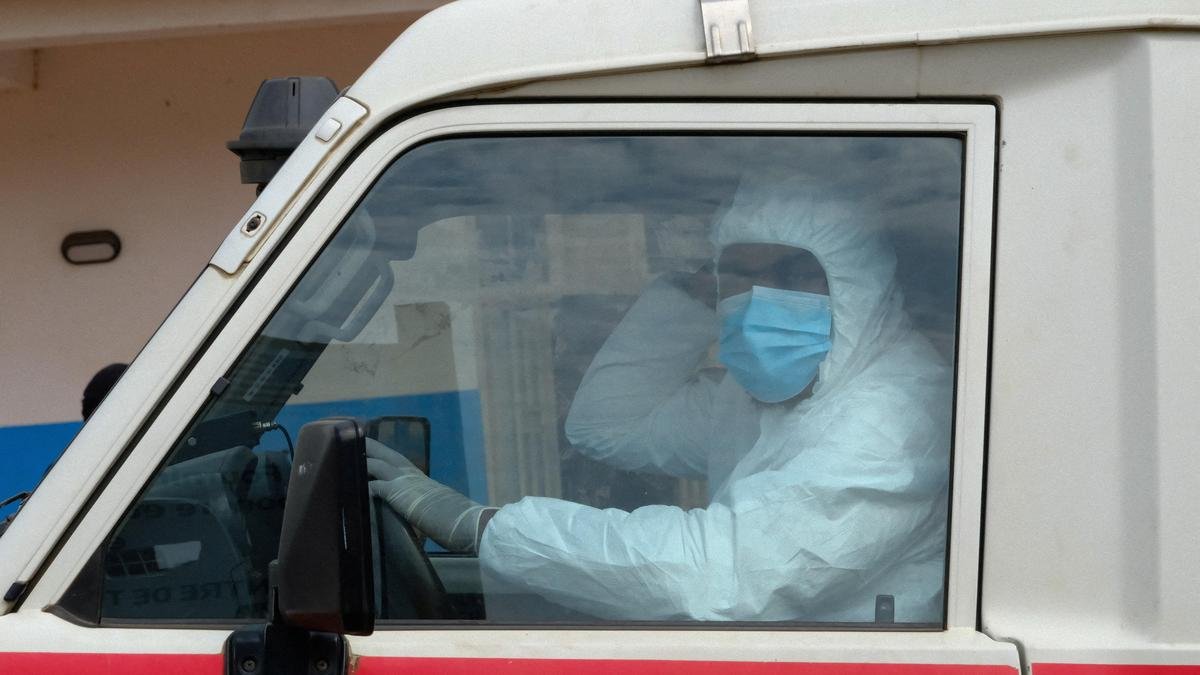
The Ebola outbreak in eastern Democratic Republic of Congo was spreading for months before it was officially declared, while a rare virus strain, delayed diagnosis, conflict and gaps in the response have allowed transmission to accelerate.
The Ebola outbreak in eastern Congo began in February, months before health authorities formally declared it on May 15, the World Health Organisation has said. The revelation helps explain why responders have struggled to contain an epidemic that has expanded at an unusually rapid pace.
Genetic sequencing indicates that the virus was already circulating before the outbreak was officially recognised. Some early patients were reportedly diagnosed with illnesses such as Malaria and typhoid, while testing initially focused on more common forms of Ebola. By the time the outbreak was declared, transmission had already gained a foothold in communities facing conflict, displacement and limited access to Healthcare.
According to the latest government figures cited by WHO, confirmed cases have reached about 4,200, with more than 1,900 deaths. The outbreak is being driven by the rare Bundibugyo virus, a form of Ebola for which there are currently no approved vaccines or treatments. That combination of delayed detection and limited medical tools has created a particularly difficult containment challenge.
Why the Congo Ebola outbreak is spreading so quickly
The most important feature of the current outbreak is not simply its size but the speed at which it has expanded. WHO officials have described it as the fastest-growing Ebola outbreak on record, warning that transmission in some locations is moving faster than the response can keep pace.
WHO Regional Director for Africa Dr Mohamed Yakub Janabi said genetic sequencing helped establish that the outbreak began months before its formal declaration. The delay meant health teams were responding to an established chain of transmission rather than an isolated cluster that could be contained at an early stage.
Janabi said some early cases had been mistaken for malaria or typhoid. That is significant because Ebola can initially resemble other illnesses, particularly when health workers are operating in areas where laboratory testing and specialist medical services are difficult to access.
Once Ebola is established in a community, identifying every possible chain of transmission becomes critical. If infected people are diagnosed late, they can unknowingly expose family members, caregivers and other contacts before isolation and treatment measures begin.
WHO has said that between 60% and 70% of new cases are being detected outside the list of monitored contacts. That suggests that contact tracing is failing to identify a large proportion of the people who are becoming infected.
A rare Ebola strain is adding another layer of difficulty
The outbreak is caused by the Bundibugyo virus, a comparatively rare Ebola virus species. This matters because the medical tools developed and approved for Ebola do not automatically apply to every Ebola virus species.
The Bundibugyo strain does not currently have an approved vaccine or treatment specifically available for use against it. That leaves responders with fewer established tools than they have had during some previous Ebola emergencies.
Vaccination has played an important role in controlling Ebola outbreaks involving the Zaire species, which was responsible for the devastating West Africa epidemic of 2014-2016 and several major outbreaks in Congo. The absence of an approved vaccine for the Bundibugyo virus therefore changes the containment equation.
The testing problem also matters. If laboratories initially look primarily for a more familiar form of Ebola, identifying an unusual strain can take additional time. In a fast-moving outbreak, even a relatively short delay can allow transmission chains to multiply.
The outbreak was declared months after transmission began
The gap between the beginning of transmission and the official declaration is one of the defining features of the current epidemic.
WHO says the outbreak began in February but was formally declared on May 15. That means the virus had several months to circulate before the international response was operating at the scale associated with a recognised Ebola outbreak.
Late recognition is not unique to Ebola. The West Africa outbreak that became the largest Ebola epidemic on record was formally declared in March 2014, even though investigators later determined that the first human case had occurred in December 2013.
The lesson from both situations is that the date an outbreak is officially declared is not necessarily the date an epidemic begins. Surveillance systems may only identify the scale of an outbreak after transmission has already been occurring for weeks or months.
For Ebola, that distinction is particularly important because early containment depends heavily on rapid diagnosis, isolation, contact tracing and community cooperation. The longer transmission remains hidden, the more difficult each of those tasks becomes.
Conflict is making Ebola response harder
The outbreak is unfolding in one of Congo’s most vulnerable regions, where years of armed conflict have weakened access to healthcare and made movement difficult.
The affected area is near the borders with South Sudan, Uganda and Rwanda. Remote communities are often connected by difficult roads, while insecurity can restrict the movement of health workers and prevent teams from reaching people who need testing or treatment.
Response workers have reported travelling along remote, unpaved roads and facing shortages of protective equipment. These logistical problems may sound routine, but during an Ebola outbreak they can directly affect the ability to identify cases and protect medical staff.
Health workers themselves have also been affected by labour disputes. Some have gone on strike over unpaid wages, creating additional pressure on an already stretched response system.
The consequences extend beyond Ebola treatment centres. When a healthcare system is overwhelmed by an infectious disease outbreak, people with other medical needs can also struggle to receive care. The situation is especially dangerous for pregnant women and others who may avoid health facilities because they fear contracting the virus.
Displacement and poor sanitation increase the challenge
Large numbers of people in eastern Congo have been displaced by conflict. Displacement makes disease control more complicated because people may move between communities, live in crowded conditions or lack consistent access to healthcare.
Reliable water supplies are another concern. Displaced people who do not have dependable access to clean water may find it difficult to maintain basic handwashing practices, an important part of infection prevention.
Ebola can spread through direct contact with infected bodily fluids, including blood and vomit, as well as through contaminated materials such as bedding and clothing. Safe handling of patients and contaminated items is therefore a central part of outbreak control.
But medical protocols only work when communities can access them. A treatment centre that is several hours away over an unpaved road may be effectively unreachable for someone who is sick, particularly when insecurity or transport shortages are involved.
Misinformation and distrust are also slowing the response
The medical response is facing another obstacle that cannot be solved simply by sending more equipment: distrust.
Some communities affected by the outbreak have lived through years of conflict and repeated humanitarian emergencies. Health workers are therefore operating in an environment where suspicion of outside organisations can be strong.
WHO has reported misinformation claiming that Ebola is not real. Such beliefs can discourage people from reporting symptoms, accepting testing or allowing health teams to trace their contacts.
For an outbreak that depends heavily on people cooperating with Public Health teams, trust is not a secondary issue. It is part of the response itself.
If families fear treatment centres, patients may remain at home for longer. If communities do not trust contact tracers, people who have been exposed may remain unidentified. And if misinformation spreads faster than accurate information, even technically effective medical measures can fail to reach the people who need them.
How this outbreak compares with West Africa’s Ebola epidemic
The current Congo outbreak is already being described as faster-growing than previous Ebola outbreaks, including the 2014-2016 West Africa epidemic.
| Outbreak | Key feature | Scale or speed |
|---|---|---|
| Eastern Congo, 2026 | Bundibugyo virus | Fastest-growing Ebola outbreak on record |
| West Africa, 2014-2016 | Large regional epidemic | More than 28,000 cases and over 11,000 deaths |
The West Africa epidemic remains the largest Ebola outbreak by total recorded cases and deaths. It spread across Guinea, Liberia and Sierra Leone and overwhelmed health systems across the region.
That outbreak took about eight months to reach 1,000 deaths. The current Congo epidemic has reached far higher levels at a much faster pace, according to the figures cited by WHO.
The comparison is important because it shows why the speed of transmission matters independently of the final number of cases. An outbreak that expands rapidly can overwhelm laboratories, treatment centres, contact-tracing teams and supplies before additional resources can be deployed.
Why contact tracing has become a critical weakness
Contact tracing is one of the most important tools for controlling Ebola. Once a person is confirmed to have the disease, health teams try to identify people who may have been exposed and monitor them for symptoms.
The system works best when most infections can be linked to known contacts. The fact that 60% to 70% of new cases are reportedly being identified outside monitored contact lists indicates that many transmission chains are occurring beyond the reach of existing surveillance.
This creates a cycle that can accelerate an outbreak. Undetected infections generate new contacts, those contacts become harder to trace, and the number of unknown chains grows. By the time some patients are diagnosed, the people who infected them may already have exposed others.
The problem is especially difficult in communities where people move because of conflict or where health workers cannot safely reach every household.
What the Congo outbreak means for the wider region
The location of the outbreak adds a regional dimension. Eastern Congo sits close to Uganda, Rwanda and South Sudan, while population movement across borders can complicate surveillance and health coordination.
That does not mean the outbreak will necessarily become a wider international epidemic. It does mean that early detection beyond the immediate outbreak zone is important, particularly along transport routes and in communities with links to affected areas.
The experience of previous Ebola emergencies shows why neighbouring countries often strengthen surveillance when transmission occurs near their borders. The objective is not simply to wait for cases to appear but to identify suspected infections quickly enough to prevent new chains from becoming established.
What happens next will depend on catching up with the virus
The central challenge for Congo’s health authorities and international partners is now straightforward to describe but difficult to achieve: the response must become faster than transmission.
That means improving access to testing, identifying cases earlier, expanding contact tracing, protecting healthcare workers and ensuring that communities have reliable information about symptoms and treatment. It also requires reaching displaced populations and people living in remote areas rather than concentrating efforts only around major treatment facilities.
The lack of an approved vaccine or treatment for the Bundibugyo virus makes prevention, early diagnosis and supportive medical care particularly important. It also increases the importance of research into effective medical interventions for this strain.
WHO officials have warned that the virus is ahead of the response, with new cases doubling in some hotspots. That assessment highlights the immediate risk: every delay allows additional transmission to occur before the health system can identify it.
The bigger lesson from the Congo Ebola outbreak
The current epidemic illustrates how an infectious disease outbreak can become a crisis through several interacting failures rather than a single cause.
The virus was circulating before the official declaration. Early illnesses were mistaken for other diseases. The outbreak involves a rare Ebola strain without approved vaccines or treatments. Conflict has restricted access. Health workers have faced shortages and payment problems. Displacement has complicated surveillance and sanitation. Misinformation has weakened public trust.
Each problem makes the others harder to solve.
A delayed diagnosis creates more contacts. More contacts require more health workers. More health workers require secure access to affected communities. Conflict makes that access harder. Poor trust makes contact tracing less effective. And weak surveillance makes it more difficult to determine where the virus is moving next.
That is why the February start date is more than a historical detail. It helps explain the scale of the challenge facing responders today. The outbreak was already developing before the world formally began counting it as an Ebola emergency.
The next phase will depend on whether health authorities can close that gap between transmission and detection. If surveillance, diagnosis, treatment capacity and community engagement can be expanded quickly, the trajectory could change. If those systems remain behind the virus, the number of unknown transmission chains could continue to grow.
For eastern Congo, the immediate priority is therefore not simply to count the next cases. It is to find them earlier, reach the people they have been in contact with and rebuild enough trust for communities to participate in stopping transmission.
For breaking news and live news updates, like us on Facebook or follow us on Twitter and Instagram. Read more on Latest World on thefoxdaily.com.






COMMENTS 0