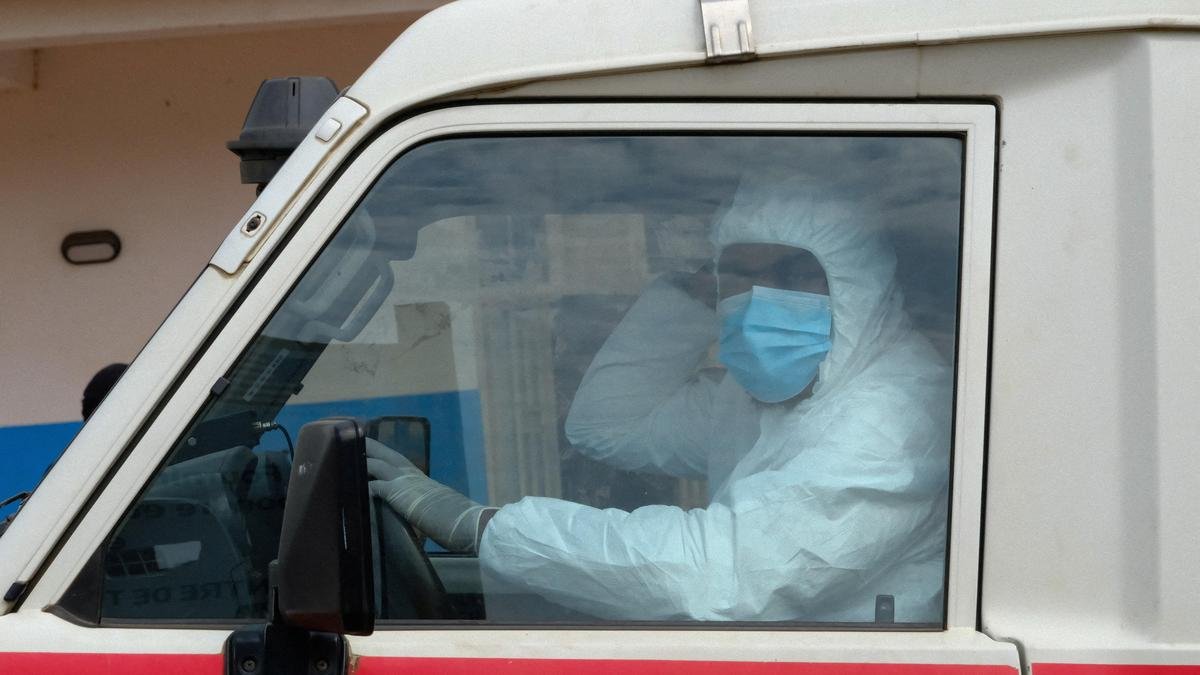
Health authorities in the Democratic Republic of Congo have begun vaccinating front-line Healthcare workers in Bunia and Mongbwalu against Ebola as the country confronts a rapidly growing outbreak caused by the Bundibugyo virus. The vaccination campaign is designed to protect medical workers who face repeated exposure to infected patients while scientists continue studying whether the Ervebo vaccine, which is licensed for a different Ebola strain, can protect against Bundibugyo Ebola.
The campaign began in Ituri province on Saturday, with Bunia serving as the centre of the response. Mongbwalu is also included because of the severity of transmission in the area. Authorities are prioritising people directly involved in patient care, surveillance, vaccination, laboratory work and other frontline activities because health workers can face a particularly high risk of exposure during an Ebola outbreak.
The decision comes as Congo’s latest Ebola outbreak continues to expand under difficult security and humanitarian conditions. Government figures cited in the response showed 7,541 confirmed cases and 3,639 deaths as of Saturday, while 1,823 people had recovered. The outbreak is concentrated largely in Ituri and has become the deadliest among Congo’s 17 recorded Ebola outbreaks.
Why Bunia Health Workers Are Being Vaccinated
Front-line healthcare workers occupy a critical position in an Ebola response, but that role also places them close to people who may be infected. Doctors, nurses, laboratory personnel, ambulance teams, cleaners and other responders can encounter infectious patients or contaminated materials while providing care.
Ituri’s military governor, Maj Gen Gaby Kasongo Mulumba, said protecting these workers was a central reason for beginning the vaccination campaign. He described the decision as a response to the particular exposure faced by staff working directly on the outbreak.
The campaign is expected to extend across Ituri and North Kivu and eventually cover about 20,000 front-line workers over six to nine months. Ervebo is being used under a compassionate-use programme while clinical research continues into its potential effectiveness against the Bundibugyo strain.
The approach reflects the unusual challenge facing Congo’s response. Authorities have an Ebola vaccine with established use against one major Ebola virus strain, but the current outbreak is caused by another strain for which there is no licensed vaccine or treatment.
The Bundibugyo Virus Creates a Different Vaccine Challenge
Ebola is not caused by a single virus. The disease can result from different Ebola virus species, and Vaccines or treatments developed for one strain cannot automatically be assumed to provide the same level of protection against another.
Ervebo is licensed for Ebola virus disease caused by the Zaire strain, which is different from the Bundibugyo virus responsible for the current outbreak. The two viruses are related, prompting researchers and health authorities to investigate whether vaccination with Ervebo could nevertheless offer protection.
That question is particularly important because Bundibugyo Ebola does not currently have a licensed vaccine or treatment. Using an available vaccine for people facing a high risk of exposure therefore has to take place alongside efforts to establish scientifically whether it actually prevents infection or serious disease caused by the strain.
The Congo campaign includes a clinical trial designed to help answer that question. According to the World Health Organisation, 70,000 doses of Ervebo had been approved for use in Congo. About 50,000 doses are intended for front-line and health workers, while another 20,000 are being used in the clinical trial examining protection against Bundibugyo virus.
Vaccination Begins as Outbreak Conditions Deteriorate
The latest vaccination effort is taking place against a backdrop of insecurity, population displacement, heavy movement of people and disruption to the health system. A health workers’ strike has also complicated efforts to maintain a consistent response.
These factors can make Ebola containment significantly harder. Ebola control depends on quickly identifying suspected cases, isolating patients, tracing contacts, safely caring for the sick, monitoring people who may have been exposed and maintaining public-health communication. Displacement and population movement can interrupt each of those activities.
Insecurity creates an additional obstacle by making it harder for response teams to reach communities and health facilities. When medical workers cannot safely Travel or when displaced populations move between locations, surveillance and contact tracing can become more difficult.
The World Health Organisation has warned that the situation remains out of control and could eventually exceed the scale of the 2014-2016 Ebola outbreak in West Africa. That earlier epidemic killed more than 11,000 people, mainly in Guinea, Liberia and Sierra Leone.
The comparison highlights the potential consequences of continued transmission. The West African epidemic became an international health emergency after sustained community transmission overwhelmed local response capacity and allowed the virus to spread across borders.
Health Workers Face the Risks Firsthand
Medical workers in Bunia have described vaccination as an important part of working in an environment where exposure to Ebola remains a daily concern.
Dr Jeannot Elua, whom The Associated Press met at a health facility in Bunia, described the vaccine as beneficial. He said healthcare workers were expected to receive it because of the risks associated with their work and noted that some staff members had already received an earlier Ebola vaccine.
Another front-line worker, Dr Jean Paul Uzele, had received Ervebo during Congo’s 10th Ebola outbreak. His experience also highlights one of the unresolved questions surrounding the latest campaign: whether people who have previously received the vaccine should be vaccinated again when they are exposed to a different Ebola strain.
The issue is particularly relevant in Congo, where Ebola outbreaks have occurred repeatedly. Medical workers who have participated in earlier responses may already have experience with Ebola vaccination, but the current outbreak involves the Bundibugyo virus rather than the Zaire strain for which Ervebo is licensed.
Determining how previous vaccination affects protection, whether additional doses are useful and whether Ervebo provides meaningful protection against Bundibugyo are therefore important questions for researchers and health authorities.
Ervebo Campaign Already Expanded Beyond Ituri
The Bunia and Mongbwalu vaccination drive is not Congo’s first use of Ervebo during the current Bundibugyo outbreak. Last month, the vaccine was rolled out in Kisangani in Tshopo province.
The Kisangani campaign was expected to extend across 14 health zones in Tshopo, Bas-Uele and Haut-Uele provinces. The broader geographic deployment demonstrates the scale of the country’s attempt to protect people involved in the response while researchers gather evidence about the vaccine.
The allocation of 70,000 doses also reflects the dual purpose of the programme. A large portion is being directed toward people at immediate occupational risk, while a separate supply is being used for scientific research.
This distinction is important because the vaccination campaign itself should not be interpreted as proof that Ervebo is effective against Bundibugyo Ebola. Its established licence applies to Ebola virus disease caused by the Zaire strain. Protection against Bundibugyo remains a question being examined through the clinical trial.
Why Protecting Front-Line Workers Matters
Protecting healthcare workers is not only about reducing infections among medical staff. It can directly affect the ability of an outbreak response to function.
An Ebola response requires trained personnel who can continue working safely in treatment centres and other health facilities. If large numbers of healthcare workers become infected, health facilities can lose essential staff at the same time that demand for care is increasing.
Healthcare workers also play an important role in maintaining trust. Communities need functioning health services to identify cases, report symptoms and access treatment. When health facilities are disrupted or workers are absent, fear and misinformation can become harder to counter.
Vaccinating high-risk responders can therefore serve two purposes: reducing occupational exposure and helping preserve the capacity of the health system during a prolonged emergency.
The Outbreak Is Testing Congo’s Ebola Response System
Congo has extensive experience responding to Ebola, having recorded 17 outbreaks. That history has created knowledge, trained personnel and response infrastructure, but repeated outbreaks do not eliminate the challenges posed by geography, insecurity and population movement.
The current outbreak is particularly difficult because the virus is spreading in areas where the health response is already under pressure. Insecurity can restrict access, while displacement can move vulnerable populations away from established health services. A strike among health workers adds another layer of disruption.
These conditions make rapid detection and sustained intervention more difficult. They also increase the importance of protecting the people who remain available to provide care and conduct outbreak-control activities.
The vaccination campaign in Bunia and Mongbwalu is consequently part of a larger response rather than a standalone measure. Vaccination is being combined with clinical research, case management and other public-health activities as authorities attempt to slow transmission.
What the Clinical Trial Could Establish
The clinical trial involving the 20,000 doses allocated for research could provide important evidence about whether Ervebo has a role against Bundibugyo Ebola. If the vaccine demonstrates protection, it could offer health authorities another tool when confronting future outbreaks caused by the same virus.
If protection is limited or absent, the findings would also be important because they would clarify the limitations of using a vaccine developed for the Zaire strain against a related but distinct virus.
The research is therefore significant beyond the current outbreak. Bundibugyo virus has previously caused outbreaks, but the absence of a licensed vaccine or treatment leaves health authorities with fewer specifically targeted tools when cases emerge.
Scientific evidence gathered during an active outbreak can be difficult to obtain because emergency conditions affect logistics, patient follow-up and access to affected communities. Conducting the research while simultaneously protecting front-line workers allows Congo and its international health partners to address an immediate threat while seeking information that could improve future outbreak preparedness.
Congo Faces a Race Between Transmission and Response
The vaccination of health workers in Bunia and Mongbwalu comes at a critical stage of Congo’s Ebola response. Thousands of confirmed cases and deaths have already been reported, while insecurity, displacement, population movement and disruption among health workers continue to complicate containment.
The decision to prioritise front-line staff reflects the risks faced by those keeping the response operational. At the same time, the use of Ervebo highlights an unresolved scientific question: whether a vaccine licensed for the Zaire strain can protect people from Bundibugyo Ebola.
For now, the campaign combines immediate protection with research. About 20,000 front-line workers across Ituri and North Kivu are expected to be covered over six to nine months, while a separate clinical trial will examine the vaccine’s potential against the virus responsible for the current outbreak.
The outcome could influence how Congo and other countries prepare for future Bundibugyo outbreaks. But in Bunia, the immediate priority remains protecting healthcare workers and maintaining the capacity to respond as the disease continues to spread.
For breaking news and live news updates, like us on Facebook or follow us on Twitter and Instagram. Read more on Latest World on thefoxdaily.com.





COMMENTS 0