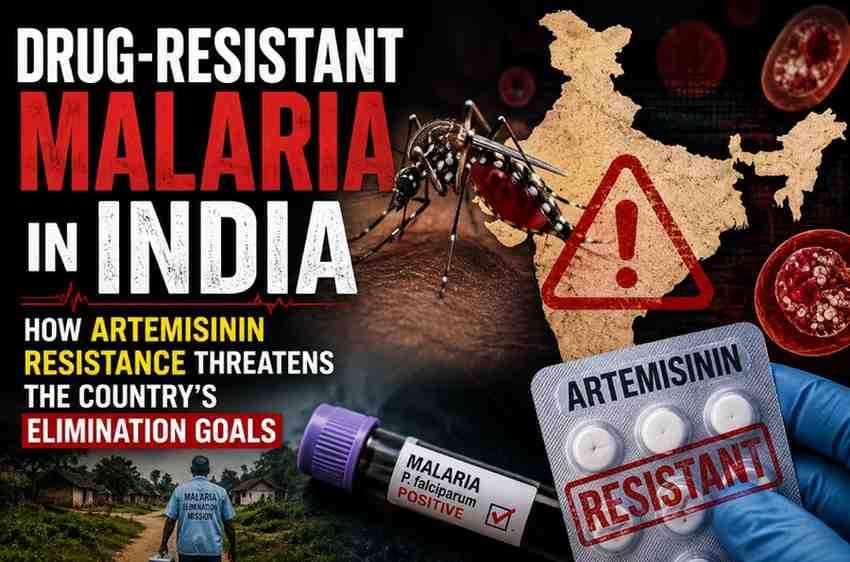
For years, the global fight against malaria has been one of Public Health‘s biggest success stories. Improved diagnostics, insecticide-treated bed nets, and highly effective medicines have helped dramatically reduce malaria-related deaths. Yet a new threat is casting a shadow over these gains: drug-resistant malaria.
Experts say mutations affecting the effectiveness of artemisinin-based combination therapies (ACTs) currently the gold standard for treating malaria represent one of the most serious challenges facing malaria control and elimination efforts. In India, where the burden of malaria has declined significantly over the past decade, the emergence and spread of resistance could complicate efforts to achieve elimination goals.
The concern is not merely about treatment failure. Drug resistance threatens to reverse decades of progress and could make malaria more difficult and expensive to control.
Why Malaria Remains a Global Health Threat
Malaria is caused by parasites of the Plasmodium species and transmitted through the bites of infected female Anopheles mosquitoes. The disease continues to affect millions of people worldwide, particularly in tropical and subtropical regions.
Common symptoms include:
- High fever and chills.
- Sweating and fatigue.
- Headache and body aches.
- Nausea and vomiting.
- Severe complications involving the brain, lungs, or kidneys in advanced cases.
Although malaria is preventable and treatable, severe infections can quickly become life-threatening without prompt medical care.
What Is Drug-Resistant Malaria?
Drug resistance occurs when malaria parasites evolve genetic changes that allow them to survive despite treatment with antimalarial medications.
Artemisinin-based combination therapies, or ACTs, have been the cornerstone of malaria treatment because they rapidly reduce parasite levels while partner drugs eliminate remaining organisms.
However, mutations in the parasite particularly those associated with delayed clearance after treatment have raised concerns among researchers.
If resistance becomes widespread, existing medicines may lose effectiveness, leading to longer infections and increased transmission.
Why Artemisinin Resistance Is a Major Concern
Artemisinin derivatives are among the most effective antimalarial medicines ever developed. Their success has been central to reducing deaths globally.
Experts warn that resistance to these therapies could result in:
- Treatment failures.
- Longer duration of infection.
- Increased risk of severe disease.
- Greater spread of resistant parasites.
- Higher healthcare costs.
- Setbacks to elimination programs.
Because ACTs are widely used, preserving their effectiveness is considered a top public health priority.
Why India’s Elimination Goals Could Become More Difficult
India has made substantial progress in reducing malaria cases through surveillance, vector control, and improved access to diagnosis and treatment.
However, experts say drug resistance could complicate these achievements.
Challenges include:
- Detecting resistant strains early.
- Ensuring patients complete treatment.
- Preventing misuse of antimalarial drugs.
- Monitoring parasite mutations.
- Maintaining strong surveillance systems.
Without effective medicines, even areas with declining malaria incidence could remain vulnerable to outbreaks.
| Drug-Sensitive Malaria | Drug-Resistant Malaria |
|---|---|
| Rapid response to treatment | Delayed parasite clearance |
| Shorter duration of illness | Persistent infection |
| Lower risk of complications | Greater chance of severe disease |
| Reduced transmission | Potential spread of resistant strains |
| Supports elimination efforts | Threatens public health progress |
An Overlooked Danger: Resistance Is an Evolutionary Process
One aspect often overlooked is that drug resistance does not emerge overnight. It develops gradually as parasites adapt to selective pressure created by medication use.
Incomplete treatment, inappropriate prescriptions, counterfeit medicines, and misuse of drugs can accelerate this process.
Once resistant strains gain a foothold, they may spread across regions, making containment increasingly difficult.
This evolutionary arms race means that vigilance must continue even when case numbers decline.
The Importance of Surveillance and Genetic Monitoring
Modern malaria control depends not only on treating patients but also on understanding how parasites evolve.
Researchers increasingly rely on genetic surveillance to identify mutations linked to resistance.
These efforts help:
- Track emerging resistant strains.
- Guide treatment policies.
- Detect outbreaks earlier.
- Improve public health responses.
- Protect the effectiveness of existing medicines.
Such monitoring is becoming an essential component of elimination strategies.
Can New Drugs Solve the Problem?
Scientists are actively developing new antimalarial medicines and exploring alternative combinations to stay ahead of resistance.
Research efforts include:
- Next-generation antimalarial drugs.
- Novel combination therapies.
- Vaccines targeting malaria parasites.
- Genetic studies of parasite evolution.
- Improved diagnostic technologies.
However, developing and deploying new treatments requires time and sustained investment.
Prevention Remains as Important as Treatment
Experts stress that reducing malaria transmission remains essential to limiting the spread of resistant parasites.
Preventive measures include:
- Using insecticide-treated bed nets.
- Indoor residual spraying.
- Prompt diagnosis and treatment.
- Environmental management to reduce mosquito breeding.
- Community awareness programs.
By lowering the number of infections, these strategies help reduce opportunities for resistant strains to emerge and spread.
A Global Problem That Requires Global Cooperation
Drug-resistant malaria is not confined by national borders. Parasites can spread across regions through travel and migration, making international cooperation crucial.
Experts emphasize the importance of:
- Sharing surveillance data.
- Strengthening healthcare systems.
- Coordinating research efforts.
- Ensuring access to quality medicines.
- Maintaining political commitment to elimination goals.
Global collaboration has historically been one of the strongest weapons against malaria and it remains essential today.
Conclusion
India has made remarkable strides in reducing malaria, but the rise of drug-resistant parasites threatens to undermine these achievements. Mutations affecting artemisinin-based therapies highlight the urgent need for robust surveillance, responsible use of medicines, and continued investment in research and prevention.
As the battle against malaria enters a new phase, success will depend not only on treating today’s infections but also on protecting the effectiveness of the medicines that millions of lives still depend upon.
For breaking news and live news updates, like us on Facebook or follow us on Twitter and Instagram. Read more on Latest Health on thefoxdaily.com.






COMMENTS 0