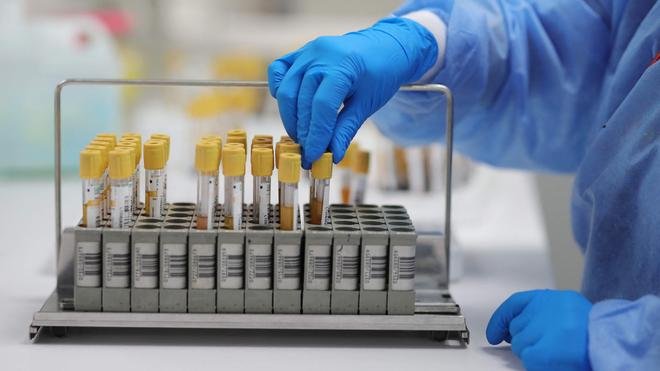
Why strengthening blood-safety systems with molecular screening could help close the gap left by conventional testing, particularly during the early window period of infection.
Introduction
Calls for Kerala to strengthen infection screening in blood banks have renewed attention on a fundamental question in transfusion medicine: how can potentially infected blood be identified before it reaches a patient?
The concern has emerged amid reports of HIV, hepatitis B and hepatitis C infections among college students in parts of the country. Such reports require careful interpretation and should not automatically be linked to blood transfusion. These infections have multiple routes of transmission, and an individual diagnosis does not establish how the infection was acquired.
But the wider public-health concern is legitimate. Blood transfusion services must operate with exceptionally strong safeguards because recipients may be medically vulnerable, and even highly effective screening systems cannot eliminate every risk.
India already requires donated blood to be screened for major transfusion-transmitted infections, including HIV, hepatitis B and hepatitis C. The question increasingly being discussed is whether conventional serological screening should be complemented more extensively with nucleic acid testing (NAT), a molecular technique designed to detect viral genetic material.
Why Advanced Blood Screening Matters
Modern blood safety is not based on a single test. It is a chain of safeguards that begins with donor selection and continues through blood collection, laboratory screening, component preparation, storage, transportation and transfusion.
Every stage matters because a test can only detect what it is designed to detect, and no laboratory method is perfect.
The central challenge is the window period. After someone becomes infected, there may be a period during which the amount or type of biological marker detectable by a particular test is too low for reliable identification.
Serological tests generally look for an immune response or viral components such as antigens. NAT takes a different approach: it looks for genetic material from the virus itself.
This distinction can make molecular testing particularly valuable when an infection is very recent.
What Is NAT Testing?
Nucleic acid testing, or NAT, is a molecular screening method that detects viral genetic material in donated blood.
For blood safety, NAT can be used to identify infections such as HIV, hepatitis B and hepatitis C at an earlier stage than some conventional antibody-based methods.
There are two broad approaches commonly discussed in transfusion screening:
- Individual-donation NAT (ID-NAT): each donation is tested separately.
- Minipool NAT: samples from multiple donations are combined into a pool for initial testing, with further testing used when a pool is reactive.
Individual-donation testing can provide greater analytical sensitivity because each donation is examined without dilution from other samples, although it generally requires greater resources and laboratory capacity.
The Window Period Is the Critical Weakness Advanced Screening Tries to Address
One of the most important insights for the public is that a negative test does not necessarily mean an infection could never be detected at that moment.
Immediately after infection, the amount of virus may initially be extremely low. Depending on the pathogen and test method, it can take time before detectable markers appear at levels reliably identified by screening.
This creates a period in which a recently infected donor may test negative despite carrying an infection.
NAT helps narrow this gap by looking for viral genetic material rather than waiting for the immune response to become detectable.
That does not mean NAT eliminates the window period. It reduces it. This distinction is crucial because headlines sometimes create the misleading impression that advanced testing makes blood completely risk-free.
ELISA and NAT Are Better Viewed as Complementary Tools
The debate should not be framed as “old testing versus new testing.” In a strong blood-safety system, different methods can complement each other.
| Feature | Serological screening | NAT screening |
|---|---|---|
| What it detects | Antibodies and/or viral antigens, depending on the assay | Viral genetic material |
| Strength | Established, widely used and suitable for routine screening | Can identify infection earlier in the course of infection |
| Window-period challenge | May miss some very recent infections | Can shorten the period in which some infections remain undetected |
| Infrastructure needs | Well-established laboratory systems | Requires specialised molecular equipment, trained personnel and quality systems |
| Best role | Core component of blood screening | Additional layer of protection where available and appropriate |
Evidence from Indian blood-bank research has demonstrated that NAT can identify some infections in donations that were initially non-reactive on serological screening. A 2024 study of more than 150,000 donations from northern India found that NAT detected additional HBV, HCV and HIV infections among samples that had initially screened negative by serological methods.
Why Kerala’s Blood-Safety Debate Deserves Attention
Kerala has a large and sophisticated healthcare network, including major hospitals that perform complex surgery, cancer treatment, trauma care and other procedures requiring reliable blood and blood components.
The more advanced the healthcare system becomes, the more important the reliability of its transfusion infrastructure becomes.
Blood is also unusual as a healthcare resource because it cannot simply be manufactured on demand. It depends on voluntary donors, careful collection, testing and an efficient distribution system.
For patients receiving repeated transfusions, such as some people with blood disorders or cancer, transfusion safety has an especially important cumulative dimension. The objective is not merely to make one transfusion safe but to maintain a dependable safety system across repeated exposure.
Kerala Has Discussed NAT Before
The demand for NAT in Kerala is not entirely new. Concerns about the limitations of conventional screening and calls for molecular testing have been raised in the state for years. Earlier reporting highlighted the potential for NAT to shorten the period during which newly acquired infections could escape conventional detection.
The persistence of the issue illustrates a broader challenge in healthcare policy: identifying a technology is easier than creating the infrastructure required to deploy it consistently across a large network.
A molecular testing programme requires equipment, reagents, trained laboratory professionals, maintenance, quality assurance, reliable power and logistics, as well as systems for confirmatory testing and donor notification.
The Most Important Question Is Not “Does Kerala Have NAT?”
A more useful policy question is: Where, how and at what scale should NAT be deployed to maximise blood safety?
Installing sophisticated equipment in one location does not automatically create a statewide safety solution.
Kerala could consider several models, depending on technical assessments, funding and blood-service organisation.
- Centralised high-throughput NAT laboratories serving multiple blood banks
- Regional hubs connected to smaller collection centres
- Greater use of individual-donation NAT where feasible
- Standardised quality-control and proficiency-testing systems
- Strong digital tracking of samples, results and blood components
- Clear referral pathways for donors with reactive results
The best model would need to balance sensitivity, turnaround time, cost, geographical access and the need to maintain adequate blood availability.
The Hidden Risk: Occult and Very Low-Level Infections
One reason molecular testing receives attention is that some infections can be difficult to detect using conventional approaches.
Hepatitis B is particularly relevant because occult HBV infection can involve detectable viral DNA despite the absence of the expected surface antigen. Conventional serological strategies may not identify every such case.
Research into blood screening has therefore increasingly examined how molecular methods can complement serological testing rather than simply replace it.
This matters because blood safety is fundamentally a risk-reduction exercise. A test that identifies an additional small number of infected donations can still have major public-health value when multiplied across a large blood supply.
What About the Reports of HIV and Hepatitis Among College Students?
This part of the discussion requires particular caution.
HIV, hepatitis B and hepatitis C are not synonymous diseases, and they do not necessarily spread through the same circumstances. Depending on the infection, transmission can occur through sexual contact, contaminated needles or equipment, infected blood, or from mother to child. Hepatitis B can also be prevented through vaccination.
Therefore, reports of infections among college students should not be interpreted as evidence that contaminated blood is responsible unless epidemiological investigation establishes such a connection.
Turning individual cases into assumptions about transmission can create stigma and misinformation.
The stronger public-health response is to improve prevention, confidential testing, vaccination where applicable, treatment access and blood safety simultaneously.
Hepatitis B Is Different Because Vaccination Provides a Powerful Prevention Tool
Blood screening is only one part of hepatitis prevention.
Unlike hepatitis C and HIV, hepatitis B has a highly effective vaccine. Increasing vaccination coverage remains one of the most important tools for preventing HBV infection.
India’s National Viral Hepatitis Control Programme provides screening and treatment services for hepatitis B and C and links positive blood donors with appropriate follow-up care.
This highlights an important policy principle: advanced blood screening should strengthen prevention, not substitute for it.
Why “100% Safe Blood” Is the Wrong Promise
It may sound reassuring to promise completely safe blood, but scientifically it is more accurate to talk about risk reduction.
Blood safety depends on several variables:
- The accuracy and sensitivity of screening assays
- The timing of donation after infection
- Donor selection and health history
- Sample identification and laboratory procedures
- Equipment performance
- Quality-control systems
- Storage and transportation conditions
- Human factors and process compliance
Even the most sophisticated screening technology cannot detect an infection that the test is not designed to identify, nor can it prevent every possible laboratory or logistical error.
The goal should therefore be layered protection.
A Better Model: Build Layers, Not a Single “Magic Test”
The strongest blood-safety strategy resembles a series of safety nets.
The first layer is careful donor selection. The second is mandatory laboratory screening. The third can include advanced molecular testing. Additional layers involve quality assurance, traceability, proper storage, haemovigilance and rapid investigation of adverse transfusion events.
This layered model is more resilient than depending on one test.
For Kerala, the opportunity is therefore larger than simply installing NAT machines. The state could use the debate to examine the entire transfusion pathway and identify where the greatest residual risks remain.
The Cost Question: Is Advanced Screening Worth It?
NAT is more resource-intensive than routine serological screening. That creates a legitimate policy question: how much additional expenditure should be committed to reduce an already low transfusion-transmission risk?
The answer cannot be determined simply by comparing the price of one test with another.
Decision-makers should consider the cost of treating transfusion-transmitted infection, the number of donations screened, the additional infections detected, the vulnerability of recipients, laboratory capacity and the long-term value of preventing avoidable disease.
A centralised or regional model could potentially improve efficiency by allowing expensive molecular equipment and specialised staff to serve multiple blood banks rather than requiring every facility to maintain a full NAT laboratory.
What Patients and Blood Donors Should Know
Patients should understand that donated blood undergoes mandatory screening and that transfusion services use multiple safeguards to reduce infection risk.
Donors, meanwhile, have an equally important responsibility. Honest answers during donor screening matter because laboratory tests are not the only defence against transfusion-transmitted infection.
People should never donate blood simply to obtain an HIV, hepatitis or other infection test. If someone believes they may have been exposed to an infection, appropriate confidential medical testing is the safer route.
What Kerala Could Do Next
If the state wants to strengthen transfusion safety, several measures deserve consideration.
- Conduct a statewide assessment of existing blood-bank screening capacity.
- Map where NAT is already available and identify geographical gaps.
- Evaluate centralised and regional NAT models.
- Prioritise high-volume centres and hospitals handling vulnerable transfusion recipients where evidence supports the approach.
- Strengthen laboratory quality assurance and external proficiency testing.
- Improve haemovigilance and investigation of suspected transfusion-transmitted infections.
- Ensure reactive donors receive confidential counselling, confirmatory testing and appropriate referral.
- Maintain strong voluntary donor recruitment so advanced testing does not create shortages.
The Bigger Lesson for India’s Blood-Safety System
Kerala’s discussion reflects a larger transformation in transfusion medicine.
Blood screening has moved from relatively simple disease detection toward increasingly sensitive, layered laboratory surveillance. NAT is part of that evolution.
Indian studies have shown why the additional layer can matter: infections may occasionally be detectable by molecular methods even when conventional screening has produced a non-reactive result.
At the same time, technology alone cannot solve every blood-safety problem. A sophisticated machine without trained staff, maintenance, quality control and reliable workflows is not a sophisticated safety system.
Conclusion: Kerala’s Opportunity Is Bigger Than a New Testing Machine
The demand for advanced infection screening in Kerala’s blood banks comes at a time when public attention is again focused on HIV and viral hepatitis. But the conversation should remain evidence-based.
Reports of infections among college students should not automatically be attributed to transfusion. At the same time, concerns about blood safety deserve serious consideration because transfusion recipients depend on the healthcare system to minimise preventable risks.
NAT can strengthen blood screening by detecting viral genetic material earlier than some conventional serological methods, narrowing the window period and providing an additional layer of protection against HIV, hepatitis B and hepatitis C.
The strongest strategy, however, is not NAT alone. It is a layered system combining responsible donor selection, established serological testing, molecular screening where appropriate, rigorous quality control, traceability, haemovigilance and rapid follow-up of reactive results.
For Kerala, the real opportunity is to move the debate beyond “Should NAT be installed?” and toward a more ambitious question: How can the state build one of India’s most reliable, transparent and evidence-driven blood-safety networks?
That shift—from purchasing technology to redesigning the safety system around the patient—could ultimately prove more important than the testing machine itself.
Primary search intent: Informational — readers want to understand why Kerala is being urged to strengthen blood-bank screening, how NAT detects HIV and hepatitis infections, why conventional testing can miss very recent infections, and what stronger blood-safety systems could mean for patients.
Primary keyword: advanced screening systems in blood banks Kerala
Related semantic keywords: NAT testing Kerala, blood bank screening, HIV blood screening, hepatitis B blood screening, hepatitis C blood screening, nucleic acid testing, transfusion transmitted infections, blood safety in India, window period infection, individual donation NAT
SEO title: Kerala Blood Banks: Why Advanced NAT Screening Could Strengthen HIV and Hepatitis Detection
SEO URL: kerala-blood-banks-advanced-nat-screening-hiv-hepatitis
Important keywords: blood bank screening Kerala, NAT testing, HIV screening, hepatitis B, hepatitis C
Tags: blood safety, Kerala health
4 important points:
- Advanced molecular screening such as NAT can help detect HIV, hepatitis B and hepatitis C earlier than some conventional serological tests.
- NAT does not replace existing blood-safety measures; it works best as an additional layer alongside donor selection and serological screening.
- Reports of infections among college students should not be automatically linked to blood transfusions without epidemiological evidence.
- Kerala’s bigger opportunity is to strengthen the entire transfusion-safety system rather than relying on a single testing technology.
For breaking news and live news updates, like us on Facebook or follow us on Twitter and Instagram. Read more on Latest Health on thefoxdaily.com.


COMMENTS 0