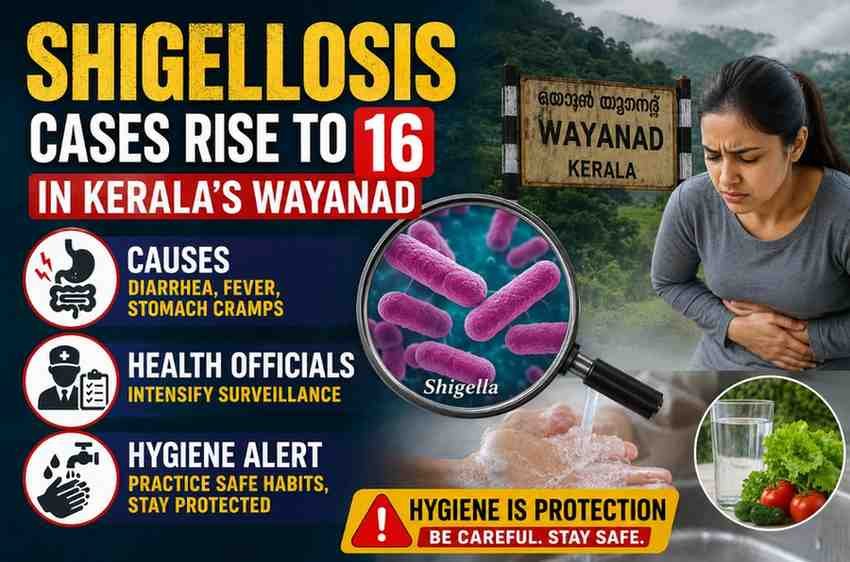
Health authorities in Kerala’s Wayanad district have intensified monitoring and preventive efforts after the number of confirmed shigellosis cases rose to 16. According to district health officials, all the infected children are currently stable, and surveillance activities have been strengthened to prevent further transmission.
While the immediate situation remains under control, the development highlights a larger public health concern. Shigellosis, though treatable, is a highly contagious bacterial infection capable of spreading rapidly in communities, schools, and households through contaminated food, water, and poor hand hygiene.
The latest cases have renewed attention on the importance of sanitation, early diagnosis, and community awareness in preventing outbreaks.
What Is Shigellosis?
Shigellosis is an intestinal infection caused by bacteria belonging to the Shigella family. The disease primarily affects the digestive system and is particularly common among young children, although people of all ages can become infected.
The bacteria spread easily because only a small number of organisms are required to cause illness. This makes shigellosis one of the more contagious gastrointestinal infections.
Outbreaks are often linked to:
- Contaminated drinking water.
- Poor sanitation facilities.
- Improper handwashing.
- Contaminated food.
- Crowded living conditions.
- Close contact in schools and childcare settings.
Why Children Are Particularly Vulnerable
The 16 reported cases in Wayanad involve children, a group considered especially susceptible to shigellosis.
Young children may struggle to maintain proper hand hygiene and often come into close physical contact with classmates and family members, increasing the risk of transmission.
Children are also more vulnerable to dehydration caused by diarrhea, making prompt treatment and hydration essential.
Fortunately, health officials have reported that the condition of all affected children remains stable.
Common Symptoms of Shigellosis
Symptoms usually appear one to three days after exposure to the bacteria.
Common signs include:
- Diarrhea, sometimes containing blood or mucus.
- Abdominal pain and cramps.
- Fever.
- Nausea and vomiting.
- Fatigue.
- Loss of appetite.
- Urgent need for bowel movements.
In many cases, symptoms resolve within several days, but severe cases may require medical attention and supportive treatment.
Why Surveillance Is Crucial During Outbreaks
Health authorities in Wayanad have increased surveillance and preventive activities to limit the spread of infection.
Public health surveillance helps authorities:
- Identify new cases quickly.
- Track transmission patterns.
- Detect clusters of infection.
- Implement sanitation measures.
- Educate communities about prevention.
- Prevent larger outbreaks.
Rapid intervention is one of the most effective tools for containing Infectious Diseases.
Comparison: Shigellosis vs Common Stomach Infection
| Feature | Shigellosis | Typical Viral Gastroenteritis |
|---|---|---|
| Cause | Bacterial infection | Virus |
| Spread | Highly contagious | Contagious |
| Bloody diarrhea | Possible | Rare |
| Need for antibiotics | Sometimes required | Usually not needed |
| Risk of dehydration | Moderate to high | Moderate |
How Shigellosis Spreads
Shigella bacteria are transmitted through the fecal-oral route, meaning infection can spread when contaminated particles enter the mouth through food, water, or contact with infected surfaces.
Even microscopic contamination can lead to infection.
High-risk environments include:
- Schools and daycare centers.
- Shared toilets and bathrooms.
- Communities with limited sanitation.
- Households with infected individuals.
- Food preparation areas with inadequate hygiene.
This is why public health experts place strong emphasis on handwashing and sanitation.
An Insight Competitors Often Miss: Diarrheal Diseases Remain a Major Public Health Challenge
In an age dominated by concerns about emerging viruses and lifestyle diseases, common gastrointestinal infections often receive less attention. Yet diarrheal illnesses continue to impose a significant burden, especially among children.
Improved sanitation and clean water have dramatically reduced many infections globally, but outbreaks still occur because bacteria exploit gaps in hygiene practices.
The Wayanad cases serve as a reminder that even well-understood infections require constant vigilance and robust public health systems.
Preventing disease frequently depends not on advanced technology but on simple measures such as handwashing and safe drinking water.
Preventive Measures Recommended by Experts
Doctors and health authorities recommend several simple precautions:
- Wash hands thoroughly with soap and water.
- Drink clean, safe water.
- Avoid consuming contaminated or improperly cooked food.
- Practice proper toilet hygiene.
- Disinfect commonly touched surfaces.
- Keep sick children away from school until recovery.
- Seek medical care if symptoms become severe.
Community awareness plays a crucial role in breaking transmission chains.
When to Seek Medical Attention
Most cases improve with supportive care and hydration, but immediate medical attention is advised if a person experiences:
- Blood in stool.
- Persistent high fever.
- Severe abdominal pain.
- Signs of dehydration.
- Persistent vomiting.
- Reduced urine output.
- Lethargy or unusual weakness.
Young children and elderly individuals should be monitored particularly closely because dehydration can develop quickly.
What the Wayanad Cases Reveal About Public Health Preparedness
The rapid response by health authorities demonstrates the importance of early surveillance systems and coordinated interventions.
By strengthening monitoring and preventive efforts, officials aim to ensure that isolated cases do not evolve into larger outbreaks.
The fact that all 16 children are reportedly stable offers reassurance, but continued vigilance remains essential.
Conclusion
The rise in shigellosis cases to 16 in Kerala’s Wayanad district has prompted intensified surveillance and preventive measures, with health authorities confirming that all affected children are stable. While the immediate situation appears under control, the outbreak highlights the persistent threat posed by highly contagious gastrointestinal infections.
Ultimately, shigellosis underscores a simple but powerful truth: public health often depends on everyday practices. Clean water, proper sanitation, and good hand hygiene remain among humanity’s most effective defenses against infectious disease—a lesson that remains as relevant today as ever.
For breaking news and live news updates, like us on Facebook or follow us on Twitter and Instagram. Read more on Latest Health on thefoxdaily.com.






COMMENTS 0