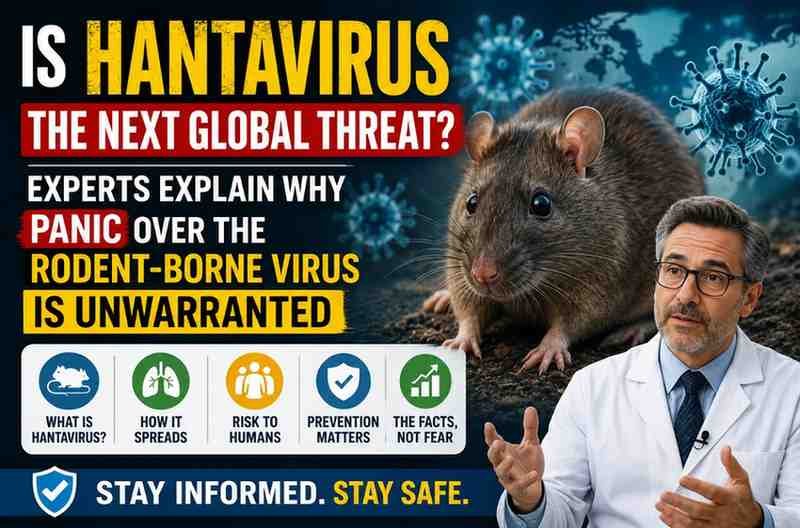
Every time a rare infectious disease makes headlines, a familiar question emerges: could this become the next global pandemic? Hantavirus, a virus transmitted primarily through contact with infected rodents and their droppings, has once again become the focus of public attention, leading to widespread speculation and concern.
But infectious disease specialists and epidemiologists caution against sensationalism. While hantavirus infections can be severe and even life-threatening, the virus behaves very differently from highly contagious respiratory pathogens such as SARS-CoV-2.
Understanding what hantavirus is and what it is not—is essential for separating legitimate health concerns from unnecessary fear.
What Is Hantavirus?
Hantavirus refers to a group of viruses carried by certain species of rodents. Humans usually become infected after inhaling particles contaminated with rodent urine, saliva, or droppings.
The virus can cause serious illnesses, including:
- Hantavirus Pulmonary Syndrome (HPS).
- Hemorrhagic Fever with Renal Syndrome (HFRS).
- Respiratory complications.
- Kidney-related illnesses.
Although rare, these conditions can be severe and require immediate medical attention.
How Does Hantavirus Spread?
Unlike many viruses that spread easily from person to person, hantavirus infections are typically associated with exposure to infected rodents or contaminated environments.
People may be exposed while:
- Cleaning rodent-infested areas.
- Handling contaminated materials.
- Working in agricultural settings.
- Entering abandoned buildings or storage spaces.
- Coming into contact with rodent nests or droppings.
This transmission pattern significantly limits the virus’s ability to spread widely through communities.
Why Experts Say Hantavirus Is Unlikely to Become a Pandemic
One of the key reasons health experts do not consider hantavirus a likely pandemic threat is its mode of transmission.
Most human infections occur through environmental exposure rather than sustained human-to-human spread.
Because the virus lacks the efficient transmission characteristics seen in respiratory viruses, large-scale outbreaks remain uncommon.
This does not mean the disease should be ignored. Rather, it means the risk profile differs substantially from viruses capable of rapid international spread.
Common Symptoms of Hantavirus Infection
Early symptoms can resemble influenza or other viral illnesses, making diagnosis challenging.
Symptoms may include:
- Fever.
- Muscle aches.
- Fatigue.
- Headache.
- Nausea and vomiting.
- Abdominal pain.
- Shortness of breath.
As the illness progresses, some patients may develop severe respiratory problems requiring intensive medical care.
Comparison: Hantavirus vs COVID-19
| Feature | Hantavirus | COVID-19 |
|---|---|---|
| Primary source | Rodents | Human-to-human transmission |
| Main transmission route | Exposure to contaminated particles | Respiratory droplets and aerosols |
| Pandemic potential | Low | High |
| Community spread | Limited | Rapid and widespread |
| Prevention focus | Rodent control and hygiene | Vaccination and infection control |
Why Social Media Often Amplifies Rare Diseases
Rare infections tend to attract outsized attention because they are unfamiliar and sometimes associated with severe outcomes.
Algorithms and viral posts can make isolated cases appear far more widespread than they actually are.
This phenomenon contributes to unnecessary anxiety and may distract attention from more common Public Health risks.
Experts emphasize that risk should be assessed based on transmission patterns, epidemiological evidence, and scientific data—not online speculation.
An Insight Competitors Often Miss: Severity and Pandemic Potential Are Not the Same Thing
One of the biggest misconceptions surrounding emerging diseases is the assumption that a deadly illness automatically poses a pandemic threat.
In reality, a virus’s ability to spread efficiently between people often matters more than its mortality rate.
Some diseases are extremely severe but difficult to transmit, while others spread rapidly but cause milder illness.
Public health experts evaluate both factors when assessing risk.
Hantavirus can be serious, but its limited transmission characteristics are a major reason why specialists do not currently view it as the next global crisis.
How to Reduce the Risk of Hantavirus Exposure
Preventing exposure to rodents remains the most effective defense.
- Seal openings that allow rodents into homes.
- Store food securely.
- Dispose of garbage properly.
- Avoid sweeping dry rodent droppings, which can release contaminated particles.
- Use protective equipment when cleaning infested areas.
- Maintain good sanitation practices.
Simple preventive measures can substantially reduce risk.
Who Is Most at Risk?
Certain occupations and activities may increase exposure.
- Farmers.
- Construction workers.
- Forestry personnel.
- People cleaning unused buildings.
- Campers and outdoor enthusiasts.
- Individuals living in areas with rodent infestations.
Awareness and proper protective measures are especially important for these groups.
What Public Health Experts Are Watching
Health authorities continuously monitor zoonotic diseases—those transmitted from animals to humans—because changing environments, climate conditions, and human activity can influence patterns of infection.
Ongoing surveillance helps identify outbreaks early and enables timely public health responses.
Experts stress that preparedness and monitoring are important, but they do not currently support fears that hantavirus is poised to become the next pandemic.
Conclusion
Hantavirus is a serious but relatively rare infection that deserves awareness rather than alarm. Although it can cause severe illness, its transmission pattern differs dramatically from highly contagious respiratory viruses, making widespread global outbreaks unlikely according to current scientific understanding.
The most effective response is not panic but prevention. Rodent control, environmental hygiene, and early medical attention remain the best defenses. As with any emerging health concern, accurate information and evidence-based risk assessment are far more valuable than fear-driven speculation.
For now, experts agree on one important point: hantavirus is a disease to understand and respect but not a reason to assume another pandemic is around the corner.
For breaking news and live news updates, like us on Facebook or follow us on Twitter and Instagram. Read more on Latest Health on thefoxdaily.com.





COMMENTS 0