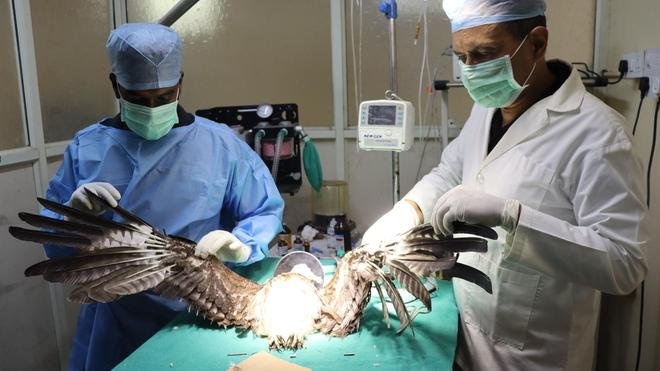
When a distressed animal is found on a Bengaluru road, inside a residential complex, near a construction site or injured in the city’s expanding urban landscape, the first challenge is often not compassion but response. Who will reach the animal? Who can safely handle it? Where can it be treated? And what happens after the immediate crisis is over?
For People For Animals, or PFA, these questions form part of everyday work.
As the organisation marks 30 years, its journey offers an opportunity to look beyond the familiar image of animal welfare as feeding strays or rescuing an occasional injured animal. The work is considerably broader. It can involve emergency rescue, veterinary treatment, wildlife rehabilitation, animal birth-control programmes, public awareness, legal intervention and the difficult process of returning recovered animals to an appropriate habitat.
In Bengaluru, that work has a particularly distinctive dimension because the city sits alongside a rich natural landscape. Snakes, birds, reptiles and mammals can find themselves sharing space with apartment blocks, roads, construction sites and increasingly dense neighbourhoods.
The result is an unusual form of urban coexistence: sometimes peaceful, sometimes inconvenient and occasionally dangerous for the animal.
PFA’s role is to help make that coexistence safer and more humane.
Thirty years of changing the meaning of animal welfare
People For Animals was formed in 1994 and has grown into a nationwide animal-welfare network. Its work extends beyond individual rescues to shelters, veterinary services, ambulances, sterilisation programmes, education, disaster response and advocacy.
That evolution is important because India’s relationship with animal welfare has changed substantially over the past three decades.
In the 1990s, animal protection was often treated as a niche concern. Today, conversations about street dogs, wildlife in cities, animal cruelty, responsible pet ownership, habitat loss and sterilisation are increasingly part of mainstream public discussion.
Yet greater awareness has also produced more complicated questions.
How should cities manage free-roaming animals? What should happen when wildlife enters homes? How can injured animals be treated without turning them into permanent captives? What is the right balance between public safety and animal welfare?
Organisations such as PFA operate in that complicated space.
What does animal rescue actually involve?
The word “rescue” can make the process sound deceptively simple.
In reality, an animal rescue may begin with a phone call containing little useful information: an injured bird is lying near a road; a snake has entered a house; a monkey appears to be hurt; an animal has become trapped somewhere.
Before anyone reaches the location, the team may need to determine what species is involved, whether it is injured, whether people nearby are at risk and what kind of response is appropriate.
That first assessment is crucial.
A frightened animal can behave unpredictably. Wildlife requires particular expertise and handling. Some cases may need immediate veterinary treatment, while others require observation before a decision can be made.
In Bengaluru, PFA’s Wildlife Rescue and Conservation Centre has been involved in cases involving birds, reptiles and mammals. Its documented rescue work has included snakes, owls, macaques, parakeets and other wildlife.
The goal is not simply to remove an animal from a difficult situation.
The real goal is recovery and, wherever appropriate, a return to the wild.
The second half of rescue is rehabilitation
Rescue is often the most visible moment. Rehabilitation is where much of the less glamorous work begins.
An injured animal may require medical treatment, controlled feeding, exercise, monitoring and time. Young wildlife that has lost its parents may require specialised care until it can survive independently.
That process cannot be rushed simply because a rescued animal looks better.
A bird that can stand may not yet be capable of sustained flight. A young wild animal may appear healthy while still lacking the skills required to survive. A reptile recovering from injury may need continued observation before release.
PFA’s Bengaluru reports have described rehabilitation efforts involving hand-raised birds, juvenile macaques and injured reptiles, as well as structured preparation for release.
This highlights an important distinction in wildlife welfare: rescue is an event; rehabilitation is a process.
The ultimate success story is often a disappearance
Animal welfare organisations understandably document rescues because they demonstrate the importance of their work. But in wildlife conservation, the most successful ending can be surprisingly invisible.
The animal disappears.
It is released into an appropriate habitat and resumes its life away from people.
PFA’s Bengaluru work has included the release of recovered birds, snakes and other wildlife after treatment and observation. Such releases demonstrate why rehabilitation should not be confused with keeping wild animals permanently in care.
For a wild animal, freedom is usually the destination.
This is particularly important in cities where people may develop an understandable emotional attachment to animals they have helped rescue. Compassion, however, does not always mean keeping an animal close. Sometimes the most compassionate outcome is allowing it to return to the environment in which it can live naturally.
Bengaluru is also a wildlife city
Bengaluru’s reputation as a technology and start-up hub can obscure its ecological identity.
The city has lakes, wooded areas, rocky landscapes, open spaces and connections to larger habitats around its metropolitan edges. Wildlife has not disappeared simply because urban development has expanded.
Instead, encounters have become more frequent and visible.
Birds can become trapped in buildings. Snakes can enter homes. Monkeys can move through neighbourhoods. Construction can disturb habitats. Roads can create risks for animals crossing between fragmented areas.
This creates a central challenge for modern Bengaluru: urban development does not eliminate wildlife; it changes where wildlife and people encounter each other.
That makes rescue organisations an important bridge between the urban population and the non-human life sharing the city.
From cobras to owls: why every rescue is different
There is no universal animal-rescue procedure.
A snake requires a different response from an injured owl. A juvenile macaque presents different welfare concerns from a wounded parakeet. A wild animal that can eventually return to its habitat requires a different long-term plan from a domestic animal that may need adoption or permanent care.
This diversity is one reason professional animal rescue requires trained teams rather than improvisation.
PFA’s Bengaluru work has included the rescue and rehabilitation of species ranging from cobras and other snakes to birds and mammals. Its documented cases illustrate how varied the demands can be: fractures, injuries, displacement, juvenile care and preparation for release all require different approaches.
It is also why public awareness matters.
A member of the public who encounters wildlife may not know whether the animal is injured, frightened, temporarily hiding or simply behaving normally. Unnecessary intervention can sometimes create additional stress.
The city needs prevention as much as rescue
Rescue is important, but a mature animal-welfare system cannot depend entirely on emergencies.
Prevention is often more effective.
That can mean responsible waste management so animals are not attracted to hazardous food waste. It can mean safer buildings for birds. It can mean awareness about wildlife encounters. It can mean responsible pet ownership and vaccination. It can also involve animal birth-control programmes aimed at managing street-dog populations through humane, scientifically grounded approaches.
PFA’s broader national work includes animal birth control, veterinary treatment, shelters, education and policy advocacy.
The philosophy behind such work is significant: animal welfare is not simply about responding after harm has occurred. It is about reducing the conditions that repeatedly create harm.
Why sterilisation is part of the larger picture
Street-animal management is one of the most complicated areas of urban animal welfare.
Large populations of free-roaming dogs can create concerns involving public health, animal welfare, road accidents, territorial behaviour and human-animal conflict. At the same time, indiscriminate killing is neither a humane nor a sustainable answer.
Animal Birth Control programmes seek to address population management through sterilisation and related interventions, alongside vaccination and responsible community practices.
The subject often generates heated debate because residents experience street-animal issues differently. A person who feeds community dogs may see the animals as neighbourhood companions, while another resident may experience fear or repeated conflict.
The important lesson is that sustainable solutions require more than slogans. They require veterinary capacity, implementation, monitoring, responsible feeding practices, waste management and cooperation between civic authorities, residents and animal-welfare groups.
When animal welfare becomes public policy
PFA’s work also extends beyond direct rescue.
The organisation has a long history of campaigning on animal-protection issues and pursuing legal and policy interventions. Its national impact has included advocacy concerning laboratory animals, transport, animal performances, municipal dog-management practices and other forms of animal use.
This matters because many animal-welfare problems cannot be solved one rescue at a time.
If animals are repeatedly transported illegally, a rescue organisation can intervene in individual cases. But changing the rules, enforcement or institutional practices that enable the problem can potentially protect many more animals.
That is the difference between casework and systemic change.
A rescue saves an individual life. A policy change can alter the conditions affecting thousands.
The 24-hour reality of animal emergencies
Animals do not follow office hours.
Injuries happen at night. Birds become trapped in buildings early in the morning. Road accidents happen whenever people are travelling. Wildlife encounters can occur when neighbourhoods are quiet.
This is why emergency infrastructure is central to animal welfare.
PFA’s national network includes animal hospitals, mobile units and rescue services, while its Bengaluru unit operates a wildlife rescue centre and provides rescue assistance through helplines.
The existence of such infrastructure changes the relationship between citizens and animal welfare organisations. A resident who encounters an animal in distress does not necessarily need to become an expert. They need to know that trained assistance exists and that reporting the situation promptly can make a difference.
What happens after the ambulance leaves?
This is perhaps the part of animal rescue that the public sees least.
There are costs after the dramatic rescue photograph.
Animals need food, medicine, housing, veterinary supervision, cleaning and rehabilitation. Facilities require electricity, equipment and maintenance. Skilled staff need to be available. Wildlife releases require suitable habitats and careful planning.
In other words, animal welfare is infrastructure.
It is tempting to measure success by the number of dramatic rescues posted on social media. A better measure includes what happens afterwards: survival, recovery, appropriate rehabilitation, successful release, prevention of repeat incidents and improvements in public behaviour.
A different way to measure 30 years
Thirty years can be measured in calendars, campaigns and organisational milestones. But for an animal-welfare organisation, another measure may be more meaningful.
It is the number of animals that people never have to rescue because preventive systems worked.
It is the bird that avoids an injury because a building has become safer. The community that understands how to respond to a snake without harming it. The injured animal that reaches treatment quickly. The rescued wild animal that eventually disappears into its natural habitat.
These outcomes are less dramatic than a rescue photograph, but they represent a more mature form of animal welfare.
Why Bengaluru’s future makes this work more important
As Bengaluru grows, interactions between humans and wildlife are unlikely to disappear.
Urban expansion can fragment habitats, while traffic and construction introduce new risks. At the same time, greater environmental awareness means residents are increasingly likely to seek humane responses when animals are in trouble.
This creates an opportunity.
The next phase of animal welfare in Bengaluru can move beyond an emergency-response model towards a stronger culture of coexistence.
Schools can teach children how to respond responsibly to wildlife. Apartment communities can develop humane protocols. Developers can incorporate wildlife-sensitive design where appropriate. Residents can learn when to call trained rescuers rather than attempting risky interventions themselves.
Technology can also help connect citizens with rescue organisations faster, provided it supports trained decision-making rather than encouraging amateur handling of wildlife.
The bigger lesson from PFA’s 30 years
People For Animals’ three decades offer a useful reminder that animal welfare is much larger than kindness in the abstract.
It involves medicine, ecology, law, public policy, education, logistics and community behaviour.
It also requires patience.
A rescued animal does not understand why it has been taken to a hospital. A wild animal cannot be expected to adapt instantly to human care. A community cannot change its habits overnight. And a policy cannot transform an entire system simply because a new rule exists.
Real animal welfare is therefore built through repeated, often uncelebrated work.
Taking the animal kingdom under their wing
Thirty years after its formation, People For Animals has become part of a much larger conversation about how India treats the animals with which it shares its cities, farms, forests and institutions.
In Bengaluru, that conversation is particularly visible.
A snake crossing a road, a bird injured near a building, a monkey hurt in an urban neighbourhood or a rescued animal waiting for release can all become reminders that the city is not exclusively ours.
The real achievement of animal welfare is not simply making people feel sorry for animals. It is helping society develop the knowledge and systems required to live alongside them responsibly.
That means answering emergency calls, running veterinary facilities, rehabilitating wildlife, supporting humane population management, educating communities and, when necessary, challenging practices through law and policy.
At 30, PFA’s story is therefore not only about the animals it has rescued. It is about an evolving idea of what a city owes to the creatures that inhabit it.
And perhaps the most fitting measure of that work is what happens when the rescue is finally over: the animal heals, the doors open, and it goes back to a life beyond the reach of the spotlight.
For breaking news and live news updates, like us on Facebook or follow us on Twitter and Instagram. Read more on Latest Health on thefoxdaily.com.

COMMENTS 0