For decades, Dengue has remained one of India’s biggest seasonal health challenges. Every monsoon brings a surge in cases, stretching hospitals, increasing healthcare costs and putting millions of families at risk. While mosquito control campaigns, awareness drives and early diagnosis have helped limit outbreaks, the absence of an approved vaccine meant prevention relied almost entirely on avoiding mosquito bites.
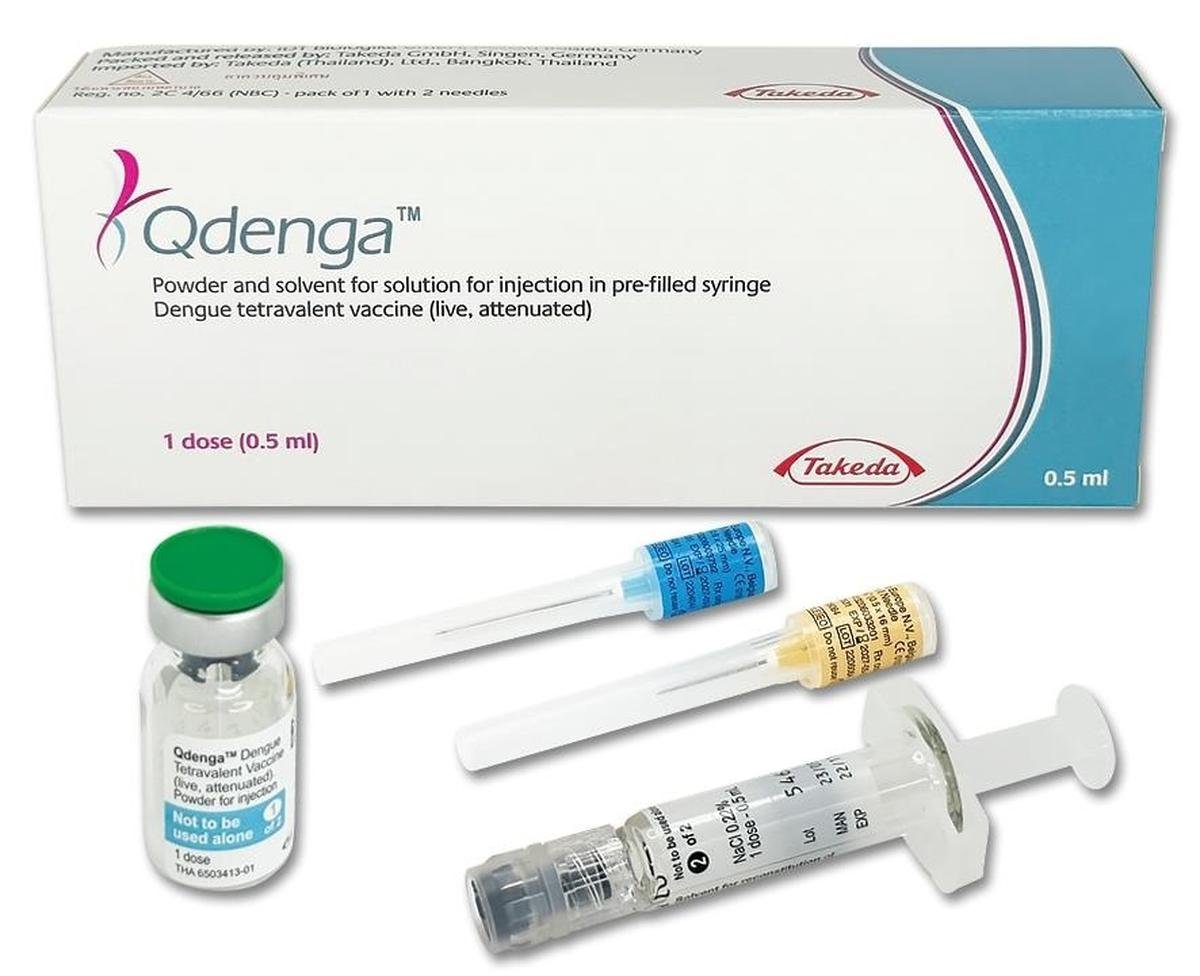
That landscape has now changed. The Drug Controller General of India (DCGI) has granted market authorisation to QDENGA, developed by Takeda Biopharmaceuticals, making it the first dengue vaccine approved for use in India. The approval represents a significant advancement in preventive healthcare and could become a valuable addition to India’s broader dengue control strategy.
The vaccine is approved for individuals aged 4 to 60 years and is administered as two doses given three months apart. It has been designed to provide protection against all four dengue virus serotypes, an important feature because infection with different strains can increase the risk of severe disease.
What Is QDENGA?
QDENGA is a tetravalent dengue vaccine developed to stimulate immunity against all four known dengue virus serotypes (DENV-1, DENV-2, DENV-3 and DENV-4). Unlike Vaccines targeting a single strain, a tetravalent vaccine aims to provide broader protection against the virus regardless of which serotype causes infection.
Dengue remains particularly challenging because recovering from one serotype does not guarantee lifelong protection against the others. In fact, a second infection with a different serotype may increase the likelihood of severe dengue due to complex immune responses.
By targeting all four serotypes, QDENGA seeks to reduce both symptomatic infections and severe disease.
India’s First Approved Dengue Vaccine: Why It Matters
The approval is significant not simply because it introduces a new vaccine, but because it fills a long-standing gap in India’s dengue prevention strategy.
Until now, prevention has largely depended on:
- Eliminating mosquito breeding sites.
- Using mosquito repellents.
- Installing window screens and mosquito nets.
- Community sanitation campaigns.
- Prompt diagnosis and supportive medical care.
While these measures remain essential, vaccination introduces an additional layer of protection that could complement existing public health interventions.
Who Can Receive the Vaccine?
According to the approved indication, QDENGA can be administered to people between the ages of 4 and 60 years.
| Feature | Details |
|---|---|
| Vaccine Name | QDENGA |
| Manufacturer | Takeda Biopharmaceuticals |
| Approved By | Drug Controller General of India (DCGI) |
| Eligible Age Group | 4–60 years |
| Dose Schedule | 2 doses, three months apart |
| Protection | All four dengue virus serotypes |
The manufacturer has not yet announced the official market price for India.
Understanding Dengue: Why It Continues to Be a Major Health Threat
Dengue is caused by the dengue virus and spreads primarily through the bite of infected Aedes aegypti mosquitoes. These mosquitoes thrive in urban and semi-urban environments where stagnant water allows them to breed.
Unlike many mosquito species, Aedes mosquitoes are active during daylight hours, particularly in the early morning and late afternoon.
The disease affects millions every year and places enormous pressure on healthcare systems during seasonal outbreaks.
India’s Growing Dengue Burden
According to the World Health Organization, nearly half of the global population is at risk of dengue, with an estimated 100 to 400 million infections occurring annually.
India carries approximately one-third of the global dengue burden, making the disease one of the country’s most significant public health challenges.
Rapid urbanisation, climate variability, population density and favourable mosquito breeding conditions continue to contribute to recurring outbreaks across many states.
Why Protection Against All Four Serotypes Is Important
Dengue viruses exist in four distinct serotypes.
| Serotype | Why It Matters |
|---|---|
| DENV-1 | Can cause classic dengue fever. |
| DENV-2 | Often associated with severe outbreaks. |
| DENV-3 | Circulates widely in endemic regions. |
| DENV-4 | Can also cause severe disease despite being less common. |
Immunity following infection usually protects against only the infecting serotype. Future infection with another serotype may carry a higher risk of severe dengue because of a phenomenon known as antibody-dependent enhancement (ADE).
This makes broad protection particularly valuable in countries like India where multiple serotypes circulate simultaneously.
How the Vaccine Fits Into India’s Dengue Prevention Strategy
Vaccination should not be viewed as a replacement for mosquito control.
Experts continue to emphasise integrated prevention, including:
- Removing stagnant water around homes.
- Covering water storage containers.
- Using insect repellents.
- Wearing long-sleeved clothing.
- Community vector-control programmes.
- Early diagnosis and medical care.
The introduction of vaccination strengthens—not replaces—these established preventive measures.
Symptoms of Dengue Everyone Should Recognise
Early identification remains essential because timely medical care can prevent complications.
Common symptoms include:
- High fever.
- Severe headache.
- Pain behind the eyes.
- Muscle and joint pain.
- Nausea or vomiting.
- Skin rash.
- Extreme fatigue.
Warning signs requiring urgent medical attention include persistent vomiting, severe abdominal pain, bleeding, lethargy, difficulty breathing and signs of shock.
Why India Needed a Dengue Vaccine
Every year, dengue outbreaks affect schools, workplaces and healthcare systems across the country.
Beyond medical consequences, dengue leads to:
- Lost productivity.
- Increased hospital admissions.
- Higher healthcare expenditure.
- School absenteeism.
- Pressure on emergency medical services during outbreaks.
A preventive vaccine has the potential to reduce these indirect societal costs over time.
Potential Public Health Impact
If widely adopted alongside existing prevention programmes, vaccination could contribute to:
- Lower infection rates.
- Reduced severe dengue cases.
- Fewer hospitalisations.
- Less strain on healthcare infrastructure.
- Improved community resilience during monsoon seasons.
The full impact, however, will depend on vaccine accessibility, public awareness and implementation strategies.
How Does QDENGA Compare With Traditional Dengue Prevention?
| Traditional Prevention | QDENGA’s Role |
|---|---|
| Mosquito control | Adds immune protection. |
| Repellents | Does not replace their use. |
| Early diagnosis | Still essential. |
| Community sanitation | Continues to remain important. |
| Hospital treatment | Aims to reduce severe disease risk. |
Challenges Ahead
Approval represents only the first step.
Several factors will influence the vaccine’s success in India:
- Affordable pricing.
- Public confidence in vaccination.
- Availability across urban and rural areas.
- Awareness among healthcare providers.
- Integration into preventive health programmes.
Ensuring equitable access will be particularly important in regions with a high dengue burden.
Expert Insight: Vaccination Is Only One Part of the Solution
While QDENGA introduces a powerful new preventive tool, experts continue to stress that dengue control requires a comprehensive strategy.
Climate change, rapid urban expansion and changing mosquito habitats mean that vector control, environmental management, disease surveillance and public education will remain essential alongside immunisation.
The vaccine should therefore be viewed as one component of a larger, multi-layered public health approach rather than a standalone solution.
What This Means for Families
For parents, caregivers and adults living in dengue-prone regions, the approval offers another option for reducing the risk of infection.
Before vaccination, individuals should consult qualified healthcare professionals to determine whether the vaccine is appropriate based on age, medical history and current health status.
As more information becomes available regarding pricing and distribution, healthcare providers will play an important role in guiding vaccination decisions.
The Future of Dengue Prevention in India
India’s approval of QDENGA reflects the growing recognition that combating dengue requires innovation alongside traditional public health measures.
With climate conditions continuing to favour mosquito-borne diseases, preventive healthcare will become increasingly important over the coming decade.
The arrival of an approved dengue vaccine could also encourage further research into improved vaccines, vector-control technologies and integrated disease surveillance systems, strengthening India’s preparedness against future outbreaks.
Conclusion
The approval of QDENGA marks a landmark moment in India’s fight against dengue. As the country’s first approved dengue vaccine, it introduces a scientifically developed preventive option capable of protecting against all four dengue virus serotypes through a two-dose schedule for individuals aged 4 to 60 years.
Although vaccination alone will not eliminate dengue, it represents an important addition to existing prevention efforts that include mosquito control, public awareness and early medical care. Combined with continued investment in public health infrastructure and community participation, QDENGA has the potential to significantly strengthen India’s long-term strategy against one of its most persistent infectious diseases. As implementation begins, awareness, accessibility and responsible use will determine how transformative this milestone ultimately becomes for millions of people living in dengue-endemic regions.
For breaking news and live news updates, like us on Facebook or follow us on Twitter and Instagram. Read more on Latest Health on thefoxdaily.com.



COMMENTS 0