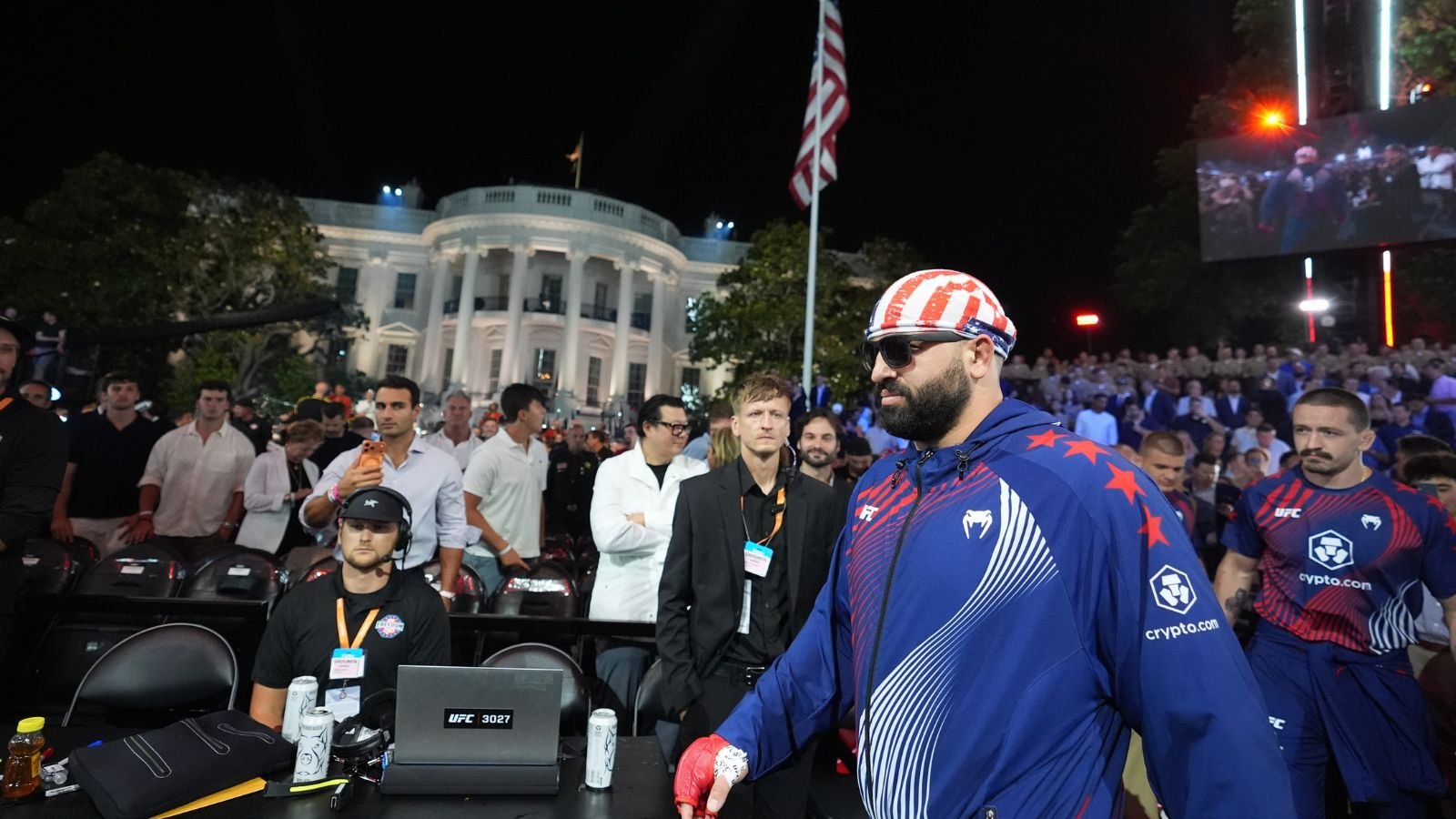
A single post-fight comment at a high-profile sporting event has once again thrust an old internet conspiracy theory into the national spotlight. During a UFC event hosted at the White House as part of celebrations marking America’s 250th anniversary, fighter Josh Hokit sparked immediate Controversy after repeating a long-debunked claim about former First Lady Michelle Obama.
The incident quickly spread across Social Media platforms, news outlets, and political circles, generating strong reactions from supporters and critics alike. While some dismissed the remark as a joke or an attempt to provoke attention, others argued it reflected a broader problem involving Misinformation, political polarization, and attacks directed toward prominent public figures.
The controversy has also renewed discussion about the role of athletes, entertainers, political events, and digital media in amplifying narratives that have repeatedly been disproven yet continue to circulate online.
What Happened at the White House UFC Event?
The controversy emerged during UFC Freedom 250, a mixed martial arts event organized as part of celebrations surrounding the 250th anniversary of American independence.
After completing his fight, Josh Hokit addressed the crowd and repeated a conspiracy theory that has circulated in fringe online communities for years. The statement immediately attracted attention because it involved Michelle Obama, one of the most recognizable former First Ladies in American history.
Video clips from the event quickly spread across social media, where reactions became sharply divided.
Supporters of Hokit framed the comment as an example of free speech or political humor. Critics, however, argued that repeating false and derogatory claims about a public figure contributes to a culture of misinformation and personal attacks.
The controversy gained additional momentum because the remarks occurred during a nationally significant event held at the White House, making the setting itself part of the broader discussion.
The Origin of the Michelle Obama Conspiracy Theory
The claim referenced by Hokit is not new.
For years, various online conspiracy communities have promoted false allegations questioning Michelle Obama’s gender identity. These claims have repeatedly been disproven and lack any factual basis.
Despite being repeatedly debunked by journalists, researchers, and independent fact-checking organizations, the theory has remained a recurring feature of certain corners of the internet.
Experts who study misinformation note that conspiracy theories often survive because they are designed to appeal to emotions rather than evidence. Once a narrative becomes embedded within an ideological community, factual corrections frequently fail to eliminate belief in the claim.
This pattern is not unique to Michelle Obama. Similar conspiracies have targeted political leaders, celebrities, Public health officials, and members of royal families across the world.
The digital age has made it easier for such narratives to spread rapidly, even when there is no credible evidence supporting them.
Why Critics Say the Claim Is Harmful
Critics argue that the controversy extends far beyond a single joke or political statement.
Many Civil Rights advocates contend that attacks on Michelle Obama often combine elements of racism, sexism, and attempts to dehumanize Black women.
Throughout American history, Black women have frequently been subjected to stereotypes questioning their femininity, appearance, and humanity. Critics say modern conspiracy theories sometimes recycle these harmful themes in new forms.
According to social justice advocates, comments that portray women as less feminine or deny their identity can reinforce damaging prejudices and contribute to hostile public discourse.
The concern is particularly significant when the target is someone as visible as Michelle Obama, whose public profile ensures that such remarks receive widespread attention.
For many observers, the issue is not merely whether a statement is offensive but whether it helps normalize misinformation and personal attacks as acceptable forms of public debate.
Political Reactions to the Incident
The remark generated swift reactions from political figures, commentators, and public personalities.
Several critics condemned the statement and described it as inappropriate, especially given the setting in which it occurred. Others argued that the incident reflected a broader deterioration in political discourse where insults and conspiracy theories often receive more attention than substantive policy discussions.
Supporters of Hokit and some conservative commentators responded differently, suggesting that critics were overreacting and interpreting a provocative comment too seriously.
This divide illustrates a larger trend in modern politics, where public controversies frequently become ideological battlegrounds. Reactions often depend less on the specific incident and more on broader political identities and affiliations.
The result is a media Environment where even seemingly isolated comments can quickly evolve into nationwide political debates.
UFC’s Response and the Challenge of Free Speech
The controversy also placed the UFC in an uncomfortable position.
Sports organizations increasingly face questions about what responsibility they bear when athletes use public platforms to make political statements or controversial remarks.
In many cases, leagues and organizations must balance competing principles:
- Freedom of expression.
- Protection of individual dignity.
- Brand reputation.
- Audience expectations.
- Sponsor concerns.
- Public accountability.
Sports have long served as platforms for political and social expression. Athletes regularly use their visibility to discuss issues ranging from racial justice and national identity to public health and foreign policy.
However, organizations often draw distinctions between political viewpoints and statements viewed as false, defamatory, or discriminatory.
The debate surrounding Hokit’s remarks reflects the broader challenge facing modern institutions: determining where free expression ends and harmful conduct begins.
The Power of Viral Moments in the Digital Era
One reason the incident attracted so much attention is the speed at which information now spreads online.
A comment lasting only a few seconds can become global news within minutes.
Platforms such as X, Instagram, TikTok, Facebook, and YouTube allow video clips to reach millions of users almost instantly. Algorithms often reward content that generates strong emotional reactions, whether positive or negative.
This creates an environment where controversial statements frequently achieve greater visibility than measured or nuanced discussions.
Communication experts argue that viral moments often follow a predictable cycle:
- A provocative statement is made.
- The clip spreads rapidly online.
- Critics condemn it.
- Supporters defend it.
- Media outlets amplify the controversy.
- The debate becomes part of broader cultural conflicts.
The Hokit controversy follows many of these familiar patterns.
Michelle Obama’s Public Legacy
The renewed attention surrounding Michelle Obama has also prompted discussions about her broader public legacy.
During her years as First Lady, Michelle Obama became known for initiatives focused on education, military families, childhood health, nutrition, and civic engagement.
Following her time in the White House, she remained a highly influential public figure through bestselling books, public speaking engagements, charitable efforts, and media projects.
Her memoir became one of the most successful political autobiographies in modern history, while her public appearances continue to attract significant attention around the world.
Supporters argue that her achievements and contributions explain why she remains a frequent target of political attacks and conspiracy theories years after leaving the White House.
Regardless of political affiliation, few former First Ladies have maintained a comparable level of cultural influence long after their time in office.
The Broader Problem of Online Conspiracy Theories
The controversy highlights a larger issue extending well beyond one individual or one event.
Conspiracy theories have become increasingly prominent in modern public life.
Researchers studying misinformation have identified several factors contributing to their growth:
- Rapid information sharing online.
- Algorithm-driven content recommendations.
- Political polarization.
- Declining trust in institutions.
- Echo chambers within online communities.
- The emotional appeal of sensational narratives.
Many conspiracy theories persist because they provide simple explanations for complex realities. They often transform political disagreements into dramatic stories involving secret plots, hidden agendas, and powerful enemies.
While such narratives can be appealing to certain audiences, experts warn that they can undermine trust, distort public understanding, and contribute to social division.
Race, Gender, and Public Perception
Scholars who study media representation note that public figures are not all targeted in the same ways.
Women, racial minorities, and other historically marginalized groups often face unique forms of criticism that focus on appearance, identity, or personal characteristics rather than policy positions or professional accomplishments.
Michelle Obama has frequently been cited in discussions about how race and gender intersect in public discourse.
Critics of the conspiracy theory argue that its persistence reflects deeper societal biases that continue to shape perceptions of powerful women, particularly Black women.
Understanding these dynamics is important because public narratives influence broader cultural attitudes and social behavior.
What begins as an online rumor can eventually affect real-world conversations and perceptions.
The Future of Political and Cultural Discourse
The incident raises important questions about the future of public dialogue in an increasingly polarized environment.
As social media platforms continue to reward attention-grabbing content, public figures may face growing incentives to make provocative statements.
At the same time, audiences are becoming more aware of the importance of media literacy and critical thinking when evaluating information.
Educational initiatives aimed at helping people identify misinformation, verify sources, and understand digital manipulation have gained momentum in recent years.
Many experts argue that strengthening these skills is essential for maintaining healthy democratic debate in the digital age.
What the Controversy Ultimately Reveals
The debate surrounding Josh Hokit’s comments is about more than a single remark made after a sporting event.
It touches on some of the most significant issues shaping contemporary society: misinformation, political polarization, race, gender, free speech, media influence, and the responsibilities that come with public platforms.
Supporters and critics may disagree about the intent behind the statement, but the controversy demonstrates how quickly provocative comments can dominate national conversations.
It also highlights the continuing challenge of balancing freedom of expression with the need to promote factual accuracy, respect, and constructive public discourse.
As the discussion continues, the incident serves as another reminder that in the age of viral media, a few seconds on a microphone can spark debates that extend far beyond the original event itself.
For breaking news and live news updates, like us on Facebook or follow us on Twitter and Instagram. Read more on Latest World on thefoxdaily.com.




COMMENTS 0