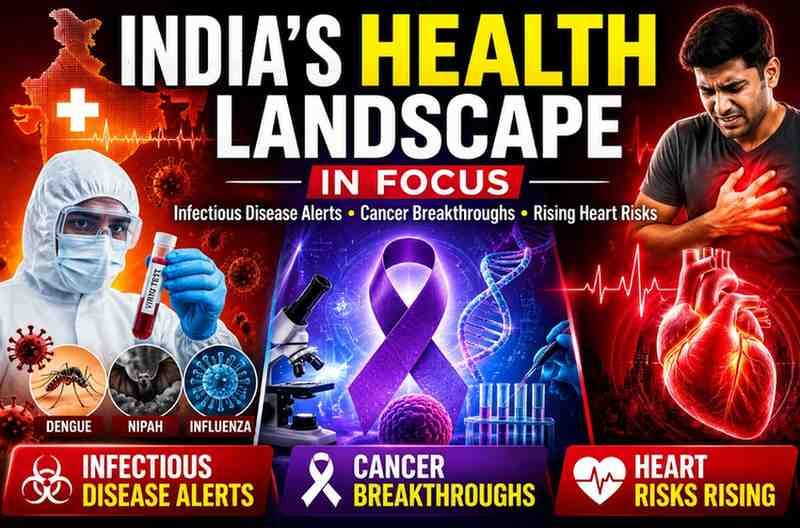
India’s health priorities are increasingly being defined by three parallel realities. The country continues to face periodic outbreaks and infectious disease alerts, scientists are making remarkable progress in cancer diagnosis and treatment, and doctors are warning that cardiovascular disease is striking people earlier than ever before.
Together, these developments paint a picture of a Healthcare system that must simultaneously fight old threats and prepare for new ones. Infectious diseases remain unpredictable, cancer care is becoming more personalized, and lifestyle-related illnesses are emerging as major public health concerns.
The intersection of these trends highlights a growing shift toward prevention, early diagnosis, and integrated healthcare strategies.
Why Infectious Disease Surveillance Remains Critical
Despite advances in medicine, infectious diseases continue to pose challenges in India. Seasonal outbreaks, changing climate patterns, increased travel, urbanization, and antimicrobial resistance have all complicated disease control efforts.
Public health experts emphasize that rapid surveillance and early warning systems are essential to preventing local outbreaks from becoming larger crises.
- Early detection helps limit transmission.
- Vaccination programs remain vital.
- Public awareness improves response.
- Laboratory capacity strengthens preparedness.
- Coordination between states supports containment.
Recent years have shown that infectious diseases require constant vigilance, even as healthcare priorities evolve.
The Rise of Precision Oncology
Cancer research is entering a transformative era. Advances in genetics, immunotherapy, and molecular diagnostics are helping doctors tailor treatments to individual patients.
Instead of relying solely on conventional therapies, oncology increasingly focuses on precision medicine—matching treatments to the specific characteristics of tumors.
This approach has the potential to improve outcomes while reducing unnecessary side effects.
Researchers are also exploring artificial intelligence, liquid biopsies, and targeted therapies that could revolutionize early detection and treatment.
Why Early Diagnosis Matters in Cancer Care
Many cancers become more treatable when detected early. Screening and awareness programs play a crucial role in improving survival rates.
Experts emphasize:
- Regular health checkups.
- Timely medical evaluation of symptoms.
- Greater awareness of warning signs.
- Access to diagnostic facilities.
- Personalized treatment strategies.
The future of oncology increasingly depends not only on better drugs but also on identifying disease before it progresses.
Cardiovascular Risks Are Appearing Earlier
Heart disease has long been associated with aging, but physicians are increasingly seeing risk factors emerge among younger populations.
Sedentary lifestyles, stress, poor sleep, obesity, smoking, diabetes, and hypertension contribute to rising cardiovascular risks.
Many individuals remain unaware of underlying conditions until symptoms become severe.
This has led healthcare professionals to advocate earlier screening and preventive measures.
Comparison: Traditional Healthcare vs Preventive Healthcare
| Traditional Approach | Preventive Approach |
|---|---|
| Treatment after illness | Early detection and prevention |
| Symptom-based care | Risk assessment and screening |
| Focus on acute disease | Long-term wellness |
| Reactive healthcare | Proactive healthcare |
| Hospital-centered | Community-centered |
The Common Thread: Prevention
Although infectious diseases, cancer, and heart disease may appear unrelated, they share one important lesson: early action saves lives.
Prevention is increasingly becoming the cornerstone of modern healthcare.
Public health initiatives now focus on:
- Vaccination and disease surveillance.
- Cancer screening programs.
- Lifestyle modifications.
- Risk-based cardiovascular assessments.
- Digital health monitoring.
- Patient education.
This shift represents a broader transformation from treating diseases to preventing them.
The Role of Technology in Modern Medicine
Digital technologies are reshaping healthcare delivery. Artificial intelligence, wearable devices, telemedicine, and data analytics are helping physicians identify risks earlier and personalize treatments.
Remote monitoring tools allow patients to track blood pressure, glucose levels, and physical activity, while AI-assisted imaging supports faster diagnoses.
Such innovations could significantly improve access and efficiency across India’s healthcare system.
An Insight Competitors Often Miss: India’s Health Challenges Are Becoming Interconnected
Healthcare discussions often separate infectious diseases, cancer, and cardiovascular illnesses into distinct categories. However, the future of medicine lies in understanding their interconnected nature.
Patients frequently face multiple health risks simultaneously. Strengthening primary healthcare, improving diagnostics, and promoting healthier lifestyles benefit all three areas.
Rather than focusing on individual diseases, healthcare systems are increasingly moving toward comprehensive patient care.
This integrated approach may become one of the most important developments in medicine over the next decade.
What Individuals Can Do Today
While scientific breakthroughs and public health systems are essential, individuals also play a key role in protecting their health.
- Maintain regular medical checkups.
- Stay physically active.
- Eat a balanced diet.
- Avoid tobacco use.
- Monitor blood pressure and blood sugar.
- Seek medical advice for persistent symptoms.
- Stay informed about vaccinations and disease alerts.
Small preventive steps often provide significant long-term benefits.
The Future of Healthcare in India
India’s healthcare landscape is evolving rapidly. Advances in research, expanding awareness, and improvements in diagnostics are creating opportunities to improve outcomes across multiple diseases.
The challenge lies in ensuring equitable access, strengthening public health infrastructure, and embracing prevention as a national priority.
If these goals are achieved, the coming decade could witness major improvements in life expectancy and quality of life.
Conclusion
A mix of infectious disease alerts, breakthrough developments in oncology, and growing awareness around early cardiovascular risks highlights the complexity of modern healthcare in India. These challenges demand a shift from reactive medicine to proactive prevention.
Whether combating outbreaks, advancing cancer treatment, or identifying heart disease before symptoms emerge, one message stands out clearly: early action and informed healthcare decisions remain among the most powerful tools available to protect lives.
For breaking news and live news updates, like us on Facebook or follow us on Twitter and Instagram. Read more on Latest Health on thefoxdaily.com.





COMMENTS 0