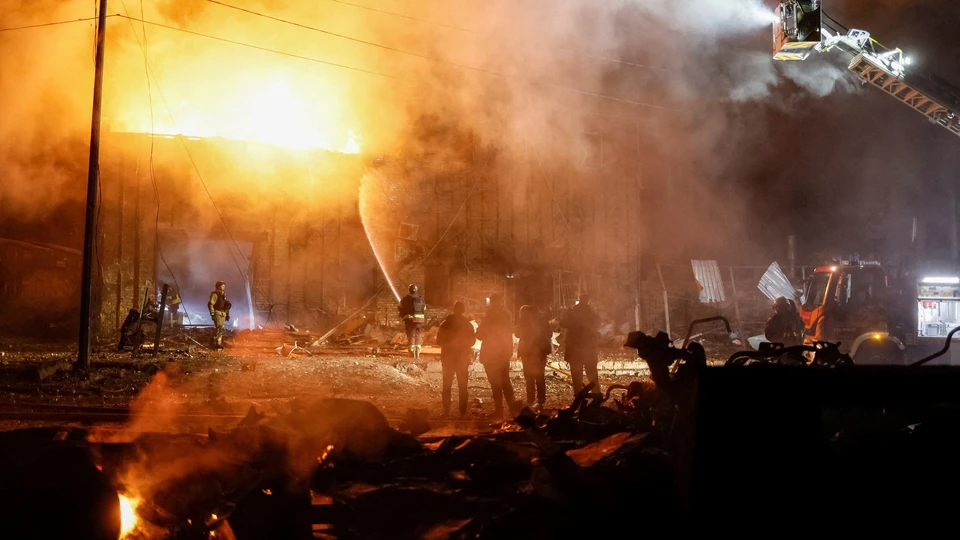
Russia launched 36 missiles and 172 drones in an overnight attack on Ukraine, President Volodymyr Zelensky said on Saturday, November 7. According to Zelensky, all 36 missiles were directed at Kyiv and the surrounding regions, in an assault that damaged energy facilities and civilian infrastructure.
Mayor Vitali Klitschko said multiple waves of ballistic missiles struck the capital, with several hitting the Northern Bridge across the Dnipro River. The attack also damaged residential properties and non-residential buildings, while emergency services were deployed to affected locations.
According to Ukrainian authorities, one person was killed and eight others were injured, including a child. The strikes also affected energy facilities in several districts of the Kyiv region, raising concerns about electricity, heating and water supplies as winter approaches.
Kyiv Faces Damage to Energy Infrastructure and Major Bridge
The overnight barrage caused damage across Kyiv and nearby areas. Mayor Klitschko said explosions shook the city as Russian forces launched repeated waves of ballistic missiles. Several missiles reportedly struck the Northern Bridge, an important transport connection across the Dnipro River.
The bridge damage could create additional difficulties for commuters and emergency services in a city with a population of more than three million. Kyiv has already faced disruption to its transport network following earlier attacks on major bridges. Further damage could complicate movement between different parts of the capital.
Energy infrastructure was also among the reported targets. Kyiv regional governor Tymur Tkachenko said facilities in at least three districts of the region had been hit. The attacks damaged homes and other buildings, while emergency workers continued responding to the consequences of the strikes.
Klitschko described the situation for electricity, heating and water supplies as extremely difficult. Temperatures in Kyiv were hovering near freezing on Saturday morning, increasing the importance of maintaining essential services.
Damage to energy facilities can have consequences beyond immediate power interruptions. Electricity is required to operate heating systems, water networks, hospitals, public transport and other essential services. If repairs are delayed or further attacks occur, residents could face longer periods of disruption.
Ukraine’s energy infrastructure has repeatedly come under attack during the full-scale war. Power plants, substations and transmission facilities are particularly important because damage to one part of the network can affect electricity distribution across a wider area.
Russia Says It Targeted Military and Industrial Infrastructure
Russia confirmed that it had carried out a large overnight strike in and around Kyiv. Its Defence Ministry described the operation as an attack on targets in Ukraine’s military-industrial sector, along with energy and transport infrastructure.
According to the Russian Defence Ministry, the strikes hit the Northern Bridge, which Moscow said was being used to transport weapons, military equipment and vehicles for Ukrainian armed forces. Russia also claimed that its forces struck the Meridian plant, which it described as a facility involved in producing Flamingo cruise missiles.
The ministry further reported damage to several energy and industrial facilities in the Kyiv region, including a power plant, an electricity substation and a munitions manufacturing facility. It also said an electricity substation in the central Zhytomyr region had been struck.
Russia’s Defence Ministry claimed that a cargo vessel in the Black Sea transporting military equipment and dual-use goods to Ukraine was also targeted. These descriptions reflect Moscow’s account of the operation and have not all been independently verified.
Ukraine, meanwhile, has reported damage to energy infrastructure, residential buildings and transport facilities. The civilian casualties reported by Ukrainian authorities highlight the impact of the attack on people living in the affected areas.
The competing descriptions of the targets underline a recurring feature of the war: Russia presents many of its long-range attacks as operations against military or military-related infrastructure, while Ukrainian authorities frequently report damage to civilian areas and essential services.
Russia Intensifies Air Attacks as Ground Offensive Stalls
The latest barrage comes amid an intensified Russian air campaign against Ukrainian cities and infrastructure. Over recent weeks, Russian forces have increased the use of missiles and drones against energy facilities, transport links and other important sites.
Russia’s ground offensive has made more limited progress in comparison with the scale of its aerial attacks, according to reporting on the current battlefield situation. Long-range weapons allow Moscow to strike targets far behind the front lines, putting pressure on Ukrainian infrastructure and forcing Kyiv to devote resources to air defence.
Missiles and drones present different challenges for Ukraine’s defence systems. Ballistic missiles travel at high speeds and can be difficult to intercept, while drones can be launched in large numbers and used to overwhelm or complicate defensive operations.
Ukraine has repeatedly appealed to its international partners for additional air-defence equipment and interceptor missiles. President Zelensky has stressed the importance of timely deliveries, particularly for systems capable of defending major cities against ballistic missile attacks.
The attacks on Kyiv’s bridges also point to the importance of transport infrastructure in the wider conflict. Bridges across the Dnipro connect different parts of the capital and can be important for civilian movement, logistics and military transport. Damage to these structures can disrupt daily life even when they remain partially operational.
For Ukraine, protecting energy and transport networks has become an ongoing challenge. Repair teams must restore damaged facilities while the possibility of further strikes remains. This creates additional pressure on public authorities, emergency services and the country’s electricity system.
Winter Raises Concerns Over Power, Heating and Water Supplies
The timing of the latest attack has increased concern about the resilience of Kyiv’s essential services. As temperatures fall, disruptions to electricity and heating can become more serious, particularly for households that depend on centralised heating systems.
Electricity shortages can also affect water pumping stations, hospitals, communication networks and public services. Even when backup systems are available, prolonged interruptions can make it harder for facilities to operate normally.
Ukraine has spent several years repairing energy infrastructure damaged by Russian attacks. The repeated targeting of power-generation facilities and electricity distribution networks has made the country’s energy system vulnerable to further disruption.
Large-scale attacks can also complicate the work of repair crews. Engineers may need to assess damage, secure affected sites and obtain replacement equipment before restoring normal operations. If several facilities are hit in a single operation, the recovery process can become more difficult.
The latest damage in Kyiv and the Zhytomyr region therefore has implications beyond the immediate aftermath of the attack. The ability to restore electricity and heating will be an important test for local authorities as Ukraine moves deeper into the winter period.
Ukraine Warned of Possible Attacks on Bridges and Energy Facilities
The overnight strikes followed a warning from Zelensky on Friday that Ukrainian intelligence had detected preparations for further Russian attacks on important infrastructure.
In his nightly address, the Ukrainian president said Russia was preparing to target energy facilities, bridges across the Dnipro and civilian infrastructure. He said the country’s air force and armed forces were preparing to defend against the expected attacks.
Zelensky also urged Ukraine’s international partners to accelerate deliveries of missiles for American-made Patriot air-defence systems. He described every day in the delivery schedule as critically important and asked allies not to delay supplies.
The warning was significant because it identified the same categories of infrastructure that were damaged in the latest overnight operation. It also highlighted Ukraine’s continuing dependence on foreign military assistance to strengthen its air-defence network.
The United States has approved a potential sale of 500 Patriot PAC-3 missiles to Ukraine, estimated at approximately $2.1 billion. However, the missiles are not expected to be delivered until the early 2030s, according to reporting on the proposed sale. The timing means the approval does not provide an immediate solution to Ukraine’s current interceptor requirements.
Russia-Ukraine-US Peace Talks Scheduled in Abu Dhabi
The latest Russian attack comes just days before a new round of trilateral negotiations involving Russia, Ukraine and the United States. The meetings are scheduled to take place in Abu Dhabi on November 10 and 11 as part of Washington’s effort to find a diplomatic path towards ending the war.
US special envoy Steve Witkoff announced the planned discussions on November 2. The talks are expected to cover post-war security arrangements, de-escalation, humanitarian measures and steps towards ending the conflict.
Witkoff and Jared Kushner are expected to represent the United States, according to a senior American official cited by Reuters. Russian President Vladimir Putin agreed to another round of discussions following a meeting with Witkoff in St Petersburg.
The Kremlin subsequently confirmed that a Russian delegation would travel to Abu Dhabi on November 10 and 11. Russian presidential aide Vladimir Medinsky is expected to lead Moscow’s negotiating team.
The meetings are part of a US-backed diplomatic initiative that has so far produced limited results. The previous round of US-mediated negotiations took place in Geneva in February, before the conflict involving the United States, Israel and Iran shifted Washington’s attention towards the Middle East.
The new round will be the fourth set of talks brokered by the Trump administration, according to the information provided about the diplomatic process. The fact that negotiations are being scheduled does not necessarily indicate that the two sides are close to an agreement.
Major Differences Remain Between Moscow and Kyiv
Russia and Ukraine continue to hold substantially different positions on the conditions required to end the war. Issues involving territory, security guarantees and Ukraine’s future relationship with NATO remain central obstacles.
Russia has previously demanded changes to the European security arrangements established after the Cold War, including restrictions on NATO’s presence and influence in Eastern Europe. European governments have maintained that Russia must first end its war against Ukraine before its wider security concerns can be considered in negotiations.
A Bloomberg report, citing people familiar with European discussions, said European officials remain opposed to Moscow’s pre-war demands that would effectively reduce NATO’s presence in Eastern Europe. Their position reflects concerns that accepting such conditions could affect the security arrangements of countries across the continent.
European governments also want Ukraine’s security and territorial concerns to remain central to any settlement. They have been involved in discussions with American officials about possible security guarantees and support for Ukraine’s reconstruction.
For Kyiv, any agreement would need to address the risk of another Russian invasion after a ceasefire. Moscow, meanwhile, has continued to press its demands over territory and the broader security framework in Europe.
These differences mean that the Abu Dhabi meetings are likely to involve difficult discussions. The immediate objective may be to identify areas where the parties can reduce tensions, even if a comprehensive peace agreement remains out of reach.
What the Abu Dhabi Talks Could Mean After the Latest Attack
The timing of the November 10-11 negotiations is particularly important because the latest strikes demonstrate that military operations are continuing even as diplomatic preparations move forward.
For Ukraine, the attacks reinforce the need for stronger air defences, protection for energy facilities and continued international assistance. Kyiv is also likely to raise the damage to transport infrastructure and the civilian consequences of attacks during discussions with its partners.
For the United States, the challenge will be to keep negotiations moving while addressing the security concerns of both Ukraine and European governments. Washington has been attempting to bring the two sides back to the negotiating table, but its ability to secure compromises remains uncertain.
Russia’s willingness to participate in the talks does not mean that it has agreed to abandon its military objectives. Similarly, Ukraine’s participation does not mean that Kyiv is prepared to accept a settlement that leaves its security concerns unresolved.
The latest attack could also affect the atmosphere surrounding the negotiations. Large-scale strikes on cities and essential infrastructure can deepen mistrust and make it harder for officials to build confidence during diplomatic discussions.
What Happens Next?
Ukrainian authorities will focus on assessing the damage, restoring essential services and supporting residents affected by the overnight strikes. Emergency workers and repair crews face the immediate task of dealing with damaged buildings, energy facilities and transport infrastructure.
Attention will then turn to the Abu Dhabi meetings scheduled for November 10 and 11. The discussions will test whether Russia, Ukraine and the United States can make progress on de-escalation, security arrangements and humanitarian issues despite continued fighting.
The latest Russian barrage has highlighted the pressure on Ukraine’s energy network and the vulnerability of important infrastructure in Kyiv. With winter approaching and diplomatic efforts still facing major obstacles, the coming days will be important for both the military situation and the prospects for negotiations.
For breaking news and live news updates, like us on Facebook or follow us on Twitter and Instagram. Read more on Latest World on thefoxdaily.com.






COMMENTS 0