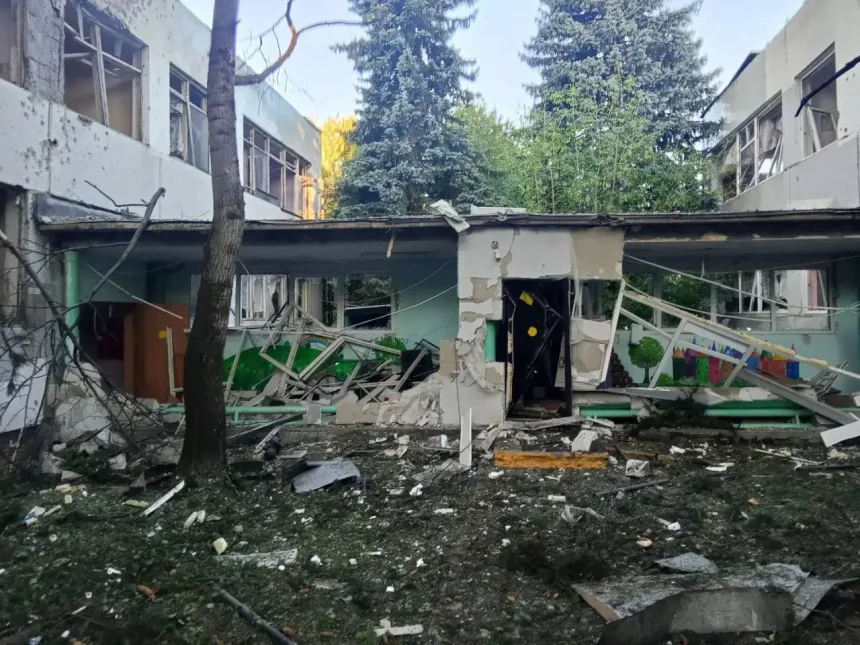
Ukraine has carried out one of its most significant long-range drone operations since the start of the war, striking logistics facilities deep inside Russian territory and causing the deadliest reported casualties from Ukrainian attacks within Russia in more than two years. According to Russian regional authorities, at least eight people were killed and dozens more injured after drones hit warehouse complexes in the Tambov and Moscow regions.
Ukrainian officials confirmed responsibility for the operation, stating that the targeted facilities were being used to supply components for military drone production rather than functioning solely as commercial warehouses. The attacks underline the growing reach of Ukraine’s long-range strike capabilities and signal an evolving strategy aimed at disrupting Russia’s military supply chain far from the battlefield.
What Happened?
The coordinated drone attacks targeted two major logistics centers located hundreds of kilometers from the front lines.
According to Russian officials:
- Seven people were killed at a distribution center in Kotovsk, Tambov region.
- One person was killed at another logistics facility in Elektrostal, Moscow region.
- Dozens of workers suffered injuries, with several reported to be in critical condition.
Emergency services responded to large fires that broke out after the strikes, while videos circulating online showed thick smoke rising from the warehouse complexes.
Why Were These Warehouses Targeted?
Ukraine stated that the facilities were legitimate military-related targets despite their commercial ownership.
According to Ukrainian officials, the warehouses were allegedly being used to store and distribute sanctioned electronic components, navigation equipment, and other materials supporting Russia’s drone manufacturing industry.
President Volodymyr Zelensky said the operation targeted logistics infrastructure supplying Russia’s military production rather than civilian commerce.
Russian authorities have not publicly confirmed those allegations and continue to describe the sites as commercial logistics centers.
Wildberries Warehouses at the Center of the Attack
Both facilities reportedly belonged to Wildberries, one of Russia’s largest e-commerce and logistics companies.
Wildberries operates an extensive nationwide warehouse network that supports online retail distribution throughout Russia.
The company confirmed that a fire occurred at its Kotovsk warehouse and stated that emergency responders had brought the blaze under control.
The incident highlights how large logistics centers can become strategically significant during modern conflicts when they are alleged to support military supply chains.
Casualties and Damage
| Location | Reported Fatalities | Reported Injuries |
|---|---|---|
| Kotovsk, Tambov Region | 7 | 25 (including several critically injured) |
| Elektrostal, Moscow Region | 1 | 37 (including multiple serious injuries) |
Russian officials also reported damage to nearby civilian infrastructure, including a kindergarten in Elektrostal.
As with many active conflict situations, assessments of damage continue to evolve as investigations proceed.
Ukraine’s Expanding Long-Range Drone Strategy
The strikes demonstrate Ukraine’s increasing ability to conduct operations far beyond the active front lines.
Rather than concentrating exclusively on battlefield targets, Ukrainian forces have increasingly focused on strategic infrastructure that supports Russia’s military operations.
Recent long-range operations have included:
- Oil storage facilities.
- Fuel depots.
- Military production plants.
- Air defense installations.
- Logistics hubs.
- Maritime infrastructure.
This strategy seeks to disrupt military logistics, reduce production capacity, and increase operational pressure without requiring direct territorial advances.
Why Logistics Hubs Have Become High-Value Targets
Modern warfare depends heavily on logistics.
Military equipment cannot reach operational units without transportation networks, storage facilities, maintenance centers, and distribution systems.
If logistics hubs are disrupted, military forces may experience shortages of:
- Electronic components.
- Navigation equipment.
- Replacement parts.
- Fuel supplies.
- Communications equipment.
- Drone components.
For this reason, supply chain infrastructure has become an increasingly important objective in contemporary conflicts.
Russia’s Response
Russian regional officials condemned the attacks and reported that air defense systems intercepted numerous incoming drones before they reached their intended targets.
Authorities also claimed that some of the drones carried enhanced warheads designed to maximize casualties, although these assertions have not been independently verified.
Emergency crews continued firefighting and recovery operations while investigators assessed the full extent of the damage.
The Expanding Battlefield
The conflict has increasingly moved beyond traditional front lines.
Both Russia and Ukraine have developed long-range strike capabilities capable of reaching strategic infrastructure hundreds of kilometers away.
This evolution reflects broader changes in modern warfare, where drones now allow militaries to target logistics, industrial facilities, energy infrastructure, and transportation networks without deploying conventional ground forces.
The growing use of unmanned systems has fundamentally altered how both sides conduct military operations.
Impact on Russia’s Supply Chain
If facilities supporting military procurement or production are successfully disrupted, the effects may extend well beyond the immediate physical damage.
Potential consequences include:
- Slower production schedules.
- Supply shortages.
- Higher transportation costs.
- Longer delivery times for military equipment.
- Increased pressure on alternative logistics networks.
Whether these particular strikes produce lasting operational effects will depend on the importance of the damaged facilities within Russia’s broader supply chain.
Growing Importance of Drone Warfare
Drones have become one of the defining technologies of the Russia-Ukraine conflict.
Initially used primarily for reconnaissance, unmanned aerial systems now conduct surveillance, precision strikes, electronic warfare, maritime operations, and long-range attacks against strategic infrastructure.
The relatively low cost of many drone systems compared with traditional missiles has enabled both sides to conduct sustained long-distance operations on a scale rarely seen in previous conflicts.
Strategic Implications
The latest attacks illustrate how the conflict continues to evolve beyond conventional battlefield engagements.
Military planners increasingly seek to degrade an opponent’s industrial capacity rather than focusing solely on troop concentrations.
Targeting logistics infrastructure can influence operational tempo, production capacity, and resource allocation without directly engaging frontline forces.
At the same time, attacks occurring deep inside either country raise concerns about civilian safety, infrastructure protection, and further escalation of the conflict.
Expert Insight: Logistics May Become the Next Major Front
Military analysts increasingly argue that logistics networks have become as strategically important as traditional combat formations. Modern armies rely on continuous supplies of technology, electronics, communications equipment, and precision-guided systems. Disrupting those supply chains can weaken military effectiveness even without major battlefield victories.
The latest warehouse strikes suggest Ukraine is placing greater emphasis on targeting the systems that sustain Russia’s military production rather than concentrating exclusively on frontline engagements. This approach could become a defining feature of the next phase of the conflict.
What Happens Next?
Several developments will determine the broader impact of these attacks:
- Whether Russia strengthens protection around logistics facilities.
- The effectiveness of future Ukrainian long-range drone operations.
- Potential retaliatory military responses.
- The resilience of Russian military supply chains.
- Continued evolution of drone warfare tactics on both sides.
As both countries expand their use of long-range unmanned systems, strategic infrastructure is likely to remain a central focus of military planning.
Conclusion
The drone strikes on logistics warehouses in Russia’s Tambov and Moscow regions represent one of Ukraine’s deadliest operations inside Russian territory in more than two years. While Russian officials emphasize the civilian casualties and infrastructure damage, Ukraine maintains that the targeted facilities were supporting Russia’s military drone production and therefore constituted legitimate military objectives.
Beyond the immediate casualties and destruction, the attacks underscore the rapidly changing character of modern warfare, where logistics networks, industrial infrastructure, and supply chains have become critical battlegrounds alongside conventional military fronts. As long-range drone technology continues to evolve, operations targeting strategic infrastructure are likely to play an increasingly significant role in shaping the course of the conflict.
For breaking news and live news updates, like us on Facebook or follow us on Twitter and Instagram. Read more on Latest World on thefoxdaily.com.






COMMENTS 0