Relations between US President Donald Trump and Ukrainian President Volodymyr Zelenskiy have deteriorated sharply, raising concerns about the future of Washington’s military, intelligence and economic support for Kyiv as Russia continues its war against Ukraine. A series of disputes over energy prices, sanctions on Moscow and US-controlled military technology has exposed the risks Ukraine faces from its dependence on its most important international ally.
The tensions intensified during the week ending October 17, following Trump’s criticism of Ukrainian attacks on Russian energy infrastructure, a US decision to waive key Russia-related sanctions and tariffs, and concerns about disruptions to satellite internet services used by Ukrainian forces.
Zelenskiy responded with unusually direct criticism of Trump’s decisions, arguing that easing pressure on Moscow could encourage further Russian attacks. Despite the public confrontation, Ukrainian officials have indicated that Kyiv wants to maintain dialogue with Trump’s representatives and continue exploring diplomatic options to end the war.
The dispute has created uncertainty over whether Washington will continue supplying weapons, sharing battlefield intelligence and supporting Ukraine’s efforts to resist Russia’s invasion, which began with a full-scale attack in February 2022.
Trump-Zelenskiy Rift Deepens Over Russian Energy Targets
One of the central sources of friction is Ukraine’s continued attacks on Russian energy facilities. Trump has criticised Zelenskiy over strikes on Russian refineries, arguing that they have contributed to higher energy costs that are creating political difficulties for his administration.
For Ukraine, however, Russian energy infrastructure represents part of the economic and logistical system supporting Moscow’s war effort. Zelenskiy has argued that Kyiv cannot simply stop attacking such targets while Russia continues its own strikes against Ukrainian cities and infrastructure.
The disagreement reflects competing priorities. Trump wants to contain fuel prices and pursue an end to the war, while Zelenskiy is seeking to weaken Russia’s capacity to sustain its military campaign without sacrificing Ukraine’s ability to defend itself.
Trump’s domestic political calculations also matter. High gasoline and diesel prices are a concern for US voters ahead of the November midterm elections, when Republicans could face the loss of their majorities in Congress. Analysts cited in the reporting linked energy costs to the political pressure facing the administration.
However, experts have argued that the surge in energy prices is driven primarily by the US-Israeli war with Iran, Iranian attacks on energy facilities and the effective closure of the strategically important Strait of Hormuz. This complicates attempts to attribute rising fuel costs primarily to Ukrainian strikes on Russian refineries.
According to a person familiar with internal discussions, Trump’s frustration with Zelenskiy contributed to a decision to turn to Russia in an effort to increase fuel supplies and contain prices.
Trump Waives Russia-Related Sanctions and Tariffs
The dispute escalated after Trump announced plans to temporarily ease restrictions on Russian fuel. On October 9, he said he had reached an agreement with Russian President Vladimir Putin to lift sanctions on Russian fuel temporarily and import Russian diesel.
On Friday, October 16, the White House released an executive order waiving key Russia-related US sanctions and tariffs shortly before they were due to take effect under legislation signed by Trump the previous month.
The legislation, named the Graham Act after the late US Senator Lindsey Graham, provided for new penalties against Russia beginning the following week. However, it also gave the president authority to waive those measures when doing so was considered to be in the national interest of the United States.
The decision prompted a strong response from Zelenskiy, who argued that the waiver undermined the law’s central purpose and could encourage Moscow to continue its military campaign.
For Kyiv, the concern extends beyond the immediate economic benefits Russia might receive from additional fuel exports. Sanctions are intended to impose costs on Moscow for continuing the war, and any reduction in pressure can weaken the leverage available to countries seeking to persuade Putin to negotiate.
The reported diesel arrangement and the sanctions waiver have therefore become symbols of a broader disagreement over how Washington should approach Russia. Trump has prioritised negotiations and energy supply, while Zelenskiy has warned that concessions could strengthen Moscow’s willingness to continue fighting.
Zelenskiy Warns That Sanctions Relief Could Encourage Russia
Zelenskiy said Trump’s latest decision would work against the objectives of the Graham Act and encourage Russia’s continued attacks on Ukraine. He also suggested that the waiver could be followed by further sanctions relief for Moscow.
The Ukrainian president expressed concern about the loss of Senator Lindsey Graham, a Republican who had strongly supported Ukraine and maintained close ties with Trump. Graham’s death in July, Zelenskiy said, had weakened the prospects of sustained US pressure on Russia.
His comments reflected anxiety in Kyiv that Washington’s policy could shift away from supporting Ukraine and towards reaching an agreement with Moscow on terms that might not adequately protect Ukrainian interests.
Daniel Fried, a former senior US State Department official responsible for European affairs from 2005 to 2009, said it remained unclear whether Washington was making a lasting strategic shift away from Ukraine. Nevertheless, he warned that the fallout was damaging the prospects for ending the war.
“It’s not only a missed opportunity, it causes genuine suffering in Ukraine and encourages Putin to continue the war, so it’s not cost-free,” Fried said.
Fried, now associated with the Atlantic Council, argued that the consequences extend beyond diplomatic disagreements. If Moscow interprets US decisions as a sign that support for Ukraine is weakening, it could become less willing to compromise in negotiations.
Ukraine Wants to Keep Talks With Trump’s Envoys Open
Despite Zelenskiy’s sharp public criticism, Kyiv has not abandoned efforts to engage with the Trump administration. Two Ukrainian officials familiar with the discussions said Ukraine wanted to continue dialogue with Trump’s envoys Steve Witkoff and Jared Kushner, who is the president’s son-in-law.
The willingness to maintain contact highlights the difficult position facing the Ukrainian government. Kyiv needs continued American support but must also defend its position against a settlement that could leave it vulnerable to future Russian aggression.
Ukraine’s chargé d’affaires in Washington, Denys Sienik, struck a more conciliatory tone in remarks to Newsmax on Friday. He said Ukraine was grateful to Trump and his team for their efforts to end the war and remained willing to engage in talks with Russia.
Trump also said he intended to continue dealing with both Zelenskiy and Putin.
“I want that war to end,” Trump told reporters on Friday.
The statements indicate that diplomatic channels remain open despite the public dispute. However, continuing discussions does not resolve the underlying differences over sanctions, military support, Russian energy exports or the conditions under which a peace agreement could be reached.
US Intelligence Support Is Critical to Ukraine’s Defence
The consequences of a breakdown in relations could be especially serious for Ukraine’s military. US intelligence helps Ukrainian forces identify threats, assess Russian movements and prepare for incoming missile and drone attacks.
Zelenskiy said on Tuesday that Ukraine had received no warning from Western partners before a deadly Russian attack on Kyiv. The absence of advance warning raised concerns about the country’s ability to anticipate attacks even as Russian forces continued targeting Ukrainian infrastructure.
Without access to US intelligence, Ukraine could face greater difficulty detecting incoming threats and coordinating its response. The consequences could be particularly severe during winter, when Russia has repeatedly attacked energy facilities, threatening electricity supplies, heating systems and other essential services.
Trump has said that the United States continues to share intelligence with Ukraine. However, Zelenskiy told NPR that US officials had warned Ukrainian commanders that intelligence support could be reduced or stopped.
The conflicting signals have left Kyiv uncertain about the reliability of a crucial element of its defence. Even a partial reduction in intelligence sharing could complicate military planning, especially when Ukrainian forces have limited time to respond to incoming threats.
Intelligence cooperation is therefore more than a diplomatic issue. It directly affects Ukraine’s ability to protect military positions, civilian areas and critical infrastructure from Russian attacks.
Starshield Disruption Exposes Ukraine’s Dependence on US Technology
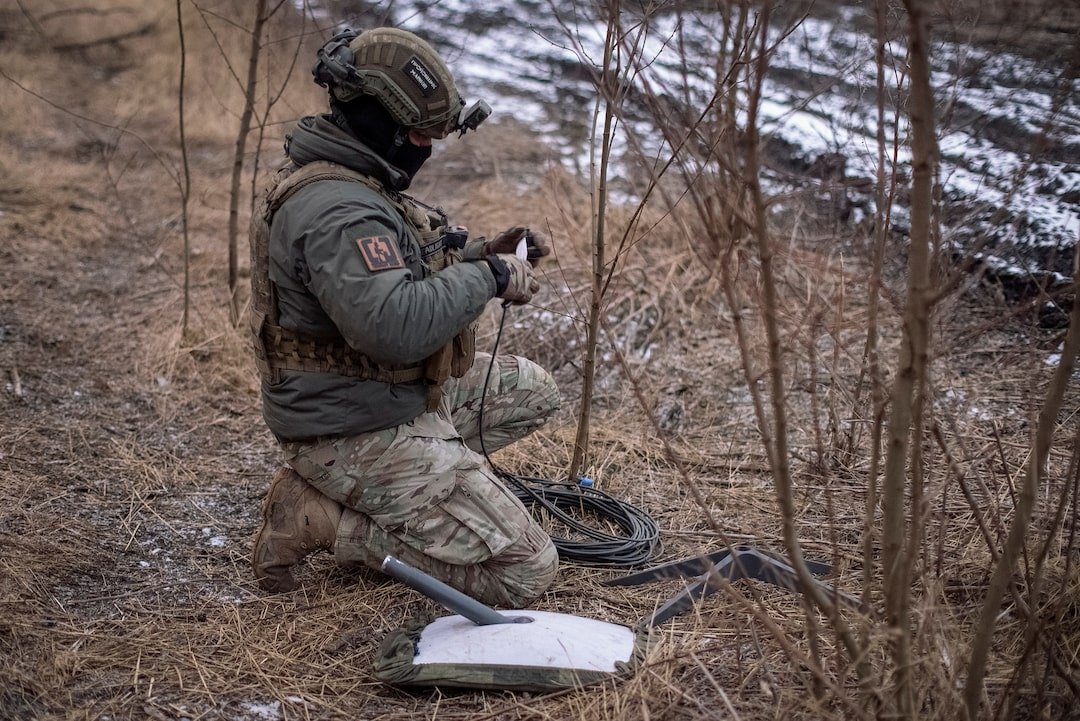
Concerns about American support have also extended to satellite communications. Ukraine relies on Starlink, SpaceX’s satellite internet service, and Starshield, its military-grade counterpart, for communications that support operations in the field.
Reuters reported on Thursday that Ukraine’s Starshield service had been disrupted following an order that two US officials and a Western official briefed on the matter said originated from the White House. The service was subsequently partially restored.
The episode highlighted the vulnerability created when a country at war depends on technology controlled by foreign companies and influenced by political decisions in another country.
Satellite communications can be particularly important when conventional communications infrastructure is damaged or unavailable. For military forces operating across a large and contested territory, disruptions can complicate coordination and increase uncertainty about the availability of essential services.
The partial restoration of Starshield did not eliminate the broader concern. Kyiv must account for the possibility that access to privately operated, US-controlled technology could change in response to decisions by the Trump administration.
The incident has reinforced questions about how Ukraine can maintain reliable communications and military coordination if its relationship with Washington continues to deteriorate.
Trump’s Relationship With Zelenskiy Has a History of Tension
The latest dispute is not the first major confrontation between Trump and Zelenskiy. Their relationship has been uneasy for years, and tensions became particularly visible during an Oval Office meeting in February 2025, when Trump and US Vice President JD Vance publicly criticised the Ukrainian president.
Since returning to office, Trump has paused or slowed some military assistance to Ukraine while allowing European allies to purchase US weapons for Kyiv. This arrangement has preserved a route for European countries to obtain American military equipment, but it has also demonstrated how dependent Ukraine remains on decisions made in Washington.
The relationship had appeared to stabilise before disagreements over Ukrainian strikes on Russian energy infrastructure and rising fuel prices reopened divisions.
For Kyiv, the danger is that disputes over individual policies could gradually undermine the wider partnership. A deterioration in political relations could affect military assistance, intelligence sharing, technology access and the level of pressure Washington is willing to place on Moscow.
Congress Could Become a Constraint on Trump’s Ukraine Policy
Although Trump controls important aspects of US foreign policy, his approach to Ukraine may face resistance from members of his own Republican Party. Some congressional Republicans continue to support Kyiv and argue that Washington should not pressure Ukraine into accepting a settlement that favours Moscow.
This support could become more consequential if the political balance in Congress changes after the November midterm elections. A shift in congressional control could complicate efforts to ease sanctions or further reduce assistance, although the precise impact would depend on the measures proposed and the political support they receive.
Brett Bruen, a former foreign policy adviser in the Obama administration and head of the Global Situation Room consultancy, suggested that Zelenskiy might be calculating that a change in the balance of power on Capitol Hill could limit Trump’s options.
Bruen said Zelenskiy understood the political environment in which he was operating and suggested that Trump’s threats might have less influence over the Ukrainian president than earlier confrontations.
Nevertheless, congressional resistance is not guaranteed to prevent changes in policy. The president retains significant authority over diplomatic engagement and aspects of military and economic policy, while the precise limits of that authority depend on the measures involved.
Why the Rift Matters for Europe’s Security
The dispute between Washington and Kyiv has implications beyond the two countries. European governments have sought to maintain support for Ukraine while managing the possibility that the United States could reduce its role in the conflict.
American intelligence, weapons and satellite communications have been important to Ukraine’s defence. If access to these capabilities becomes less reliable, European allies could face greater pressure to expand their own military assistance and intelligence cooperation.
However, replacing US support would not necessarily be straightforward. The scale of the requirements, the complexity of military systems and the need for coordination could make any transition difficult, particularly while fighting continues.
The diplomatic consequences could also affect European security planning. If Russia believes Western governments are divided over the costs of supporting Ukraine, Moscow could calculate that continuing the war will produce better results than accepting a negotiated settlement.
That outcome is not inevitable, but it explains why European officials have a strong interest in maintaining coordination between Washington and Kyiv.
What Happens Next in US-Ukraine Relations?
The immediate question is whether Trump and Zelenskiy can prevent their public dispute from turning into a sustained reduction in US support. Continued talks through presidential envoys offer one route to limiting the damage, but disagreements over Russian sanctions, energy policy and Ukraine’s military requirements remain unresolved.
For Kyiv, the priorities are to preserve intelligence sharing, maintain access to military technology and weapons, and prevent economic concessions to Moscow from weakening its negotiating position. Ukraine also needs to prepare for further Russian attacks on energy infrastructure as winter approaches.
For Washington, the challenge is to pursue its stated goal of ending the war while deciding how much pressure to maintain on Russia and what security arrangements would be needed to support a durable settlement.
The November midterm elections could influence the domestic political environment surrounding US policy, but their precise effect on support for Ukraine remains uncertain. Congressional attitudes, developments on the battlefield and the progress of diplomatic talks will all shape the next phase of the relationship.
For now, the widening Trump-Zelenskiy rift has exposed the risks of Ukraine’s reliance on American military assistance, intelligence and technology. Although both governments have signalled a willingness to continue engagement, the durability of that cooperation will depend on whether they can reconcile competing priorities without further weakening Kyiv’s ability to defend itself.
For breaking news and live news updates, like us on Facebook or follow us on Twitter and Instagram. Read more on Latest World on thefoxdaily.com.






COMMENTS 0