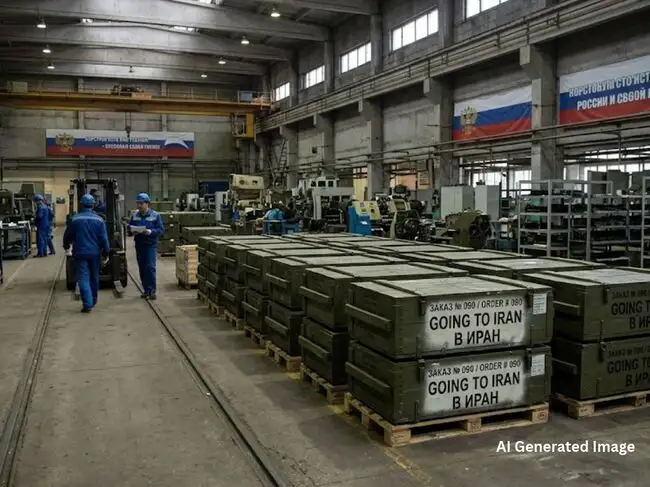
Iran is reportedly set to acquire 90 Russian-made helicopter launchers that could expand the country’s ability to operate precision missile systems from attack helicopters. The reported deal, highlighted by the Financial Times, points to another potential development in the expanding defence relationship between Moscow and Tehran.
The launchers are designed for use with Russia‘s Mi-28 attack helicopters, aircraft developed for combat missions involving ground targets. Their reported inclusion in Russian export plans has attracted attention because the same helicopter platform and associated weapons systems have been used by Russian forces during the war in Ukraine.
However, the reported export arrangement should not automatically be interpreted as confirmation that Iran has received the equipment or that all 90 launchers are ready for delivery. Production documents and export schedules can indicate planned transfers, but they do not necessarily establish when equipment will reach a buyer or become operational.
The development comes amid wider Military cooperation between Russia and Iran. Both countries have faced extensive international sanctions and diplomatic pressure, while their defence relationship has become an increasingly important subject for governments monitoring security developments in the Middle East and Europe.
Iran’s Mi-28 Helicopters Could Operate Russian Missile Systems
The reported launchers are associated with the Mi-28 attack helicopter, a Russian combat aircraft designed primarily to engage ground targets. Known as the Night Hunter, the Mi-28 is built to conduct missions involving armoured vehicles, fortified positions and other battlefield targets.
Unlike transport helicopters, which are primarily designed to move personnel and equipment, attack helicopters are equipped to carry weapons and provide direct support to ground forces. Their effectiveness depends on a combination of sensors, targeting systems, weapons integration, crew training and the ability to operate in challenging battlefield conditions.
Weapon launchers are an important part of this configuration. They allow compatible missiles and other munitions to be carried and fired from the aircraft. The reported Russian equipment could therefore help Iran develop or expand its ability to integrate compatible weapons with its helicopter fleet.
The distinction between a launcher and a missile is important. A launcher is the equipment used to carry and release a weapon, while the missile itself contains the propulsion, guidance and other systems required to reach a target. Acquiring launchers does not necessarily mean that a country has received every missile required to operate them.
For Iran, the reported equipment could be relevant to efforts to improve the capabilities of its rotary-wing combat aircraft. However, the practical value of the launchers would depend on whether Iran possesses compatible helicopters, missiles, technical support and the infrastructure needed to maintain the complete weapons system.
Why the Mi-28 Platform Matters
The Mi-28 is among Russia’s dedicated attack helicopter platforms. It was developed to provide armed aerial support in combat environments and can carry different types of weapons depending on its configuration.
Attack helicopters can offer military forces flexibility because they operate at lower altitudes and can support ground operations without relying entirely on fixed-wing aircraft. They can be used to engage battlefield targets, provide armed escort and support troops operating in difficult terrain.
However, modern battlefield conditions have also exposed the vulnerabilities of helicopters. Air defence systems, radar-guided weapons, shoulder-fired missiles and increasingly widespread surveillance technologies can create serious risks for aircraft operating near contested areas.
Russia’s experience in Ukraine has demonstrated the importance of adapting aviation tactics to changing battlefield conditions. Helicopter operations have to account for air defence threats, electronic warfare, intelligence gathering and the availability of protected operating areas.
Consequently, the reported launchers should be viewed as one component of a broader weapons capability rather than a complete military upgrade on their own.
Russian Production Schedule Identifies Iran as the Buyer
One of the most significant aspects of the reported arrangement is the reference to Russian defence production documents identifying Iran as the intended buyer of the 90 launchers.
Such documents can provide insight into defence manufacturing and export planning, particularly when they identify equipment quantities, intended customers or production schedules. They can also reveal how military suppliers organise production for domestic requirements and potential foreign orders.
In this case, the reported identification of Iran as the customer has drawn attention to the possibility that Moscow is preparing to transfer equipment associated with its own military aviation capabilities.
Nevertheless, a production schedule is not the same as a confirmed delivery record. Defence equipment can be subject to manufacturing delays, technical inspections, export approvals, logistical complications and changes in military priorities.
Russia’s war in Ukraine is an especially important factor when assessing the potential timing of foreign military exports. The conflict has placed significant demands on Russian defence production, with equipment and industrial capacity needed to support ongoing military operations.
These competing requirements could influence the pace at which export orders are fulfilled. Even when an export agreement exists, domestic military priorities may affect production schedules and delivery arrangements.
There is also a difference between ordering equipment, completing production, transferring it to a foreign customer and making it operational. Each stage can involve separate technical and logistical requirements.
For that reason, the reported figure of 90 launchers is an indication of the scale of the planned supply, not proof that Iran already has 90 operational systems.
Yak-130 Aircraft Add to Evidence of Russian Military Supplies
The reported launcher arrangement has also attracted attention because it comes alongside other indications of military equipment transfers between Russia and Iran. One notable example is the Yak-130 advanced jet trainer, an aircraft that can support pilot training and perform additional military roles depending on its configuration.
The Yak-130 is designed primarily to train pilots for modern combat aircraft. Its capabilities allow air forces to prepare personnel for the handling of advanced aircraft, including training exercises that simulate aspects of operational missions.
It can also be configured to carry weapons, giving it a limited light-attack capability. However, its principal importance for an air force is its role in preparing pilots and supporting the development of aviation skills.
Iran’s acquisition of Yak-130 aircraft has been viewed as an indication of closer defence ties with Moscow. The aircraft offer a Russian-made training platform that could contribute to the development of Iran’s military aviation capabilities.
The reported helicopter launcher order would represent a different category of cooperation. While the Yak-130 relates to fixed-wing aviation and pilot training, the launchers are associated with attack helicopters and weapons integration.
Together, these developments suggest that the relationship may involve several areas of military equipment rather than a single isolated purchase. They also illustrate why analysts are paying attention to Russian production documents and reported export plans involving Iran.
Still, each reported transfer needs to be assessed separately. The existence of one confirmed or reported equipment acquisition does not automatically establish the completion, scale or operational status of another.
Moscow’s Military Support for Tehran Draws International Scrutiny
Military cooperation between Russia and Iran has become an important international security issue. Their relationship has expanded amid the war in Ukraine, regional tensions in the Middle East and pressure from Western governments over their respective military activities.
Both countries have faced extensive sanctions, although the measures imposed on them differ in scope and legal basis. Their cooperation has attracted attention because military technology, equipment and industrial support can influence security calculations across multiple regions.
For Russia, defence exports can provide economic and diplomatic benefits. Selling military equipment can strengthen relationships with partner countries, support domestic defence industries and create longer-term connections through maintenance, training and spare-parts arrangements.
For Iran, access to foreign military technology can help address gaps in areas where domestic production or existing equipment may not meet its requirements. Imported systems can also provide technical knowledge that may support future maintenance, integration or development programmes.
However, international scrutiny increases when military transfers involve equipment that could influence conflicts or regional balances of power. Governments concerned about Iran’s military capabilities may view additional access to Russian weapons technology as a development requiring closer monitoring.
The reported launcher supply is particularly relevant because attack helicopters can contribute to ground operations and military support missions. Their effectiveness depends on the complete combination of aircraft, weapons, training and operational infrastructure.
Any assessment of the strategic consequences must therefore consider more than the number of launchers involved. The types of missiles available, the compatibility of Iran’s aircraft and the level of technical support would all influence the actual military value of the reported transfer.
Why Russia and Iran Are Strengthening Defence Cooperation
Russia and Iran have developed closer relations in recent years, with defence cooperation forming one part of a wider diplomatic and strategic relationship.
For Moscow, cooperation with Tehran offers opportunities to maintain partnerships outside the Western diplomatic and economic system. Russia has faced restrictions on access to certain technologies, financial services and international markets following its invasion of Ukraine.
Maintaining relationships with countries willing to engage in military and economic cooperation can therefore be valuable to Moscow. Defence agreements may also create longer-term connections through equipment servicing, technical training and future purchases.
Iran has its own reasons for pursuing military cooperation with Russia. Its armed forces have operated a mixture of domestically produced equipment and foreign-made systems acquired over several decades. Access to additional technology can help address capability gaps and diversify its military supply options.
However, purchasing foreign equipment does not automatically create a fully integrated military capability. Different aircraft, weapons and support systems must work together, and this can require extensive technical preparation.
Training personnel, maintaining spare-parts supplies and establishing repair facilities are also essential. Without these supporting arrangements, even advanced imported equipment may be difficult to operate consistently.
The reported 90-launcher arrangement should therefore be considered within the broader question of how Iran could integrate Russian military technology into its existing defence infrastructure.
What the Reported Deal Could Mean for Regional Security
The possibility of additional Russian military equipment reaching Iran has implications for security discussions across the Middle East. Iran’s military capabilities are closely watched by neighbouring countries and international powers because of the region’s existing political and security tensions.
Additional helicopter weapons equipment could contribute to Iran’s ability to modernise parts of its military aviation inventory. If the launchers are successfully integrated with compatible aircraft and missiles, they could expand the range of weapons available to Iranian helicopter units.
However, the reported order alone does not establish a dramatic change in the regional military balance. The number of launchers, their technical specifications, the availability of compatible aircraft and the operational readiness of the systems remain important unknowns.
Military capability is also shaped by factors beyond equipment acquisition. Intelligence, surveillance, air defence, logistics, electronic warfare and personnel training all influence how effectively a weapons system can be used.
For countries monitoring Iran’s military development, the reported arrangement may be another reason to examine the depth of cooperation between Tehran and Moscow. It could also encourage closer attention to future Russian export documents and defence production activity.
Delivery Status Remains Uncertain
Despite the reported production plans, the actual delivery status of the 90 launchers remains uncertain. An export order can indicate that equipment is intended for a foreign customer, but it does not establish that the transfer has been completed.
Several stages would normally separate a production plan from an operational weapons capability. The equipment must be manufactured, inspected, prepared for export, transported and handed over to the recipient. It may then require technical integration, testing and training before it can be used effectively.
There is also no automatic guarantee that the original quantity or delivery schedule will remain unchanged. Defence contracts can be adjusted because of manufacturing constraints, changing military priorities or other logistical considerations.
Russia’s continuing war in Ukraine adds another layer of uncertainty. Moscow must balance its domestic military requirements with the commitments it makes to foreign customers, potentially affecting the availability and timing of equipment exports.
Until further information confirms the transfer, the reported 90 launchers should be understood as part of an alleged or planned supply arrangement rather than a verified delivery of fully operational systems to Iran.
What to Watch Next in Russia-Iran Military Relations
Future developments will help clarify whether the reported launcher order becomes a completed arms transfer. Important indicators include additional Russian production records, official announcements, evidence of equipment transportation and confirmation that Iran has received compatible systems.
Another issue will be whether the reported arrangement includes technical support, maintenance services or additional weapons required to operate the launchers. These elements can be just as important as the initial equipment purchase when assessing the long-term value of a military transfer.
Further information about Iran’s helicopter inventory and the integration of Russian weapons systems could also help establish the practical significance of the reported deal. Without those details, it remains difficult to determine how quickly the equipment could contribute to Iran’s operational capabilities.
The reported plan to supply 90 helicopter launchers adds another dimension to the growing defence relationship between Russia and Iran. It highlights Moscow’s potential role as a supplier of military aviation technology to Tehran while raising questions about production priorities, delivery timelines and regional security consequences.
For now, the key distinction remains between a reported export plan and a completed military transfer. Whether the launchers reach Iran, how they are integrated and what additional equipment accompanies them will determine the significance of the reported arrangement.
For breaking news and live news updates, like us on Facebook or follow us on Twitter and Instagram. Read more on Latest World on thefoxdaily.com.




COMMENTS 0