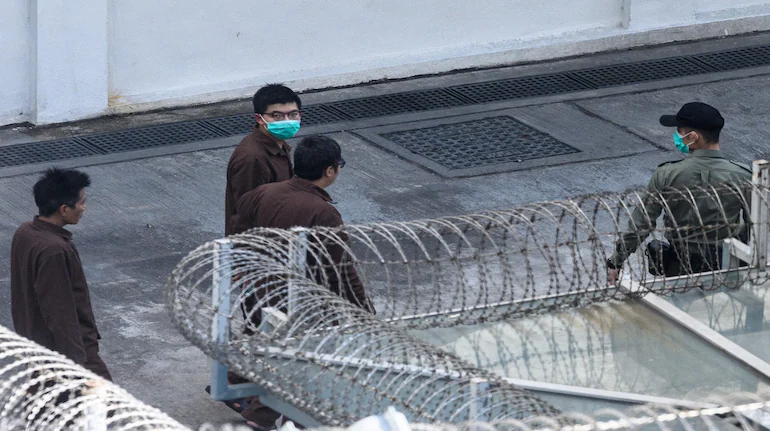
Hong Kong pro-democracy activist Joshua Wong has been sentenced to an additional 10 years in prison after the High Court convicted him of conspiring to collude with foreign forces under the city’s national security law. The ruling extends the imprisonment of one of the most recognisable figures of Hong Kong’s democracy movement and means he is expected to remain behind bars until late 2036.
Wong, 30, has been in custody since November 2020 and was already serving a prison sentence of four years and eight months for his involvement in an unofficial primary election held that year. He had been expected to complete that sentence and become eligible for release in January 2027. The latest conviction has substantially extended his time in prison.
High Court Judge William Tam handed down the 10-year sentence on Thursday, November 5, 2026. Two months and two days of the new term will run concurrently with Wong’s existing sentence, while the remaining period will extend his imprisonment.
Why Was Joshua Wong Sentenced to Another 10 Years?
Wong was convicted of conspiring with self-exiled Hong Kong activist Nathan Law and other individuals to seek foreign pressure against China and the Hong Kong government. The prosecution alleged that the group attempted to persuade foreign governments, organisations and individuals to impose sanctions, blockades or other hostile measures against the People’s Republic of China and the Hong Kong Special Administrative Region.
The alleged conspiracy covered the period between July and November 2020, after Beijing introduced the National Security Law in Hong Kong. Prosecutors argued that Wong continued supporting international lobbying efforts after the legislation came into effect, including by promoting or amplifying calls for foreign governments to take action against Chinese and Hong Kong officials.
Wong pleaded guilty to the charge in September 2026. His admission of guilt was considered during sentencing, although it did not prevent the court from imposing a lengthy prison term.
The case centred on whether his activities formed part of a continuing conspiracy to encourage foreign intervention after the national security legislation had been introduced. The court treated the offence as being of a grave nature, a classification that carries significantly heavier penalties under the law.
How the Court Arrived at the 10-Year Sentence
Judge William Tam said the starting point for Wong’s sentence was 13 years in prison. The court then reduced the term by three years after considering his guilty plea and mitigating circumstances, resulting in a final sentence of 10 years.
The judge said the punishment had to reflect the seriousness of the offence and serve as a deterrent. He also said the court needed to express the community’s condemnation of the defendant’s alleged scheme and actions with others to collude with foreign forces or external elements and endanger national security.
“The punishment must fit the gravity of the crime,” Judge William Tam told the court.
The 10-year term is particularly significant because the National Security Law provides a higher sentencing range for offences classified as grave. The court’s classification placed Wong’s case in that more serious category, despite the reduction granted for his guilty plea.
When Will Joshua Wong Be Released From Prison?
Before the latest ruling, Wong was expected to be released in January 2027 after serving a four-year-and-eight-month sentence for conspiracy to commit subversion. That case was connected to his participation in an unofficial primary election organised by Hong Kong’s pro-democracy camp in 2020.
The new 10-year sentence changes that expected release date substantially. Since two months and two days will run concurrently with his existing prison term, the new sentence will largely be served consecutively rather than entirely overlapping with the earlier punishment.
As a result, Wong is now expected to remain imprisoned until late 2036, when he will be around 40 years old. The sentence means that a significant portion of his adult life will have been spent in custody.
Who Is Joshua Wong? From Student Protest Leader to Democracy Movement Figure
Joshua Wong became a prominent figure in Hong Kong’s political landscape while still a teenager. He first gained widespread attention through the student activist group Scholarism, which opposed a proposed national education curriculum in 2012. Critics of the curriculum argued that it could promote political indoctrination in schools.
Wong later became one of the leading faces of the 2014 Umbrella Movement, a series of pro-democracy demonstrations that demanded greater democratic representation and genuine universal suffrage in Hong Kong. The protests brought him international attention and established him as a prominent young voice in the city’s democracy movement.
In 2016, Wong co-founded Demosisto, a political organisation that advocated greater democratic self-determination for Hong Kong. The group included Nathan Law, who later became a prominent pro-democracy activist outside the city.
Wong’s international profile grew further during the 2019 demonstrations, which initially erupted over a proposed extradition bill. The legislation would have allowed the transfer of certain suspects to jurisdictions with which Hong Kong did not have extradition agreements, including mainland China. The protests eventually expanded into a much wider movement opposing Beijing’s growing influence over the territory.
Wong and other activists sought international attention and support for their campaign. Their activities, including calls for foreign governments to apply pressure on Chinese and Hong Kong officials, later became central to the national security case against him.
How Hong Kong’s National Security Law Changed the Political Landscape
China imposed the Hong Kong National Security Law on June 30, 2020, following months of political unrest and large-scale demonstrations. Beijing and Hong Kong authorities said the legislation was necessary to address threats to national security and restore stability after the 2019 protests.
The law criminalises activities involving secession, subversion, terrorism and collusion with foreign forces. Depending on the seriousness of an offence, those convicted can face lengthy prison sentences, including life imprisonment for certain grave offences.
However, the legislation has remained controversial internationally. Governments and Human Rights organisations have argued that its broad provisions have been used against political opposition, activists, journalists and civil society organisations. They say the law has significantly narrowed the space for political dissent in Hong Kong.
Hong Kong and Chinese authorities reject that characterisation. They maintain that the law protects national security, addresses threats to public order and allows the city to maintain stability while continuing its development.
Wong’s latest conviction has brought these competing interpretations back into focus. The prosecution viewed his alleged efforts to secure foreign sanctions and other measures as conduct that endangered national security. Critics of the law argue that targeting international lobbying by pro-democracy activists risks criminalising political advocacy and peaceful expression.
US and Taiwan Condemn Joshua Wong’s Sentence
The 10-year sentence prompted criticism from foreign governments and international human rights organisations. The United States consulate in Hong Kong condemned the ruling and called for Wong’s immediate release.
Taiwan’s top China policy body also criticised the treatment of Hong Kong’s pro-democracy activists, describing it as endless political persecution. Taiwan has repeatedly expressed concern about the political and civil liberties situation in Hong Kong following the introduction of the national security legislation.
The reactions underline the international dimension of Wong’s case. His political activities had involved attempts to draw attention to developments in Hong Kong among foreign governments and organisations. The latest ruling has therefore become another point of disagreement between Hong Kong authorities and governments critical of Beijing’s approach to the territory.
Human Rights Watch and Amnesty International Criticise the Ruling
Human Rights Watch described Wong’s 10-year sentence as cruel and unjust. The organisation called on the Hong Kong government to release him and argued that the national security law has been used to keep prominent pro-democracy figures behind bars.
Human Rights Watch also raised concerns about the broader pattern of prosecutions involving Hong Kong activists. It argued that successive national security cases have prolonged the imprisonment of influential figures from the city’s democracy movement.
Amnesty International also criticised the sentence, calling it another grim reminder of how Hong Kong’s National Security Law has become a tool to punish dissent. The organisation said the conviction raised concerns about the criminalisation of political activism and called for the protection of fundamental rights.
Both organisations have argued that peaceful political expression and advocacy should not be treated as national security crimes. Their criticism reflects a wider international debate over how the legislation is being applied and whether its enforcement is consistent with Hong Kong’s human rights obligations.
Hong Kong Chief Executive John Lee Defends the Authorities’ Position
Hong Kong Chief Executive John Lee took a sharply different position from the organisations criticising the ruling. He described Wong and Nathan Law as among the primary culprits responsible for undermining Hong Kong’s prosperity and stability.
Lee’s remarks reflect the Hong Kong government’s position that the activists’ efforts to seek foreign pressure against China and the territory were not simply political campaigning but actions that threatened national security.
The contrast between the government’s response and international criticism illustrates the continuing disagreement over the national security law. While Hong Kong authorities describe the prosecutions as necessary to protect the city, rights groups argue that the legislation has weakened political freedoms and restricted opposition activity.
What Joshua Wong’s Sentence Means for Hong Kong’s Pro-Democracy Movement
Wong’s additional prison term carries significance beyond the length of his individual sentence. He was one of the most internationally recognised figures associated with Hong Kong’s pro-democracy movement, having participated in major demonstrations and political campaigns over more than a decade.
His imprisonment until late 2036 means that he will remain absent from public political life for years. The case also highlights how individuals already serving sentences under the national security framework can face further prosecutions and additional periods of imprisonment.
For international human rights organisations, the ruling raises questions about the future of political opposition and freedom of expression in Hong Kong. For the authorities, it demonstrates the continued enforcement of legislation they regard as essential to national security.
The immediate consequence is clear: Wong’s expected release in January 2027 will no longer take place under his previous sentence. Following the High Court’s decision on November 5, he faces another decade in prison, with only a small portion of the new term running concurrently with his existing sentence.
Frequently Asked Questions
Why was Joshua Wong sentenced to 10 more years in prison?
Wong was sentenced after pleading guilty to conspiring with Nathan Law and others to seek foreign sanctions, blockades or other hostile measures against China and Hong Kong under the city’s National Security Law.
Who sentenced Joshua Wong?
High Court Judge William Tam handed down the 10-year sentence on November 5, 2026. He set a starting point of 13 years before reducing the term by three years for Wong’s guilty plea and mitigating circumstances.
When will Joshua Wong be released?
Wong was previously expected to be released in January 2027. The additional sentence means he is now expected to remain in prison until late 2036.
What is Nathan Law’s connection to the case?
Nathan Law is a self-exiled Hong Kong pro-democracy activist. Prosecutors alleged that Wong conspired with Law and other individuals to encourage foreign governments and organisations to impose sanctions or other measures against China and Hong Kong.
What is Hong Kong’s National Security Law?
Introduced on June 30, 2020, the law criminalises offences involving secession, subversion, terrorism and collusion with foreign forces. It allows lengthy prison sentences, including life imprisonment for certain grave offences.
Why did the United States and human rights groups criticise the sentence?
The US consulate called for Wong’s immediate release, while Human Rights Watch and Amnesty International argued that the sentence reflected the use of national security legislation to punish political dissent.
What was Joshua Wong’s role in Hong Kong’s democracy movement?
Wong rose to prominence through student activism in 2012 and became a leading figure during the 2014 Umbrella Movement. He later co-founded the political organisation Demosisto and became internationally recognised during the 2019 pro-democracy demonstrations.
Did Joshua Wong’s guilty plea reduce his sentence?
Yes. Judge William Tam considered a 13-year starting point but reduced the sentence to 10 years after taking Wong’s guilty plea and mitigating circumstances into account.
For breaking news and live news updates, like us on Facebook or follow us on Twitter and Instagram. Read more on Latest World on thefoxdaily.com.



COMMENTS 0