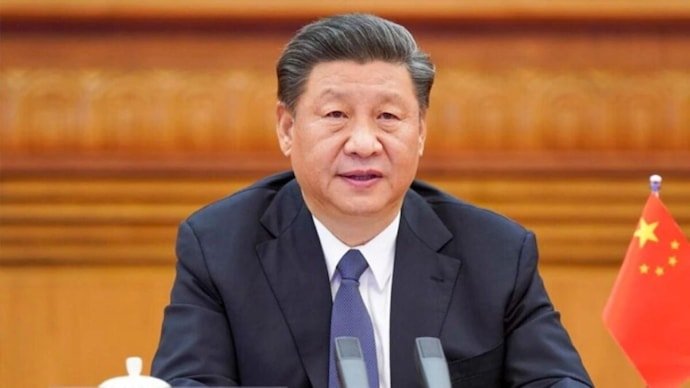
China has once again demonstrated that its anti-corruption campaign is far from over. The latest decision to remove six senior military lawmakers, along with former financial regulator Li Yunze and Politburo member Ma Xingrui, from the National People’s Congress (NPC) has attracted widespread attention because it continues a pattern of high-profile dismissals that has reshaped China’s political and military establishment over the past decade.
Although Chinese authorities did not publicly explain the reasons behind the latest removals, the action reflects President Xi Jinping‘s continuing efforts to strengthen discipline within the Communist Party, reinforce military loyalty and maintain tighter control over key institutions.
The development raises several important questions. WHO has been removed? Several senior military officers and prominent political figures. What does the move signify? It represents another phase of China’s long-running anti-corruption campaign. When did it occur? The National People’s Congress Standing Committee announced the removals through an official notice. Where is the impact most significant? Within China’s military leadership and political system. Why is this important? Because it affects the leadership structure of the People’s Liberation Army (PLA) and China’s broader Governance framework. How could it influence China? By reshaping military leadership, reinforcing political discipline and potentially affecting defense modernization.
While official explanations remain limited, the latest developments have renewed debate about the objectives and long-term consequences of Xi Jinping’s extensive anti-corruption drive.
Understanding China’s National People’s Congress
The National People’s Congress is China’s highest legislative body and serves as the country’s principal lawmaking institution. Although legislative authority ultimately operates within the framework of the Communist Party of China, membership in the NPC carries considerable political significance.
Senior military officers, provincial leaders, government officials, business representatives and other delegates participate in legislative sessions that approve national policies, budgets and major institutional reforms.
Removal from the NPC often reflects broader political or disciplinary developments rather than merely administrative changes, making such announcements closely watched by political observers.
Xi Jinping’s Anti-Corruption Campaign: A Decade of Political Transformation
Since assuming China’s top leadership, Xi Jinping has pursued one of the most extensive anti-corruption campaigns in modern Chinese History.
The campaign has targeted officials across multiple levels of government, state-owned enterprises, financial institutions and the military.
Chinese authorities have consistently described the initiative as an effort to eliminate corruption, strengthen governance and improve public confidence in state institutions.
At the same time, many international analysts argue that the campaign has also consolidated Xi Jinping’s authority by reshaping political and military leadership while reinforcing party discipline.
Regardless of interpretation, the campaign has fundamentally altered China’s political landscape.
Timeline of Xi Jinping’s Anti-Corruption Drive
| Period | Major Development |
|---|---|
| 2012 | Xi Jinping launches nationwide anti-corruption campaign. |
| 2013–2017 | Numerous senior government and military officials investigated. |
| 2018–2022 | Campaign expands into financial institutions and state-owned enterprises. |
| 2023–2025 | Senior PLA officers and defense procurement officials face investigations. |
| Current Development | Six military lawmakers and other senior figures removed from the National People’s Congress. |
Why the People’s Liberation Army Is Receiving Greater Scrutiny
The People’s Liberation Army occupies a unique position within China’s political system because it serves under the leadership of the Communist Party rather than operating as an independent national military.
Maintaining political discipline within the armed forces has long been viewed by Chinese leaders as essential to national stability and military effectiveness.
Recent investigations involving senior officers suggest that military procurement, equipment development, command structures and internal supervision remain areas of particular focus.
The latest removals reinforce the message that even senior military leadership remains subject to party disciplinary oversight.
Who Are the Military Officials Removed?
Among those removed from the National People’s Congress are several senior military figures associated with important branches of the People’s Liberation Army.
The officials reportedly include leaders connected with:
- Equipment development.
- Western Theatre Command.
- Air Force political leadership.
- Eastern Theatre Command.
- Cyberspace Force.
- Army leadership.
These organizations oversee areas ranging from military modernization and procurement to regional operational readiness and cyber capabilities.
Although no official explanation accompanied the announcement, the involvement of officers from multiple branches indicates that the review extends across different segments of China’s military establishment.
Why Equipment Development Is Strategically Important
One of the most closely watched aspects of the latest development involves leadership connected to the Equipment Development Department.
This department plays a critical role in acquiring advanced weapons, overseeing research programs, managing defense procurement and supporting China’s military modernization goals.
As China continues investing heavily in next-generation aircraft, naval vessels, missiles, satellites and Artificial Intelligence, oversight of procurement processes has become increasingly significant.
Defense procurement systems worldwide often involve enormous financial commitments, making transparency and accountability especially important.
Military Modernization Remains a National Priority
China has spent years modernizing its armed forces through investments in advanced technologies, naval expansion, aerospace capabilities, cyber warfare, space operations and precision-guided weapons.
The country’s long-term objective has been to transform the People’s Liberation Army into a highly modern military capable of operating across multiple domains.
Leadership stability within procurement and equipment management therefore plays an important role in achieving modernization goals.
Personnel changes at senior levels may temporarily affect administrative continuity, although large institutional programs generally continue under established organizational structures.
Political Significance Beyond Corruption Investigations
Political observers frequently view high-level personnel changes in China through multiple perspectives.
While official announcements often emphasize disciplinary procedures, leadership changes may also reflect broader institutional restructuring, organizational reforms or efforts to reinforce governance standards.
Because China’s political system places significant emphasis on party discipline, public announcements involving senior officials are often interpreted as indicators of evolving political priorities.
The latest removals therefore carry importance beyond the individuals directly involved.
Comparison: Administrative Removal vs Criminal Investigation
| Administrative Action | Criminal Investigation |
|---|---|
| Removal from official position | Formal legal investigation |
| Organizational or disciplinary measure | Evidence collection under criminal procedures |
| Does not automatically establish criminal liability | May lead to prosecution depending on findings |
| Often announced through official notices | Requires investigative process |
How the Campaign Affects China’s Governance
The anti-corruption campaign has significantly influenced governance throughout China.
Supporters argue that stronger oversight discourages misconduct, improves institutional efficiency and strengthens public confidence in government administration.
Others suggest that sustained investigations encourage greater caution among officials, potentially slowing decision-making within some administrative systems.
Regardless of differing perspectives, the campaign has become one of the defining characteristics of Xi Jinping’s leadership.
International Implications
The developments are being closely monitored outside China because leadership stability within the People’s Liberation Army has broader geopolitical implications.
China remains one of the world’s largest military powers, with growing influence across the Indo-Pacific region.
Changes involving senior military leadership attract attention from governments, defense analysts and international investors seeking to understand the direction of China’s defense policy.
However, personnel changes alone do not necessarily indicate immediate changes in military strategy or foreign policy.
What Investors and Businesses Watch
Political stability remains an important factor for global investors evaluating the Chinese economy.
Leadership changes involving financial regulators, senior political figures or military institutions can influence market sentiment, particularly when official explanations remain limited.
Businesses operating in China typically monitor such developments for indications regarding regulatory priorities, governance reforms and policy continuity.
Nevertheless, long-term investment decisions generally depend on broader economic indicators rather than individual personnel announcements.
Expert Insight: Why Transparency Matters in Leadership Changes
One of the recurring challenges in assessing political developments in China is the limited public disclosure surrounding personnel decisions. Official announcements frequently provide only the administrative outcome without detailed explanations.
This lack of transparency often leads analysts to focus on broader institutional patterns rather than isolated cases. Over time, repeated leadership changes across similar sectors may reveal evolving governance priorities, organizational reforms or strengthened internal oversight.
For international observers, understanding these broader trends is often more valuable than interpreting individual appointments or dismissals in isolation.
Possible Future Developments
Several scenarios may emerge following the latest removals.
- Additional leadership appointments within affected military departments.
- Expanded internal reviews of procurement and administrative systems.
- Further disciplinary investigations if new evidence emerges.
- Continued emphasis on governance reforms within the People’s Liberation Army.
- Ongoing reinforcement of party discipline across government institutions.
Whether additional announcements follow will depend on future official decisions and the progress of internal reviews.
Conclusion
China’s decision to remove six senior military lawmakers along with other prominent officials from the National People’s Congress represents another significant chapter in President Xi Jinping’s long-running anti-corruption campaign. Although authorities have not publicly explained the reasons behind the latest personnel changes, the move reinforces the continuing emphasis on party discipline, institutional oversight and governance within both the military and civilian administration.
As China continues pursuing military modernization and broader national development goals, leadership stability and organizational accountability are likely to remain central priorities. The coming months may provide greater clarity regarding new appointments, institutional reforms and the future direction of one of the most extensive anti-corruption campaigns in contemporary global politics.
For breaking news and live news updates, like us on Facebook or follow us on Twitter and Instagram. Read more on Latest World on thefoxdaily.com.




COMMENTS 0