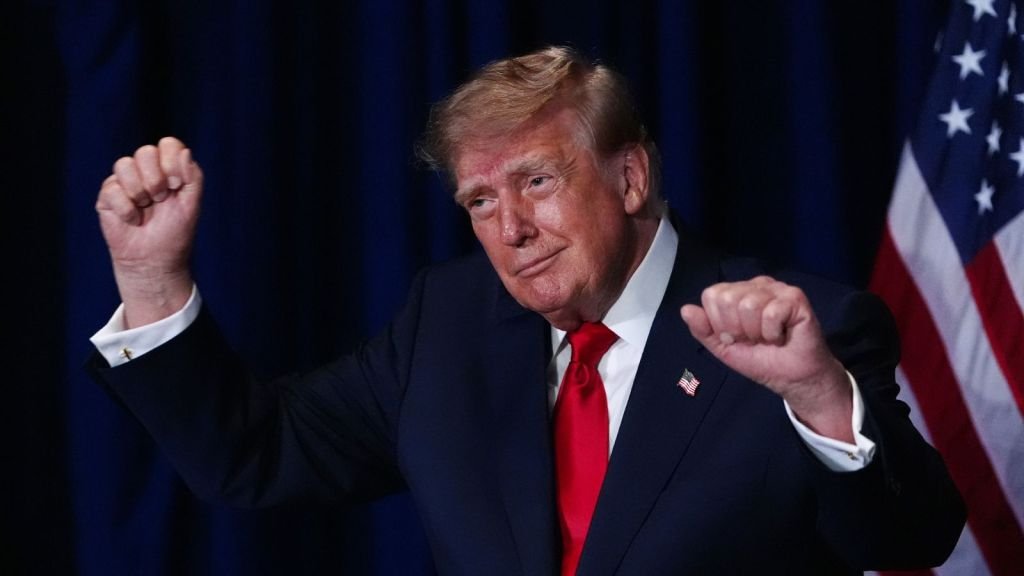
The United States has passed a major Russia sanctions bill that gives President Donald Trump broad new authority to impose tariffs of up to 100% on foreign countries purchasing Russian oil and natural gas. The measure could directly affect major buyers of Russian energy, including India and China, if the administration chooses to use the new powers.
The legislation, officially titled the Lindsey O. Graham Sanctioning Russia and Iran Act of 2026, cleared the US House of Representatives on Wednesday with a vote of 262-159. The bill had previously passed the Senate by 86-11, bringing it through congress after weeks of disagreement over the extent of presidential authority over tariffs and economic measures.
Trump is now expected to sign the legislation into law. Once enacted, the measure would give the US president significant discretion over the use of tariffs against countries that continue purchasing Russian energy.
For India and China, the legislation introduces a new element of uncertainty into their energy relationships with Moscow. Both countries are major buyers of Russian crude, making the tariff provision particularly significant even though the bill is primarily presented as a mechanism to increase pressure on Russia.
What the Russia sanctions bill means for India and China
The central provision attracting international attention is the authority to impose tariffs of up to 100% on foreign nations that purchase Russian oil and natural gas.
The measure does not automatically impose a 100% tariff on India or China. Instead, it gives the US president discretionary authority to use tariffs against countries that continue buying Russian energy.
That distinction is important. The legislation creates the power to impose the tariffs, while any actual tariff action would depend on decisions made by the Trump administration and the circumstances surrounding individual countries.
For India, the issue is particularly sensitive because Russian crude has become an important component of its energy imports. Purchases of discounted Russian oil have helped Indian refiners secure supplies at competitive prices, while Russia has become a major source of crude for the Indian market.
China is also a major purchaser of Russian energy. Any US decision to use the new tariff authority against Beijing could therefore add another layer to the already complex economic relationship between the world’s two largest economies.
The legislation consequently creates a potential link between Russian energy purchases and access to the US market. Countries continuing to purchase Russian oil could face the possibility of substantially higher duties on their exports to the United States.
Why tariff authority became a major point of disagreement
The bill received strong bipartisan support overall, but the expansion of presidential tariff authority became one of its most controversial provisions in the House.
The Senate had already approved the measure by an overwhelming 86-11 vote. Its progress in the House was delayed, however, because lawmakers disagreed over whether the legislation should provide the president with additional authority over tariffs and broader economic measures.
Although 58 Democrats joined Republicans in supporting the final House vote, Democratic leadership raised objections to the tariff provisions and questioned whether the new powers would be used effectively or responsibly.
Representative Gregory W. Meeks described the legislation as a potential “Trojan horse,” arguing that its tariff provisions could expand presidential economic authority without necessarily producing additional pressure on Russia.
His criticism also focused on the domestic economic consequences that could follow from wider tariff use. Opponents of the provision have argued that tariffs can affect prices and economic conditions in the United States, particularly when they are imposed on countries involved in major global supply chains.
House Minority Leader Hakeem Jeffries also raised concerns about the breadth of tariff waivers and enforcement provisions. According to the criticism cited in the debate, exemptions and enforcement mechanisms could leave considerable discretion over how the new authority is applied.
Representative Richard Neal similarly opposed expanding presidential tariff authority, arguing that lawmakers should not provide additional tariff powers to the president.
Republicans say the measure increases pressure on Moscow
Supporters of the bill have presented it as a tool for increasing economic pressure on Russia and reducing the revenue available to Moscow from energy exports.
House Speaker Mike Johnson described the legislation as a way to apply “maximum pressure” on the Russian war machine by targeting energy revenue streams.
Supporters including Representatives Brian Mast and Michael McCaul argued that Russian energy revenues have helped sustain Moscow’s ability to continue its war against Ukraine. They said the legislation could target the financial resources available to Russian President Vladimir Putin and increase pressure for negotiations.
Senator Jeanne Shaheen similarly described the legislation as a message to Vladimir Putin and countries that help Russia evade sanctions. She said the measure demonstrates that there are consequences for supporting or facilitating Russian energy trade.
The competing arguments highlight the central debate surrounding the legislation. Supporters view economic pressure as a way to reduce Russia’s ability to finance the war, while critics are concerned that expanding presidential tariff powers could have wider economic consequences and may not necessarily produce the intended outcome.
How the bill targets Russian energy revenues
The legislation goes beyond the possibility of tariffs on countries buying Russian energy. It also expands sanctions and enforcement mechanisms aimed at the networks involved in Russia’s energy trade.
One part of the measure targets vessels, logistical organizations and maritime operators involved in transporting discounted Russian oil, including shipments conducted below applicable market price caps.
These measures are designed to address the infrastructure that allows Russian crude to reach international markets. Oil shipments depend on a broad network involving ships, logistics companies, financial institutions, traders and other intermediaries. Targeting those networks can make it more difficult to move sanctioned or discounted energy without disrupting every part of the wider Global energy market.
The legislation also provides for penalties targeting senior Russian leadership, state officials, banking institutions and companies operating in the energy sector.
Together, these provisions seek to increase the financial and logistical costs associated with Russia’s energy exports.
The bill also expands pressure on Iran
Despite the intense focus on Russia and the potential impact on India and China, the legislation also contains provisions relating to Iran.
The measure broadens existing enforcement mechanisms concerning Iran’s military and energy trade. These provisions are separate from the bill’s Russia-focused energy measures but reflect the legislation’s wider objective of strengthening US economic pressure on governments and entities viewed by Washington as supporting activities contrary to US interests.
The Iran provisions do not directly determine how the Russia-related tariff authority would be applied to India or China. However, their inclusion makes the legislation broader than a measure focused exclusively on Moscow.
Why the measure matters for India’s Russian oil purchases
India’s position is particularly important because Russian crude has become a significant part of its energy import strategy.
Indian refiners have purchased Russian oil partly because discounted supplies can provide economic advantages. Refiners process crude into fuels and other petroleum products, some of which are consumed domestically while others can enter international markets.
A potential US tariff response therefore creates a complicated policy question for New Delhi. India would have to weigh the economic benefits of maintaining Russian energy purchases against the possibility of increased trade pressure from Washington.
The impact would also depend on how any future US tariffs were designed and enforced. A tariff on Indian exports to the United States would not be identical to a direct sanction on an Indian oil company or refinery. Its consequences would depend on which products were covered, the tariff rate, available exemptions and the duration of the measures.
This means the passage of the bill does not by itself establish the final economic impact on India. It creates a legal and political mechanism that the Trump administration could potentially use.
China faces a similar uncertainty
China’s position is also significant because the country remains a major participant in the global Russian energy trade.
If Washington were to use the new authority against Chinese purchases of Russian oil or natural gas, the measure could intersect with existing US-China trade tensions.
Any such action could also have implications beyond bilateral trade. China is a major global manufacturing and trading power, while energy prices influence transportation, manufacturing and consumer markets across countries.
However, the bill’s passage alone does not establish that Trump will impose a 100% tariff on China. The legislation provides authority; the decision to use that authority remains a separate matter.
A new pressure mechanism, but not an automatic tariff
One of the most important distinctions in understanding the legislation is the difference between authorizing tariffs and imposing tariffs.
The bill gives the president the power to impose duties of up to 100% on countries purchasing Russian energy. It does not mean that every country buying Russian oil will automatically face a 100% tariff once the legislation becomes law.
The administration would have to decide whether and how to use the authority. That leaves room for diplomatic negotiations, exemptions, waivers and different approaches toward individual countries.
This discretion is also why the tariff provision became such a significant point of contention during congressional debate. Supporters see presidential flexibility as useful when dealing with countries that continue purchasing Russian energy. Critics argue that such broad authority could give the executive branch too much control over trade policy.
What happens after the bill becomes law
The immediate next step is the president’s expected signing of the legislation. After enactment, the administration would have the new authority available as part of its broader Russia sanctions strategy.
The practical consequences for India, China and other Russian energy buyers will depend on whether the administration chooses to use the tariff mechanism and, if so, how it defines the targeted countries and transactions.
The legislation therefore creates a new layer of uncertainty for governments and companies involved in Russian energy trade. Buyers may have to consider not only the price of Russian crude and existing sanctions requirements, but also the possibility of additional US trade measures.
For Russia, the bill is intended to increase pressure on one of its most important sources of foreign revenue. For the United States, it represents a significant expansion of the tools available to pressure Moscow and countries continuing to conduct energy trade with it.
For India and China, the key issue will be how Washington uses the authority created by the legislation. The passage of the bill establishes the possibility of tariffs as high as 100%, but the actual economic consequences will depend on decisions taken after the law comes into force.
For breaking news and live news updates, like us on Facebook or follow us on Twitter and Instagram. Read more on Latest World on thefoxdaily.com.






COMMENTS 0