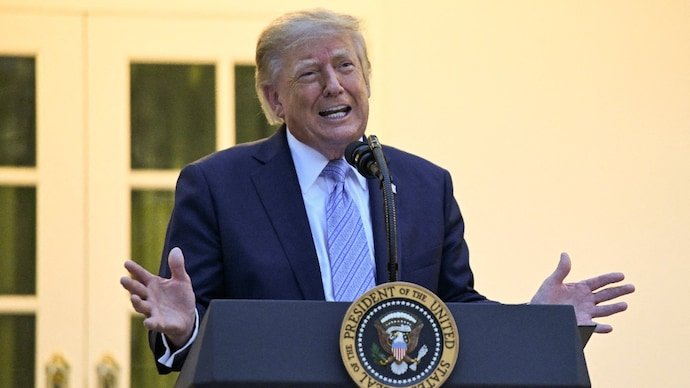
US President Donald Trump has announced plans to appoint a new Artificial Intelligence adviser, or “AI czar,” and establish what he described as an “AI force,” adding a new layer to Washington’s efforts to manage the rapidly developing technology.
Trump made the announcement on Saturday in a post on Truth Social but did not provide details about who would receive the new AI czar position, how the proposed AI force would be organised or which government agencies would participate.
The announcement comes at a significant moment for US artificial intelligence policy. Washington is simultaneously seeking to accelerate the growth of the American AI industry, address concerns about potential risks from increasingly capable systems and maintain the country’s technological position as competition with China intensifies.
Trump has consistently argued that excessive regulation could slow the development of US artificial intelligence companies and weaken their ability to compete with Chinese firms. At the same time, AI researchers, safety advocates and some lawmakers have warned that the technology could create serious risks if its development outpaces efforts to manage potential harms.
Trump Plans New AI Czar and ‘AI Force’
Trump said his administration intends to appoint a new AI adviser who would serve as an “AI czar.” The role would effectively put a senior official in charge of coordinating or advising on artificial intelligence policy, although the precise responsibilities have not yet been outlined.
He also announced plans for an “AI force.” Unlike the AI czar position, the proposed force does not yet have a clearly defined structure. Trump did not explain whether it would be a new federal organisation, an interagency task force or another mechanism for coordinating government action on artificial intelligence.
The lack of operational details means the announcement currently establishes an administration objective rather than a fully defined government programme. Further information would be needed to determine the force’s authority, membership, funding and relationship with existing federal agencies.
Trump framed his approach as supportive of technological development while maintaining government oversight of wrongdoing. He said the administration would not seek to hinder the growth of the AI industry and indicated that existing criminal and civil justice systems could be used to address misconduct.
That approach reflects a broader position Trump has expressed on AI policy: encourage rapid development while avoiding regulations that he believes could make American companies less competitive.
Why the US-China AI Race Matters
The announcement comes ahead of Trump’s scheduled meeting with Chinese President Xi Jinping on Thursday, placing artificial intelligence among the issues being discussed against the backdrop of wider US-China economic and strategic competition.
Artificial intelligence has become an important component of the relationship between the world’s two largest economies. Both Washington and Beijing view advanced AI as strategically significant because of its potential effects on economic productivity, scientific research, national security and military capabilities.
The competition extends beyond the development of individual AI models. It also involves computing infrastructure, advanced semiconductors, data centres, research talent, software, investment and the ability of companies to commercialise AI technologies at scale.
For the United States, maintaining an advantage in AI has become closely connected with the country’s broader technology strategy. American technology companies have invested heavily in AI systems and the infrastructure required to train and operate them.
China has also placed AI development high on its national technology agenda. The resulting competition has made AI policy a matter of both economic policy and national security for governments in Washington and Beijing.
Trump and technology executives have argued that regulatory restrictions could slow US innovation at a time when Chinese companies are also rapidly developing their capabilities. AI safety advocates, however, have challenged the idea that faster development should take priority over safeguards.
US Officials Prepare for Talks With China
Trump’s AI announcement also comes as senior US officials prepare for discussions with Chinese counterparts.
US Treasury Secretary Scott Bessent is scheduled to meet Chinese Vice Premier He Lifeng on Sunday at JPMorgan Chase’s headquarters in New York. According to a person familiar with the planning, the discussions are expected to cover AI security, Trade and other economic issues.
The meetings highlight how artificial intelligence has increasingly moved into high-level economic and diplomatic discussions between Washington and Beijing.
AI security is particularly significant because technological competition can involve both commercial and strategic concerns. Governments want their companies to remain competitive, but they also face questions about how powerful AI systems should be developed, deployed and protected from misuse.
Trade is another closely connected issue. Advanced AI depends on access to powerful computing hardware and semiconductors, while semiconductor restrictions and technology controls have become major points of tension between the United States and China.
Against that background, discussions about AI security cannot be separated entirely from the wider technology relationship between the two countries.
AI Safety Concerns Continue to Grow
Trump’s announcement also arrives as concerns about artificial intelligence risks continue to attract attention in Washington and the technology industry.
Some researchers and technology experts have warned that increasingly capable AI systems could create risks that existing laws and institutions may not be prepared to address. These concerns range from misuse of AI systems and cybersecurity threats to questions about how highly autonomous systems could behave as their capabilities increase.
Earlier this month, former Anthropic researcher Jacob Coxon said that people working on advanced AI seriously believe the technology could pose an existential threat within the decade.
Such warnings represent one side of an increasingly active debate over AI safety. Supporters of stronger safeguards argue that governments and companies should establish mechanisms to reduce potentially severe risks before systems become substantially more capable.
Other technology leaders and policymakers have placed greater emphasis on innovation and competition. Their argument is that excessive restrictions could prevent companies from developing useful technologies and could leave the United States at a disadvantage compared with countries taking a less restrictive approach.
The disagreement has created a difficult policy question for Washington: how to encourage technological development while establishing sufficient safeguards against misuse and unintended consequences.
Trump Has Repeatedly Criticised Excessive AI Regulation
Trump has repeatedly downplayed concerns about AI risks and argued that additional regulation could interfere with the development of the US technology sector.
His latest announcement is consistent with that broader position. Rather than presenting the proposed AI force as a mechanism for imposing sweeping new restrictions, Trump emphasised supporting the industry and using existing criminal and civil justice systems to deal with wrongdoing.
That distinction could become important as the administration develops the details of its AI policy. A regulatory framework focused on existing legal systems would differ from the creation of a new federal authority specifically designed to regulate AI developers and systems.
It remains unclear whether the proposed AI czar would have authority over existing agencies or primarily serve as a coordinator and policy adviser. The eventual structure will determine how much influence the position has over decisions involving AI development, safety, national security and economic policy.
David Sacks Previously Held the AI Czar Role
If Trump proceeds with the appointment, the new position would restore an AI czar role that was previously held by venture capitalist David Sacks.
Sacks stepped down from the position in the spring and subsequently moved to an external advisory role. During his time involved in AI policy, he opposed the creation of additional federal AI regulations.
Sacks has argued that AI developers should bear responsibility for the safety of the products they create. Speaking at a Politico event on Wednesday, he said developers could be held liable when their systems cause problems.
That approach places significant responsibility on technology companies rather than relying exclusively on a new federal regulatory framework.
The choice of a new AI czar could therefore provide an indication of how the Trump administration intends to balance industry growth, legal accountability and AI safety during the next phase of its technology policy.
AI Policy Faces a Difficult Balance
The central challenge for the administration is balancing two objectives that can sometimes pull in different directions: accelerating American AI development and managing the risks associated with increasingly powerful systems.
Technology companies generally benefit from an environment that allows rapid experimentation and investment. Government officials, however, must also consider issues involving public safety, national security, privacy, economic disruption and potential misuse.
The debate becomes more complicated as AI systems are integrated into areas ranging from software development and Education to finance, healthcare, communications and defence.
A policy that is too restrictive could potentially increase compliance costs or slow experimentation. A framework that provides too few safeguards could leave companies, consumers and government institutions exposed to risks that existing laws may not adequately address.
Trump’s proposed AI force could eventually become part of the administration’s response to that challenge, but its significance will depend on its final design and authority.
What the New AI Structure Could Mean for US Technology Policy
The creation of an AI czar would give the administration a designated senior figure focused specifically on artificial intelligence. Such a position could help coordinate policies across different parts of the federal government, particularly because AI affects economic policy, national security, scientific research and technology regulation simultaneously.
The proposed AI force could provide another mechanism for bringing those areas together. However, without details about its membership or responsibilities, it is too early to determine how it would operate or how much influence it would have over existing agencies.
The timing of the announcement is significant regardless. The United States is competing with China for technological leadership while American officials are simultaneously debating the appropriate level of oversight for the industry.
The coming discussions between US and Chinese officials could further demonstrate how AI has become intertwined with trade and national-security policy. At home, the administration’s eventual appointment of an AI czar and the development of the proposed force could provide more clarity about how Washington intends to navigate the next stage of the AI race.
For now, Trump’s announcement signals an emphasis on accelerating AI development while relying on government oversight and existing legal mechanisms to address wrongdoing. The unresolved question is how that approach will evolve as AI systems become more capable and the strategic competition between the United States and China continues.
For breaking news and live news updates, like us on Facebook or follow us on Twitter and Instagram. Read more on Latest Technology on thefoxdaily.com.






COMMENTS 0