
More than two weeks of climate negotiations at the COP31 summit in Antalya, Turkey, have ended without an overarching agreement, exposing deep divisions among countries over fossil fuels, climate finance and the future of global efforts to limit rising temperatures. The collapse came after marathon negotiations extended more than 40 hours beyond the scheduled deadline, with the European Union, the United Kingdom, vulnerable island nations and several other countries rejecting the proposed final agreement.
The dispute centred on the omission of an explicit commitment to transition away from fossil fuels. More than 130 countries had pushed for stronger language, but a group led by Saudi Arabia opposed including it. The proposed Antalya Pact instead encouraged electrification, climate adaptation funding and efforts to limit global temperature overshoot, while retaining references to carbon capture and storage.
Ireland’s Environment Minister Darragh O’Brien criticised the proposed agreement, saying it failed to meet the scale of the climate challenge. The breakdown represents a setback for countries seeking a clearer international roadmap for reducing dependence on coal, oil and gas.
What Happened at COP31?
The COP31 climate summit in Antalya ended without consensus on the proposed overarching climate agreement after countries failed to bridge differences over fossil fuels. Negotiators spent more than 40 additional hours attempting to reach a compromise, but the final text remained unacceptable to several major negotiating groups.
The proposed Antalya Pact called on countries to accelerate the electrification of their economies, encouraged wealthy nations to provide climate adaptation finance to developing countries and urged governments to minimise any overshoot of the Paris Agreement’s 1.5-degree Celsius temperature threshold.
However, the draft did not include the explicit commitment to a transition away from fossil fuels demanded by more than 130 countries. Instead, it retained provisions supporting carbon capture and storage technologies, which critics argued could allow continued fossil fuel consumption rather than requiring a faster reduction in emissions.
The disagreement exposed a fundamental divide between countries seeking a direct commitment to reduce fossil fuel dependence and those resisting language that could constrain their energy production and economic development.
Why Did the COP31 Negotiations Collapse?
The immediate breakdown followed resistance from a small group of countries led by Saudi Arabia, which refused to accept an explicit reference to transitioning away from fossil fuels.
In previous climate negotiations, disagreements involving a small number of countries have often resulted in diluted language that allows a final agreement to be adopted despite unresolved differences. At COP31, however, nearly 40 countries, led by the European Union, the United Kingdom, small island states and least developed countries, openly rejected the weakened proposal.
Their opposition challenged the usual approach of preserving a final appearance of consensus by accepting compromises that do not satisfy all participating nations. Instead, the countries argued that the proposed text was insufficient to address the climate crisis.
O’Brien said the agreement failed to meet the moment, reflecting concerns that the summit had not delivered the stronger commitments many governments and vulnerable communities had sought.
The collapse also demonstrated how difficult it remains for nearly 200 countries with different economic interests, energy requirements and development priorities to agree on a common climate strategy.
US Intelligence Chief Says He Trusts Trump’s Description of Putin as ‘My Friend’
US Director of National Intelligence Jay Clayton said he trusted President Donald Trump “completely” after Trump described Russian President Vladimir Putin as “a friend” during their recent meeting in China.
Clayton made the remarks during media appearances on Sunday, November 22, when he was questioned about Trump’s warm description of the Russian leader. Putin is regarded by Washington as a major geopolitical adversary, particularly because of Russia’s invasion of Ukraine and the continuing conflict.
The comments followed a trilateral meeting involving Trump, Putin and Chinese President Xi Jinping. Trump’s description of Putin as a friend drew attention because of the continuing tensions between Washington and Moscow over security, military policy and the war in Ukraine.
Clayton’s statement expressed confidence in the president but did not, by itself, resolve questions about how the administration intends to approach Russia or the ongoing conflict.
Ukraine War: Russian Strike Kills at Least 14 in Kyiv Region
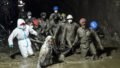
Rescue workers in Ukraine raced to locate residents trapped beneath the rubble of a partly collapsed apartment building after overnight Russian attacks on the Kyiv region killed at least 14 people.
One of the strikes hit a five-storey residential building in Dymer, approximately 45 kilometres north of Kyiv. At least 11 people were reported killed in the attack on the town, while emergency crews continued search and rescue operations.
The attacks added to the civilian toll of Russia’s continuing military campaign against Ukraine. Residential buildings and civilian infrastructure have repeatedly been affected during the conflict, leaving rescue teams to search damaged structures for survivors after major strikes.
The latest casualties also came as international attention remained focused on diplomatic efforts, military developments and the possibility of future negotiations between Moscow and Kyiv.
Russian Warship Merkury Struck in Suspected Ukrainian Drone Attack in Libya
A Russian naval vessel docked at Benghazi in eastern Libya was struck in a suspected Ukrainian sea drone attack early on Sunday, November 22. The incident caused a major explosion and left the Russian corvette Merkury severely damaged before it reportedly sank.
The warship had been docked at the Libyan port to refuel and take on supplies. The attack highlighted the expanding geographical reach of the conflict between Russia and Ukraine, with military-related incidents increasingly reported beyond the immediate front lines.
Ukraine has previously developed and deployed naval drones against Russian naval assets in the Black Sea. A strike on a Russian vessel in Libya, if confirmed as a Ukrainian operation, would represent another example of the use of unmanned maritime systems against targets far from the main battlefield.
The incident also carries wider implications for Russia’s military and diplomatic presence in Libya, where Moscow has maintained ties with authorities in the country’s east.
Democrats Capture at Least 258 House Seats in Biggest Sweep Since 1992
Democrats have secured at least 258 seats in the US House of Representatives, marking their largest majority in more than three decades, following a series of victories in the midterm elections.
The latest result came after Chuck Hubbard defeated Republican Representative Virginia Foxx in North Carolina on Sunday, extending the Democratic gains recorded across the country.
The party is now preparing a 100-day legislative and oversight agenda focused on addressing the cost of living and challenging the Trump administration’s policies during the remainder of the president’s second term.
Democratic leaders are expected to focus on household affordability while using their strengthened position in the House to scrutinise the administration’s decisions and federal agencies.
The scale of the gains represents a significant shift in the composition of the lower chamber of Congress and gives Democrats greater influence over legislative priorities and congressional investigations.
Israel’s Destruction of Gaza Leaves a ‘Toxic Wasteland’, Report Finds
Israel’s military assault on Gaza has created widespread environmental contamination, with polluted water, damaged soil and toxic air threatening the conditions necessary for human survival, according to a report by Oxfam and the Conflict and Environment Observatory (Ceobs).
The report describes an environmental crisis extending beyond the immediate destruction of homes and infrastructure. It identifies heavy metals, explosive residues, asbestos from destroyed buildings and sewage as major sources of contamination across the territory.
These pollutants could have long-term consequences for Palestinians, affecting access to safe drinking water, agricultural land and healthy living conditions. The report warns that the environmental damage could persist for decades.
Contamination from damaged infrastructure and military activity can also complicate reconstruction. Even after fighting stops, removing hazardous materials, restoring water systems and making damaged land safe for residential and agricultural use can require extensive work and resources.
The findings underline how the environmental consequences of war can continue long after the immediate military operations have ended.
Israeli Settler Attacks in West Bank Condemned as ‘Jewish Terrorism’
Arson attacks by militant Israeli settlers on Palestinian communities in the occupied West Bank have triggered a political controversy in Israel, with opposition leader Gadi Eisenkot describing the violence as “Jewish terrorism”.
Dozens of settlers reportedly raided Palestinian communities, setting fire to approximately a dozen vehicles and several homes. Racist graffiti was also scrawled on buildings and other property, with at least four communities reported to have been attacked.
The incidents drew condemnation from Eisenkot, who used the term “Jewish terrorism” to describe the attacks. His remarks added to political debate in Israel over settler violence and the government’s response to attacks against Palestinians.
The incidents have also renewed concerns about the safety of Palestinian residents in the occupied West Bank, where clashes, property destruction and violence have contributed to persistent tensions.
ICE Detention of Father and Daughter at Seattle Airport Sparks Protests
Protests broke out at Seattle-Tacoma International Airport on Sunday after videos circulated showing masked immigration agents detaining a father and his daughter on an airport jet bridge as they prepared to board an Alaska Airlines flight.
The two individuals were identified as Ricardo Larrondo Mendoza and his daughter, Sofia Hernandez Mejia. According to their lawyer, they were travelling to California to attend a family baptism ceremony when immigration agents detained them.
The footage showed the pair being taken into custody while boarding their flight, prompting demonstrations at the airport and renewed criticism of immigration enforcement practices.
The incident drew attention to the use of immigration enforcement operations in public spaces and the impact such detentions can have on families. The circumstances surrounding the detention and the legal status of the individuals were not fully detailed in the available account.
In Other News: Miley Cyrus, Trump Crypto Gala and US Military Controversy
Grammy-winning singer Miley Cyrus and drummer Maxx Morando have reportedly married in a private ceremony in Palm Springs. The reported wedding has attracted attention among entertainment followers, although further details about the ceremony have not been provided.
Donald Trump has also headlined his third cryptocurrency gala, an event rewarding major holders of his own meme coin. Democratic critics have accused the president of improperly benefiting from his cryptocurrency ventures, keeping questions about potential conflicts of interest in the political spotlight.
Meanwhile, Abdul El-Sayed, a Democratic senator-elect, has reiterated support for a healthcare proposal he has referred to as “TrumpCare”. He has urged Trump to support the plan and suggested that Medicare for All could be renamed after the president if he allowed the legislation to pass.
In Iowa, the US Army appeared set to proceed with plans to destroy bomb-making chemicals despite safety concerns and a court order. The issue has raised questions about the handling and disposal of potentially hazardous materials.
Separately, two groups have reportedly verified a mathematician’s claim that Anthropic’s Claude AI model helped solve the 19th-century Riemann Hypothesis. The claim concerns one of mathematics’ most famous unsolved problems and has attracted interest because of the potential role of artificial intelligence in advanced mathematical research. Independent scrutiny of the claimed proof remains important before the result can be treated as an established mathematical breakthrough.
Stat of the Day: Mets Reportedly Agree to $450 Million Deal With Tarik Skubal
The New York Mets have reportedly agreed to a nine-year contract worth $450 million with free-agent pitcher Tarik Skubal, potentially making it the biggest deal of the Major League Baseball offseason.
The reported agreement would represent a major investment by the Mets as they look to strengthen their pitching rotation and compete at the highest level. The scale of the contract also reflects the value placed on elite starting pitchers in the modern baseball market.
Building Power: How Democrats Flipped Texas in the Midterm Elections
Democratic gains in Texas have drawn attention to years of organising efforts aimed at challenging Republican dominance in the state. Organisers who spent decades trying to mobilise voters against Republican rule had often regarded a Democratic breakthrough as a distant possibility.
Reporting from Austin by Samantha Grasso examines how sustained grassroots mobilisation contributed to the political shift and what the results could mean for future elections in Texas.
Melania Documentary Receives Scathing Review
Stuart Heritage has delivered a sharply critical review of the first lady’s new two-part television documentary, Melania, describing the production in unusually harsh terms.
Heritage wrote that “Calling it thin gruel would be an insult to the gruel industry”, reflecting his assessment of the documentary’s content and presentation. The review gave the programme zero stars while presenting it as a must-read example of scathing entertainment criticism.
Climate Check: Hybrid Crabs Puzzle Scientists in the Bering Sea
A marine heatwave in the Bering Sea that killed an estimated 10 billion snow crabs has been followed by reports of an unusual hybrid crab that is puzzling marine biologists and fishers.
The creatures reportedly do not fit neatly into the categories of either Tanner crab or snow crab. Researchers are still trying to understand their characteristics and whether they can reproduce with one another.
The discovery has also raised questions about fisheries management because the hybrid crabs do not currently have established fishing quotas. Determining their biological classification and reproductive behaviour will be important for understanding how they should be managed.
The wider context is the impact of changing ocean conditions on marine ecosystems. Rising sea temperatures can affect species distribution, survival and interactions, creating new challenges for scientists and fishing communities.
Last Thing: US Releases Historical Records of Suspected Bigfoot Sightings
The US Forest Service has added historical reports of suspected Bigfoot encounters in Montana and Oregon to a public archive, renewing interest in the legendary creature also known as Sasquatch.
The Bigfoot Mapping Project contains more than 16,000 reports concerning the cryptid. The newly accessible records include accounts of unusual footprints and unexplained encounters, some dating back several decades.
One document describes a 1982 investigation into suspected footprints in Washington state’s Umatilla National Forest. A biologist examined the impressions, took photographs and prepared plaster casts, but identified several reasons to doubt that the tracks were genuine.
Another account recalls a group of Montana hunters who reportedly encountered strange footprints, an unusual odour and grunting sounds during an incident in the 1940s. The records document historical reports rather than establish the existence of Bigfoot.
Why These Developments Matter
The developments highlight several major issues shaping international affairs, from the difficulty of reaching global agreement on climate action to the continuing human and environmental consequences of armed conflicts. COP31’s failure to produce an overarching agreement has exposed divisions over fossil fuels and climate finance, while the latest reports from Ukraine and Gaza underline the wider costs of war.
In the United States, Democratic gains in the House, immigration enforcement controversies and debates over presidential conduct are likely to influence the political agenda. Meanwhile, developments in artificial intelligence, scientific research and environmental change continue to raise questions that extend beyond national borders.
Together, these stories illustrate how decisions made by governments, institutions and political leaders can shape economic security, public safety, international relations and the environment.
For breaking news and live news updates, like us on Facebook or follow us on Twitter and Instagram. Read more on Latest World on thefoxdaily.com.





COMMENTS 0