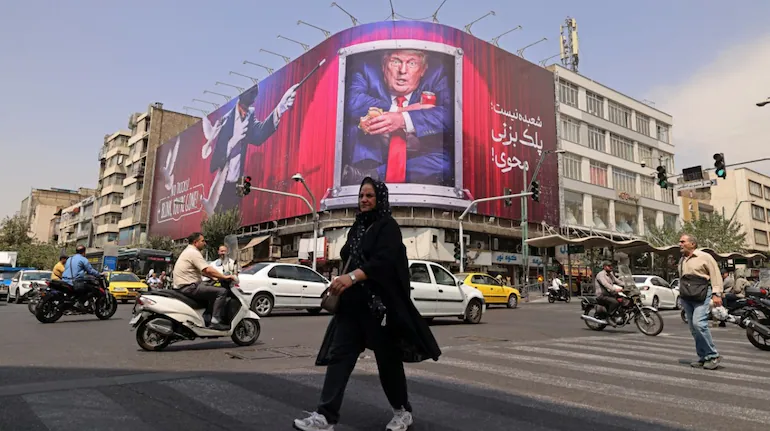
The United States military has prepared plans for a possible new round of strikes against Iran that could take place as early as Wednesday, November 4, according to a report by The New York Times citing US sources. The reported preparations come amid rising tensions between Washington and Tehran following a recent American military operation on Iran’s Qeshm Island in the strategically important Strait of Hormuz.
However, the preparation of military options does not mean that an attack has been authorised. US President Donald Trump has not announced a decision on whether to approve further military action, leaving the possibility of renewed strikes dependent on his approval.
The timing is significant because the reported military plans could be implemented immediately after the November 3 US midterm elections. The development also highlights divisions within the Trump administration over how to respond to Iran, with some officials supporting continued economic pressure and others arguing that additional military action may be necessary.
US military prepares options for fresh strikes on Iran
According to The New York Times, the US military has developed options for another round of strikes against Iranian targets, potentially beginning as early as November 4. The report cited US sources familiar with the preparations.
The reported plans follow earlier discussions between American and Israeli military planners about possible attacks after the US midterm elections. A previous New York Times report published on October 21 said potential targets could include Iranian energy infrastructure, nuclear facilities and missile sites.
These targets would represent different areas of Iran’s strategic and military capabilities. Energy infrastructure is important to the country’s economy, while nuclear facilities and missile installations are central to its security and defence programmes.
However, the reported list describes potential targets considered during military planning. It does not establish that all these facilities have been selected for an attack or that a final operational decision has been made.
Trump’s approval remains necessary before the reported plans can move forward. Until the US president makes a decision, the possibility of fresh strikes remains under consideration rather than a confirmed military operation.
Divisions inside Trump’s administration over Iran strategy
The reported preparations have emerged alongside an internal debate within the Trump administration about the most effective way to deal with Tehran.
Some senior officials are reportedly urging Trump to maintain the US blockade of the Strait of Hormuz. They believe continued economic pressure could weaken Iran’s leadership and increase Washington’s leverage without immediately expanding military operations.
Others favour additional military action, arguing that further strikes could undermine the Iranian regime’s capabilities and increase pressure on Tehran.
The difference reflects two competing approaches to the crisis. One relies primarily on economic and strategic pressure, while the other considers military force necessary to achieve Washington’s objectives.
Trump has not publicly confirmed which approach he intends to follow. His decision could determine whether the current confrontation remains centred on economic pressure and negotiations or moves towards another phase of direct military action.
Trump confirms US operation on Iran’s Qeshm Island
The possibility of fresh strikes comes after American forces carried out an overnight military operation on Iran’s Qeshm Island in the Strait of Hormuz on Monday.
Trump confirmed the operation during an interview with Fox News on Tuesday, describing it as a “minor attack”. He said the United States had targeted an Iranian anti-aircraft facility after it was completed.
“They built an anti-aircraft facility… As soon as it was completed, we hit it last night very nicely,” Trump said.
The president’s remarks provided confirmation of the American operation, which had taken place shortly before the report about possible additional strikes emerged.
US officials described the Qeshm Island operation as “limited” and “defensive”, according to the Associated Press. They said it was intended to counter threats to American forces and commercial shipping operating in the Strait of Hormuz.
The description of the operation as limited and defensive reflects the US administration’s stated justification. However, the action triggered a strong response from Iranian officials and added to concerns about the possibility of a wider military confrontation.
Why Qeshm Island and the Strait of Hormuz matter
Qeshm Island is located in the Strait of Hormuz, one of the world’s most strategically important maritime routes. The waterway connects the Persian Gulf with the Gulf of Oman and provides a major passage for international energy shipments.
Any military escalation in the area can have consequences beyond the immediate confrontation between the United States and Iran. The security of commercial shipping is important for countries that depend on energy supplies moving through the region.
The US officials’ description of the Qeshm Island operation as an effort to counter threats to American forces and commercial vessels highlights the importance Washington places on maintaining security in the waterway.
The Strait of Hormuz has also become central to the wider diplomatic and economic pressure surrounding the crisis. Continued restrictions or threats to shipping could increase uncertainty for international markets and make negotiations between Washington and Tehran more difficult.
Iran warns it is ready for further confrontation
Tehran responded strongly to the American operation on Qeshm Island. Iran’s chief negotiator, Mohammad Bagher Ghalibaf, said the country was prepared for a military confrontation and described its position as being “ready for battle with its finger on the trigger”.
Iranian Deputy Foreign Minister Kazem Gharibabadi also asserted the country’s right to self-defence. His remarks indicated that Tehran considers itself entitled to respond to actions it views as attacks against its territory or interests.
The statements underline the risk that another American military operation could trigger further retaliation. If both sides continue to expand their military responses, the confrontation could become more difficult to contain.
Iran’s warnings also come at a time when US military planners are reportedly considering additional targets. This combination of military preparations and public warnings has increased uncertainty over the next stage of the crisis.
Iranian President Masoud Pezeshkian keeps door open for dialogue
Despite the strong statements from other Iranian officials, President Masoud Pezeshkian has indicated that Tehran remains committed to resolving the crisis through dialogue.
Pezeshkian warned that a return to war would benefit no one. His remarks suggest that Iran is maintaining a diplomatic position even as other senior officials emphasise military readiness and the country’s right to defend itself.
The difference in emphasis highlights the two tracks currently visible in Tehran’s response: warnings against further military action and continued willingness to explore a diplomatic solution.
For Washington, this creates a situation in which military pressure and negotiations are developing simultaneously. Whether the diplomatic approach can prevent further escalation remains uncertain.
Qatar continues mediation between Washington and Tehran
Qatar, which has been mediating indirect negotiations between the United States and Iran, said discussions between the two sides were continuing.
Doha also expressed hope that the negotiations could produce an interim agreement. Such an arrangement could potentially provide a temporary framework for reducing tensions while the two countries continue discussions on their wider differences.
Qatar’s role is particularly important because Washington and Tehran have been communicating through indirect diplomatic channels rather than relying solely on direct negotiations.
The continuation of discussions suggests that diplomatic efforts have not completely stopped despite the recent military operation and the reported preparation of additional strike options.
However, no final agreement has been announced in the available information. The possibility of an interim arrangement will depend on whether both sides can find sufficient common ground to prevent further escalation.
Could the US midterm elections influence Trump’s Iran decision?
The timing of the reported military preparations has drawn attention because the possible strikes could take place immediately after the November 3 midterm elections. The elections are therefore an important part of the political backdrop to the latest developments.
The report indicates that US and Israeli military planners had previously developed options for renewed strikes following the midterms. However, it does not establish that the election results will directly determine Trump’s decision or that military action has been scheduled regardless of the political outcome.
Trump retains the authority to approve or reject the proposed military options. The decision will come amid competing views within his administration about the effectiveness of economic pressure, military action and diplomatic engagement.
For now, the reported timing has increased attention on Washington’s next move, particularly because the Qeshm Island operation has already demonstrated that limited military action remains an option under consideration.
What happens next in the US-Iran confrontation?
The immediate question is whether Trump will approve the military options reportedly prepared by the Pentagon. Although the plans could allow fresh strikes as early as November 4, no final decision has been publicly confirmed.
Several developments will be important in determining the direction of the crisis:
- Trump’s decision: The US president must decide whether to authorise additional military action or continue with the existing pressure strategy.
- Iran’s response: Tehran’s warnings about its readiness for battle raise the possibility of retaliation if American forces launch further strikes.
- Strait of Hormuz security: The situation around Qeshm Island and commercial shipping will remain central to the military and economic dimensions of the crisis.
- Diplomatic negotiations: Qatar’s mediation efforts could provide an alternative route to reducing tensions if Washington and Tehran make progress towards an interim agreement.
The outcome will depend on decisions made by both governments and whether diplomatic efforts can prevent another round of military escalation.
US weighs military action as diplomatic efforts continue
The reported preparation of fresh US strike options against Iran has raised the possibility of another escalation immediately after the 2026 midterm elections. Potential targets reportedly include energy infrastructure, nuclear facilities and missile sites, although no final list of approved targets has been announced.
Trump’s confirmation of the Qeshm Island operation has added urgency to the situation, while Iranian officials have warned that the country is prepared to defend itself. At the same time, President Pezeshkian has reiterated the importance of dialogue, and Qatar says indirect discussions between Washington and Tehran are continuing.
The central uncertainty remains whether Trump will choose military escalation or continue relying on economic pressure and diplomacy. Until the president makes a decision, the reported November 4 timeline remains a possibility rather than confirmation that another US attack on Iran will take place.
For breaking news and live news updates, like us on Facebook or follow us on Twitter and Instagram. Read more on Latest World on thefoxdaily.com.






COMMENTS 0