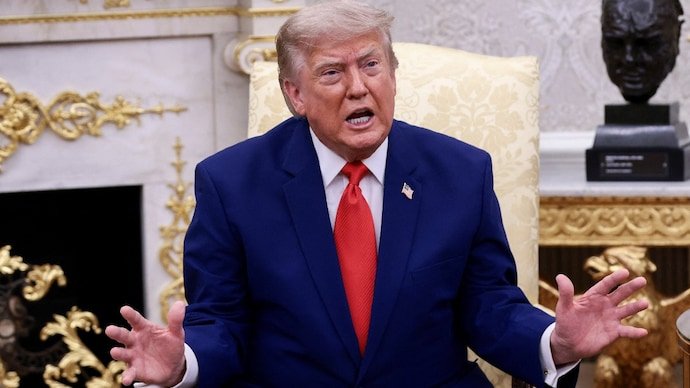
The conflict between the United States and Iran entered another dangerous phase after US President Donald Trump declared that the United States would destroy Iranian bridges or power plants whenever Tehran attacks a commercial or military vessel transiting the Strait of Hormuz. The statement follows more than a week of sustained US military operations against Iranian targets and comes amid rising fears that the regional conflict could evolve into a broader international crisis.
Trump’s latest warning reflects a significant shift in deterrence strategy by directly linking attacks on international shipping to strikes against Iran’s civilian infrastructure. The announcement has intensified diplomatic tensions, unsettled global financial markets, and renewed concerns over the security of one of the world’s most critical maritime trade routes.
As military operations continue and diplomatic efforts struggle to gain momentum, governments, businesses, and investors worldwide are closely monitoring developments that could influence global oil supplies, shipping costs, Inflation, and regional stability.
What Did Donald Trump Announce?
President Trump stated that the United States would retaliate against Iran’s infrastructure if Iranian forces attack any ship navigating the Strait of Hormuz, regardless of whether the attack involves missiles, rockets, drones, or other weapons.
The warning expands previous US rhetoric by identifying bridges and power plants as potential targets, signaling a broader approach aimed at deterring future attacks on international shipping. The announcement came after another night of American military operations targeting Iranian military facilities.
The statement underscores Washington’s position that freedom of navigation through international waterways remains a strategic priority and that attacks on commercial shipping will invite immediate consequences.
US Military Operations Continue
According to the US military, American forces completed an eleventh consecutive night of operations targeting military assets inside Iran. Officials stated that the strikes focused on infrastructure associated with Iran’s ability to conduct maritime operations and deploy drones and missiles.
Military objectives reportedly included:
- Command and operational centers.
- Aircraft hangars.
- Drone storage facilities.
- Military logistics infrastructure.
- Maritime operational capabilities.
US officials have argued that these operations are intended to reduce Iran’s capacity to threaten commercial vessels operating in strategic waterways.
Why the Strait of Hormuz Is So Important
The Strait of Hormuz is widely regarded as one of the world’s most strategically important maritime chokepoints. Located between Iran and Oman, the narrow passage connects the Persian Gulf with international shipping routes through the Arabian Sea.
Every day, millions of barrels of crude oil and significant volumes of liquefied natural gas pass through this corridor, making it essential to Global Energy security.
Any military confrontation that disrupts traffic through the strait has immediate consequences for international energy markets, shipping companies, insurers, and consumers worldwide.
Key Facts About the Strait of Hormuz
| Category | Details |
|---|---|
| Location | Between Iran and Oman |
| Strategic Role | Main export route for Gulf oil and natural gas |
| Global Importance | One of the world’s busiest maritime energy corridors |
| Primary Users | Saudi Arabia, UAE, Kuwait, Iraq, Qatar and global shipping companies |
| Economic Impact | Critical for global fuel prices and international trade |
Timeline of the Escalation
| Event | Development |
|---|---|
| Regional conflict begins | Military operations expand between the US, Israel, and Iran. |
| Repeated maritime incidents | Washington accuses Iran of attacking commercial vessels. |
| Extended US operations | American forces conduct multiple consecutive nights of strikes. |
| Trump’s warning | US threatens infrastructure strikes following any future attacks on shipping. |
| Regional uncertainty | Markets and governments prepare for possible further escalation. |
Why Commercial Shipping Is at the Center of the Crisis
Modern economies depend on uninterrupted maritime trade. The Strait of Hormuz serves as a vital gateway for energy exports from Gulf nations to markets across Asia, Europe, and North America.
When ships face security threats, the consequences extend far beyond the region.
- Shipping insurance premiums increase.
- Freight costs rise.
- Oil Prices become more volatile.
- Energy-importing countries face higher fuel expenses.
- Global supply chains experience additional pressure.
Even isolated attacks can influence financial markets because traders anticipate future supply disruptions before shortages actually occur.
Economic Impact Beyond the Middle East
The implications of instability in the Strait of Hormuz reach virtually every major economy.
Higher energy prices affect transportation, manufacturing, agriculture, aviation, and retail industries. Businesses facing increased fuel costs often pass those expenses on to consumers, contributing to broader inflation.
Financial markets also respond quickly to geopolitical uncertainty. Investors frequently shift toward safer assets during periods of heightened international tension, increasing volatility across global stock and commodity markets.
Comparison: Immediate vs Long-Term Effects
| Immediate Effects | Long-Term Effects |
|---|---|
| Oil price fluctuations | Persistent inflation risks |
| Higher shipping insurance | Structural changes in energy trade |
| Market uncertainty | Reduced global investment confidence |
| Military deployments | Expanded regional security alliances |
| Supply chain disruptions | Diversification of energy transportation routes |
The Strategic Importance of Freedom of Navigation
International waterways like the Strait of Hormuz play a critical role in global commerce. Many governments consider uninterrupted access to these sea lanes essential for economic stability and international trade.
Freedom of navigation has long been a central principle of maritime law and international security Policy. When commercial shipping becomes a target during armed conflicts, the risks extend well beyond the countries directly involved.
Protecting these routes often requires cooperation among naval forces, international organizations, and regional governments.
The Humanitarian Dimension
While geopolitical strategy dominates headlines, armed conflicts inevitably have significant humanitarian consequences. Military operations can affect civilian populations through displacement, infrastructure damage, disruptions to healthcare services, and economic hardship.
International humanitarian organizations have repeatedly emphasized the importance of protecting civilians and maintaining access to essential services during periods of conflict.
The longer military operations continue, the greater the challenge of balancing security objectives with humanitarian considerations.
How Energy Markets Are Responding
Energy traders closely monitor developments in the Gulf because geopolitical tensions directly influence market expectations.
Several factors determine how oil prices respond:
- Actual disruptions to exports.
- Shipping availability.
- Insurance costs.
- Strategic petroleum reserves.
- Production decisions by major oil-exporting nations.
- Global economic demand.
Even if physical supplies remain stable, uncertainty alone can contribute to higher market volatility.
Expert Insight: Why Infrastructure Threats Represent a Major Escalation
Military analysts often distinguish between attacks targeting military assets and threats directed at broader national infrastructure. Bridges, power generation facilities, and transportation networks are essential to economic activity and civilian life.
Public warnings involving infrastructure targets therefore represent a significant escalation in political messaging because they broaden the potential scope of military retaliation beyond conventional battlefield objectives.
Such statements are frequently intended to strengthen deterrence, although they can also increase diplomatic tensions and complicate future negotiations.
Diplomatic Challenges Ahead
Despite continued military operations, diplomatic engagement remains an important avenue for reducing tensions.
Negotiations involving regional governments and international stakeholders are expected to focus on several key issues:
- Maritime Security.
- Protection of commercial shipping.
- Regional military de-escalation.
- Nuclear-related concerns.
- Humanitarian access.
- Long-term stability in the Gulf.
Achieving progress remains difficult while active military operations continue, but diplomatic communication often becomes even more important during periods of heightened conflict.
Future Outlook
The coming weeks are likely to determine whether the current confrontation evolves into a broader regional conflict or gradually moves toward diplomatic de-escalation.
Global markets will continue monitoring military developments, shipping activity through the Strait of Hormuz, oil production levels, and official statements from Washington, Tehran, and regional governments.
If commercial shipping remains under threat, governments may expand naval patrols and coordinate additional maritime security measures to protect international trade routes.
At the same time, sustained diplomatic engagement will be essential to reducing the risk of further escalation and restoring confidence in one of the world’s most strategically important energy corridors.
Conclusion
Donald Trump’s warning that the United States would strike Iranian bridges and power plants following any future attacks on ships in the Strait of Hormuz marks another significant development in an already tense regional conflict. The statement highlights Washington’s determination to safeguard international shipping while signaling a tougher deterrence strategy against maritime attacks.
Beyond the immediate military implications, the situation carries profound consequences for global Energy Security, international trade, financial markets, and diplomatic stability. As one of the world’s most critical maritime chokepoints remains under heightened security concerns, governments and businesses across the globe will continue watching developments closely. Ultimately, preventing further escalation while preserving the free flow of international commerce will remain the defining challenge for policymakers in the weeks ahead.
For breaking news and live news updates, like us on Facebook or follow us on Twitter and Instagram. Read more on Latest World on thefoxdaily.com.





COMMENTS 0