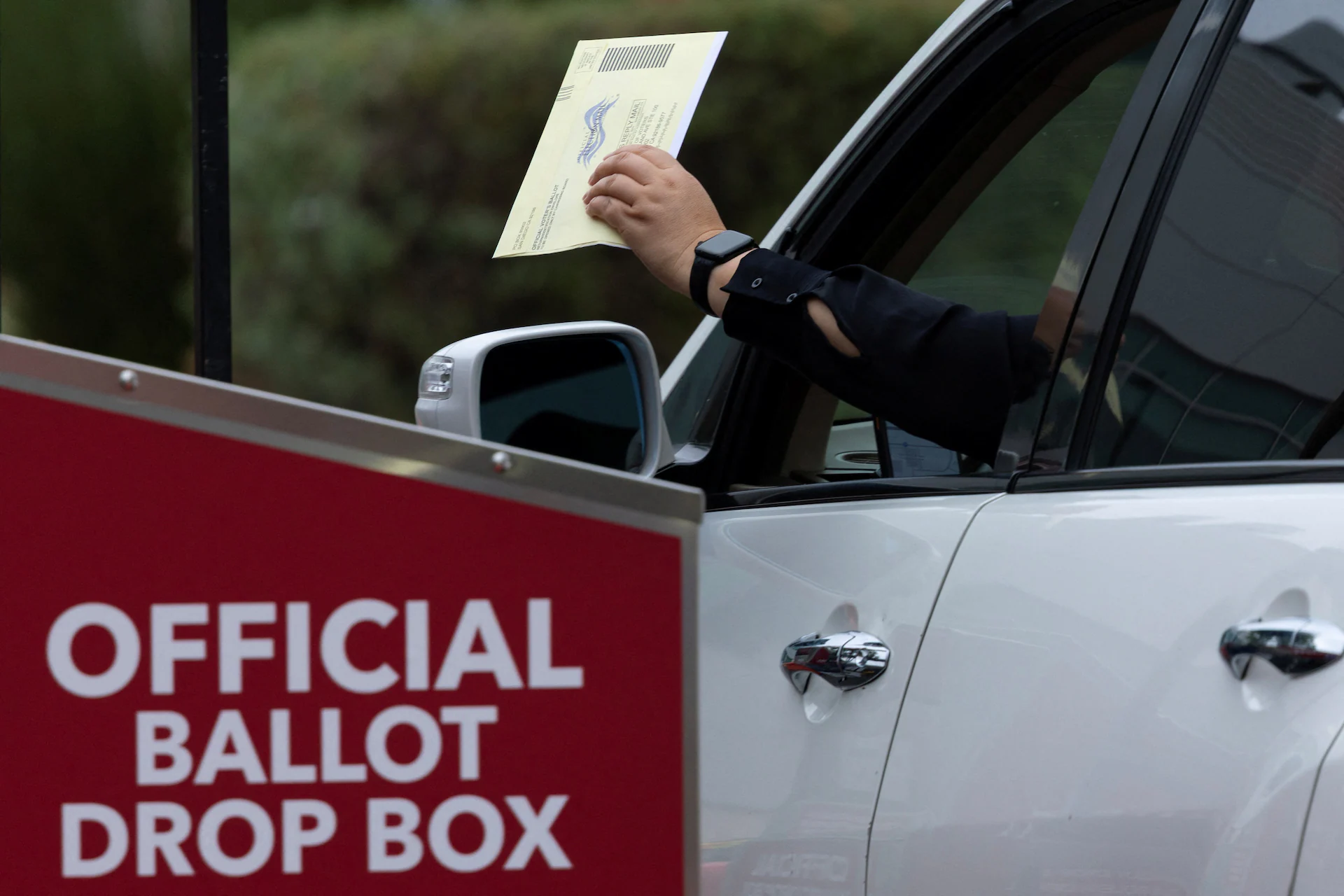
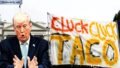
US President Donald Trump has threatened California election officials with imprisonment amid a dispute over mail-in ballots linked to more than 20,000 people whom his administration suspects of being noncitizens. The controversy escalated after the US Justice Department warned Los Angeles County and California election officials that they could face legal liability if they knowingly facilitate the counting of ballots allegedly returned by ineligible voters.
The warning came on October 16, less than three weeks before the November 3 US midterm elections. It followed a Justice Department lawsuit seeking to prevent California from counting the ballots and an earlier demand that state officials review a federal list of alleged noncitizen voters within 48 hours.
Trump amplified the dispute by sharing a letter from acting US Deputy Attorney General Trent McCotter on his Truth Social platform. The president responded with a threat that the officials involved would face lengthy prison sentences, intensifying the confrontation between the federal administration and California over election administration, voter eligibility and access to voter records.
California officials have challenged the federal government’s approach, arguing that the Justice Department has not adequately explained how it compiled the list and that its efforts to obtain protected voter information could undermine public confidence in elections. The dispute raises questions about how allegations of noncitizen voting should be investigated, how voter eligibility is verified and what legal authority federal officials can exercise over state election procedures.
Trump Threatens Jail Time for California Election Officials
Trump issued his warning after McCotter sent a letter to Los Angeles County and California election officials concerning ballots allegedly returned by people the administration believes are likely noncitizens. The letter warned that officials could be treated as abettors of a federal crime if they knowingly helped facilitate illegal voting in a federal election.
Sharing the letter on Truth Social, Trump wrote: “They will all go to jail for a long period of time!!!”
The statement represented a forceful escalation of the administration’s campaign to challenge what it describes as potential noncitizen voting. However, the allegation that particular individuals are likely noncitizens does not, by itself, establish that they voted illegally or that election officials knowingly facilitated a crime.
McCotter’s letter addressed Los Angeles County Assistant Counsel Peter Bollinger and copied California Secretary of State Shirley Weber and Los Angeles County Registrar-Recorder Dean Logan. It called on the county and the state’s top election official to reconsider their refusal to take measures that the administration says are necessary to prevent voter fraud.
The county counsel’s office did not immediately respond to a request for comment, according to the report by Reuters. Weber’s office referred to an earlier statement criticising the Justice Department’s attempts to access protected voter data and remove names from voter rolls.
Justice Department Warns California Over More Than 20,000 Ballots
The dispute centres on a list of more than 20,000 people whom the Trump administration believes may be noncitizens and who were reportedly sent mail-in ballots in California. The Justice Department has argued that officials must take action to ensure that ballots returned by ineligible voters are not counted in federal elections.
In his letter, McCotter warned that noncitizen voting in a federal election is a federal crime and argued that knowingly facilitating such conduct could also violate federal law. He urged Los Angeles County and California’s secretary of state to reconsider their position on the administration’s demands.
The warning followed an earlier letter sent on Tuesday to Weber and Logan. According to that correspondence, the Justice Department provided Los Angeles County officials with a password-protected thumb drive containing the names of individuals whom federal authorities believed were likely noncitizens and who had been sent mail-in ballots.
The department subsequently explained that it had relied on internal immigration records and data matching to compile the list, according to McCotter’s Friday letter.
However, the disagreement has not been limited to whether noncitizens should be prevented from voting. It also concerns the reliability and transparency of the federal government’s identification process and whether state and county officials have sufficient information to evaluate the allegations before taking action affecting ballots or voter registration records.
The distinction is important because receiving a mail-in ballot does not establish that a person voted, and being identified as a potential noncitizen does not automatically establish that the person is legally ineligible to vote. Determining eligibility requires an assessment of the individual’s citizenship status and the applicable election rules.
Why California Officials Are Resisting the Federal Demands
California officials have questioned the Justice Department’s requests, particularly its demand for action based on a list whose methodology they say has not been adequately explained.
Los Angeles County Counsel Dawyn R. Harrison said on Thursday that the county could not comply with the Justice Department’s requests because the Trump administration had not explained how the list was compiled. The concern centres on whether the information provided by federal authorities is sufficiently reliable to justify action involving voter eligibility and ballots.
California Secretary of State Shirley Weber has also criticised the federal government’s approach. Her office referred to an earlier statement in which she said the Justice Department’s attempts to obtain protected voter data and purge voter rolls risked creating confusion and weakening public trust in elections.
California’s position reflects a broader dispute over the administration of elections in the United States, where state and local authorities play central roles in maintaining voter registration records and conducting elections. Federal authorities can investigate and prosecute violations of federal election law, but disagreements can arise over the scope of federal requests and the procedures states must follow when reviewing voter information.
In this case, the administration has argued that officials should take steps to prevent potentially ineligible ballots from being counted. California officials, meanwhile, have raised concerns about the information supporting the federal allegations and the consequences of acting on data whose accuracy has not been sufficiently demonstrated to them.
The disagreement has now moved beyond correspondence between officials. The Justice Department’s lawsuit seeking to block California from counting the ballots creates a separate legal challenge that could determine how the disputed ballots are handled.
Justice Department Sues California Over Disputed Mail-In Ballots
On Thursday, the Justice Department sued California in an attempt to prevent the state from counting the disputed ballots. The legal action followed the administration’s demand that California review the list of alleged noncitizen voters within 48 hours or face further legal action.
The lawsuit represents a significant escalation in the dispute, shifting the conflict from demands made through official letters to a court challenge over election procedures. The case centres on the administration’s contention that ballots associated with suspected noncitizens should not be counted and the state’s response to the federal request.
The precise legal outcome will depend on the arguments presented in court and the evidence supporting the government’s allegations. The existence of a federal list does not, on its own, resolve whether every person identified is a noncitizen, whether any individual cast a ballot or whether a particular ballot is legally ineligible to be counted.
The timing adds to the significance of the case. With the November 3 midterm elections approaching, disputes over election administration can create uncertainty for officials responsible for ensuring that voting procedures comply with applicable law.
The litigation also raises practical questions about how election officials should respond when federal authorities identify people as potentially ineligible voters but local officials say the basis for those classifications has not been adequately explained.
Trump’s Claim About 275,000 Noncitizens Registered to Vote
The latest confrontation follows Trump’s earlier claims about noncitizen voter registration. In July, the president said his administration had uncovered evidence of more than 275,000 noncitizens registered to vote. However, the reported information did not establish how many of those individuals, if any, had actually cast ballots.
The distinction between voter registration and voting is central to assessing such claims. A person appearing on a voter registration list is not necessarily evidence that the person participated in an election. Similarly, an allegation that someone may not meet citizenship requirements must be evaluated separately from the question of whether that individual cast a ballot.
Registration records can also contain inaccurate or outdated information. Names may remain in databases after changes in a person’s circumstances, while data-matching systems can produce incorrect classifications when records do not align properly.
For these reasons, the number of people identified in a registration database should not automatically be treated as the number of people who voted illegally. Establishing whether a violation occurred requires reliable evidence concerning an individual’s eligibility and voting activity.
The administration’s claims have intensified the debate over election security and the safeguards used to verify voter eligibility. At the same time, concerns about the accuracy of citizenship checks have prompted warnings that aggressive removal efforts could affect eligible voters if the underlying data is incorrect.
Studies Find Noncitizen Voting Is Exceedingly Uncommon
The controversy comes against a broader backdrop of research indicating that noncitizens casting ballots in US elections is exceedingly uncommon. The information reported in connection with the dispute also highlights the risk that systems designed to identify noncitizens may mistakenly flag people who are legally eligible to vote.
In some previous cases, citizenship verification systems have incorrectly identified naturalised US citizens as noncitizens. Naturalised citizens acquire US citizenship through a legal process and are generally eligible to vote if they meet the other applicable requirements.
Such errors illustrate the challenges involved in matching records across government databases. Differences in names, incomplete information, outdated records or discrepancies between systems can produce results that require further verification before officials make decisions affecting an individual’s voting status.
The possibility of errors does not mean that voter eligibility checks are unnecessary. Rather, it underscores the importance of using accurate information and appropriate verification procedures when investigating allegations of unlawful voting.
In the California dispute, the central question is not simply whether noncitizen voting is prohibited under federal law. It is also whether the individuals identified by the administration have been correctly classified and whether the available evidence supports the requested action involving their ballots.
The distinction between suspected ineligibility and proven wrongdoing is particularly important when election officials are asked to make decisions that could affect the counting of ballots shortly before a major election.
Justice Department Expands Investigations Into Alleged Noncitizen Voting
Since July, the Justice Department has increased prosecutions of people accused of voting illegally while not holding US citizenship, according to the report. The activity forms part of the administration’s broader effort to address what it describes as vulnerabilities in voter registration and election administration.
The White House has also pushed federal agencies to accelerate their review of at least 47 state voter rolls obtained by the Department of Homeland Security. The information was described in an internal email seen by Reuters.
The effort to examine voter registration data across multiple states suggests that the dispute with California is part of a wider federal initiative rather than an isolated disagreement over a single county’s election procedures.
Supporters of stricter verification measures argue that election officials should identify and address any cases in which ineligible individuals are registered or attempt to vote. Critics, however, have raised concerns about the accuracy of data-matching systems, the handling of protected voter information and the potential for eligible voters to be incorrectly flagged.
These competing concerns make the design and implementation of verification procedures important. Effective election administration requires safeguards against unlawful voting while also protecting eligible citizens from erroneous registration removals or allegations based on inaccurate records.
Why the Mail-In Ballot Dispute Matters Before the Midterm Elections
The timing of the confrontation has added political and administrative pressure to an already contentious issue. The Justice Department issued its warning less than three weeks before the November 3 midterm elections, when state and local officials were preparing for voting and managing election-related procedures.
Mail-in ballots are an established voting method in the United States, allowing eligible voters to participate without casting their ballots in person on election day. The rules governing their use, return and counting vary according to the applicable state laws and election procedures.
When a dispute arises over the eligibility of voters associated with returned ballots, officials must distinguish between allegations requiring investigation and evidence sufficient to justify a particular action. The handling of such disputes can affect election administration, public confidence and the ability of eligible voters to have their votes counted in accordance with the law.
The California case also highlights the relationship between federal election law enforcement and state responsibility for conducting elections. Federal authorities may investigate suspected violations of federal law, while state and local officials administer many of the procedures governing voter registration and ballot counting.
When the two levels of government disagree about the reliability of information or the legality of a requested action, the dispute can move into the courts. The Justice Department’s lawsuit against California is now part of that process, with the outcome potentially affecting how the disputed ballots are treated.
The approaching election deadline makes clarity particularly important. Election officials must understand which legal requirements apply, what evidence supports any allegations and what procedures must be followed before making decisions that affect ballots.
What Happens Next in the California Election Dispute?
The immediate legal question is whether the Justice Department can obtain the relief it is seeking to prevent California from counting the disputed ballots. The lawsuit filed on Thursday will require the legal claims and supporting evidence to be considered through the court process.
At the same time, the disagreement over the federal list remains significant. Los Angeles County officials have questioned how the list was compiled, while McCotter’s latest letter says the Justice Department relied on internal immigration records and data matching.
Further examination of the underlying information may be important in determining whether the people identified are correctly classified and whether the allegations support the administration’s requested action. The distinction between being suspected of being a noncitizen and having that status reliably established remains central to the dispute.
Trump’s threat of imprisonment has added a political dimension to the legal confrontation, but the president’s statement does not itself determine whether California officials have violated federal law. Any question of criminal liability would depend on the applicable legal requirements and the evidence concerning the conduct of the individuals involved.
The dispute is likely to remain focused on three connected issues: whether the ballots can legally be counted, whether the federal government’s data supports its claims about voter eligibility, and how federal and state authorities should resolve disagreements over election administration.
Key Takeaways From Trump’s Threat Against California Officials
- Trump threatens imprisonment: The president said California officials would face lengthy prison sentences after sharing a Justice Department letter on Truth Social.
- More than 20,000 people identified: The administration says the individuals associated with the disputed mail-in ballots are likely noncitizens.
- Justice Department warns officials: Acting Deputy Attorney General Trent McCotter said knowingly facilitating unlawful voting could expose officials to criminal liability.
- California challenges the request: State and county officials have questioned the federal government’s approach and the explanation provided for its list.
- Federal lawsuit filed: The Justice Department sued California on Thursday in an effort to prevent the state from counting the disputed ballots.
- Data accuracy remains a concern: Previous citizenship verification systems have mistakenly flagged some naturalised US citizens as noncitizens.
- Broader federal review underway: The White House has pushed agencies to accelerate reviews of at least 47 state voter rolls obtained by the Department of Homeland Security.
- Midterm elections approach: The dispute has intensified less than three weeks before the November 3 elections.
Conclusion
Donald Trump’s threat to imprison California officials has intensified a dispute over mail-in ballots linked to more than 20,000 people whom his administration suspects of being noncitizens. The Justice Department has warned that officials could face legal liability if they knowingly facilitate unlawful voting, while California authorities have questioned the reliability and transparency of the information used to identify the individuals.
The federal lawsuit seeking to prevent California from counting the disputed ballots has moved the disagreement into the courts. The outcome will depend on the applicable law, the evidence supporting the administration’s claims and the legal arguments presented by both sides.
The controversy also highlights the challenge of balancing election security with accurate voter verification. Noncitizen voting in US elections has been found to be exceedingly uncommon, according to studies cited in the reported account, while previous verification systems have sometimes mistakenly flagged naturalised citizens.
As the November 3 midterm elections approach, the central questions remain whether the disputed individuals have been correctly identified, what the available evidence establishes and how election officials should respond without compromising lawful ballot counting or public confidence in the electoral process.
For breaking news and live news updates, like us on Facebook or follow us on Twitter and Instagram. Read more on Latest World on thefoxdaily.com.


COMMENTS 0