Bill Essayli, the interim US attorney overseeing federal prosecutions in Southern California, has become a central figure in a growing dispute over Voting Rights and the limits of federal prosecutorial power. In the weeks leading up to the November 2026 midterm elections, Essayli’s office has challenged California’s handling of voter eligibility, seeking to prevent thousands of ballots from being counted until officials verify the citizenship status of the people who cast them.
The Department of Justice (DOJ) contends that approximately 20,000 registered voters are likely noncitizens. California election officials dispute the reliability of the federal government’s data and argue that the requested verification process is impractical. They warn that setting aside ballots on this basis could disenfranchise eligible American citizens and undermine confidence in the electoral process.
The legal confrontation is the latest in a series of controversial initiatives undertaken by Essayli since President Donald Trump returned to office in 2025. His office has pursued cases involving Immigration protests, alleged drug offences and transgender athletes, while several prosecutions have encountered setbacks in court.
Critics argue that these cases reflect an increasingly political approach to federal law enforcement. Essayli and the Justice Department have defended their authority to pursue the administration’s priorities, but a series of judicial challenges has raised questions about prosecutorial conduct and Essayli’s own legal authority to lead the office.
The dispute over California ballots has particular significance because it concerns the administration of an election before votes are counted. It also raises a fundamental question: how can authorities investigate suspected electoral misconduct without preventing eligible citizens from exercising their constitutional rights?
Why Bill Essayli wants California to set aside 20,000 ballots
Essayli’s latest campaign centres on the DOJ’s contention that approximately 20,000 California voters are likely to be noncitizens. His office has sued the state, seeking to require election officials to verify the eligibility of those voters before counting their ballots in the upcoming midterm elections.
The dispute is not simply about whether noncitizens are legally permitted to vote in federal elections. The central issue is whether the federal government has established a sufficient basis to question the eligibility of the particular voters identified in its data and whether the proposed verification process can be implemented lawfully and practically.
California election officials argue that the federal data is unreliable and that the requested checks would be logistically impossible. They also warn that treating the identified voters as potentially ineligible without adequate verification could result in legitimate ballots being excluded from the count.
These concerns highlight an important distinction in election administration: identifying a person for further review is not the same as establishing that the person is ineligible to vote.
A voter record may require clarification, but election officials must still determine whether the individual meets the applicable eligibility requirements. If a ballot is excluded before that question is resolved, an eligible citizen could lose the opportunity to have their vote counted.
What the federal lawsuit could mean for voters
The DOJ’s request would place additional obligations on California election officials shortly before a high-stakes election. Depending on how the verification process was designed and implemented, it could affect the handling of ballots associated with the disputed voter records.
The practical challenge is determining eligibility accurately without introducing unnecessary delays or excluding valid votes. Officials would need a reliable process for reviewing the relevant records, resolving discrepancies and distinguishing confirmed ineligibility from uncertainty.
California officials argue that the federal government’s proposed approach fails to account adequately for these practical difficulties. They contend that the demand could threaten the voting rights of US citizens rather than simply prevent unlawful voting.
The timing also matters. Election administrators operate under fixed deadlines for processing ballots and certifying results. A substantial verification exercise introduced shortly before an election could place pressure on staff and existing procedures, particularly if the underlying records require extensive review.
On Monday, an appeals court issued an initial ruling against the DOJ’s attempt to set aside the votes. The ruling marked an early legal setback for the federal government’s effort, although the supplied account does not establish the final outcome of the wider dispute.
The court proceedings will help determine how far the federal government can go in requiring states to change their election procedures on the basis of disputed voter eligibility data.
Bill Essayli’s separate prosecutions over alleged noncitizen voting
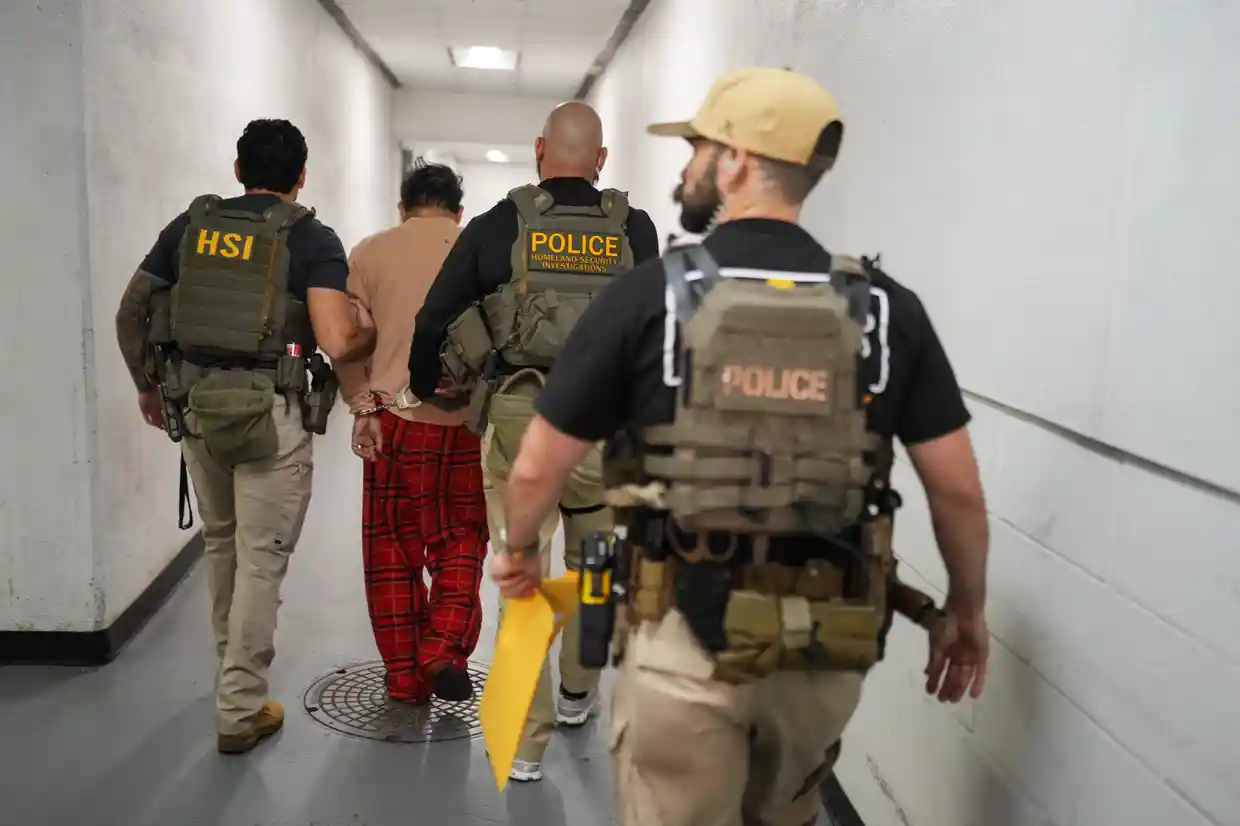
Essayli has pursued a second line of action alongside the lawsuit against California. His office recently charged 13 green card holders accused of unlawfully registering to vote.
One defendant, aged 72, was arrested in front of news cameras and featured in a promotional video released by the Justice Department. The presentation of the arrest drew attention to the administration’s public messaging around alleged voter fraud.
The cases involve a distinction between immigration status and voting eligibility. Green card holders are lawful permanent residents of the United States, but they are not US citizens. Federal elections are generally restricted to citizens, and noncitizens may face legal consequences for unlawfully registering or voting where applicable laws have been violated.
However, an arrest or criminal charge is not proof of guilt. Each allegation must be assessed through the legal process, including examination of the evidence and the specific conduct attributed to the defendant.
The distinction is particularly important when individual prosecutions are used to support broader claims about election integrity. Evidence that particular people allegedly attempted to register unlawfully would not, by itself, establish that thousands of other voters identified through a separate database are ineligible.
Critics of Essayli’s approach argue that the public presentation of these cases risks creating a broader impression of electoral misconduct before the allegations have been fully tested in court.
Threats of prosecution against California election officials
Essayli has also warned election officials that they could face legal jeopardy if they knowingly process a ballot cast by a noncitizen.
The warning raises questions about how federal criminal law should apply to election administration, particularly when officials are dealing with disputed records rather than confirmed cases of ineligibility.
Election officials must follow the law, and knowingly facilitating unlawful voting can raise legitimate legal concerns. But the question of knowledge is important. Processing a ballot associated with a record flagged by a federal database is not necessarily the same as knowingly processing an ineligible person’s vote.
Officials may have to reconcile incomplete records, correct administrative errors or investigate conflicting information. A legal standard that does not adequately distinguish between deliberate misconduct and a good-faith administrative decision could create uncertainty for those responsible for running elections.
Such uncertainty may also affect the conduct of election workers. If officials fear prosecution for making routine decisions involving disputed voter records, they may become more reluctant to process ballots or may delay decisions while seeking additional guidance.
That possibility is central to the concerns raised by voting-rights advocates. They argue that aggressive enforcement rhetoric, combined with demands to set aside ballots, could discourage participation or make election administration more difficult even before a court reaches a final decision.
Why democracy and constitutional law experts are concerned
The DOJ’s efforts have drawn criticism from democracy advocates and constitutional law experts, who say noncitizen voting is extremely rare and that the aggressive pursuit of these cases is unusual.
Sergio Perez, a former DOJ lawyer and civil rights advocate, described the actions as an effort to discourage voting in California and criticised what he viewed as the politicisation of the US attorney’s office.
His criticism reflects a broader concern about the distinction between enforcing election laws and using the authority of federal prosecutors in ways that could affect participation in an election.
Election integrity is a legitimate public interest. Governments have a responsibility to investigate credible allegations of unlawful voting and maintain accurate voter records. At the same time, enforcement measures must be grounded in reliable evidence and applied consistently.
The challenge is especially significant when an investigation involves a large group of voters rather than a small number of individually established cases. A broad database-based allegation requires careful verification before it can justify measures that might prevent ballots from being counted.
There is also a difference between preventing unlawful votes and protecting the integrity of the entire electoral process. An effective system must address both concerns: it should investigate credible evidence of ineligibility while ensuring that eligible citizens are not wrongly excluded.
For critics of Essayli, the concern is that the administration’s approach gives insufficient weight to the second obligation. The courts’ handling of the lawsuit will be important in determining whether the federal government’s proposed restrictions are legally justified.
How Essayli’s record as a prosecutor has attracted scrutiny
The ballot dispute did not emerge in isolation. Since becoming interim US attorney for the Central District of California in April 2025, Essayli has pursued an array of cases aligned with the Trump administration’s priorities.
His office has targeted people accused of interfering with immigration enforcement, pursued drug prosecutions in Los Angeles and brought a lawsuit seeking to prevent transgender girls from participating in girls’ sports.
These initiatives have generated criticism from defence lawyers, former prosecutors and civil rights advocates, particularly where charges have subsequently been dismissed or defendants have been acquitted.
Critics argue that the pattern suggests a prosecutorial strategy focused on politically prominent cases rather than the conventional assessment of whether the available evidence supports a charge.
Several high-profile cases have encountered significant legal difficulties. Judges have criticised aspects of the government’s conduct, while some prosecutions have ended without convictions.
Those outcomes do not automatically establish that every case brought by Essayli’s office was improperly motivated. A dismissal or acquittal must be understood in the context of the particular allegations and evidence. Nevertheless, repeated setbacks can raise legitimate questions about investigative standards, prosecutorial judgment and the use of federal resources.
Immigration protest prosecutions suffered significant setbacks
Essayli’s office stepped up prosecutions of people accused of interfering with federal immigration officers after the Trump administration intensified immigration enforcement in the Los Angeles region during spring 2025.
As protests spread, federal prosecutors brought cases involving alleged assaults on officers, obstruction and conspiracy. Essayli publicly warned that people who impeded or struck federal agents would face arrest.
According to data the DOJ shared with the Guardian, Essayli’s office prosecuted 113 people for alleged crimes against immigration officers from spring 2025 onward.
By mid-September, 33 of those defendants had their charges dismissed, while nine were acquitted by juries. Four people had been found guilty at trial, including two whose convictions were for felonies. Thirteen pleaded guilty to felonies, while the remaining cases were resolved through misdemeanor pleas, with some trials still pending.
Laurie Levenson, a Loyola law professor and former DOJ attorney, described the results as unprecedented for federal prosecutors, who ordinarily achieve conviction rates well above 90%.
The figures are notable because they indicate that many of the cases did not end in felony convictions after contested trials. However, the outcomes alone do not establish that all the original charges were unjustified or that every case involved political interference.
Reports by the Los Angeles Times and Bloomberg also suggested that Essayli had intervened in some cases where prosecutors had concerns about insufficient evidence. The supplied account describes allegations that he overruled colleagues who advised against bringing charges.
If prosecutors are pressured to pursue cases despite substantial evidentiary weaknesses, the consequences can extend beyond the eventual verdict. Defendants may spend time in custody, lose employment and incur legal expenses before the case is resolved.
Six months in jail before a protest case was dismissed
One of the most striking examples involved Jonathon Redondo-Rosales, a 37-year-old man who spent six months in jail after being charged with assaulting a federal officer during an anti-ICE protest.
Video from an August 2025 demonstration outside a federal building showed Redondo-Rosales dancing in front of a government vehicle. The vehicle slowly made contact with him, after which he briefly rolled onto its hood and an officer lunged at him.
Redondo-Rosales appeared to stumble backwards and swing his sun hat towards the officer. Multiple officers then took him to the ground, pepper-sprayed him and left him with a bloodied face.
An officer alleged that Redondo-Rosales had struck him with a fist. However, the defence argued that video footage contradicted that account. Court records also raised questions about the officer’s credibility because he had failed to disclose a criminal harassment conviction in a separate case.
Before the trial began in February, prosecutors sought to dismiss the case without prejudice, a move that could have left open the possibility of bringing the charges again.
The judge rejected that approach, finding that the government’s move was in bad faith and dismissing the charges with prejudice, which prevented the prosecution from simply refiling the same case.
Redondo-Rosales later described the stress of being held without bail and said he had refused pressure to plead guilty because he maintained that he had not assaulted the officer.
His case illustrates the potential human consequences of a prosecution that collapses after months of detention. Even when a defendant ultimately avoids conviction, time spent in jail can affect employment, family relationships and the ability to participate in public life.
Sandra Samame acquitted after being accused of targeting an ICE agent
Another case involved Sandra Samame, 25, who was charged with stalking and conspiracy to dox an Immigration and Customs Enforcement agent.
Samame and others had followed an officer who was driving away from a federal building in August 2025. According to her account, the group believed the officer was heading towards an immigration raid but inadvertently followed him to his home.
Unlike Redondo-Rosales, Samame went to trial. She was acquitted of both charges, although two co-defendants were convicted.
Samame spent approximately three months in jail before her release. During that period, she lost her job as a veterinary technician and failed her classes.
She argued that the administration was portraying immigration officers as heroes and activists as villains. Her case highlights the difficulty of distinguishing unlawful conduct from protest-related activity, especially when the government’s allegations concern speech, observation or actions carried out in a politically charged environment.
Whether particular conduct amounts to stalking, conspiracy or an unlawful disclosure of personal information depends on the evidence and the applicable law. The acquittal established that the prosecution did not secure a conviction against Samame on the charges she faced.
For critics of Essayli’s office, the case reinforces concerns about the consequences of bringing aggressive prosecutions against people involved in demonstrations.
Questions over drug prosecutions and mistaken identity
Essayli’s office has also attracted scrutiny over drug cases brought following federal operations in Los Angeles neighbourhoods, including MacArthur Park and Skid Row.
In May, federal officers conducted an operation at MacArthur Park targeting what authorities described as drug markets and high-Crime areas. Another operation took place in Skid Row in October.
Essayli announced 25 defendants in the MacArthur Park drug cases and 23 arrests associated with the Skid Row operation. The DOJ presented the efforts as attempts to dismantle drug-distribution networks.
Defence lawyers, however, questioned whether some of the allegations justified federal prosecution. One attorney described a client accused of selling 0.4 grams of methamphetamine for $20 to an informant. Another represented a defendant accused of selling 0.15 grams of fentanyl.
The lawyers argued that the quantities involved and the circumstances of the defendants raised questions about the proportionality of federal charges. They also pointed to the potential consequences of felony convictions for people struggling with addiction or attempting to find employment.
In the Skid Row cases, a separate prosecution was dismissed after a defence lawyer discovered that the photograph included in the government’s complaint did not appear to depict his client.
The lawyer subsequently learned that his client had been at a probation office at the time prosecutors alleged that he had been recorded selling fentanyl. The case was dismissed after the defendant had spent two nights in jail.
The episode raised questions about the accuracy of the identification process and whether sufficient checks had taken place before charges and an arrest warrant were sought.
A mistaken-identity case does not establish that every prosecution arising from the operations was defective. However, it demonstrates why verification and independent review are essential before the government seeks to deprive someone of their liberty.
Essayli’s appointment is facing a separate legal challenge
Alongside the disputes over individual prosecutions, Essayli’s authority to lead the US attorney’s office has itself become a major legal issue.
Trump brought Essayli back to the Justice Department in April 2025, appointing him interim US attorney for the Central District of California. The appointment gave him control of a major federal prosecution office without the Senate confirmation normally associated with a presidentially nominated US attorney.
Essayli’s interim appointment officially ended in July 2025. The administration subsequently used other designations to keep him in a leadership position, including describing him as an acting US attorney and retaining him as first assistant.
Defence lawyers challenged these arrangements, arguing that the government could not use successive titles to bypass the legal requirements governing appointments to the position.
The dispute has wider implications because the authority of a prosecutor can affect the validity of decisions made by the office. Questions about appointment procedures are separate from whether the evidence in an individual criminal case supports a charge.
In a ruling described in the supplied account, a federal judge concluded that Essayli was unlawfully serving as a de facto US attorney. The judge disqualified him from overseeing two cases in which lawyers had challenged his position.
The order was not immediately effective, and the Justice Department said it intended to appeal. Essayli’s office maintained that the issue would ultimately be decided by the US Supreme Court.
The dispute forms part of a wider set of legal challenges to the Trump administration’s use of interim and acting appointments for federal prosecutors. Other cases involving similar appointment questions have also faced judicial scrutiny.
For Essayli, the outcome could affect his ability to continue leading the office. For the Justice Department, it raises a question about how the executive branch can appoint senior prosecutors while complying with the legal framework governing those positions.
What the California ballot case could mean for the midterms
The dispute over California ballots brings together several concerns that have shaped Essayli’s tenure: the administration’s focus on voter fraud, the use of federal prosecutorial authority, and questions about the relationship between political priorities and established legal procedures.
The immediate issue is whether California can be required to set aside ballots associated with voters whom the federal government believes may be noncitizens. The state’s position is that the underlying data is unreliable and that the requested process could prevent eligible citizens from having their votes counted.
The appeals court’s initial ruling against the DOJ’s effort represents an important development, but the final legal position will depend on the continuing proceedings.
More broadly, the case demonstrates that election integrity requires both accurate eligibility checks and safeguards against wrongful exclusion. A system that fails to investigate credible allegations of unlawful voting risks undermining public confidence. A system that excludes eligible voters because of unverified suspicions risks doing the same.
The balance depends on reliable evidence, clear legal standards and procedures that allow disputed records to be resolved fairly.
Essayli’s future leadership role also remains uncertain because of the separate judicial challenge to his appointment. The Justice Department’s intended appeal could determine whether the administration can maintain its current arrangement or must adopt another approach.
For California voters, however, the immediate concern is more direct: whether the legal dispute changes how their ballots are handled in the midterm elections.
The ultimate outcome will depend on the courts’ decisions and the evidence supporting the government’s claims. Until those questions are resolved, the allegations against the voters and the legality of the proposed restrictions must remain distinct from any assumption that the ballots in question are invalid.
For breaking news and live news updates, like us on Facebook or follow us on Twitter and Instagram. Read more on Latest World on thefoxdaily.com.






COMMENTS 0