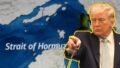
The Strait of Hormuz has once again become a focal point in the escalating confrontation involving Iran and the United States. Any attack affecting infrastructure in or around this strategic waterway carries consequences beyond the immediate battlefield because the passage is one of the world’s most important routes for international oil and gas shipments.
With military activity increasing and Washington maintaining a visible presence in the region, attention is turning to the decisions Trump may take next. His public comments have suggested that further US strikes are unlikely, but the movement of additional military assets indicates that American forces are continuing to prepare for a range of possible developments.
Iran-US War: Attacks Intensify as Key Strait of Hormuz Installation Is Hit, Trump Faces Critical Decisions
Fresh attacks around the Strait of Hormuz have intensified concerns over maritime security, energy supplies and the risk of a wider regional conflict. US President Donald Trump has sent mixed signals about Washington’s next steps, while the arrival of a third aircraft carrier and thousands of additional troops has strengthened the American military presence in the Middle East.
The confrontation between Iran and the United States has entered another dangerous phase, with Tehran widening its attacks across the Gulf and Washington responding with strikes on Iranian military targets. The latest developments include an Iranian attack targeting a US air base in Kuwait, further attacks aimed at Bahrain and an American strike on an Islamic Revolutionary Guard Corps (IRGC) missile launch site on Qeshm Island near the Strait of Hormuz.
The escalation is particularly significant because the Strait of Hormuz is a critical route for international energy shipments. Attacks on vessels, military installations and infrastructure around the waterway threaten commercial shipping and complicate efforts to restore normal maritime traffic.
Trump has indicated that additional major US strikes are unlikely, but the deployment of the USS Theodore Roosevelt carrier strike group, joining two other American aircraft carriers in the region, shows that Washington is maintaining substantial military options.
The central question is whether the latest exchanges will remain limited retaliatory operations or develop into a broader confrontation involving more military targets and regional countries.
Iran expands attacks on US-linked targets in the Gulf
Iran widened its attacks on Gulf neighbours on Wednesday, November 18, targeting Kuwait’s Ali Al Salem air base and launching attacks against Bahrain, according to reports. The developments followed a series of exchanges between Iranian forces and the United States over the preceding days.
The attacks came after American forces struck an Iranian missile launch site on Qeshm Island on Tuesday. The US described the operation as a self-defence action following Iranian attacks targeting American personnel and military assets in the region.
Kuwait said its air defences intercepted drones targeting the air base, while Bahrain reported intercepting attacks. The available reports did not establish damage or casualties from the latest attacks on those locations.
The renewed targeting of Bahrain is particularly important because the country hosts the US Navy’s Fifth Fleet, a major American naval command responsible for operations across a strategically important maritime region.
Iran has also targeted American-linked facilities in Bahrain in recent days. The latest incidents followed a period of roughly two months without comparable attacks, indicating a renewed cycle of military exchanges.
Tehran has described its actions as retaliation for American military operations and surveillance activity. Washington, meanwhile, has characterised its strikes as responses to threats against US personnel and assets. These competing explanations underline how each side is presenting its actions as defensive while continuing military operations.
Qeshm Island missile site struck near the Strait of Hormuz
One of the most significant developments took place on Qeshm Island, located near the Strait of Hormuz. American fighter aircraft struck an IRGC missile launch site on Tuesday, November 17, in an operation described by a US military official as self-defence.
The strike followed an Iranian attack targeting a US radar installation in Bahrain. American military officials said Iranian drones launched towards Bahrain had been intercepted and that the attack caused no damage to US equipment or injuries to American personnel.
Iranian officials also said the American strikes on Qeshm had not damaged residential, commercial or infrastructure areas. The reported target was a military missile-launch facility.
Qeshm Island’s location makes it strategically important. It sits near the Strait of Hormuz, a narrow maritime passage connecting the Persian Gulf with the Gulf of Oman and the wider Arabian Sea.
Military installations near this waterway can play an important role in monitoring maritime activity and threatening vessels operating in the surrounding waters. A strike against a missile-launch site therefore has implications beyond the immediate military target because it forms part of the wider contest over access and security in the strait.
The latest American operation also demonstrates that Washington is prepared to carry out limited strikes even while Trump publicly signals reluctance to launch another major campaign.
Why the Strait of Hormuz has become the centre of the conflict
The Strait of Hormuz is among the world’s most strategically important maritime chokepoints. Before the war, roughly one-fifth of global oil supplies passed through the waterway, making its security important to energy markets and international trade.
The conflict has disrupted shipping through the strait, with vessels facing attacks, threats of mines and uncertainty over safe passage. The United States has imposed a naval blockade on Iranian shipping and has been helping commercial vessels navigate the waterway.
Iran has repeatedly warned shipping companies about routes through the strait and claimed that mines have damaged tankers. The US military, however, has said that southern shipping lanes have been cleared and are safe to navigate. Claims about individual mine incidents have not always been independently verified.
The two sides are therefore contesting not only military positions but also the practical ability of commercial ships to move through a major international trade route.
Attacks on tankers add pressure to global energy shipping
Commercial vessels have continued to face danger in the Strait of Hormuz. The United Arab Emirates’ state-owned oil company ADNOC said one crew member from one of its tankers was missing after an attack in the strait, while 11 others were injured and receiving medical treatment.
The incident highlights the risks faced by civilian maritime crews even when ships are not directly involved in military operations.
Shipping companies must consider the possibility of attacks, mines, insurance costs, delays and the availability of naval protection before sending vessels through the waterway. These risks can affect the movement of oil and other commodities even when the route remains technically open.
Although US military escorts have helped restore some oil shipments from the Gulf, shipping activity remains vulnerable to further incidents. The uncertainty is especially significant for countries that depend heavily on imported energy.
Third US aircraft carrier arrives as Trump keeps military options open
The arrival of the USS Theodore Roosevelt in the Middle East has added another major element to the American military deployment. The carrier strike group has joined the USS George H.W. Bush and USS George Washington, bringing the number of US aircraft carriers operating in the region to three.
The deployment also brings thousands of additional American personnel into the region. The Roosevelt’s arrival is a substantial show of military presence at a time when attacks against US-linked targets and commercial shipping are increasing.
Aircraft carriers provide the United States with mobile air power, allowing military aircraft to operate from international waters without depending entirely on land-based airfields. Carrier strike groups also include supporting warships that contribute to air defence, surveillance and other naval operations.
The additional deployment gives Washington more flexibility to respond to developments across the Gulf and surrounding waters. It also strengthens the military presence supporting the US naval blockade of Iranian shipping.
However, the arrival of another carrier does not automatically mean that a large-scale offensive is imminent. Carrier deployments can support defensive operations, maritime security, deterrence and the preparation of options that may or may not be used.
Trump sends mixed signals about the next US military action
Trump’s public position has added uncertainty to the situation. He has indicated that further major strikes against Iran are highly unlikely, while also maintaining a substantial military presence in the region.
His statements have alternated between warnings about the possibility of additional military action and suggestions that the conflict is effectively over from a military perspective.
The arrival of the third aircraft carrier complicates the diplomatic and political picture. It shows that the administration is maintaining the capability to respond quickly if attacks against American forces or regional partners continue.
At the same time, a larger military deployment can serve as a warning to Tehran without necessarily leading to an immediate escalation. Washington may seek to use its military presence to strengthen its position in negotiations and discourage further attacks.
The administration is therefore facing several interconnected decisions: whether to respond militarily to new Iranian attacks, how to protect commercial shipping, whether to continue the naval blockade and what conditions would be required for a diplomatic agreement.
Why US-Iran negotiations remain stalled
Diplomatic efforts to end the conflict have struggled to make progress because Washington and Tehran remain divided over key conditions.
Trump has insisted that Iran’s nuclear programme must be addressed in any agreement intended to end the war. The United States has also maintained pressure through its naval blockade, which restricts Iran’s ability to export oil through normal maritime channels.
Iran, meanwhile, has demanded that the blockade be lifted and has resisted accepting Washington’s conditions on its nuclear activities.
The disagreement creates a difficult negotiating environment. The United States wants an agreement that addresses its security concerns, while Iran is seeking relief from economic and military pressure.
Recent attacks have further complicated the situation. Each new military exchange creates political pressure on both governments to respond, potentially making concessions more difficult.
Regional mediators have continued efforts to prevent the conflict from expanding, but the latest developments demonstrate how fragile the situation remains.
What the escalation means for global oil prices and shipping
The Strait of Hormuz is important not only because of its military geography but also because of the volume of energy trade that normally passes through it. Any sustained disruption can influence oil prices, shipping costs and the wider global economy.
When commercial vessels face greater security risks, shipping companies may delay voyages, change routes where possible or demand higher freight rates. Insurers may also reassess the risks associated with operating in the region.
These additional costs can eventually affect the price of transporting oil and other goods. If supplies become harder to move, energy markets may react to concerns about availability even before a major physical shortage develops.
Reuters reported on November 11 that attacks on vessels in the Strait of Hormuz had increased, even as some energy shipments began recovering. The report highlighted the continuing danger to maritime crews and the disruption affecting shipping activity.
For major energy-importing economies, including India, prolonged uncertainty around the strait is particularly important. Higher crude prices can increase import costs and place pressure on domestic fuel prices, inflation and the country’s trade balance.
The impact would depend on how long disruptions continue, the volume of oil available from alternative sources and whether naval protection can keep commercial shipping moving safely.
Could the conflict spread beyond Iran and the United States?
The latest attacks have already involved locations in several Gulf countries, including Bahrain and Kuwait. This increases the risk that countries hosting American military facilities could become more directly exposed to the confrontation.
Bahrain’s role as the host of the US Fifth Fleet makes it strategically significant, while Kuwait’s military facilities are also important to the American presence in the region.
There are additional concerns about the involvement of Iran-aligned groups and other regional actors. In a separate development, Saudi Arabia said it intercepted Houthi cruise missiles aimed at Riyadh following coalition airstrikes in Yemen. The incident adds another layer of uncertainty to an already tense regional security environment.
The risk is not limited to direct attacks on military installations. Commercial shipping, energy infrastructure and maritime routes could also be affected if the confrontation spreads across multiple locations.
However, the involvement of additional countries in the wider security crisis does not necessarily mean that they have entered a direct war with Iran. Their actions and official positions need to be assessed separately from the military exchanges between Washington and Tehran.
What could Donald Trump do next?
Trump faces several possible courses of action, each carrying different military, economic and diplomatic consequences. His next decision will depend partly on the scale of any further Iranian attacks and the security of American personnel and commercial shipping.
1. Continue limited retaliatory strikes
Washington could continue conducting targeted operations against Iranian military assets that it considers threats to US forces or maritime security. The Qeshm Island strike provides a recent example of this approach.
Limited operations could allow the administration to respond to attacks without immediately returning to a wider bombing campaign. However, Iran could interpret further strikes as a reason to continue retaliatory operations.
2. Strengthen maritime protection
The United States could focus on protecting commercial vessels and maintaining access through the Strait of Hormuz. Naval escorts, surveillance and mine-clearance capabilities could remain central to this approach.
This option would prioritise the movement of international shipping while seeking to limit the economic impact of the conflict. It would not, however, resolve the underlying disagreement over Iran’s nuclear programme or the US blockade.
3. Maintain military pressure while pursuing negotiations
Another possibility is to maintain the current military deployment and economic pressure while leaving diplomatic channels open. The presence of three aircraft carriers could strengthen Washington’s position without requiring an immediate large-scale offensive.
Such an approach would depend on both sides being willing to avoid further escalation while negotiating over the blockade, nuclear activities and security arrangements.
4. Launch a broader military campaign
If attacks against US forces or regional partners intensify, Washington could consider a wider military response. Such an operation would carry greater risks, including further Iranian retaliation, threats to shipping and potential damage to regional infrastructure.
A broader campaign could also make diplomatic progress more difficult and increase uncertainty across international energy markets. The deployment of additional forces gives the United States military options, but it does not establish that Trump has decided to use them.
What to watch in the coming days
Several developments will help determine whether the latest escalation remains limited or becomes a wider regional confrontation.
- Further attacks on US facilities: Any new strikes targeting American bases or military personnel could influence Washington’s response.
- Security of the Strait of Hormuz: Attacks on tankers, reports of mines and changes in shipping traffic will remain important indicators.
- US military movements: The deployment and operational role of the three aircraft carriers will provide clues about Washington’s regional posture.
- Iran’s response to the Qeshm strike: Further attacks on American or regional targets could intensify the cycle of retaliation.
- Diplomatic contacts: Any movement on the naval blockade and Iran’s nuclear programme could create an opportunity to reduce tensions.
- Regional involvement: Developments involving Bahrain, Kuwait, Saudi Arabia and Yemen could widen the geographical scope of the crisis.
Iran-US war: A critical moment for the Strait of Hormuz and global security
The latest attacks have exposed how quickly the Iran-US confrontation can spread across military installations, neighbouring countries and commercial shipping routes. The strike on the Qeshm Island missile site, Iranian attacks targeting Kuwait and Bahrain, and the arrival of a third US aircraft carrier have added pressure to an already fragile security environment.
For Trump, the challenge is to protect American forces and maritime interests while deciding whether military pressure can produce a diplomatic outcome. His statements suggest reluctance to launch another major campaign, but the expanded deployment keeps a wider range of military options available.
For Iran, continued attacks and pressure around the Strait of Hormuz demonstrate the strategic importance of the waterway, but they also increase the risk of further American retaliation and regional disruption.
The immediate concern is the safety of commercial vessels and military personnel operating in the Gulf. The longer-term issue is whether Washington and Tehran can reach an agreement over the nuclear programme, maritime restrictions and regional security.
Until those disagreements are addressed, the Strait of Hormuz is likely to remain at the centre of the confrontation, with every new attack carrying consequences for regional stability and global energy trade.
For breaking news and live news updates, like us on Facebook or follow us on Twitter and Instagram. Read more on Latest World on thefoxdaily.com.




COMMENTS 0