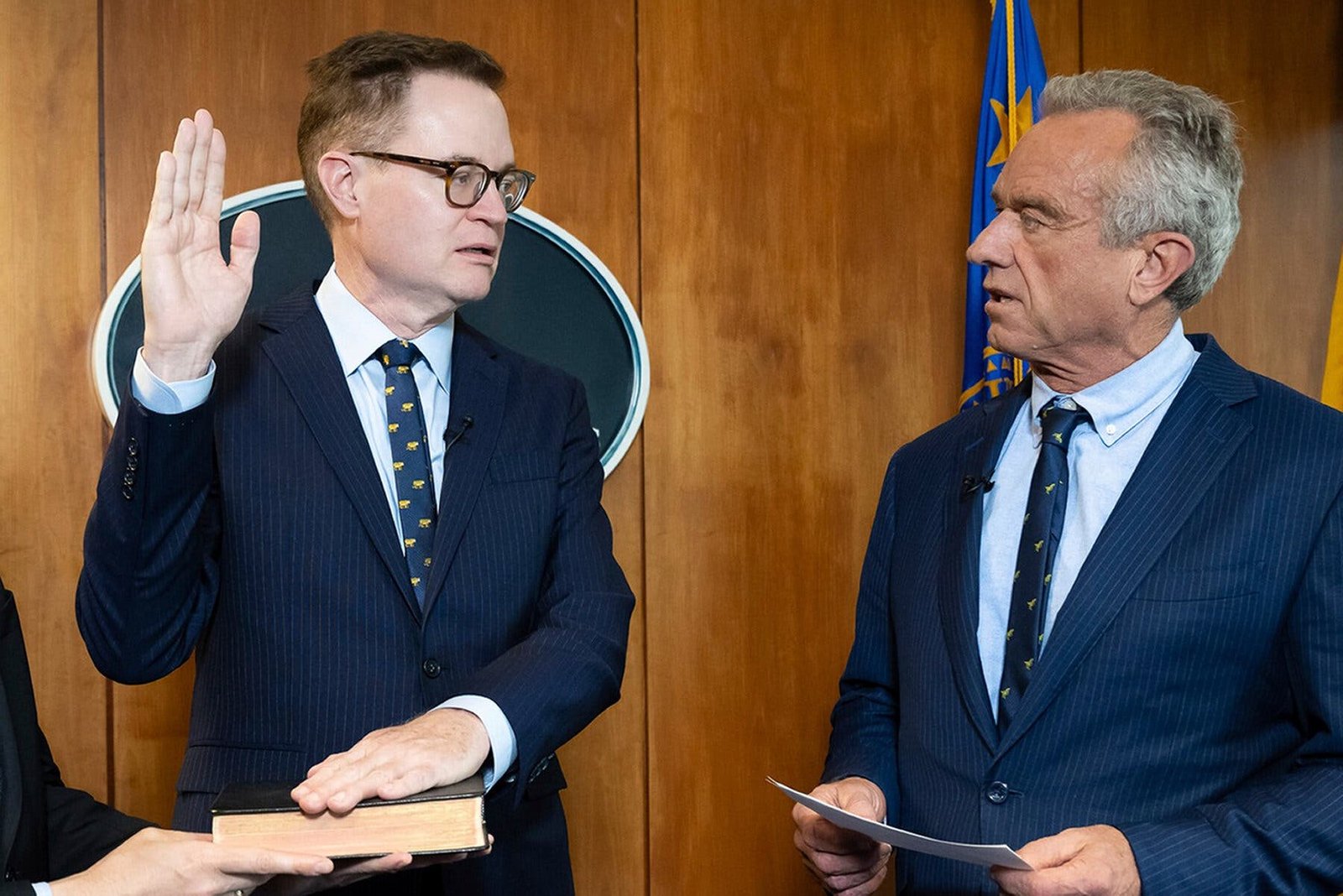
Jim O’Neill’s bid to lead the US National Science Foundation (NSF) has been derailed after Senate committee chairman Bill Cassidy said the nominee had failed to demonstrate sufficient independence in his previous government roles. Cassidy, a Republican from Louisiana, said O’Neill did not do enough to defend science while serving in senior positions at the Department of Health and Human Services (HHS) and the Centers for Disease Control and Prevention (CDC). The decision ends O’Neill’s immediate path to the NSF leadership post as the agency continues to face budget reductions, grant disruptions and uncertainty over its future direction under the Trump administration.
Bill Cassidy Says O’Neill Failed to Defend Scientific Independence
Cassidy made his position clear in opening remarks before the committee’s scheduled business meeting on Wednesday. He said O’Neill had not sufficiently challenged what he described as irresponsible decisions and statements by Health and Human Services Secretary Robert F. Kennedy Jr. during their time working together.
O’Neill served as acting director of the CDC from August 2025 until February 2026. Cassidy argued that his conduct in that position raised questions about whether he would exercise independent judgment as head of a major federal science agency.
“His role in the firing of Susan Monarez raised further concerns about the independent judgment he would bring to NSF,” Cassidy said.
Monarez’s departure from the CDC became a significant point of concern in the debate over O’Neill’s nomination. Cassidy said several committee members had raised questions about O’Neill’s response to decisions made under Kennedy’s leadership.
Although Cassidy said he personally liked O’Neill, he argued that the circumstances required a nominee willing to defend scientific principles even when doing so involved challenging senior administration officials.
“But this time requires leadership and fortitude in standing up for what is right,” Cassidy said.
O’Neill’s Previous Roles at CDC and HHS Under Scrutiny
O’Neill’s nomination became controversial partly because of his record in two senior positions within the federal health system. Before serving as acting CDC director, he was deputy secretary of the Department of Health and Human Services from June 2025 to February 2026.
During his time at HHS, the department reduced recommendations for routine childhood immunisations. The changes became part of a wider debate over federal vaccine policy and the direction of public health agencies under Kennedy.
Criticism of O’Neill’s leadership focused on whether he had sufficiently defended established scientific processes and the independence of public health institutions. Cassidy’s objections suggest that these concerns extended beyond the health sector to the type of leadership expected at the National Science Foundation.
The NSF is not a public health agency. Its responsibilities centre on supporting scientific research and education across a broad range of disciplines. However, its leadership must make decisions involving scientific priorities, research funding and the evaluation of proposals, making institutional independence an important consideration in the appointment process.
O’Neill’s previous government positions therefore became central to the question of whether he would be able to lead an independent science agency while maintaining a working relationship with the administration that nominated him.
White House Did Not Withdraw O’Neill’s Nomination
The White House did not formally withdraw O’Neill’s nomination, even as Cassidy indicated that the nominee lacked sufficient support to advance through the committee.
That distinction is important. The immediate setback came from the Senate committee leadership’s decision not to proceed with the scheduled consideration, rather than a formal withdrawal by President Donald Trump‘s administration.
The situation also unfolded alongside a separate controversy involving Heidi Overton, Trump’s nominee to lead the Food and Drug Administration.
Cassidy noted that the White House had withdrawn Overton’s nomination after determining that she did not have enough support for confirmation. He described the decision as unusual, saying he believed she would have secured the votes needed to advance.
Heidi Overton’s FDA Nomination Also Collapses
Overton’s nomination had faced opposition and demands for assurances from senators concerned about her positions on abortion. Cassidy said anti-abortion senators had sought commitments from the administration regarding Overton’s views, but the White House did not provide the assurances they wanted.
“They chose not to make such commitments and ultimately withdrew Dr Overton,” Cassidy said.
The two nomination developments exposed separate challenges for the Trump administration as it attempted to fill senior positions across federal science and health institutions. O’Neill’s nomination faced concerns about his record in defending scientific independence, while Overton’s nomination encountered political resistance connected to abortion policy.
Both cases also highlighted the importance of securing sufficient Senate support, even when a nominee has the backing of the president.
Senate Republicans Face a Narrow Window Before Democrats Take Control
The developments come as Republicans work to move presidential nominations through the Senate before losing their majority in January. Democrats are set to take control of the chamber following their victories in the November congressional elections.
The change in Senate control could significantly affect the administration’s ability to advance nominees. Once the new Congress convenes, Trump’s appointments will face a Senate led by the opposing party, making the confirmation process more challenging politically.
For O’Neill, the timing is particularly important. His nomination was already facing resistance within the Republican-led committee, and the loss of the Republican majority leaves the administration with a more difficult route to securing approval.
The committee’s decision also means that the NSF leadership question remains unresolved at a time when the agency is dealing with wider institutional uncertainty.
National Science Foundation Faces Leadership Uncertainty
The National Science Foundation is an independent federal agency that supports research and scientific education across the United States. Its funding helps universities, research institutions and scientists pursue projects across fields including mathematics, engineering, computing, biology and the physical sciences.
The agency’s leadership is particularly important because decisions about research priorities and grants can influence the direction of scientific work for years. A stable director is expected to provide strategic oversight, represent the agency in government discussions and help maintain confidence in its funding processes.
However, the NSF has faced significant pressure under the Trump administration, including major budget cuts and freezes affecting research grants. These disruptions have added to concerns about the agency’s ability to provide predictable support for scientific institutions and long-term projects.
The absence of a confirmed director could make that uncertainty more difficult to manage, particularly as researchers and universities seek clarity about future funding opportunities.
Brian Stone Is Performing the Duties of NSF Director
In the absence of a confirmed permanent director, NSF chief of staff Brian Stone is currently performing the duties of the agency’s director.
Stone, however, announced in October that he plans to retire at the end of 2026. His expected departure adds another leadership question for an agency already facing uncertainty over its permanent appointment.
The administration will therefore need to consider its next steps for the NSF leadership position. With O’Neill’s nomination stalled and the Senate set to change hands, identifying a new nominee and securing confirmation could become a more complicated process.
What Happens Next to Trump’s NSF Nomination?
O’Neill’s immediate path to leading the National Science Foundation has been blocked after Cassidy declined to move forward with the scheduled committee consideration. The White House has not formally withdrawn the nomination, but the lack of support within the committee leaves its future uncertain.
The administration could reconsider its approach or put forward another candidate. Any new nominee would need to navigate a Senate whose political balance is about to change, making the timing of the next appointment an important factor.
For the NSF, the priority remains securing stable leadership while managing funding pressures and uncertainty surrounding federal research support. The controversy over O’Neill’s nomination has also brought a broader issue into focus: how an independent science agency should balance its relationship with the administration against the need to protect scientific judgment and institutional autonomy.
The outcome will matter not only for the person who eventually leads the NSF but also for universities, researchers and institutions that depend on the agency’s support for scientific work across the United States.
For breaking news and live news updates, like us on Facebook or follow us on Twitter and Instagram. Read more on Latest World on thefoxdaily.com.


COMMENTS 0