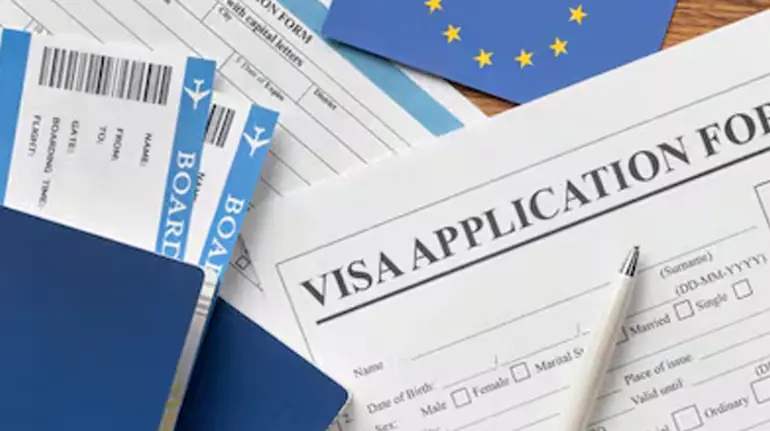
A US federal judge has struck down a Trump administration immigration rule that would have imposed strict limits on how long foreign students, academics and journalists could remain in the country. The ruling blocks a policy that sought to replace the long-standing duration-of-status system with fixed periods of admission and a new extension procedure.
US District Judge F. Dennis Saylor ruled on November 16 that the Department of Homeland Security’s (DHS) policy was “arbitrary, capricious, an abuse of discretion, and otherwise not in accordance with law”. The decision followed a legal challenge brought by a coalition of higher education organisations, labour unions and journalism groups.
Under the proposed regulations, most international students would have been permitted to stay in the United States for a maximum of four years before applying for an extension. Foreign journalists would have faced a 240-day limit, while Chinese journalists would have been restricted to an initial stay of just 90 days.
The ruling is significant for international students planning to pursue undergraduate, postgraduate and doctoral programmes in the United States, as well as researchers, academics and foreign media professionals whose work requires extended stays.
Why the US Court Rejected Trump’s Visa Restrictions
In his order, Judge Saylor focused primarily on the potential consequences of the new restrictions for international students and the American higher education system.
The judge argued that the policy could discourage the very educational activities that Congress intended to support by allowing foreign students to study in the United States.
“Put bluntly, DHS is seeking to prevent or discourage the very activity — providing educational opportunities for foreign students in the United States — that Congress sought to permit and encourage,” Saylor said in his ruling.
He also highlighted how fixed admission periods could interfere with academic programmes that require more than four years to complete. Doctoral research, joint-degree programmes and changes in academic specialisation could become more difficult under a system requiring students to seek extensions.
For universities, the restrictions could have created additional administrative responsibilities and uncertainty for international students and academic staff. Institutions would have needed to account for extension applications and the possibility that students could face interruptions to their studies if their authorised stays were not extended in time.
The court’s November 16 decision granted the plaintiffs’ request for summary judgment and rejected the government’s request. It formally vacated the final rule under the Administrative Procedure Act, providing a final judgment in the case at the district court level.
What the Trump Administration’s Four-Year Student Visa Rule Proposed
The DHS regulation sought to change the system governing the duration of stay for several categories of foreign nationals entering the United States for education, research, academic exchange and journalism.
Previously, international students admitted under the F-1 visa category could generally remain in the country for the duration of their authorised academic programmes, provided they continued to meet the relevant immigration requirements. This arrangement was commonly known as the duration-of-status system.
The proposed rule would have replaced that framework with a fixed admission period of up to four years. Students whose courses or academic activities extended beyond the permitted period would have needed to apply for an extension to continue their stay legally.
The change could have affected students enrolled in lengthy academic programmes, particularly those pursuing doctoral degrees or research-intensive courses. It also raised questions about how universities would manage students whose academic plans changed after admission.
Under the proposed framework, the four-year limit would not necessarily have meant that every student had to leave the United States after that period. Extensions would have remained possible, but students would have faced an additional application process rather than relying on the duration-of-status arrangement.
Foreign Journalists Faced a 240-Day Stay Limit
The proposed restrictions also covered foreign journalists and representatives of international media organisations working in the United States under the I visa category.
Under the existing arrangements described in the case, foreign journalists could receive admission periods of up to five years. The Trump administration’s proposed rule would have reduced the initial permitted stay to 240 days, or approximately eight months.
Journalists could have applied for extensions, but those extensions would also have been limited to similar periods. This would have required foreign correspondents covering American politics, government, business and other developments to navigate a more frequent immigration renewal process.
The proposal included an even shorter initial admission period for Chinese journalists. They would have been allowed to remain for 90 days before seeking an extension of another 90 days.
Media organisations and journalist representatives raised concerns about the potential effect of these restrictions on reporting operations. Foreign correspondents often need to remain in the country for extended assignments, and shorter admission periods could create uncertainty for journalists and their employers.
Which Visa Categories Were Covered by the Rule?
The DHS regulation covered three broad categories of non-immigrant visas associated with education, exchange programmes and international media.
- F visas: These cover international students pursuing academic studies in the United States.
- J visas: These apply to exchange visitors, including researchers, professors, instructors and participants in approved exchange programmes.
- I visas: These are issued to foreign representatives of the media, including journalists working on assignments in the United States.
Although much of the public debate surrounding the case focused on international students, the regulation had wider implications for universities, research institutions and foreign media organisations.
The court’s ruling therefore affects a policy that covered more than conventional student admissions. It also addressed the proposed restrictions on academic exchange and international journalism.
Universities and Unions Challenged the DHS Policy
The legal challenge was brought by a coalition representing universities, higher education institutions, educators, researchers and journalists. The organisations argued that the new visa restrictions would create unnecessary obstacles for International Education and professional work in the United States.
The lawsuit was filed against the Department of Homeland Security and challenged the legality of the regulation. The plaintiffs questioned whether the government had adequately considered the consequences of replacing the existing duration-of-status system with fixed admission periods.
Judge Saylor had already temporarily blocked implementation of the rule on September 14, 2026, shortly before it was scheduled to take effect. That earlier decision prevented the restrictions from being introduced while the legal challenge continued.
The Trump administration appealed the earlier intervention. However, the court subsequently considered the parties’ requests for summary judgment and issued its November 16 order vacating the final rule.
The latest decision goes beyond the initial temporary block. By granting summary judgment to the plaintiffs and vacating the regulation under the Administrative Procedure Act, the court ruled against the legality of the final policy itself.
How the Ruling Could Affect International Students in the US
The decision is particularly relevant to international students who choose the United States for higher education. The country attracts students from across the world for undergraduate degrees, postgraduate programmes, doctoral research and specialised professional courses.
For students pursuing long-term academic programmes, the duration-of-status framework provides an important degree of flexibility. It allows eligible students to remain in the country while completing their authorised studies rather than requiring them to seek extensions solely because a fixed admission period has expired.
The proposed four-year limit could have created additional uncertainty for students enrolled in programmes that routinely extend beyond that period. Doctoral candidates, for example, may need additional time for research, fieldwork, laboratory experiments, dissertation preparation and academic review.
Students who change their academic concentration or pursue joint degrees could also have faced complications under the proposed system. These concerns formed a central part of the judge’s reasoning.
The ruling removes the immediate legal basis for implementing the vacated regulation. International students should nevertheless continue to follow the existing immigration requirements applicable to their individual visa status and consult official US Immigration guidance for any changes.
US Hosted More Than 1.1 Million International Students in 2023-24
The scale of international education in the United States helps explain why the visa dispute attracted attention from universities and education organisations.
According to official data cited in the case coverage, the United States hosted more than 1.1 million international students during the 2023-24 academic year, making it the largest destination for international students during that period.
International students contribute to university enrolments, research programmes and the wider education economy. They also participate in scientific and technological research, graduate teaching and collaborations between American institutions and universities in other countries.
Universities had warned that stricter admission periods could make it harder to attract and retain international talent. Additional extension requirements could also increase administrative costs and create uncertainty for students whose academic progress depends on factors beyond their control.
The court’s decision highlights the importance of considering these consequences when changing immigration rules that directly affect higher education and research institutions.
Trump Administration’s Wider Immigration Crackdown
The visa-duration proposal formed part of the broader immigration policy pursued by President Donald Trump. His administration has introduced and pursued measures aimed at tightening immigration enforcement, expanding deportation operations and restricting certain legal immigration pathways.
The proposed student and journalist restrictions represented a separate effort to change the conditions under which specific categories of foreign nationals could remain in the country.
The administration had argued for tighter controls over the visa system, including measures intended to address immigration violations and prevent misuse of non-immigrant status. The legal dispute, however, centred on whether the DHS had followed the requirements of administrative law when introducing the new regulation.
The court’s ruling does not amount to a decision on every aspect of the Trump administration’s immigration agenda. It specifically concerns the regulation governing the duration of admission and extension procedures for international students, exchange visitors and foreign media representatives.
What Happens Next After the Judge’s Decision?
The November 16 judgment marks a major legal setback for the administration’s attempt to introduce fixed stay limits for foreign students and journalists. The final rule has been vacated by the district court, meaning the proposed restrictions cannot be treated as an operative replacement for the existing framework on the basis of that regulation.
The administration’s earlier appeal concerned the court’s September decision temporarily blocking implementation. The latest final judgment changes the legal position by granting summary judgment to the organisations challenging the rule.
Any further legal proceedings or government action will be important in determining whether the administration attempts another approach to changing visa-duration requirements.
For international students, researchers, universities and foreign journalists, the decision provides clarity against the specific restrictions challenged in the lawsuit. However, existing visa conditions and other immigration requirements continue to apply.
The case also underscores the broader debate over how the United States balances immigration enforcement with its role as a destination for international education, academic research and global journalism. The court’s ruling makes clear that changes to these systems must comply with the law and properly account for their consequences.
For breaking news and live news updates, like us on Facebook or follow us on Twitter and Instagram. Read more on Latest World on thefoxdaily.com.




COMMENTS 0