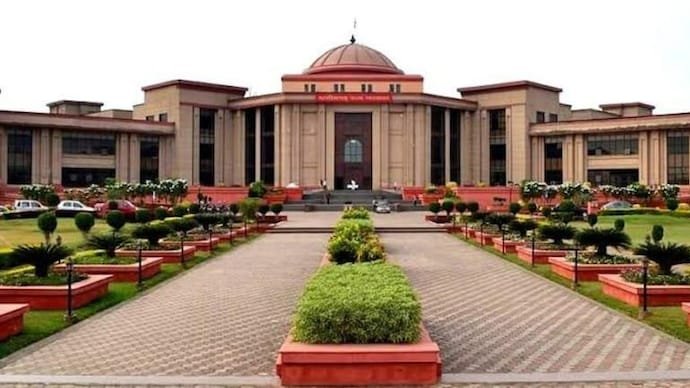
The Chhattisgarh High Court has ruled that marriage cannot by itself disqualify a woman from receiving a compassionate appointment after the death of a parent in government-linked Employment. The court directed Chhattisgarh Rajya Gramin Bank to appoint two married daughters of deceased employees, holding that the relevant question is whether they were actually dependent on their fathers, not whether they were married.
A division bench comprising Chief Justice Ramesh Sinha and Justice Ravindra Kumar Agrawal found that the bank’s compassionate appointment scheme did not distinguish between married and unmarried daughters. Because the scheme focused on dependency, the authorities could not introduce marital status as an additional condition for women.
The judgment has broader significance because compassionate appointment schemes are designed to provide employment support to eligible family members when an employee dies while in service. The ruling makes clear that eligibility cannot be decided through assumptions about traditional family roles when the governing policy itself does not create such a distinction.
What the Chhattisgarh High Court decided
The court was hearing two separate appeals filed by Sheena David, 33, from Bilaspur, and Ankita Mishra, 32, from Raipur. Both women challenged the rejection of their claims for compassionate appointment following the deaths of their fathers, who had worked for Chhattisgarh Rajya Gramin Bank.
David’s father, Noel Shailendra Kumar Johns, had served as a branch manager, while Mishra’s father, Mandan Kumar Panda, had worked as an office assistant. Both employees died while still in service, in 2015 and 2016 respectively.
The women challenged a single-bench order dated May 7 and the subsequent decisions rejecting their requests for appointment.
The division bench set aside the earlier order and directed the bank to issue appointment orders to both women against suitable posts consistent with their educational qualifications.
The court also directed the bank to complete the appointments within 90 days from receiving the July 30 order.
Why marital status became the central issue
The dispute turned on how the bank interpreted the meaning of a dependent family member.
The bank’s scheme included a “wholly dependent son” and a “wholly dependent daughter” within its definition of eligible family members. However, the policy did not divide daughters into married and unmarried categories.
That distinction became crucial to the High Court’s reasoning.
The judges observed that the scheme itself identifies dependency as the relevant condition. It does not say that a daughter stops qualifying as a dependent simply because she gets married.
The court therefore rejected the bank’s approach of treating marriage as an automatic end to dependency. In its view, authorities were required to examine the actual circumstances of each applicant rather than rely on a general assumption about what happens after a woman marries.
Married sons and daughters must be treated by the same standard
One of the strongest aspects of the judgment was the comparison between married sons and married daughters.
During the proceedings, the bank acknowledged that compassionate appointments had been granted to several sons who were already married.
The respondents attempted to justify the difference by arguing that a married son ordinarily continues to maintain his deceased parent’s family, while a married daughter is generally presumed to become part of her husband’s family.
The High Court rejected that reasoning.
The bench said such an argument relies on a broad social assumption rather than an assessment of actual dependency. If marriage does not automatically prevent a son from being considered a dependent family member, the same principle must apply to a daughter.
That means the relevant question is not whether the applicant is male or female, married or unmarried. The authorities must determine whether the person satisfies the dependency requirement established by the applicable scheme.
What Articles 14 and 15 mean in this case
The court found that rejecting the two women merely because they were married was arbitrary and discriminatory. It held that such differential treatment violated Articles 14 and 15 of the Constitution.
Article 14 guarantees equality before the law and equal protection of the laws. Article 15 prohibits discrimination by the state on specified grounds, including sex.
The significance of the judgment lies in how those constitutional principles were applied to the operation of an employment benefit scheme.
The court was not saying that every family member of a deceased employee automatically has a right to a job. Compassionate appointment remains subject to the conditions of the applicable policy. What the ruling establishes is that where dependency is the eligibility test, an authority cannot replace that test with an assumption that marriage necessarily ends a woman’s dependency.
The court said the bank did not properly examine dependency
The judges also identified a practical problem with the way the women’s applications had been assessed.
According to the judgment, the authorities did not make an effort to determine whether the appellants continued to be wholly dependent on their deceased fathers. Instead, they proceeded from the assumption that marriage itself ended dependency.
That distinction is important.
A compassionate appointment scheme generally requires authorities to examine the financial and family circumstances surrounding the death of an employee. Such an assessment can involve determining who depended on the employee and whether the death created the kind of financial hardship that the scheme is intended to address.
The High Court’s reasoning means that those questions must be answered through evidence and the terms of the policy rather than through a generalized assumption about a woman’s marital status.
The 2019 policy changed the position for older cases
The timing of the two deaths was another important part of the case.
When the women’s fathers died in 2015 and 2016, Chhattisgarh Rajya Gramin Bank did not have a compassionate appointment scheme in place. The dependants were instead entitled to ex-gratia compensation, which was paid to the deceased employees’ widows.
The bank subsequently introduced a compassionate appointment policy in 2019.
Later, an e-circular dated October 21, 2023, extended the policy retrospectively to employees who had died in harness on or after February 11, 2014.
This retrospective provision became important because it brought the cases of the two women within the scope of the later compassionate appointment framework.
The High Court held that their claims were therefore required to be considered under the retrospective scheme.
Why retrospective schemes matter in compassionate appointment cases
A compassionate appointment claim can become complicated when the employee dies before a policy is introduced or when the applicable rules are changed later.
In this case, the bank’s later decision to extend the scheme retrospectively created a mechanism through which eligible dependants of employees who had died earlier could seek consideration.
Once the women’s cases fell within the scope of that retrospective policy, the bank had to apply the policy as written. The court found that the applicants could not be rejected simply because they had married before their claims were taken up.
The ruling therefore addresses two separate issues at once: whether the applicants could be considered under the retrospective scheme, and whether their marriage could be treated as an automatic bar. The court answered both questions in their favour.
Compassionate appointment is not an automatic job entitlement
The judgment should not be read as creating an unconditional right to government employment for married daughters.
Compassionate appointment is a specific employment mechanism governed by the relevant rules or scheme. Applicants still have to satisfy the applicable eligibility requirements, including any dependency conditions and other requirements prescribed by the policy.
The High Court’s ruling instead concerns the method by which those requirements must be applied.
Where a scheme identifies a dependent daughter as an eligible category but does not exclude married daughters, officials cannot create a separate exclusion based solely on marital status. The applicant’s actual circumstances remain relevant.
This distinction is important because compassionate appointment differs from ordinary recruitment. It is intended to address the consequences faced by an eligible family after the death of an employee, rather than function as a conventional open recruitment process.
The ruling challenges an assumption about married women
The court’s reasoning also addresses a broader social assumption: that marriage necessarily transfers a woman’s economic dependence from her parental family to her marital family.
The judges found that such a presumption cannot automatically determine eligibility for a benefit when the governing scheme does not make marriage a disqualification.
Families do not all operate in the same way. A married daughter may continue to support, live with or depend financially on her parents. Conversely, marriage by itself does not establish that a person is financially independent.
For that reason, the court emphasized an individualized assessment of dependency.
The approach also prevents the same family circumstance from being treated differently solely because the applicant is a woman.
What the judgment could mean for similar cases
The ruling could become relevant wherever employment or welfare schemes distinguish between family members using assumptions tied to gender or marital status.
Its reasoning is particularly significant for schemes that expressly include both sons and daughters but do not say that marriage changes their eligibility.
Authorities administering such policies may need to pay closer attention to the precise language of the scheme. If the policy establishes dependency as the deciding factor, officials cannot necessarily introduce an additional condition that does not appear in the policy.
At the same time, the judgment does not mean every dispute involving a married daughter will produce the same result. The wording of the particular scheme, evidence of dependency and other eligibility requirements can still determine the outcome.
Why the ruling matters beyond two appointments
The immediate result is clear: two women who were denied compassionate appointment because they were married must now be appointed to suitable posts, subject to the court’s directions and their educational qualifications.
The larger importance lies in the principle used to reach that conclusion.
The Chhattisgarh High Court has placed the actual eligibility criterion ahead of a gender-based assumption. Where a policy says dependency matters, the administration must examine dependency.
That may sound straightforward, but it can have significant consequences in cases where older social assumptions influence the interpretation of employment rules.
The judgment also reinforces the constitutional expectation that similarly situated men and women should not be subjected to different standards without a legally sustainable basis.
What happens next for the two women
The High Court has directed Chhattisgarh Rajya Gramin Bank to issue compassionate appointment orders to Sheena David and Ankita Mishra for suitable posts according to their educational qualifications.
The bank has been given 90 days to complete the appointments after receiving the court’s order.
The immediate legal dispute has therefore moved from the question of whether the women can be considered to the implementation of the court’s direction.
More broadly, the judgment provides a clear message to authorities administering compassionate appointment schemes: eligibility must be determined according to the actual policy and the applicant’s circumstances, not by assuming that marriage automatically ends a daughter’s connection or dependency on her parental family.
For women seeking similar benefits, the decision is significant because it makes marital status a less decisive factor where the governing rules themselves do not treat it as a bar. The central test, as the High Court emphasized, is dependency.
For breaking news and live news updates, like us on Facebook or follow us on Twitter and Instagram. Read more on Latest India on thefoxdaily.com.






COMMENTS 0