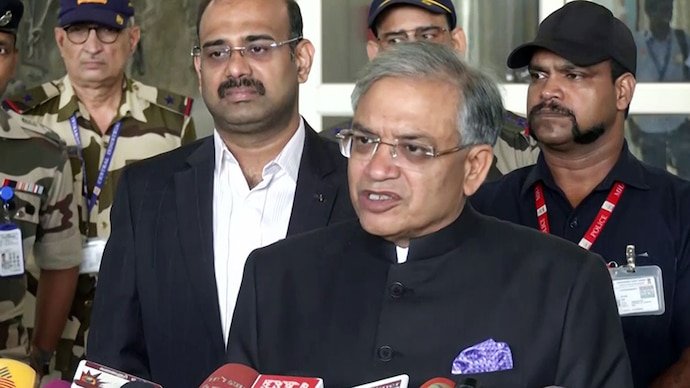
Chief Election Commissioner Gyanesh Kumar‘s scheduled two-day visit to Chhattisgarh on October 7 and 8 has been postponed due to what the state Chief Electoral Officer’s office described as “unavoidable reasons”. No fresh date has been announced yet.
The postponement comes at a time when the Election Commission of India is facing intensified political scrutiny over electoral-roll revisions, changes to Form 6 and allegations raised by Opposition parties. The development also follows protests demanding Kumar’s resignation, discussions around a possible impeachment motion in Parliament and petitions pending before the Supreme Court.
The Chhattisgarh visit had been planned as part of Kumar’s official programme with senior Election Commission officials. The schedule included visits to prominent cultural and religious sites in the state, including the Danteshwari Mata Temple in Dantewada, Chitrakote Waterfall in Bastar and the Bhoramdeo Temple in Kabirdham district.
Gyanesh Kumar’s Chhattisgarh Visit Postponed
The state Chief Electoral Officer’s office confirmed that the visit scheduled for October 7 and 8 would not take place as planned. Officials said the programme had been postponed because of “unavoidable reasons”.
The office has not announced an alternative date. It said a revised schedule would be communicated separately once it is received from the Election Commission of India.
The postponement has drawn attention because it follows a series of Political Protests and controversies surrounding the poll panel and comes shortly after a major Opposition demonstration in Delhi against the Election Commission.
Chhattisgarh Had Prepared for the CEC’s Visit
The Chhattisgarh government had accorded Kumar the status of a “state guest” for the visit. Preparations had also begun in Raipur for his arrival, including reception and security arrangements.
The Raipur administration, police authorities and Swami Vivekananda Airport officials had been involved in preparations connected with the scheduled programme.
The proposed itinerary was also expected to take Kumar beyond the state capital. The Danteshwari Mata Temple in Dantewada, Chitrakote Waterfall in Bastar and Bhoramdeo Temple in Kabirdham were among the locations included in the planned visit.
With the programme now postponed, officials are waiting for the Election Commission to communicate a new schedule.
Another Scheduled Visit by CEC Postponed
The Chhattisgarh postponement is not the first time a planned visit by Gyanesh Kumar has been put off amid heightened scrutiny of the Election Commission.
Earlier, scheduled visits involving Kumar to Meerut and Varanasi in Uttar Pradesh, as well as programmes in Ladakh, Himachal Pradesh and Uttarakhand, were also postponed.
The repeated postponements have attracted political attention because they have occurred during a period in which the poll panel has faced criticism from Opposition parties over electoral-roll procedures and other decisions.
However, the Chhattisgarh CEO’s office has cited “unavoidable reasons” for the latest postponement and has not announced any connection between the decision and the ongoing political protests.
Opposition Protests Intensify Over Election Commission
The latest development comes shortly after a major Opposition protest in Delhi on Tuesday, where congress leader Rahul Gandhi led an extended sit-in near the Election Commission office.
Opposition MPs had attempted to march from Parliament House towards the Election Commission headquarters. They were stopped by police amid heavy barricading after seeking a meeting with the election commissioners over their allegations concerning “vote chori”.
The Opposition has been demanding answers from the poll panel and has raised questions about electoral-roll processes. The protests have also included demands for Kumar’s resignation.
The Election Commission has faced criticism over the Special Intensive Revision (SIR) of electoral rolls and changes involving Form 6, which is used in the electoral registration process.
Rahul Gandhi Leads Extended Sit-In
After the march was stopped, Rahul Gandhi, Congress MP Priyanka Gandhi Vadra and other Opposition leaders entered the Akashvani Bhawan premises, located around 200 metres from the Election Commission office.
The leaders remained there after insisting that they should be allowed to meet representatives of the poll panel.
The sit-in continued for several hours. Police subsequently removed the protesters after 8 pm, and around 250 people were detained, according to police.
Rahul Gandhi, Priyanka Gandhi Vadra, TMC’s Derek O’Brien, Congress leader KC Venugopal and other Opposition MPs were later released after a brief detention.
The episode brought the dispute between the Opposition and the Election Commission into sharper public focus, with the Opposition continuing to seek a response from the poll panel to its allegations.
Opposition Plans More Protests
The political mobilisation against the Election Commission is expected to continue. The Aam Aadmi Party has announced that it will join Congress, Left parties and other Delhi-based parties in a demonstration outside the Delhi Chief Electoral Officer’s office.
The demonstration is scheduled for 1 pm on Wednesday.
AAP Delhi chief Saurabh Bhardwaj said the party had called upon its workers, supporters and members to participate in large numbers. He also said the party had already decided to join street protests over the “vote chori” issue.
The planned demonstration means the postponement of Kumar’s Chhattisgarh visit comes against the backdrop of continued political activity around the functioning of the Election Commission.
What Is Behind the Political Dispute?
The current confrontation centres on Opposition allegations regarding electoral rolls and the conduct of the election process. The Election Commission has faced criticism particularly over the Special Intensive Revision of electoral rolls and changes related to Form 6.
Opposition parties have used the phrase “vote chori” while raising their concerns and have demanded greater engagement with the election commissioners.
The protests and political statements are allegations and demands made by Opposition parties. They should be distinguished from findings established through judicial proceedings or formal determinations by the Election Commission.
At the same time, petitions connected with the issues remain pending before the Supreme Court, adding a legal dimension to the broader political dispute.
Possible Impeachment Notice Also Under Discussion
The political pressure on the Chief Election Commissioner has extended beyond street protests. Discussions have also taken place around a notice in Parliament for an impeachment motion against Kumar.
The development reflects the intensity of the Opposition’s objections to the Election Commission at a time when questions over electoral-roll revision and election administration remain politically contentious.
Any parliamentary or judicial process, however, is separate from the administrative decision to postpone the Chhattisgarh visit. The state CEO’s office has only cited unavoidable reasons for the postponement and has not provided a new date.
Why the Chhattisgarh Visit Was Significant
The planned visit would have taken Kumar to several prominent locations in Chhattisgarh and included interactions connected with the state’s political and administrative environment.
The decision by the state government to accord him state-guest status reflected the official preparations being made for the visit. Security and logistical arrangements had also been initiated before the programme was postponed.
The absence of a revised schedule means the immediate focus will remain on when the Election Commission decides to reschedule the visit and whether any changes are made to the original itinerary.
Election Commission Under Increased Scrutiny
The postponement comes during a period when the Election Commission is under increased public and political scrutiny. The controversy surrounding electoral-roll revisions has brought the poll panel into the centre of a wider political confrontation.
For the Opposition, the protests are intended to press the Election Commission for answers to allegations concerning electoral rolls and the conduct of the electoral process. For the poll panel, such issues involve procedures that directly affect the preparation and maintenance of voter lists.
The dispute has now unfolded simultaneously across political, legal and institutional arenas, with street protests, parliamentary discussions and court proceedings all forming part of the wider controversy.
What Happens Next
The immediate administrative question is when Gyanesh Kumar’s Chhattisgarh visit will be rescheduled. The state Chief Electoral Officer’s office has said the revised programme will be communicated after receiving it from the Election Commission of India.
Meanwhile, Opposition parties are continuing their protests and seeking engagement with the poll panel. The AAP’s planned demonstration outside the Delhi CEO’s office adds another layer to the ongoing political mobilisation.
With petitions pending before the Supreme Court and continued political debate over the Special Intensive Revision and Form 6, the Election Commission is likely to remain under close scrutiny.
For now, the postponement of Kumar’s Chhattisgarh visit adds to a series of deferred programmes involving the Chief Election Commissioner, while the political dispute surrounding the poll panel continues to unfold through protests, parliamentary discussions and legal proceedings.
For breaking news and live news updates, like us on Facebook or follow us on Twitter and Instagram. Read more on Latest India on thefoxdaily.com.

COMMENTS 0