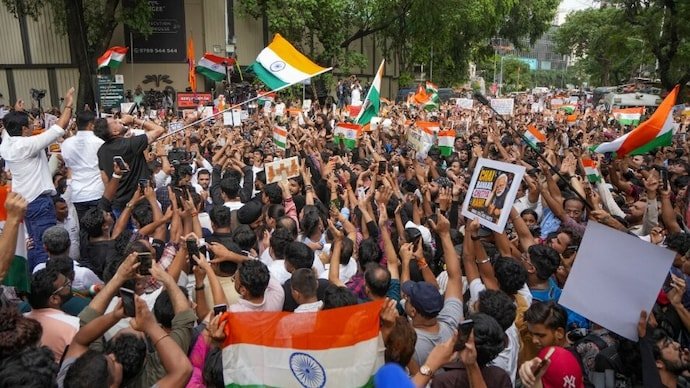
The Supreme Court on Monday declined to pass an immediate order stopping the Cockroach Janata Party’s (CJP) proposed protest march in Delhi on September 5, saying there was currently no concrete reason to presume that the demonstration would result in an untoward incident.
A bench headed by Chief Justice of India Surya Kant said questions of immediate law and order were primarily for the government and police to manage. The court asked the petitioner to raise concerns with the authorities while leaving open the possibility of judicial intervention if circumstances later became alarming.
The ruling comes as the CJP prepares for another mobilisation following its earlier Protests over the NEET paper-leak issue. The organisation has accused the Centre of failing to honour assurances that it says led to the withdrawal of its previous nationwide agitation on July 25.
The court’s approach means the September 5 march has not been prohibited by an immediate judicial order. At the same time, the proceedings underline that any protest must remain peaceful and lawful, while the authorities retain responsibility for managing Security and public order.
What the Supreme Court said about the September 5 march
The bench comprising Chief Justice Surya Kant and Justices Joymalya Bagchi and V Mohana did not find sufficient grounds at this stage to impose a pre-emptive ban on the proposed demonstration.
The CJI said the court would, for the time being, presume that everyone involved would behave responsibly and conduct themselves peacefully and lawfully.
The court also distinguished between two broad questions raised by the case: law and order, and policy-related concerns. According to the bench, the immediate responsibility for maintaining public order lies with the appropriate government and police authorities.
This distinction is important because courts can review questions involving legal rights and constitutional issues, but the practical management of a public demonstration involves decisions about policing, security, traffic and public safety.
The Supreme Court therefore directed the petitioner toward the relevant authorities rather than immediately stopping the march.
Court leaves the door open if the situation changes
The Supreme Court did not suggest that its position could never change.
Chief Justice Surya Kant indicated that if something alarming occurred, the petitioner could return to the court. However, any such intervention would have to concern an issue falling within the court’s judicial domain.
The matter has been scheduled for hearing on September 10, meaning the dispute will remain before the Supreme Court even though no immediate prohibition has been issued for the September 5 march.
This creates a significant distinction between refusing an urgent preventive order and finally deciding the broader issues surrounding the protest. Monday’s proceedings dealt primarily with whether there was enough reason to stop the proposed demonstration before it occurred.
Why the CJP is marching again
The September 5 protest follows a larger dispute between the CJP and the government over commitments allegedly made after the organisation called off its earlier agitation.
The CJP announced the new march on August 24, saying the Centre had not fulfilled assurances given when its nationwide protest over the NEET paper leak was withdrawn on July 25.
Among the issues highlighted by the organisation are cases and FIRs linked to earlier demonstrations and what it says were commitments to provide written assurances.
The organisation has described the government’s handling of those commitments as a betrayal, using the Hindi term vishwasghaat.
The CJP says the September 5 mobilisation will be peaceful and will include families of NEET students who died by suicide as well as people described by the organisation as victims of police brutality during the July protests.
What the CJP says about the planned demonstration
CJP spokesperson Saurav Das said the decision to organise the September 5 march followed concerns within the organisation’s National Working Committee about whether the government intended to honour its earlier commitments.
The organisation has framed the demonstration as a peaceful continuation of its campaign rather than a confrontation with authorities.
The proposed route has been described as running from India Gate to the New Delhi Police Headquarters. The CJP has said that families of affected NEET students and people who suffered during earlier protests would participate in the march.
The planned location is nevertheless significant from a security perspective because demonstrations in central Delhi can affect traffic, public movement and access to important government areas.
That makes coordination between organisers and police particularly important even when a protest is intended to remain peaceful.
The earlier NEET protests are at the centre of the dispute
The current confrontation cannot be understood without the CJP’s earlier mobilisation over the NEET paper-leak controversy.
The organisation’s previous agitation was eventually called off on July 25 after discussions and assurances concerning issues raised by protesters.
The CJP has since argued that some of those commitments were not implemented to its satisfaction. FIRs and other legal proceedings have become a particular point of contention.
The dispute illustrates a recurring challenge in protest movements: ending a demonstration does not necessarily end the underlying disagreement. If protesters believe that commitments made during negotiations have not been implemented, the possibility of renewed mobilisation remains.
For the CJP, the September 5 march is therefore being presented as a response to what it considers a failure of follow-through rather than an entirely new campaign.
Why the Supreme Court did not impose a pre-emptive ban
The court’s decision reflects the limited factual basis available at the present stage for concluding that the September 5 demonstration would inevitably become violent or unlawful.
A protest announcement by itself does not establish that an offence or disturbance will occur. The Supreme Court’s comments indicate that it was unwilling to assume in advance that organisers and participants would act irresponsibly.
That approach also places responsibility on the people organising and participating in the march. The court’s expectation of peaceful and lawful conduct means that the absence of a ban should not be interpreted as permission to ignore legal restrictions or directions issued by authorities.
The government and police, meanwhile, remain responsible for assessing security risks and taking appropriate measures within the law.
Law and order remains the immediate responsibility of authorities
The Supreme Court’s observations put the practical responsibility for the September 5 event largely on the relevant authorities at this stage.
Managing a large demonstration requires more than deciding whether protesters can assemble. Police must also consider crowd movement, traffic, emergency access, public safety and the possibility of clashes or disruption.
Those decisions require information that can change as the event approaches, including the expected size of the gathering and the final arrangements agreed with organisers.
The court’s refusal to issue an immediate prohibition therefore does not remove the authorities’ role. Instead, it leaves them to manage the event under the applicable legal framework.
The significance of the court’s September 10 hearing
The case is scheduled to return before the Supreme Court on September 10, five days after the planned march.
That timing means the court’s next consideration could take into account developments surrounding the protest itself, depending on what issues remain before it.
The September 10 hearing also gives the court an opportunity to consider the broader petitions and disputes connected to the student protests and the allegations of police violence.
For now, however, the immediate question of whether the September 5 march should be stopped has not resulted in a judicial prohibition.
What could happen before September 5
The situation could still evolve before the scheduled demonstration.
The organisers and authorities may need to discuss practical arrangements, including the route, crowd management and security requirements. Any restrictions imposed by competent authorities would also have to be followed by participants.
The Supreme Court has made clear that its current position rests on the expectation that everyone involved will behave responsibly and remain within the law.
If credible evidence of an imminent threat emerges, the legal position could be revisited through the appropriate channels. But without such developments, the court has indicated that it sees no reason to assume in advance that the march will lead to trouble.
The larger issue is the unresolved dispute over government assurances
While the immediate court battle concerns the September 5 march, the deeper dispute is about whether commitments made during negotiations with protesters have been implemented.
The CJP says it acted in good faith when it called off its earlier agitation and now wants the government to fulfil the assurances it says were given.
The government’s position and the status of individual commitments will be central to the continuing dispute. The questions surrounding FIRs, written assurances and the handling of complaints from protesters remain part of the broader legal and political debate.
The Supreme Court’s involvement does not automatically resolve those policy disagreements. Instead, the court is examining the legal questions that have been brought before it while leaving administrative and law-and-order responsibilities to the relevant authorities.
Why the ruling matters for the September 5 protest
Monday’s decision gives the CJP no judicial guarantee that every aspect of its planned march will proceed exactly as announced, but it does remove an immediate court-ordered prohibition.
At the same time, the ruling places a clear expectation on protesters to maintain discipline and on authorities to manage the situation lawfully.
The court’s message is therefore relatively straightforward: there is no current basis to assume that the demonstration will become disorderly, so it will not stop the event merely on that presumption. But if circumstances materially change, the issue can be brought back through the appropriate legal process.
For the CJP, the September 5 march is now the next major test of its campaign over the government’s alleged failure to honour earlier assurances. For the authorities, it will be a test of whether a politically charged demonstration can be managed without fresh confrontation.
And for the Supreme Court, the September 10 hearing will provide the next formal opportunity to examine the issues that continue to connect the protest movement, the NEET controversy and allegations arising from earlier demonstrations.
For now, however, the court has chosen not to predict trouble before it happens. The immediate responsibility rests with the organisers, protesters, government and police to ensure that the September 5 demonstration remains peaceful, lawful and properly managed.
For breaking news and live news updates, like us on Facebook or follow us on Twitter and Instagram. Read more on Latest India on thefoxdaily.com.






COMMENTS 0