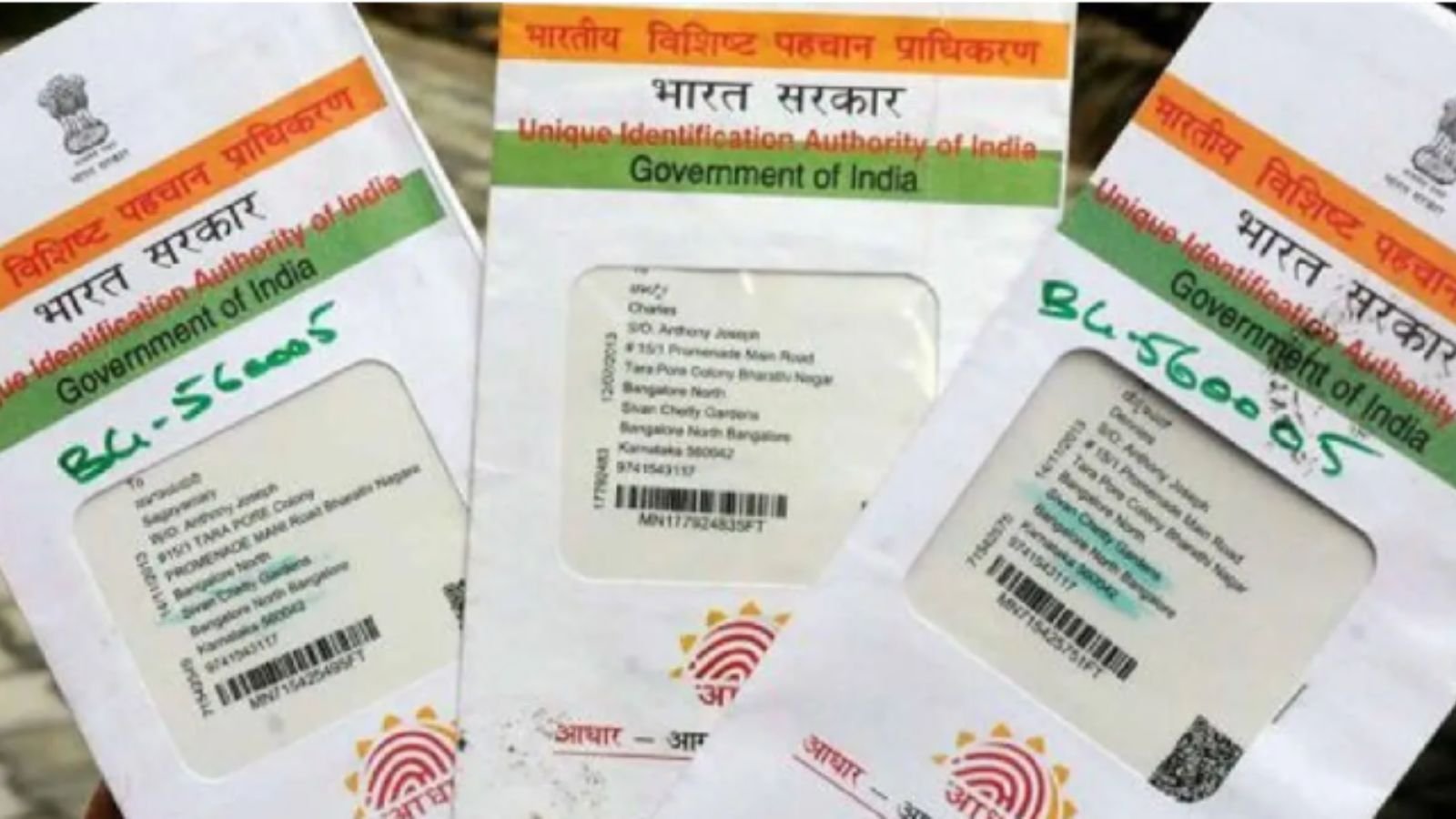
A significant legal debate surrounding Aadhaar, citizenship verification, and electoral integrity has reached the Supreme Court of India. The apex court has issued notices to the Central Government, state governments, Union Territories, the Election Commission of India (ECI), and the Unique Identification Authority of India (UIDAI) after a Public Interest Litigation (PIL) questioned the continued use of Aadhaar as proof of citizenship and age.
The case raises important constitutional, administrative, and electoral questions. At its core is a fundamental issue: if Indian law explicitly states that Aadhaar is not proof of citizenship, should it continue to be accepted in processes where citizenship verification is essential?
The outcome of this case could have implications for Voter Registration, public welfare programs, identity verification systems, and the broader debate over illegal Immigration and electoral transparency in India.
What Is the Supreme Court Case About?
The PIL argues that Aadhaar is increasingly being used as proof of citizenship, domicile, and date of birth in situations where existing laws and official guidelines expressly prohibit such usage.
A bench comprising Chief Justice of India Surya Kant and Justice V. Mohana has sought responses from relevant authorities before examining the matter further.
The petitioner contends that the current system creates legal inconsistencies and potential loopholes that may be exploited by individuals who are not Indian citizens but possess Aadhaar numbers.
What Does the Aadhaar Act Actually Say?
The Controversy revolves around Section 9 of the Aadhaar Act, 2016.
The provision clearly states that Aadhaar:
- Does not confer citizenship.
- Is not proof of citizenship.
- Is not proof of domicile.
- Functions primarily as proof of identity.
Additionally, UIDAI has repeatedly clarified that Aadhaar serves as a proof of identity and is not intended to establish nationality, citizenship status, or legal residence.
This distinction is crucial because Aadhaar enrollment is based on residency criteria rather than citizenship.
In simple terms, an individual may qualify for Aadhaar enrollment without being an Indian citizen, provided they meet the applicable residency requirements.
Understanding the Difference Between Identity and Citizenship
One of the most misunderstood aspects of Aadhaar is the distinction between identity verification and citizenship verification.
| Concept | Purpose | Does Aadhaar Prove It? |
|---|---|---|
| Identity | Who a person is | Yes |
| Residence | Where a person lives | Limited Use |
| Date of Birth | Age Verification | Not Primary Proof |
| Citizenship | Nationality Status | No |
| Domicile | Permanent Legal Residence | No |
This distinction lies at the center of the Supreme Court proceedings.
While Aadhaar can authenticate a person’s identity, the petitioner argues that it should not be used for purposes that require verification of citizenship or nationality.
Why the Petition Challenges Voter Registration Rules
A major focus of the PIL is Form-6, which is used for new voter registration under the Registration of Electors Rules.
The petitioner argues that Aadhaar continues to be accepted as supporting documentation for certain aspects of voter enrollment, creating potential inconsistencies with the Aadhaar Act and UIDAI guidelines.
The concern raised is not merely administrative but constitutional.
Voting rights in India are reserved for citizens. Therefore, any documentation accepted during voter registration must be capable of supporting lawful verification processes.
The PIL questions whether current procedures adequately distinguish between citizens and non-citizens during enrollment.
Why Electoral Integrity Is Central to the Debate
The case has attracted attention because it touches upon electoral integrity, one of the cornerstones of democratic Governance.
Electoral rolls serve as the foundation of Elections. If inaccuracies enter voter databases, confidence in democratic processes can be affected.
The petition argues that stronger verification mechanisms may be required to ensure:
- Only eligible citizens are registered as voters.
- Duplicate registrations are minimized.
- Identity fraud is prevented.
- Electoral rolls remain accurate.
- Public trust in elections is strengthened.
At the same time, any reforms must balance Security concerns with accessibility and voter inclusion.
The Broader Debate Around Illegal Immigration
The PIL also highlights concerns regarding illegal immigration and the alleged misuse of identity documents.
Illegal immigration has been a politically sensitive issue in several regions of India, particularly in border states.
For decades, debates have focused on:
- Population movements across borders.
- Documentation and identification systems.
- Citizenship verification procedures.
- Electoral roll accuracy.
- National security implications.
The petitioner argues that identity documents obtained through residency-based systems should not automatically translate into evidence of citizenship.
Supporters of stricter verification believe this distinction is necessary to maintain legal clarity.
How Aadhaar Became India’s Largest Identity Platform
To understand the significance of the case, it is important to appreciate Aadhaar’s scale.
Aadhaar has become one of the world’s largest digital identity systems.
It was originally introduced to:
- Improve delivery of government benefits.
- Reduce identity fraud.
- Strengthen welfare distribution.
- Enable digital authentication.
- Simplify service access.
Today, Aadhaar is linked to numerous services, including Banking, taxation, welfare programs, mobile connections, and various public services.
Its widespread adoption has made it one of the most recognized forms of identification in India.
However, its increasing use has also led to questions regarding where identity verification ends and citizenship verification begins.
What Previous Courts Have Said About Aadhaar
The petition references previous judicial observations that Aadhaar should not automatically be treated as proof of citizenship.
Courts have repeatedly emphasized the limited legal purpose of Aadhaar.
The guiding principle has generally remained consistent:
Aadhaar establishes identity, but it does not independently establish citizenship status.
This distinction has been reinforced through judicial interpretations and official clarifications over the years.
Potential Implications if the Court Rules in Favor of the Petition
If the Supreme Court ultimately accepts the arguments presented in the PIL, several administrative procedures could come under review.
Possible outcomes may include:
- Revision of voter registration documentation requirements.
- Clearer guidelines regarding Aadhaar usage.
- Additional citizenship verification mechanisms.
- Updated government forms and procedures.
- Enhanced scrutiny of identity documentation processes.
Such changes could affect multiple government departments and electoral authorities across the country.
Potential Challenges of Stricter Verification
While stronger verification measures may improve compliance with legal provisions, they could also create practical challenges.
Policymakers would need to ensure that legitimate citizens are not disadvantaged by more complex procedures.
Key concerns include:
- Administrative burden.
- Processing delays.
- Documentation availability.
- Rural accessibility.
- Implementation costs.
Any future reforms would likely need to balance security, efficiency, and inclusiveness.
The International Perspective on Identity Systems
India is not alone in facing these challenges.
Many countries distinguish between identity documents and citizenship documents.
For example:
| Document Type | Typical Purpose |
|---|---|
| National ID Card | Identity Verification |
| Passport | Citizenship and Travel |
| Birth Certificate | Birth Registration |
| Voter ID | Election Participation |
| Citizenship Certificate | Nationality Verification |
The challenge for governments worldwide is ensuring that each document serves its intended purpose without creating legal ambiguities.
Why This Case Matters Beyond Aadhaar
Although the immediate issue concerns Aadhaar, the case raises broader questions about governance and documentation systems in the digital age.
As governments increasingly rely on digital identity platforms, distinctions between identity, residence, citizenship, and eligibility become more important.
The Supreme Court’s eventual ruling could help define these boundaries more clearly and establish guidelines for future policy decisions.
It may also influence how digital identity systems are integrated into electoral and administrative processes going forward.
What Happens Next?
The Supreme Court has currently sought responses from the Centre, states, Union Territories, the Election Commission of India, and UIDAI.
Once these responses are filed, the Court will examine:
- The legal framework governing Aadhaar.
- Existing voter registration procedures.
- UIDAI guidelines.
- Constitutional implications.
- Administrative feasibility of potential reforms.
The proceedings are expected to generate significant legal and policy discussion because they involve the intersection of citizenship, elections, identity verification, and constitutional governance.
Conclusion: A Landmark Debate on Identity, Citizenship, and Democracy
The Supreme Court’s examination of Aadhaar’s role in citizenship and voter verification processes has opened an important national conversation about the distinction between identity and nationality.
While Aadhaar has transformed service delivery and digital authentication across India, the law has consistently maintained that it is not proof of citizenship. The PIL argues that current practices may not fully reflect that legal position, particularly in areas involving voter registration and eligibility verification.
The Court’s eventual decision could influence how identity documents are used across multiple sectors, strengthen legal clarity regarding Aadhaar’s scope, and shape future electoral and administrative procedures.
Beyond the legal arguments, the case underscores a broader challenge facing modern democracies: how to build efficient digital identity systems while preserving the integrity of citizenship verification and democratic participation. The answer could have lasting implications for governance, elections, and public administration in India.
For breaking news and live news updates, like us on Facebook or follow us on Twitter and Instagram. Read more on Latest India on thefoxdaily.com.






COMMENTS 0