
China has accused the United States of using unsubstantiated espionage allegations as an excuse to restrict its access to advanced technology, escalating tensions between the two countries over artificial intelligence, semiconductor exports and national security. Beijing’s criticism follows reports that Nvidia chief executive Jensen Huang may have been targeted in an alleged Chinese intelligence operation involving a former business executive.
Chinese Foreign Ministry spokesperson Mao Ning made the remarks during a regular briefing on Thursday, November 12, rejecting the allegations and accusing Washington of turning the controversy into a political tool against China’s technology industry.
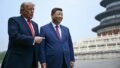
The dispute has added another layer to the ongoing US-China technology rivalry, particularly over advanced Nvidia processors used to develop and operate artificial intelligence systems. It also comes just days before US President Donald Trump is expected to meet Chinese President Xi Jinping at the Asia-Pacific Economic Cooperation (APEC) gathering in Shenzhen.
China Accuses Washington of Fabricating Spy Narratives
Beijing has strongly rejected reports suggesting that Huang was the target of an espionage operation linked to China. Mao Ning said China’s technological development was based on domestic innovation and international cooperation rather than illicit access to foreign technology.
“China’s technological progress is driven by independent innovation and open cooperation. The US side should stop fabricating such ‘spy’ narratives as a pretext for imposing a technological blockade,” Mao told reporters.
Her remarks reflected Beijing’s concern that the allegations could be used to justify additional restrictions on Chinese companies seeking access to American semiconductor technology.
China has previously described the accusations involving Huang and Alice Huang as groundless speculation and an attempt to smear the country. Chinese officials have not accepted the suggestion that the reported relationship represents evidence of a state-backed intelligence operation.
The Chinese government has also argued that Washington’s technology restrictions are part of a broader effort to slow China’s economic and technological development. The latest comments suggest Beijing sees the Nvidia controversy as connected to that wider dispute.
What Are the Allegations Involving Nvidia CEO Jensen Huang?
The controversy centres on Jensen Huang, the co-founder and chief executive of Nvidia, and Alice Huang, a former executive associated with Singapore-based technology and data centre company Megaspeed. The two individuals are not related despite sharing the same surname.
Reports based on information from people familiar with US intelligence assessments have alleged that Alice Huang was recruited by China’s Ministry of State Security to collect information about the Nvidia chief. According to those reports, she allegedly maintained a relationship with Jensen Huang while having connections to China’s intelligence network.
Jensen Huang has acknowledged having an extramarital affair, apologising to his wife, family and colleagues. However, his admission of infidelity does not establish that he knowingly participated in espionage or that confidential Nvidia information was transferred to Chinese authorities.
The allegations have not been publicly substantiated through a criminal finding, and no publicly reported charges have established that Jensen Huang or Alice Huang committed espionage. The distinction is important because the investigation concerns whether the Nvidia chief may have been targeted by a foreign intelligence operation, rather than proof that he knowingly assisted one.
The allegations have also raised questions about Megaspeed’s business activities. The company operates in the cloud computing and AI infrastructure sector and has attracted scrutiny over concerns that advanced Nvidia processors could have been made accessible to Chinese customers despite US export restrictions.
Nvidia Launches Independent Investigation Into Possible Intelligence Operation
Nvidia’s board of directors has initiated an independent investigation into reports that Huang was targeted by a foreign intelligence effort. The review is intended to establish whether the alleged relationship created any risk to the company’s confidential information or American national security interests.
In its public statement, Nvidia’s board said it had no reason to believe that national security or the company’s trade secrets had been compromised. However, it said the inquiry would examine all available information surrounding the allegations.
Huang has expressed support for the investigation and committed to cooperating with the review. The company has also maintained that its business activities and leadership remain focused on its technology and customers.
The investigation is particularly sensitive because Nvidia is a central supplier of advanced processors used in AI development. Its products support data centres, cloud computing platforms, scientific research and major technology companies worldwide.
Any evidence of unauthorised access to confidential information could therefore have implications beyond Nvidia itself. It could intensify scrutiny of relationships between semiconductor companies, overseas customers and businesses operating in countries subject to US technology restrictions.
Why Nvidia Chips Are at the Centre of the US-China Technology Rivalry
Nvidia has become one of the most important companies in the global artificial intelligence industry because its graphics processing units (GPUs) are widely used to train and run advanced AI models. These processors provide the computing capacity required for large-scale machine learning, data analysis and other demanding applications.
Washington has imposed export controls on advanced semiconductor technology to limit China’s access to processors that could strengthen its military capabilities or accelerate the development of strategically sensitive AI systems.
Those restrictions have become a major source of friction between the world’s two largest economies. The US government argues that controlling access to advanced computing technology is necessary to protect national security and maintain its technological advantage.
Beijing, meanwhile, has criticised the restrictions as unfair attempts to contain China’s development. Chinese technology companies have continued investing in domestic chip design, semiconductor manufacturing and alternative computing infrastructure to reduce their dependence on American suppliers.
The Nvidia controversy has renewed debate over whether existing export controls are sufficient to prevent restricted technology from reaching Chinese customers through indirect routes, including overseas data centres and rented computing capacity.
Trump’s Decision on Nvidia H200 Chips Adds to the Debate
The dispute has also drawn attention to the US administration’s policy on Nvidia’s advanced H200 artificial intelligence processors. President Donald Trump previously cleared a pathway for the chips to be exported to China under conditions, despite objections from American lawmakers and national security hardliners.
Supporters of allowing controlled sales argue that American semiconductor companies should retain access to international markets. They also warn that completely shutting China out of US technology could encourage Chinese companies to accelerate the development of domestic alternatives.
Critics take a different view. They argue that access to powerful AI processors could strengthen China’s capabilities in areas such as military research, intelligence analysis and advanced computing. They have therefore called for tighter restrictions on the export of high-performance chips.
The allegations involving Alice Huang have intensified these concerns because they connect a reported intelligence operation with the business relationships surrounding Nvidia’s technology. However, the existence of espionage allegations does not by itself prove that restricted chips were illegally transferred or that Nvidia’s leadership knowingly violated export rules.
The controversy could nevertheless increase pressure on Washington to review how advanced processors are sold, licensed and accessed through overseas computing facilities.
Jensen Huang Has Long Opposed Broad Restrictions on China Sales
Huang has spent years arguing against broad restrictions on Nvidia’s ability to sell advanced chips in China. He has maintained that American companies should remain competitive in international markets and that limiting access to US technology could create opportunities for Chinese semiconductor developers.
His position has sometimes placed him at odds with policymakers who view advanced AI computing as a strategic national security resource. The debate has become more complicated as artificial intelligence has gained importance in commercial applications, defence research and economic competition.
For Nvidia, China represents an important technology market, although US export controls have limited the company’s ability to sell some of its most advanced processors there. Restrictions have also encouraged Chinese companies to explore alternative suppliers and computing arrangements.
Washington must therefore balance two competing objectives: protecting strategically important technology while preserving the commercial strength of American semiconductor companies.
China’s Response Comes Ahead of Trump-Xi Meeting in Shenzhen
The latest exchange between Beijing and Washington comes ahead of an expected meeting between Trump and Xi Jinping at the APEC gathering in Shenzhen, southern China, next week.
The meeting is taking place against a backdrop of disagreements over trade, technology exports, artificial intelligence and broader economic competition. The Nvidia controversy could add another sensitive issue to discussions between the two leaders.
For Beijing, the allegations raise concerns that Washington may use national security arguments to justify further restrictions on Chinese access to American technology. For the United States, the reported intelligence operation highlights questions about protecting sensitive business information and preventing strategic technology from reaching foreign adversaries.
Neither government has indicated that the Nvidia controversy will determine the outcome of the upcoming meeting. However, the issue illustrates how closely technology, trade and national security have become linked in US-China relations.
Could the Spy Controversy Lead to Tighter Technology Restrictions?
The allegations have already increased uncertainty among technology companies that depend on Nvidia’s processors. Chinese AI developers are particularly concerned that Washington could introduce additional controls on overseas access to advanced computing capacity.
One potential area of scrutiny is the use of data centres outside China. Companies can sometimes rent computing power from overseas facilities rather than importing restricted processors directly. Such arrangements have raised questions about whether existing export controls adequately cover remote access to advanced AI hardware.
Any additional restrictions could affect Chinese technology companies, international data centre operators and American semiconductor businesses seeking to maintain access to overseas markets.
For Nvidia, the challenge is to protect its reputation and technology while navigating increasingly complicated political and regulatory expectations. The company’s independent investigation may help clarify whether the reported intelligence concerns created any actual security risk.
What Happens Next in the US-China Technology Dispute?
China’s latest statement demonstrates that Beijing intends to challenge the use of espionage allegations as a justification for additional technology restrictions. Washington, meanwhile, faces pressure from lawmakers and national security officials to examine the potential risks surrounding Nvidia’s business relationships and access to advanced processors.
Several developments will be important in the coming days:
- Nvidia’s investigation: The board’s findings could clarify whether the reported relationship created any risk to company information or national security.
- US export policy: Washington may face renewed pressure to review restrictions on advanced Nvidia chips and overseas access to computing capacity.
- China’s response: Beijing is likely to continue rejecting the espionage allegations and opposing technology restrictions it considers discriminatory.
- Trump-Xi meeting: The upcoming APEC discussions could provide an opportunity to address technology trade and wider economic tensions.
For now, the central espionage allegations remain disputed, and Nvidia has said it has no reason to believe its secrets or national security were compromised. The broader political consequences, however, could extend well beyond the individuals involved.
The dispute highlights a growing challenge for the global technology industry: as artificial intelligence becomes a strategic resource, the commercial relationships surrounding advanced chips are increasingly being examined through the lens of national security and geopolitical competition.
For breaking news and live news updates, like us on Facebook or follow us on Twitter and Instagram. Read more on Latest World on thefoxdaily.com.





COMMENTS 0