- Why the Strait of Hormuz Matters So Much
- Why Trump and Xi Suddenly Found Common Ground
- The Iran Nuclear Issue Returned to the Center of Diplomacy
- China’s Carefully Worded Response Reveals Diplomatic Caution
- Why China Is Especially Vulnerable to Hormuz Disruption
- Trump Faces Political Pressure at Home
- Marco Rubio Tried to Downplay Dependence on China
- The Iran Conflict Is Quietly Reshaping US-China Relations
- Taiwan and Trade Tensions Still Linger in the Background
- The Bigger Story Is Energy Security
- Conclusion: Rare Cooperation Amid Deep Rivalry
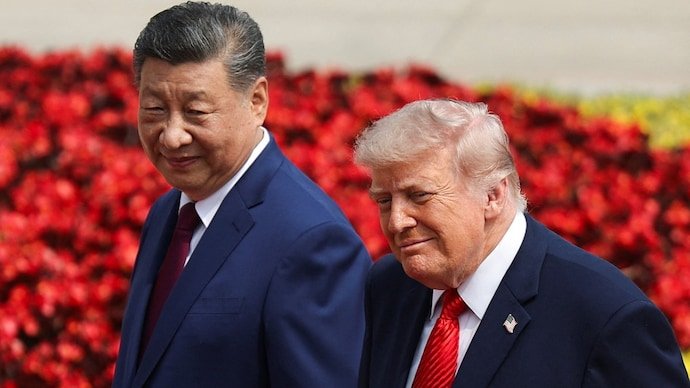
US President Donald Trump and Chinese President Xi Jinping found an unusual area of agreement during their high-stakes summit in Beijing: the Strait of Hormuz must remain open, and Iran should never possess nuclear weapons.
In a period marked by deep rivalry between Washington and Beijing over trade, technology, Taiwan, and military influence, the rare convergence between the world’s two largest powers immediately drew global attention.
The White House described the discussions as significant progress on a critical international security issue, particularly as the ongoing Iran conflict continues disrupting energy markets and increasing fears of wider regional instability.
The summit took place against the backdrop of one of the most dangerous geopolitical crises in recent years. Iran’s tightening control over maritime traffic around the Strait of Hormuz has already shaken global oil markets, raised shipping risks, and intensified inflation concerns worldwide.
While many areas of US-China relations remain tense, the Hormuz crisis appears to have created a shared strategic concern that neither country can afford to ignore.
Why the Strait of Hormuz Matters So Much
The Strait of Hormuz is not just another regional waterway.
It is one of the most strategically important energy chokepoints on Earth.
Nearly one-fifth of global oil shipments pass through the narrow maritime corridor connecting the Persian Gulf to international waters. Massive volumes of crude oil and liquefied natural gas move through the strait every day, supplying economies across Asia, Europe, and beyond.
Any disruption in Hormuz can immediately affect:
- Global oil prices
- Fuel costs
- Shipping insurance rates
- Inflation levels
- Energy security
- Financial markets
That is why Iran’s recent moves to tighten control over Gulf shipping routes have triggered such widespread international concern.
Even countries not directly involved in the conflict face economic consequences when maritime energy routes become unstable.
| Why the Strait of Hormuz Is Critical | Global Impact |
|---|---|
| Handles major global oil shipments | Affects worldwide fuel prices |
| Key LNG transit route | Influences energy markets globally |
| Narrow strategic chokepoint | Highly vulnerable to disruption |
| Close to Iranian coastline | Raises military and shipping risks |
| Vital for Asian economies | Impacts China, India, Japan and others |
Why Trump and Xi Suddenly Found Common Ground
The agreement between Trump and Xi on Hormuz is significant because US-China relations remain deeply strained in almost every other area.
The two countries continue competing over:
- Artificial intelligence
- Semiconductors
- Trade policy
- Taiwan
- Military influence in Asia
- Technology supply chains
Yet energy security creates a shared vulnerability.
China is one of the world’s largest energy importers and depends heavily on Gulf oil shipments passing through Hormuz.
Meanwhile, although the United States has increased domestic energy production over the past decade, it remains heavily exposed to global oil-price shocks because energy markets are interconnected.
That explains why both governments appear aligned on preventing prolonged disruption in Gulf shipping routes.
The summit demonstrated a reality often overlooked in geopolitical narratives:
Strategic rivals can still cooperate when their economic interests overlap.
The Iran Nuclear Issue Returned to the Center of Diplomacy
Another major outcome highlighted by the White House was agreement that Iran should never acquire nuclear weapons.
The nuclear issue has remained one of the central tensions between Iran and Western powers for decades.
Concerns focus on whether Tehran could eventually develop nuclear weapons capability under the cover of civilian nuclear programs.
Iran has repeatedly denied seeking nuclear weapons, insisting its nuclear activities are for peaceful energy and research purposes.
However, Western governments and many regional powers remain skeptical.
The White House statement suggesting both Trump and Xi agreed Iran should never possess nuclear weapons is notable because China has traditionally taken a more cautious and less confrontational approach toward Tehran compared with Washington.
At the same time, China’s official state media avoided directly emphasizing the nuclear aspect in its own summary of the meeting.
China’s Carefully Worded Response Reveals Diplomatic Caution
One of the most interesting aspects of the summit was the contrast between the White House statement and China’s official messaging.
While the White House explicitly referenced:
- The Strait of Hormuz
- Iranian nuclear concerns
- Opposition to militarization
- Shipping toll disputes
China’s state-run Xinhua News Agency offered a far more restrained description.
Xinhua merely stated that the two leaders exchanged views on “major international and regional issues, including the Middle East situation.”
The omission appears deliberate.
China has traditionally tried to maintain balanced relations across the Middle East, including with:
- Iran
- Saudi Arabia
- The United Arab Emirates
- Israel
Beijing generally avoids publicly appearing aligned too closely with Washington against Tehran.
This diplomatic ambiguity allows China to preserve strategic flexibility in the region.
Why China Is Especially Vulnerable to Hormuz Disruption
China’s energy dependence explains much of its concern over the Strait of Hormuz.
As the world’s largest Manufacturing economy, China imports enormous amounts of oil to power:
- Factories
- Transportation systems
- Industrial production
- Energy infrastructure
A prolonged Hormuz disruption could create:
- Higher import costs
- Industrial slowdowns
- Inflationary pressure
- Supply-chain instability
The White House statement suggesting China expressed interest in purchasing more American oil is especially important.
If accurate, it signals Beijing may be looking to diversify energy sources and reduce excessive dependence on Gulf shipping routes.
This reflects a broader global trend where countries increasingly view energy security as a national-security issue rather than simply an economic matter.
Trump Faces Political Pressure at Home
The Beijing summit also comes at a difficult political moment for Donald Trump.
The ongoing Iran conflict has contributed to:
- Higher fuel prices
- Inflation concerns
- Market volatility
- Public frustration over economic uncertainty
Although the United States produces large amounts of oil domestically, American consumers remain highly sensitive to gasoline prices.
That makes stability in the Strait of Hormuz politically important for any US administration.
Trump’s visit to Beijing therefore carried both diplomatic and domestic political significance.
Any signs of international coordination aimed at stabilizing energy markets could help ease economic pressure back home.
Marco Rubio Tried to Downplay Dependence on China
After the summit, Secretary of State Marco Rubio insisted the United States was not asking China to mediate with Iran.
“We don’t need their help,” Rubio stated publicly.
However, his remarks also acknowledged that Washington and Beijing had aligned positions on keeping the strait open and opposing maritime toll systems.
The comments reveal a delicate diplomatic balancing act.
The US wants to avoid appearing dependent on China for regional crisis management while still recognizing that Beijing’s position matters because of its economic influence and energy interests.
This reflects a broader shift in global Geopolitics where China increasingly plays a larger role in international crisis diplomacy.
The Iran Conflict Is Quietly Reshaping US-China Relations
One of the most important long-term implications of the summit is how the Iran crisis may reshape the relationship between Washington and Beijing.
Although the two powers remain strategic competitors, the conflict has highlighted areas where cooperation becomes unavoidable.
These include:
- Energy market stability
- Global shipping security
- Nuclear non-proliferation
- Inflation management
- Supply-chain protection
Modern geopolitics increasingly creates situations where rival powers compete aggressively in some areas while cooperating selectively in others.
The Hormuz issue appears to be one such case.
Taiwan and Trade Tensions Still Linger in the Background
Despite the focus on Iran and Hormuz, the summit did not erase broader US-China tensions.
According to officials, discussions also touched on:
- Taiwan
- Trade disputes
- Human rights issues
- The case of jailed Hong Kong publisher Jimmy Lai
These issues continue straining relations between the two countries.
That is why analysts caution against viewing the Hormuz agreement as a broader geopolitical breakthrough.
Instead, it is more accurately understood as limited cooperation driven by overlapping economic interests during a crisis.
The Bigger Story Is Energy Security
Perhaps the most important insight from the summit is how central energy security has become in modern diplomacy.
For decades, trade and military alliances dominated great-power politics.
Today, energy routes, shipping lanes, and commodity supply chains increasingly shape international strategy.
The Hormuz crisis has exposed how vulnerable the global economy remains to maritime disruption.
Even countries geographically distant from the Gulf cannot escape the economic consequences of prolonged instability.
This explains why both Washington and Beijing appear determined to prevent a complete breakdown in Gulf shipping flows.
Conclusion: Rare Cooperation Amid Deep Rivalry
The Beijing summit between Donald Trump and Xi Jinping revealed an unusual but important reality: even strategic rivals can find common ground when global economic stability is threatened.
By agreeing that the Strait of Hormuz must remain open and that Iran should never obtain nuclear weapons, both leaders signaled concern over the growing risks posed by the ongoing Middle East conflict.
For China, the issue is deeply tied to energy security and economic stability. For the United States, it carries both strategic and domestic political consequences as fuel prices and inflation remain sensitive issues.
At the same time, differences between the White House statement and China’s more cautious messaging show that underlying geopolitical tensions remain unresolved.
The summit was not a sign of full diplomatic reconciliation between Washington and Beijing.
Instead, it highlighted the complicated nature of modern geopolitics where competition, dependence, cooperation, and rivalry increasingly exist at the same time.
And as long as the Strait of Hormuz remains unstable, both superpowers may find themselves forced into more coordination than either side originally expected.
For breaking news and live news updates, like us on Facebook or follow us on Twitter and Instagram. Read more on Latest World on thefoxdaily.com.





COMMENTS 0