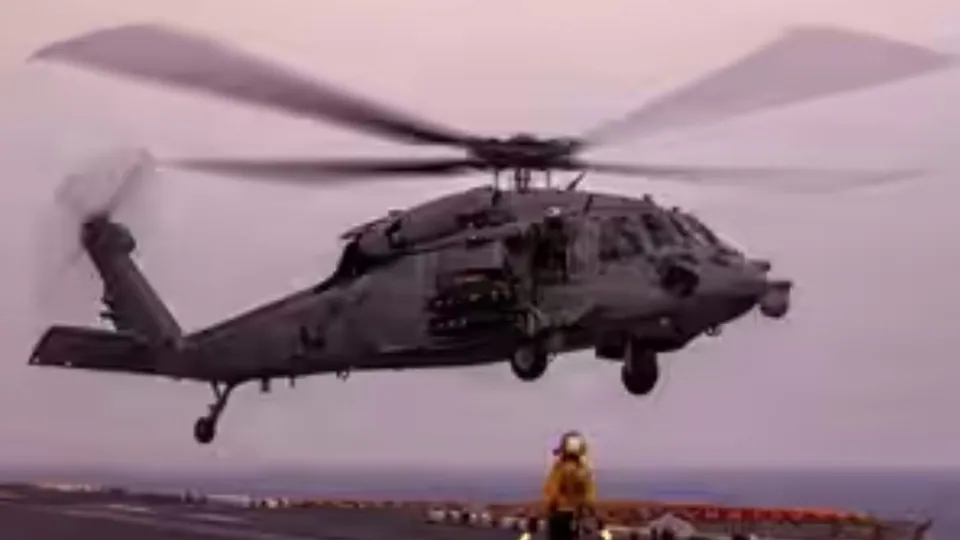
Two people have been killed after a Saudi Arabian AH-6i reconnaissance helicopter crashed near Najran, close to the kingdom’s border with Yemen, as Saudi Arabia faces an intensifying wave of attacks by Houthi rebels. The Saudi-led coalition attributed the crash to a technical fault, disputing an earlier claim by the Iran-backed group that it had brought down a similar aircraft.
The deaths mark the first reported fatalities of their kind in Saudi Arabia since the latest escalation in its confrontation with the Houthis. The incident occurred amid reports of intercepted missiles, drone attacks and overnight air-raid alerts in Riyadh, highlighting the continuing security challenges facing the kingdom.
The latest developments have also disrupted travel, education and business activity in Saudi Arabia. Authorities have extended remote learning in the capital, while uncertainty remains over the reopening of the main airport and the safe return of employees to the city’s financial district.
Saudi Coalition Attributes Helicopter Crash to Technical Fault
The Saudi-led coalition said the AH-6i reconnaissance helicopter crashed near Najran because of a technical fault. Two crew members died in the incident, according to the available information.
The coalition’s explanation contradicts an earlier claim by the Houthis that they had shot down a similar aircraft. The competing accounts leave an important distinction between the reported cause of the crash and the Houthi claim of responsibility.
No additional technical details about the helicopter’s failure were provided in the supplied report. The available information also does not establish the precise circumstances leading up to the crash beyond the coalition’s attribution to a technical problem.
The incident comes at a sensitive time for Saudi Arabia, which has faced repeated attacks as the conflict involving the Houthis and Saudi-backed Yemeni forces intensifies. Although the helicopter crash has drawn attention because of the deaths, the coalition has attributed it to a mechanical or technical issue rather than an enemy strike.
Houthi Attacks Intensify Across Saudi Arabia
The helicopter crash occurred as Saudi Arabia reported multiple attempts to target locations across the kingdom. According to the Saudi-led coalition, several waves of drones were intercepted over Riyadh during the weekend, while ballistic and cruise missiles were destroyed in other areas.
The reported interceptions included attempted strikes targeting Yanbu, a Red Sea port city, and the Khamis Mushait area near the Saudi-Yemeni border. These incidents came amid broader concerns about the vulnerability of Saudi infrastructure to attacks launched by the Yemen-based group.
Saudi Arabia’s main population and economic centres have faced heightened security pressure since the latest escalation began. Airports in Abha, Jazan, Najran and Dammam have also reportedly come under fire, while the headquarters of oil giant Saudi Aramco in Dhahran has been hit.
The frequency and geographical spread of the reported attacks have increased concerns about the safety of transport networks, commercial facilities and energy infrastructure. Interceptions can prevent incoming weapons from reaching their intended targets, but repeated attack attempts can still disrupt normal operations and force authorities to introduce precautionary measures.
Riyadh Airport Closure Disrupts Travel and Business
The security situation has created significant uncertainty for air travel in Saudi Arabia. King Khalid International Airport in Riyadh was shut following a wave of deadly attacks approximately a week before the reported helicopter crash, and observers were still awaiting its reopening.
The closure has affected the kingdom’s aviation outlook at a time when airlines and passengers are already dealing with changes to services across the region. Travellers may face cancellations, suspended routes and uncertainty over departure schedules as the security situation develops.
Airports are particularly important during periods of regional conflict because disruptions can affect more than passenger movement. Cargo operations, connecting flights, business travel and the movement of international visitors may also be affected when major aviation hubs close or operate under restrictions.
The reported attacks have also had consequences for daily life in Riyadh. Authorities extended remote learning for schools in the capital by another seven days, while the city’s financial district had not indicated that it was safe for employees to return to their offices.
These measures illustrate how the impact of the confrontation extends beyond military targets. Prolonged restrictions on schools, workplaces and air travel can affect families, employers and businesses even when incoming missiles and drones are intercepted.
Saudi Arabia Delays Events as Security Concerns Grow
The latest escalation has placed pressure on Saudi Arabia’s efforts to attract international visitors, investors and business leaders. The kingdom has reportedly delayed several global events scheduled for the month as the security situation deteriorates.
One of the events facing uncertainty is the Future Investment Initiative, a flagship Saudi financial gathering scheduled for later in the month. Bloomberg reported that organisers were considering contingency arrangements, including virtual attendance.
The possibility of shifting participation online highlights the difficulties of organising large international gatherings during a period of heightened security risk. Events that depend on international travel and in-person meetings can face logistical problems when airports are closed, flight schedules are disrupted or attendees reconsider their plans.
Saudi Arabia has invested heavily in attracting international business and expanding its economic profile beyond oil. Security-related disruptions can complicate those efforts by affecting travel confidence, event planning and perceptions of operational stability.
However, the precise financial cost of the latest attacks and event delays was not provided in the available report. The longer-term economic consequences will depend partly on how quickly transport services resume and whether the frequency of attacks declines.
Egypt Signals Support for Saudi Arabia’s Defence
The escalation has prompted expressions of support from some of Saudi Arabia’s regional allies. Egypt has indicated that it is considering steps to support the kingdom’s defence if Riyadh formally requests assistance.
Egyptian President Abdel-Fattah El-Sisi urged parliament to authorise measures that could support Saudi Arabia’s defence. The Egyptian parliament was due to convene for an emergency session on Sunday, according to the supplied report.
Speaking during a military graduation ceremony, El-Sisi stressed that any authorisation would be defensive rather than an effort to launch an attack.
“We’re talking about for defense only,” he said, adding that the aim would not be to “fight someone or attack someone.”
The remarks signal political support for Saudi Arabia amid the continuing attacks, but they do not establish that Egyptian forces have been deployed or that a specific military operation has been agreed. Any concrete action would depend on the decisions taken by the relevant authorities and the nature of a possible Saudi request.
Support from regional partners could become an important factor if the confrontation expands. At the same time, the distinction between defensive assistance and direct participation in hostilities remains significant as governments consider their responses.
Houthi Strikes Also Target Yemeni Government Positions
The latest attacks have not been confined to Saudi territory. The Houthis also struck the airport in Aden, the seat of Yemen’s internationally recognised government, on Friday night, according to the state-run Saba news agency.
The group had reportedly targeted the presidential palace in the city several days earlier, killing several security personnel. The incidents underline the continued threat to government-held areas inside Yemen as fighting intensifies.
Yemen has experienced years of conflict involving the Houthis, the internationally recognised government and various regional actors. Saudi Arabia has been deeply involved in the conflict, leading a military coalition against the Houthis and supporting forces opposed to the group.
The latest escalation followed an offensive by Saudi-backed Yemeni forces aimed at recapturing areas held by the Houthis. The group stepped up its attacks in October, according to the supplied report, intensifying pressure on Saudi territory and Yemeni government positions.
The sequence of events points to an increasingly interconnected security situation, with attacks in Yemen and Saudi Arabia forming part of a broader confrontation. However, individual incidents should be assessed separately, particularly where responsibility or the circumstances of an attack have not been independently established.
Repeated Attacks on Riyadh Airport Raise Security Concerns
According to the supplied report, the Houthis had attacked Riyadh’s King Khalid International Airport 20 times since the beginning of October. Those attacks reportedly left around 17 people dead and more than 300 injured.
The reported figures underline the human cost of the latest escalation, although the available information does not provide a detailed breakdown of casualties by incident or independently establish the circumstances of every reported death and injury.
The airport attacks have become a central concern because aviation facilities serve as critical links for passengers, cargo and international business. Disruption at a major capital-city airport can affect domestic connections and international routes well beyond the immediate area targeted.
Repeated attacks also create uncertainty for airlines, airport staff and travellers, who may need to adjust plans at short notice. Even when air-defence systems intercept incoming weapons, authorities may close facilities temporarily while they assess risks and restore normal operations.
The reported attacks on airports in other Saudi cities and on the Dhahran headquarters of Saudi Aramco have added to concerns about the security of the kingdom’s infrastructure. The latest developments suggest that protecting transport and energy facilities remains a major challenge as the confrontation continues.
Bab el-Mandeb Threatens to Deepen the Global Energy Supply Crunch
The conflict is also adding pressure to an already strained global energy market. The Houthis have targeted ships travelling through the Bab el-Mandeb Strait, a strategic maritime passage linking the Red Sea with the Gulf of Aden and an important route for international trade and energy shipments.
The strait’s location makes it particularly significant for vessels travelling between the Indian Ocean and the Mediterranean through the Red Sea and Suez Canal. Disruption to shipping in the area can force operators to reassess routes, increase journey times and face higher costs associated with security and insurance.
The reported maritime threat has compounded an energy-supply crunch linked to the nearly eight-month Iran war described in the supplied report. With shipping routes under pressure and the prospect of normal flows diminishing, markets have faced renewed concerns about the availability and movement of crude oil.
Brent crude rose to $110 a barrel on Friday, its first move to that level since May, according to the report. The price movement reflected concerns about the prospects for restoring normal flows, although the supplied information does not establish how much of the increase was attributable specifically to Houthi activity rather than other regional developments.
Energy markets respond to both actual supply disruptions and the possibility that future shipments could be delayed or interrupted. Threats to a key maritime corridor can therefore influence prices even before the full scale of any physical supply loss becomes clear.
For oil-importing economies, sustained disruption could increase fuel costs and add pressure to transport, manufacturing and household expenses. The eventual impact would depend on the duration of the disruption, the availability of alternative routes and supplies, and developments elsewhere in the regional conflict.
What the Latest Escalation Means for Saudi Arabia
The deaths in the AH-6i helicopter crash come amid a wider security crisis involving missile and drone interceptions, airport disruptions and attacks on infrastructure. The Saudi-led coalition has attributed the helicopter crash to a technical fault, while the Houthis had previously claimed to have downed a similar aircraft. The available information does not support treating the crash as a confirmed Houthi strike.
Meanwhile, the reported attacks have affected travel and education in Riyadh, raised questions about the timing of major business events and prompted regional expressions of support for Saudi Arabia’s defence. The threat to shipping through the Bab el-Mandeb Strait has also connected the confrontation to concerns about global energy supplies.
Several key questions remain unresolved: when Riyadh’s main airport will reopen, whether the frequency of attacks will decline, what form any external defensive assistance might take, and how shipping and oil markets will respond to the continuing uncertainty.
For now, the combination of security incidents, civilian disruption and pressure on a major maritime trade route indicates that the consequences of the Saudi-Houthi confrontation extend well beyond the border region. The next developments will depend on the course of the fighting and the effectiveness of efforts to protect infrastructure and restore normal movement across the affected areas.
For breaking news and live news updates, like us on Facebook or follow us on Twitter and Instagram. Read more on Latest World on thefoxdaily.com.






COMMENTS 0