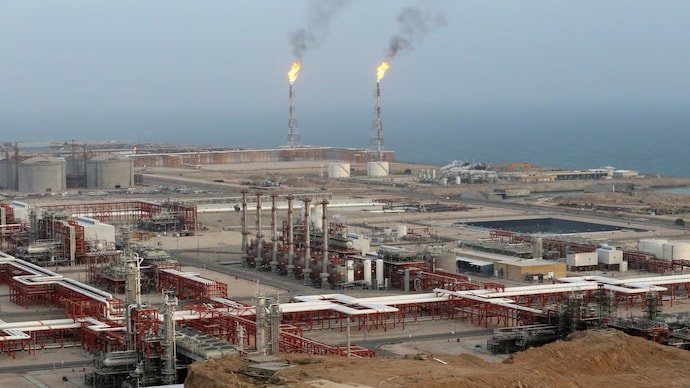
Iran has announced the discovery of more than 7.5 trillion cubic feet of Natural Gas in a field south of Fars Province, adding another substantial resource to one of the world’s largest gas-holding countries at a time when its energy industry is under intense pressure.
Oil Minister Mohsen Paknejad announced the discovery on Sunday as the country continues to deal with the effects of war, sanctions and restrictions on energy exports. The find adds to Iran’s long-term energy wealth, but its immediate economic value is less straightforward. Discovering gas is only the first step. Developing the field requires investment, drilling capacity, infrastructure and Technology, followed by a reliable route to domestic or international markets.
The timing also exposes a striking contradiction in Iran’s energy sector. The country possesses enormous quantities of oil and natural gas, yet it has faced shortages of gas and electricity and disruptions to industrial activity. Damage to energy infrastructure during the conflict has added another layer of difficulty.
For Tehran, the new field could eventually strengthen domestic energy security and potentially support exports. But with Iranian energy exports facing severe restrictions, the central question is not simply how much gas is underground. It is whether Iran can develop the resource and turn it into usable energy and revenue.
Iran’s new gas discovery adds to a vast resource base
The newly announced field contains more than 7.5 trillion cubic feet of natural gas, according to Paknejad.
That is a substantial quantity by any measure and reinforces Iran’s position as a major holder of natural gas resources. Yet reserves and production are not the same thing.
A gas discovery can remain economically inaccessible for years if the infrastructure needed to extract, process and transport the fuel is unavailable. Wells must be drilled, gathering systems constructed and processing facilities developed before gas can reach consumers.
The commercial value of the discovery will therefore depend heavily on how successfully Iran can overcome those constraints.
This distinction matters particularly in Iran, where international sanctions have restricted access to foreign capital and advanced technology. The country has continued developing its energy industry using domestic capabilities and alternative partnerships, but decades-old infrastructure remains a challenge in parts of the sector.
Why the discovery matters during an energy crisis
The announcement comes at an unusually difficult moment for Iran’s energy industry.
Iran consumes most of the gas it produces domestically and has experienced recurring shortages, power cuts and disruptions affecting industrial activity. According to the information provided by Iranian officials, strikes on energy infrastructure had reduced daily gas production by about 230 million cubic metres by July.
That makes a new gas discovery strategically important even if production from the field is still years away.
Additional reserves could eventually provide Iran with another source of supply for power generation, households and industry. They could also help reduce pressure on existing producing fields if sufficient infrastructure is developed.
But the discovery does not immediately solve today’s supply problems. A newly identified gas resource cannot replace lost production overnight. Exploration, appraisal, field development and infrastructure construction take time.
For that reason, the significance of the announcement is primarily long-term rather than an immediate solution to Iran’s current energy shortages.
Another major discovery was announced in 2025
The latest announcement follows another major discovery in southern Iran in October 2025.
Paknejad said exploration at the Pazan field had identified around 10 trillion cubic feet of natural gas along with at least 200 million barrels of crude oil. The field is located in southern Fars Province and extends toward Bushehr Province.
Iran estimated that approximately 7 trillion cubic feet of the gas at Pazan could ultimately be recovered. Production was expected to begin in about 40 months.
The Pazan development illustrates the difference between identifying a resource and bringing it into production. Even after a discovery has been assessed, years may be required before commercial volumes begin flowing.
The same challenge is likely to apply to the latest discovery. The size of the resource is significant, but its economic importance will ultimately depend on recoverability, development costs, infrastructure and market access.
Iran’s gas wealth has not prevented domestic shortages
Iran’s energy situation may appear puzzling from the outside.
The country has some of the world’s largest natural gas reserves, yet it has struggled to maintain sufficient supply during periods of high demand. The explanation lies partly in the difference between having resources underground and having the capacity to produce and distribute them efficiently.
Iran’s domestic gas demand is enormous. Natural gas plays a major role in electricity generation, industrial activity and household consumption. When production falls or demand rises sharply, the pressure can spread through the wider economy.
Industrial facilities can face interruptions, power generation can come under pressure and households can experience supply constraints.
Developing additional fields could help over the longer term, but it must happen alongside investment in pipelines, processing facilities, wells and other infrastructure.
South Pars remains central to Iran’s gas system
Iran’s dependence on the South Pars gas field adds another dimension to the country’s energy challenge.
South Pars is a giant gas field shared with Qatar and accounts for most of Iran’s gas production. Its importance means that disruption affecting the field can have consequences far beyond a single production site.
The field has been targeted during the conflict described in the supplied material, adding to concerns about Iran’s ability to maintain production.
This makes diversification of Iran’s gas resource base strategically valuable. A successful development of additional fields could reduce dependence on existing production centres over time.
However, diversification is meaningful only if new discoveries can eventually be connected to the country’s energy network and developed at commercial scale.
Why sanctions make development harder
Iran’s energy sector has operated under international sanctions that limit access to foreign investment, equipment and technology.
For an oil and gas producer, these restrictions can affect nearly every stage of a major development project.
Exploration companies need advanced geological and seismic technologies to assess underground formations. Development requires drilling equipment and specialised services. Producing gas at scale requires processing facilities, pipelines and compression infrastructure.
Sanctions can also complicate financing and relationships with international energy companies.
Iran has substantial domestic technical expertise and has continued operating its energy sector despite restrictions. But developing large and technically challenging fields can still require significant capital and specialised equipment.
That is why the new discovery should not be interpreted as an immediate financial windfall for Tehran.
Iran’s oil revenue has remained important despite the crisis
The gas announcement comes shortly after Iranian Media reported that Tehran had transferred $7.5 billion in foreign-currency earnings from oil sales to its central bank between March and July 2026.
The semiofficial Fars news agency, citing Oil Ministry data, reported that the amount was 50% higher than in the corresponding period of 2025. Officials expected the funds to meet the government’s foreign-currency requirements until late December.
The figures suggest that Iran continued generating significant oil revenue during part of the period affected by the conflict and restrictions on shipping.
But maintaining those earnings has become increasingly difficult as export routes come under pressure.
Oil remains particularly important because it provides Iran with hard-currency income that can be used to support imports and government financial requirements. Restrictions on oil shipments therefore affect much more than the energy industry itself.
US blockade puts greater pressure on Iranian oil exports
The United States reimposed its blockade of Iranian ports and shipping on July 13 after an interim agreement to halt the war collapsed, according to the supplied information.
The measure is aimed at restricting Iranian oil exports, which are one of Tehran’s main sources of hard currency.
Iranian exports have subsequently come under pressure.
Data from Kpler cited in the supplied material showed no visible passage of supertankers carrying Iranian crude through the Strait of Hormuz, although vessels involved in sanctioned trade can disable their tracking systems, making it difficult to observe every movement.
Iranian crude held in floating storage outside the blockade zone also reportedly declined from approximately 105 million barrels to 80 million barrels.
Trade sources estimated that only about 30 million barrels remained in Asian waters, roughly half the usual volume.
Those developments illustrate the immediate challenge facing Iran. The country may possess enormous quantities of hydrocarbons, but restrictions on shipping can prevent those resources from generating revenue.
The Strait of Hormuz is at the centre of the export problem
The Strait of Hormuz is one of the most important energy routes in the world. It connects the Persian Gulf with the Gulf of Oman and the wider international shipping network.
For Iran, the waterway provides a critical route for oil exports. For other Gulf producers, it is equally important because large quantities of crude and liquefied natural gas pass through the strait.
Before the war, about one-fifth of the world’s oil and LNG was transported through the waterway, according to the information provided.
Qatar is particularly dependent on the route for LNG exports, while several major Gulf oil producers also rely on maritime access through Hormuz.
Any prolonged disruption therefore has consequences beyond Iran. It can affect shipping patterns, Energy Markets and the ability of producers across the region to reach international buyers.
Iran has linked reopening Hormuz to broader conditions
Iran has linked the reopening of the Strait of Hormuz to conditions surrounding an interim agreement with the United States.
Iranian negotiator Mohammad Baqer Qalibaf said the waterway would remain closed until Washington lifted its blockade and oil sanctions, released Tehran’s frozen assets and ended military operations and threats.
The agreement eventually collapsed over control of the waterway. US President Donald Trump declared the agreement “over” on July 7, while Iran suspended it a week later.
Tehran has allowed some Iraqi oil tankers to pass following requests from Baghdad, but wider commercial traffic has remained severely restricted.
This creates a difficult situation for Iran’s energy industry. Even if the country maintains production capacity, exporting large quantities of crude or gas requires access to reliable shipping routes.
Gas discoveries cannot immediately replace lost oil revenue
It may be tempting to view the latest gas discovery as a solution to Iran’s export difficulties, but the two resources present different commercial challenges.
Oil can generally be transported in tankers once it has been produced and loaded for export. Natural gas requires additional processing and transportation infrastructure. Depending on the market, gas can be moved through pipelines or converted into liquefied natural gas before shipment.
That means a large gas discovery does not automatically create a new export stream.
For Iran, the immediate priority is likely to be ensuring sufficient domestic supply while preserving its existing production infrastructure. Export opportunities would depend on additional investment, infrastructure and access to international markets.
The discovery therefore has greater significance as a long-term strategic asset than as an immediate source of foreign currency.
What the discovery could mean for Iran’s energy strategy
If the new field can be developed successfully, it could eventually support several objectives.
- It could add to Iran’s domestic gas supply.
- It could help diversify production beyond existing major fields.
- It could provide additional fuel for electricity generation and industry.
- It could potentially create export opportunities if infrastructure and market access improve.
- It could strengthen Iran’s long-term position as a major holder of natural gas resources.
None of those outcomes is automatic. They depend on investment, technical development, security conditions and the ability to move the gas to consumers.
The bigger problem is turning reserves into production
Iran’s latest discovery highlights a problem that has confronted the country’s energy sector for years: resource abundance does not necessarily translate into reliable energy supply or strong export earnings.
The country has extensive oil and gas reserves, but sanctions have limited investment and access to technology. Existing infrastructure has also faced years of pressure.
The current conflict makes that challenge more acute.
Energy facilities need to remain operational. Production must be maintained. Domestic demand must be met. Pipelines and processing plants must function. Export routes must remain accessible. And all of this must happen while international restrictions complicate financing and trade.
A discovery of 7.5 trillion cubic feet therefore represents potential rather than immediate output.
Why the new field matters despite the export blockade
The significance of the discovery becomes clearer when viewed over a longer time horizon.
Iran’s current energy problems are dominated by war damage, production losses, sanctions and restrictions on exports. Those issues cannot be solved simply by discovering another underground reservoir.
But if the field can eventually be developed, it could become an important part of Iran’s future energy system.
The timing also gives Tehran a strategic argument for continuing investment in domestic exploration. A larger portfolio of producing gas fields could make the country’s energy system more resilient if individual facilities are disrupted.
For the moment, however, the discovery is competing with much more immediate challenges.
What happens next for Iran’s gas discovery?
The next important steps will involve determining how much of the discovered gas is commercially recoverable, developing the field and identifying the infrastructure required to bring production online.
The speed of that process will depend heavily on security conditions and Iran’s access to financing and technology.
If sanctions and the blockade remain in place, development could face significant obstacles. If conditions eventually improve and investment becomes easier, the field could become a valuable addition to Iran’s domestic energy system.
The outcome will therefore depend on factors far beyond the size of the discovery itself.
Iran’s energy paradox is becoming more visible
The latest announcement captures the central paradox facing Iran’s energy sector.
On one side, the country continues to uncover enormous quantities of hydrocarbons. On the other, it is struggling to maintain production, meet domestic demand and export energy in the face of sanctions, conflict and shipping restrictions.
The reported discovery of more than 7.5 trillion cubic feet of gas adds substantial potential to Iran’s resource base. But potential is not the same as production, and production is not the same as export revenue.
For Tehran, the immediate challenge remains protecting and maintaining its existing energy infrastructure while navigating restrictions on trade and shipping. The longer-term challenge is turning discoveries such as the latest field into reliable supplies of gas.
Until those obstacles are addressed, Iran’s vast reserves will remain an asset with considerable strategic value but limited ability to provide immediate relief from the country’s energy and economic pressures.
For breaking news and live news updates, like us on Facebook or follow us on Twitter and Instagram. Read more on Latest World on thefoxdaily.com.






COMMENTS 0