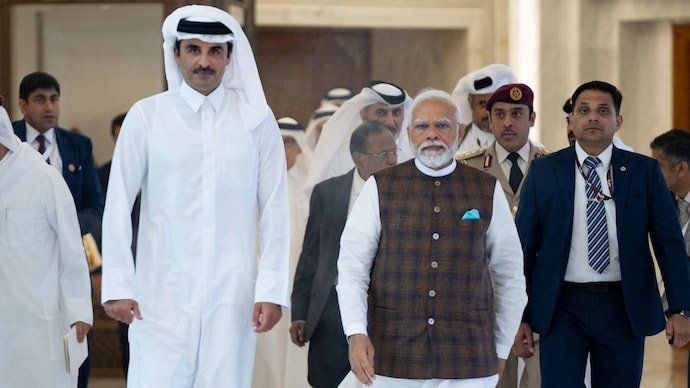
The tragic explosion at Qatar’s Ras Laffan Industrial City has brought the spotlight on the thousands of Indian workers WHO form the backbone of the Gulf nation’s energy sector. In a significant diplomatic gesture, Qatar’s Emir Sheikh Tamim bin Hamad Al Thani personally called Prime Minister Narendra Modi to express condolences after 12 Indian nationals lost their lives in the blast.
The accident, which also injured dozens of workers, has triggered grief across India and Qatar while prompting renewed discussions about Industrial Safety, emergency preparedness, and the welfare of expatriate workers in one of the world’s most important energy hubs.
What Happened at Ras Laffan Industrial City?
Ras Laffan Industrial City is the heart of Qatar’s liquefied natural gas (LNG) industry and one of the largest energy complexes in the world. The facility plays a critical role in global energy markets, supplying LNG to countries across Asia, Europe, and beyond.
The explosion occurred shortly after parts of the LNG facility resumed operations following a prolonged maintenance shutdown. According to Qatari authorities, the blast killed 13 people, including 12 Indian nationals, while at least 66 others sustained injuries.
The force of the explosion was reportedly felt more than 70 kilometres away in central Doha, with residents describing powerful shockwaves that rattled buildings and caused widespread panic.
Despite the scale of the incident, authorities stated that none of the injured were in life-threatening condition, a factor that likely prevented the casualty count from rising further.
PM Modi and Qatar Emir Express Shared Grief
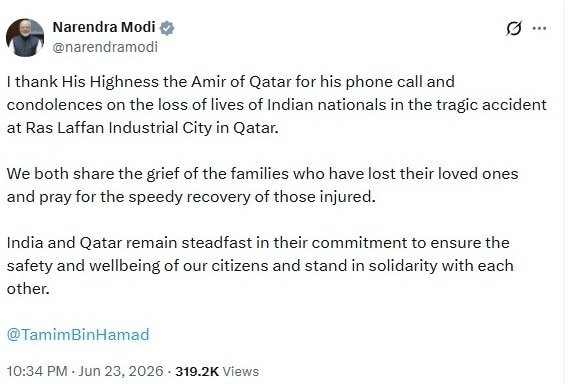
Prime Minister Narendra Modi publicly acknowledged the call from Qatar’s Emir and thanked him for personally conveying condolences to the families affected by the tragedy.
The conversation reflected the close diplomatic relationship that has evolved between India and Qatar over the past decade. Both leaders emphasized solidarity with the victims’ families and reiterated their commitment to ensuring the welfare of their respective citizens.
The personal intervention of the Emir is noteworthy because heads of state rarely make direct calls in the aftermath of industrial accidents unless the incident carries significant humanitarian and diplomatic importance.
For the families of the deceased workers, the gesture offered recognition of the enormous sacrifice made by migrant workers who contribute to the economic development of Gulf nations.
Why the Incident Matters Beyond Qatar
The Ras Laffan explosion is not merely a local industrial accident. It has implications for global energy markets, labour welfare policies, and international economic cooperation.
Qatar is among the world’s largest LNG exporters and plays a crucial role in global energy security. Any disruption at its major facilities attracts attention from governments, investors, and energy companies worldwide.
While officials have stressed that the incident was an accident rather than sabotage, the event highlights how vulnerable critical energy Infrastructure can be to operational failures.
Energy markets closely monitor such incidents because even temporary disruptions at major LNG facilities can influence global supply expectations and commodity prices.
The Strategic Importance of Ras Laffan
Often described as the engine room of Qatar’s energy economy, Ras Laffan Industrial City hosts some of the world’s largest LNG production and export facilities.
The complex includes:
- LNG liquefaction plants
- Export terminals
- Petrochemical facilities
- Storage infrastructure
- Industrial support services
- Major maritime logistics operations
The city has been central to Qatar’s transformation from a small Gulf state into one of the world’s wealthiest nations on a per-capita basis.
Given this strategic significance, any accident at Ras Laffan receives immediate international attention.
India’s Workforce in Qatar: A Vital Economic Link
The tragedy also highlights the enormous contribution of Indian workers to Qatar’s economy.
Indians constitute one of the largest expatriate communities in Qatar and are employed across multiple sectors, including:
- Energy and petrochemicals
- Construction
- Engineering
- Healthcare
- Information technology
- Financial services
For decades, Indian professionals and labourers have played a crucial role in building and operating Qatar’s modern infrastructure.
The economic relationship is mutually beneficial. Qatar gains access to a skilled and experienced workforce, while Indian workers support families back home through remittances that contribute significantly to India’s economy.
India-Qatar Relations Have Deepened in Recent Years
The condolence call comes against the backdrop of rapidly expanding ties between New Delhi and Doha.
Over the past several years, cooperation has increased in areas including:
- Energy security
- Trade and investment
- Food security
- Technology partnerships
- Defence cooperation
- People-to-people exchanges
Qatar remains one of India’s most important LNG suppliers, helping meet the country’s growing energy demand as it transitions toward cleaner fuel sources.
The strong relationship has also enabled both nations to address issues affecting expatriate workers more effectively through diplomatic channels.
Qatar Rules Out Sabotage
One of the first questions raised after the blast concerned the possibility of sabotage, particularly given heightened geopolitical tensions across West Asia.
However, Qatar’s Energy Minister and QatarEnergy Chief Executive Saad al-Kaabi dismissed such speculation.
Officials stated that preliminary assessments indicated the incident was an accident rather than the result of hostile action.
The clarification helped calm concerns in international energy markets, which are highly sensitive to disruptions involving major oil and gas producers.
By ruling out sabotage, authorities shifted attention toward operational and technical factors that may have contributed to the explosion.
The Human Cost Behind Industrial Growth
Major industrial projects often focus attention on production capacity, export revenues, and economic growth. Yet accidents such as the Ras Laffan blast serve as reminders that every industrial complex ultimately depends on people.
Behind every LNG shipment are engineers, technicians, maintenance crews, operators, safety personnel, and support workers who ensure facilities function around the clock.
The deaths of 12 Indian workers highlight the risks that many expatriates face while working far from home.
For their families, the tragedy is not measured in production losses or infrastructure damage but in lives permanently altered by the sudden loss of loved ones.
Lessons for Industrial Safety
Industrial accidents frequently lead to comprehensive reviews of safety protocols, maintenance procedures, and emergency response systems.
Experts often point to several key areas after incidents of this nature:
- Equipment inspection standards
- Maintenance scheduling
- Worker training programs
- Emergency evacuation systems
- Operational risk assessments
- Real-time monitoring technologies
Large energy facilities continuously evolve their safety practices based on lessons learned from incidents worldwide.
The findings of Qatar’s Investigation could influence future safety measures not only within the country but across the global LNG industry.
How Global LNG Facilities Compare on Safety
| Area | Primary Focus | Objective |
|---|---|---|
| Maintenance Systems | Equipment reliability | Prevent technical failures |
| Worker Training | Operational awareness | Reduce human error |
| Emergency Response | Rapid intervention | Minimise casualties |
| Risk Monitoring | Early warning systems | Detect hazards quickly |
| Safety Audits | Compliance reviews | Identify vulnerabilities |
Economic Impact Likely to Remain Limited
Although the human toll is severe, analysts expect the broader economic impact on Qatar’s energy sector to remain manageable.
The country has invested heavily in redundancy, backup systems, and operational resilience across its energy infrastructure.
Because production had only recently resumed following maintenance work, authorities are likely to conduct detailed technical reviews before full-scale operations continue.
However, the long-term reputation of Qatar as a reliable energy supplier is unlikely to be significantly affected unless investigators uncover systemic safety concerns.
What Happens Next?
Several parallel processes are expected to unfold in the coming weeks:
- Detailed accident investigation
- Compensation and support for victims’ families
- Technical safety reviews
- Assessment of operational procedures
- Diplomatic coordination regarding affected workers
- Potential updates to industrial safety protocols
Indian authorities are also expected to remain in close contact with Qatari officials to ensure support for the families of the deceased and injured workers.
Future Outlook: Safety and Diplomacy Will Be Closely Watched
The Ras Laffan tragedy has become more than an industrial accident. It has highlighted the human dimension of global energy production, the importance of worker safety, and the strength of India-Qatar relations during moments of crisis.
The personal condolence call from Qatar’s Emir to Prime Minister Modi reflects the depth of bilateral ties and recognition of the contribution made by Indian workers to Qatar’s development.
As investigations continue, attention will focus on the causes of the explosion and the lessons that can be learned to prevent similar incidents in the future. For policymakers, industry leaders, and worker communities alike, the key challenge will be ensuring that economic progress is matched by the highest possible standards of safety and protection.
Ultimately, the incident serves as a powerful reminder that behind every major infrastructure project are thousands of workers whose wellbeing remains the most important measure of success.
For breaking news and live news updates, like us on Facebook or follow us on Twitter and Instagram. Read more on Latest India on thefoxdaily.com.






COMMENTS 0