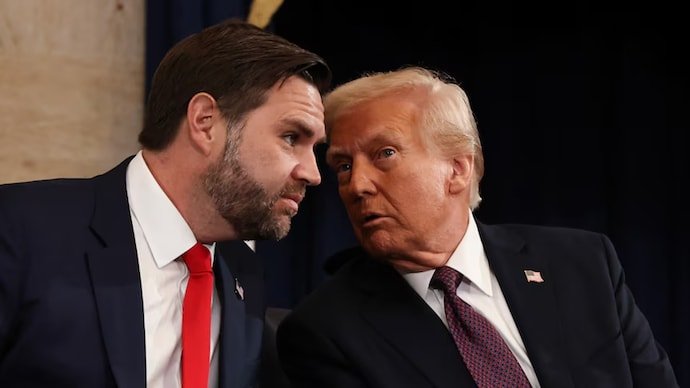
US President Donald Trump’s threat to turn Iran’s strategically important Kharg Island “to smithereens” was intended to send a message to Tehran, Vice President JD Vance said on Monday, adding another layer of tension to an already volatile confrontation between the United States and Iran.
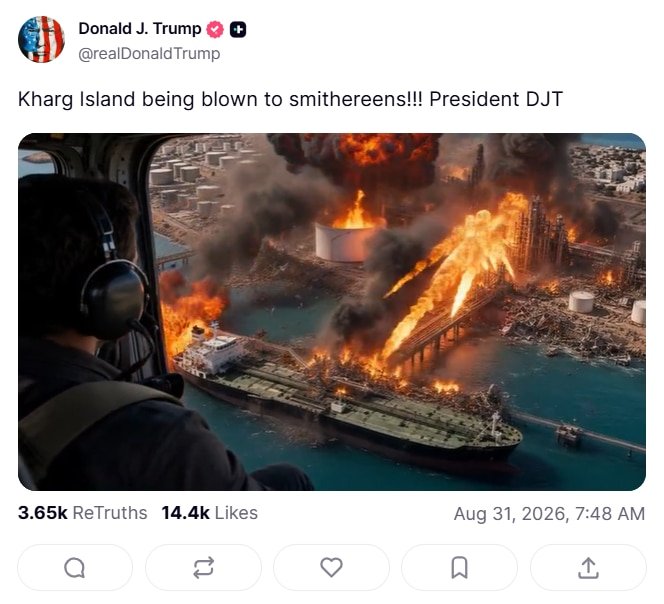
Trump made the threat in a one-line post on Truth Social, accompanied by a dramatic video that appeared to show explosions at the Iranian island. However, there was no evidence that Kharg Island had actually been attacked. A US official said American forces had not targeted the oil hub during overnight operations.
The distinction matters because Kharg Island is not simply another military site. It is the centre of Iran’s oil export infrastructure and handled about 90 per cent of the country’s oil exports before the war began on February 28. Any direct attack could therefore affect Iran far beyond the battlefield, potentially disrupting energy exports and placing additional pressure on its economy.
Vance described Trump’s post as a deliberate signal to Iran while acknowledging that the president does not normally use Social Media to announce military operations.
JD Vance says Trump was sending Iran a warning
Asked about Trump’s Kharg Island post, Vance said the president sometimes uses social media to vary his messaging. He also indicated that the post should be viewed as a warning rather than confirmation of an attack.
“The president likes to switch it up on social media a little bit,” Vance said. He added that Trump would be the first to say he does not announce military actions through social media, but said the president was sending a message to the Iranian government.
That distinction is significant. Trump’s statement created immediate uncertainty over whether Washington had expanded its military campaign to Iran’s most important oil-export terminal. The US official’s denial suggested that the threat and an actual military operation remained separate developments.
For Tehran, however, the threat itself carries strategic weight. An attack on Kharg Island could potentially hit one of the country’s most important sources of foreign revenue without requiring strikes across Iran’s entire energy sector.
What is Kharg Island and why does it matter?
Kharg Island is a major Iranian oil-export hub in the Persian Gulf. Its importance comes from its role in moving crude oil from Iran’s production fields into international markets.
Before the war began, the island handled roughly 90 per cent of Iran’s oil exports. That makes the facility a critical point in the country’s energy network and an obvious strategic concern during a conflict involving sanctions, military pressure and attempts to restrict Iran’s ability to generate revenue.
The island’s importance also means that any disruption could have consequences beyond Iran. Oil markets respond not only to actual supply losses but also to credible threats against major production and export infrastructure.
A sustained interruption at Kharg could therefore affect traders’ expectations about future supplies, shipping risks and the availability of Iranian crude.
Why an attack would be economically significant
Iran’s oil exports are an important source of income for the country. Targeting an export terminal would potentially create pressure at two levels: physically interrupting the movement of crude and increasing uncertainty for buyers, insurers and shipping companies.
The economic impact would depend on the scale and duration of any disruption. A temporary threat could produce market volatility without permanently removing supply, while prolonged damage could have much more significant consequences.
That is why Trump’s Kharg Island warning was closely watched even though US officials said the island had not been attacked.
Trump’s video of Kharg Island appears to be AI-generated
The controversy surrounding Trump’s post was amplified by the video attached to it. The footage appeared to depict dramatic explosions at Kharg Island, but an analysis cited by Reuters found that the material was most likely synthetically generated.
Software designed to identify AI-manipulated imagery indicated that the video was likely created or altered using synthetic media techniques. The finding is important because the footage could otherwise have been interpreted by viewers as evidence that a US strike had already taken place.
The White House and the US Defense Department did not immediately respond to requests for comment outside regular business hours, according to Reuters.
The episode illustrates a growing challenge during modern conflicts: images shared by political leaders or accounts on social media can spread faster than governments can confirm what has actually happened on the ground.
In this case, the distinction between a threat, an AI-generated visual and a confirmed military operation became particularly important because of the strategic significance of the location shown.
Iran dismisses the threat as “laughable”
The reaction from Tehran was dismissive. An Iranian official described Trump’s Kharg Island post as “laughable”, while the threat nevertheless added to the broader uncertainty surrounding the conflict.
Iran has faced repeated military and economic pressure during the war, and the Kharg warning potentially raises the stakes by putting energy infrastructure directly into the conversation.
The Iranian response also reflects the difficulty facing both sides. Washington is attempting to increase pressure on Tehran, while Iran has sought to preserve its ability to generate revenue and maintain leverage through its energy resources and strategic position in the Gulf.
Neither side benefits from allowing uncertainty to become uncontrollable. An accidental escalation around critical energy infrastructure could carry consequences for regional Security and global oil markets.
US strikes Larak Island as tensions rise
While Kharg Island was not targeted, US forces did carry out strikes elsewhere in the Strait of Hormuz region.
A US official said American forces attacked two Iranian launchers on Larak Island. The strikes were described as the first known US military action since late July.
Larak and Kharg serve different functions, making the distinction between the two locations important. Larak is strategically positioned near the Strait of Hormuz, a crucial maritime passage for global energy shipments, while Kharg is primarily significant because of its role in Iran’s oil-export system.
The reported attack on Larak therefore fits into the military side of the confrontation, while Trump’s threat against Kharg raised the possibility of a much more direct economic strike against Iran’s energy infrastructure.
Why the Strait of Hormuz remains central to the conflict
The geography surrounding Kharg Island and Larak Island gives the latest developments wider significance. The Strait of Hormuz is one of the world’s most important energy shipping routes, connecting the Persian Gulf with the Gulf of Oman and the wider Arabian Sea.
Any prolonged military disruption in or around the waterway can affect commercial shipping and energy markets. Even when ships continue moving, higher security risks can raise insurance and transportation costs.
For Iran, the region provides strategic leverage because its geography allows it to influence a maritime route that is important to international energy trade. For the United States, protecting shipping and limiting Iran’s ability to threaten vessels are important parts of maintaining pressure on Tehran.
This creates a difficult strategic balance. Military operations intended to deter Iran can themselves increase the risk of wider disruption if commercial shipping or energy infrastructure becomes caught in the confrontation.
Trump’s war aims remain unfinished
The Kharg Island threat also comes against the backdrop of Trump’s broader objectives in the conflict. The US president has sought to pressure Iran over its nuclear programme, its regional military capabilities and the future of its political leadership.
However, Trump has yet to achieve all the objectives he set at the beginning of the war, according to the supplied account. Those objectives included dismantling Iran’s nuclear programme, reducing its capacity to attack regional rivals and creating conditions that could lead Iranians to challenge the country’s clerical rulers.
That gap between stated objectives and results helps explain the significance of the current pressure campaign. If military action has not produced the desired political outcome, Washington faces a choice between continued military pressure, economic measures or attempts to reopen a diplomatic pathway.
Economic pressure is becoming an important battlefield
Threatening critical oil infrastructure represents a form of pressure that goes beyond conventional military targets. Iran’s ability to export crude is directly connected to its ability to earn foreign currency and support its economy.
But targeting energy infrastructure also carries risks for the United States and its partners. Oil markets operate globally, meaning disruption to Iranian exports can affect prices and supply expectations beyond Iran itself.
The threat therefore illustrates the complicated nature of economic warfare. A measure designed to weaken an adversary can also create costs for other countries if it contributes to tighter global energy supplies.
Why the Kharg Island threat could matter even without a strike
One of the most important aspects of Trump’s post is that its impact does not depend entirely on whether the United States actually attacks the island.
A credible threat against a major export facility can influence the behaviour of oil buyers, shipping companies and insurers. Companies may reassess the risks of handling Iranian crude, while traders may factor the possibility of future supply disruptions into market prices.
For Tehran, the message is equally significant. Iran must consider whether its oil infrastructure is becoming a direct target and whether additional military pressure could reduce its export capacity.
For Washington, the threat can serve as a deterrent without immediately committing American forces to an attack on the facility.
That makes the current situation different from a confirmed strike. The strategic effect may already be unfolding through uncertainty, even as the physical infrastructure remains intact.
What happens next for Iran and the US?
The immediate question is whether the Kharg Island threat remains a warning or develops into military action. So far, US officials have said the island was not targeted, while Iranian officials have publicly dismissed the threat.
The next phase could depend on Iran’s response to the latest US strikes, Washington’s assessment of Iranian military activity and whether either side chooses to reopen diplomatic channels.
Energy markets will also remain an important indicator. Any confirmed damage to Kharg Island, a sustained disruption to oil exports or increased danger around the Strait of Hormuz could quickly become an international economic concern.
For now, the available information points to a sharp escalation in rhetoric and a limited expansion of US military action, rather than confirmation of an attack on Iran’s principal oil-export hub.
The most consequential development may therefore be what happens after the warning. If Kharg Island remains untouched, Trump’s post could function primarily as a deterrent message. If the facility is eventually targeted, the consequences could extend well beyond the US-Iran confrontation and directly affect Iran’s oil trade and the wider global energy market.
For breaking news and live news updates, like us on Facebook or follow us on Twitter and Instagram. Read more on Latest India on thefoxdaily.com.





COMMENTS 0