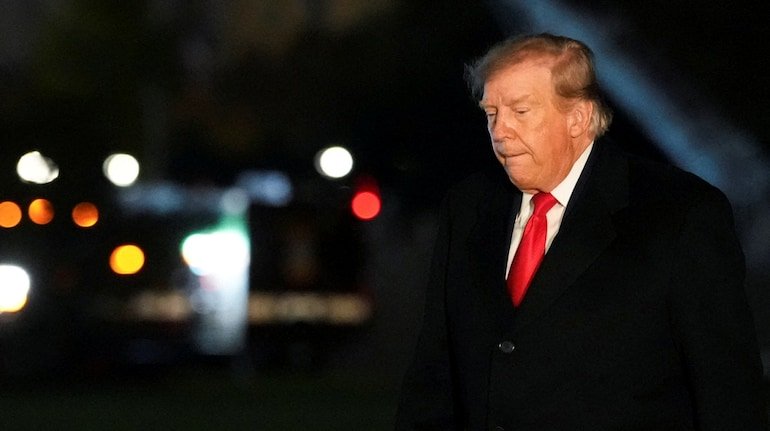
The November 3 US midterm elections could shape the direction of American policy during the remaining two years of President Donald Trump‘s term, with potential implications for India’s trade relations, immigration concerns, technology partnerships and defence cooperation.
American voters are deciding whether Trump’s Republican Party will retain control of Congress. A Democratic victory in either the House of Representatives or the Senate would not remove Trump from office or automatically reverse his policies. However, it could make it harder for his administration to advance legislation, secure funding and implement parts of its policy agenda without facing increased scrutiny from lawmakers.
For India, the outcome matters because several important areas of bilateral engagement are influenced by decisions made in Washington. The election could change the political environment in which New Delhi and the Trump administration manage trade disputes, skilled-worker immigration and strategic cooperation.
Trade and Tariffs: Could India Get Some Breathing Room?
Trade is likely to remain one of India’s most immediate concerns following the US midterm elections. President Trump’s tariff policies have created uncertainty for Indian exporters, particularly businesses involved in textiles, pharmaceuticals, engineering goods and manufacturing.
If Democrats gain control of either chamber, they could use congressional hearings, investigations and legislative proposals to examine the administration’s tariff decisions and trade negotiations more closely.
However, a change in congressional control would not automatically result in lower tariffs on Indian products. The US President retains significant authority under existing laws to impose or modify tariffs. Congress can attempt to limit or challenge the use of those powers, but any legislative intervention would face procedural and political hurdles.
A Democratic-controlled chamber could therefore increase pressure on the administration and demand greater accountability over trade decisions without necessarily changing the tariffs affecting Indian exporters.
H-1B Visas and the Indian IT Industry
Immigration policy is another major area of interest for India, particularly because Indian professionals form an important part of the US technology workforce.
The H-1B visa programme remains a key route for skilled foreign workers seeking employment in the United States. It is particularly relevant to Indian technology professionals and employees of Indian IT services companies operating in the American market.
Restrictions and proposed changes introduced by the Trump administration have raised concerns among employers, workers and prospective applicants. If Democrats take control of the House or Senate, they could increase congressional scrutiny of immigration-related decisions and push for legislative discussions concerning skilled-worker visas.
However, immigration policy is shaped by several factors, including executive action, federal regulations and court proceedings. A shift in congressional control would not automatically reverse restrictions introduced by the administration or guarantee changes to H-1B visa rules.
For Indian IT companies and professionals, the key question will be whether a more assertive Congress can influence the administration’s approach to skilled immigration during the remainder of Trump’s presidency.
Defence and Technology Partnerships: Will Cooperation Continue?
India-US cooperation extends beyond trade and immigration. Defence, semiconductors, artificial intelligence, critical minerals and other emerging technologies have become important areas of engagement between the two countries.
One initiative in this area is the TRUST framework, launched by Prime Minister Narendra Modi and Trump in February 2025 to strengthen cooperation in critical and emerging technologies.
A change in congressional leadership could influence funding priorities, oversight and the pace at which some bilateral initiatives progress. Congressional committees also play an important role in examining defence cooperation, arms sales and technology-related policies.
Nevertheless, India-US strategic engagement has developed across successive American administrations and has support in both political parties. A Democratic victory in the midterms would not, by itself, indicate a fundamental shift in Washington’s approach towards New Delhi.
The more immediate impact could involve changes in congressional oversight, budget priorities and the political attention given to specific areas of cooperation.
What Happens If Democrats Take Control of Congress?
The US Congress has two chambers: the House of Representatives and the Senate. All 435 seats in the House and 35 Senate seats are being contested in the November 3 elections.
If Democrats gain control of one or both chambers, they would acquire greater influence over congressional investigations, hearings, government spending and legislation. Control of the Senate would also provide greater leverage over the consideration of presidential appointments.
Such a shift could make it more difficult for the Trump administration to advance parts of its domestic and foreign policy agenda without negotiating with Democratic lawmakers. Congressional committees could also increase scrutiny of decisions involving tariffs, immigration, defence spending and international relations.
However, Trump would remain President until January 2029 and retain significant executive powers, including the authority to veto legislation. A change in congressional control would therefore create additional political constraints rather than automatically transfer control of US policy to the Democrats.
What the US Midterm Results Could Mean for India
For New Delhi, the election is less about an immediate reversal of American policy and more about the political conditions under which the Trump administration will operate during its remaining two years.
Trade and tariffs will remain important for Indian exporters, while H-1B visa policy will continue to affect technology companies and skilled professionals. Defence and technology partnerships could also face changes in congressional oversight and funding priorities.
If Democrats take control of either chamber, the administration could face more questions and legislative challenges over its decisions. If Republicans retain control, Trump would continue to work with a Congress controlled by his party.
The election results will therefore help determine how much legislative and political room Trump has to pursue his agenda, while shaping the environment in which India and the United States manage their economic and strategic relationship.
For breaking news and live news updates, like us on Facebook or follow us on Twitter and Instagram. Read more on Latest World on thefoxdaily.com.






COMMENTS 0