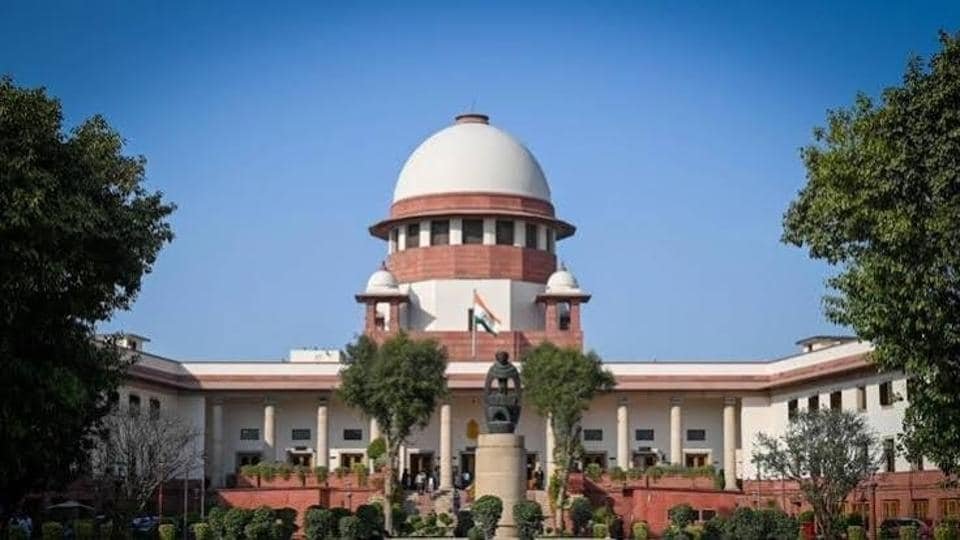
The Supreme Court of India has directed every state government to immediately establish grievance committees under the Wetlands (Conservation and Management) Rules, 2017, to address public complaints concerning wetland encroachment and inadequate protection. The order seeks to strengthen the mechanism through which citizens can report threats to wetlands and ensure that their complaints reach the relevant State Wetland Authorities for action.
A bench comprising Justices Aravind Kumar and Vipul M Pancholi issued the direction while hearing a batch of petitions concerning the identification, demarcation and preservation of wetlands across the country. The court instructed states that have not yet constituted the committees to do so without delay and ensure that the bodies begin performing their responsibilities effectively once established.
The direction comes amid continuing concerns that wetlands identified through the Space Applications Centre (SAC) Wetlands Atlas 2021 remain vulnerable to encroachment, despite earlier judicial orders requiring their identification and protection. The proceedings have also highlighted delays in physically verifying wetlands, marking their boundaries and completing the process of notifying them under the applicable conservation framework.
Supreme Court Orders Immediate Formation of Grievance Committees
The Supreme Court directed all state governments to constitute grievance committees in accordance with the provisions of the 2017 Wetland Conservation Rules, wherever such committees have not already been established.
In its order, the bench emphasised that the committees must not exist merely as administrative bodies on paper. Once constituted, they must actively discharge the functions assigned to them under the rules and take appropriate steps to address complaints submitted by members of the public.
The court’s direction follows concerns raised during the proceedings that wetlands protected through earlier judicial orders continue to face encroachment. The judges observed that complaints about such violations require an effective institutional mechanism rather than leaving citizens without a clear route for seeking intervention.
The court also directed that a copy of its order be sent to the chief secretaries of all states for immediate implementation. The matter has been scheduled for further hearing on December 2.
The order is significant because it seeks to make the existing grievance mechanism operational across states, potentially giving residents, environmental organisations and other concerned citizens a formal channel to report the destruction or encroachment of wetlands.
What the Wetlands Rules, 2017 Say About Grievance Committees
During the hearing, senior advocate Jayant Bhushan, who is assisting the Supreme Court as amicus curiae, drew attention to Rule 5(6)(b) of the Wetlands (Conservation and Management) Rules, 2017.
The provision calls for the establishment of a four-member grievance committee. Its role is to receive grievances raised by the general public, examine them and forward them to the respective State Wetland Authorities for consideration and necessary action.
The rules also provide that these committees should be constituted within 90 days of the rules becoming operational. Their purpose is to create a formal connection between public complaints and the authorities responsible for wetland conservation.
However, the proceedings exposed concerns about whether the mechanism has been established and is functioning effectively in every state. Although comprehensive figures showing how many states have failed to constitute the committees were not presented before the court, an advocate appearing from Maharashtra pointed out that a committee exists in the state but has not responded effectively to grievances submitted to it.
The lawyer referred to instances in which complaints shared with the committee had not resulted in action. The example highlighted an important distinction between formally establishing a committee and ensuring that it performs its responsibilities.
The Supreme Court’s latest direction addresses both aspects by requiring states to establish the committees where necessary and make sure that they begin functioning in accordance with the rules.
Why Wetland Encroachment Has Become a Major Concern
Wetlands are important ecological systems that support biodiversity, regulate water flows and contribute to groundwater recharge. They also help reduce the impact of floods, provide habitats for birds and aquatic species, and support communities that depend on water bodies for their livelihoods.
Despite these functions, wetlands in several parts of India face pressure from urban expansion, construction, waste disposal, land-use changes and other forms of human activity. Encroachment can reduce the area of a wetland, obstruct natural water channels and damage the ecological processes that allow it to function.
The Supreme Court has repeatedly emphasised that protecting these water bodies is connected not only with environmental conservation but also with the availability of drinking water and the constitutional right to life.
In an earlier order dated October 12, the court observed that water bodies are precious sources of drinking water and fall within the scope of the right to life guaranteed under Article 21 of the Constitution. The observation reflects the wider importance of protecting wetlands and other water bodies as part of India’s environmental and public-interest obligations.
The court has also expressed concern that wetlands remain exposed to encroachment even when judicial orders have already been issued to protect them. Its latest direction is intended to improve the process through which such violations can be reported and addressed.
SAC Wetlands Atlas Identifies More Than 2.31 Lakh Wetlands
The Space Applications Centre’s Wetlands Atlas 2021 provides an important reference for the ongoing nationwide conservation exercise. According to the atlas, 231,195 wetlands measuring more than 2.25 hectares have been identified across India.
The atlas also identifies approximately 555,557 smaller wetlands covering areas below 2.25 hectares. These smaller water bodies are also relevant to conservation planning, even though their size may make identification, verification and protection more challenging.
Bhushan told the court that effective grievance committees are necessary to ensure that wetlands identified in the atlas receive protection and that judicial directions issued for their conservation are implemented.
The identification of a water body in a satellite-based inventory, however, does not automatically complete the process of legal protection. Authorities must verify the location and physical characteristics of the identified wetland, establish its boundaries and undertake the required administrative steps before it can be appropriately notified.
This is where ground-truthing becomes essential. The exercise involves physically checking locations identified through satellite mapping to establish whether the water bodies exist, determine their actual boundaries and verify their characteristics on the ground.
Delays in Ground-Truthing and Wetland Demarcation
The latest direction forms part of a broader series of Supreme Court orders monitoring the steps taken by states to identify and protect wetlands. The court has been examining whether state governments are completing ground-truthing and boundary demarcation for wetlands listed in the 2021 SAC Atlas.
In December 2024, the Supreme Court directed states and Union Territories to demarcate all wetlands identified in the atlas within three months. However, the deadline has been extended repeatedly following requests from states, indicating that the exercise has encountered administrative and implementation difficulties.
In its earlier observations, the court expressed dissatisfaction that the process had remained incomplete even nine years after the 2017 rules were introduced. It questioned why the identification and demarcation work had not been completed within the expected timeframe.
Responses submitted by different states have also revealed disagreements over the identification and legal status of certain water bodies. Some states have reportedly said that wetlands listed in the atlas cannot be physically traced, while others have argued that certain identified water bodies do not qualify for protection under the definition of wetlands contained in the 2017 rules.
These differences have complicated the conservation exercise. Satellite mapping provides a broad inventory, but discrepancies between mapped locations and ground conditions can create difficulties when authorities attempt to verify and formally notify individual wetlands.
The Supreme Court has made clear that such difficulties cannot become a reason for leaving water bodies unprotected indefinitely. The court has warned that it cannot remain a spectator while wetlands and other water bodies continue to face the consequences of inadequate protection.
Ground-Truthing Progress and the Number of Protected Wetlands
A report submitted by the Centre last year provided an indication of the progress made in implementing the nationwide wetland identification exercise.
Of the 231,195 wetlands inventoried in the 2021 SAC Atlas, ground-truthing had been completed for nearly 80%. Boundary demarcation had been completed for close to 95,000 wetlands, according to the figures presented in the report.
These figures indicate progress in physical verification, but they also show that substantial work remains before the entire exercise can be completed. Ground-truthing and boundary demarcation are separate stages, and completion of one does not automatically mean that a wetland has been formally notified or is receiving effective protection.
According to data maintained by the Ministry of Environment, Forest and Climate Change, India currently has 1,319 notified wetlands and 103 Ramsar sites. Ramsar sites are wetlands recognised as being of international importance under the Ramsar Convention on Wetlands.
The difference between the number of wetlands identified in the SAC Atlas and the number formally notified highlights the scale of the administrative work involved. The figures also underline why the Supreme Court has continued to monitor state-level progress.
Supreme Court Extends Its Monitoring to Other Water Bodies
The court’s conservation-related proceedings are not limited to wetlands alone. Last month, it directed states to undertake a similar exercise for water bodies that fall outside the category of wetlands.
This broader approach recognises that ponds, lakes and other water bodies can also face encroachment, deterioration and loss of their ecological functions. Protecting only those locations formally classified as wetlands would leave other important water resources exposed to similar risks.
The court has therefore sought information from states about the measures being taken to identify and protect smaller wetlands as well as other water bodies. Its attention to the 555,557 wetlands below the 2.25-hectare threshold is particularly relevant because smaller water bodies can be overlooked in large-scale conservation programmes.
The proceedings reflect the court’s concern that the protection of water resources should not depend solely on whether a particular water body has already completed every stage of administrative identification and notification.
What the Order Means for State Governments and the Public
The immediate responsibility now rests with state governments. They must establish grievance committees wherever required and ensure that the committees are accessible and responsive to complaints from the public.
The committees are expected to provide a route for raising concerns about wetland encroachment and other violations connected with their conservation. They must forward grievances to the relevant State Wetland Authorities, which are responsible for considering the complaints and taking appropriate steps within the applicable legal framework.
For citizens and environmental groups, the direction reinforces the importance of public participation in conservation. Residents who observe illegal construction, dumping, land filling or other activities threatening wetlands may have a formal mechanism through which to bring such concerns to the attention of the authorities.
However, the effectiveness of the order will depend on more than the formal constitution of committees. Their ability to receive complaints, communicate with State Wetland Authorities and ensure that grievances are acted upon will determine whether the mechanism delivers meaningful results.
The Supreme Court’s next hearing on December 2 will provide another opportunity to examine the progress made by states in implementing its directions. Alongside the establishment of grievance committees, the larger questions of ground-truthing, boundary demarcation and notification remain central to the proceedings.
The latest order sends a clear message that wetland conservation requires functioning institutions, timely administrative action and public accountability. With hundreds of thousands of wetlands identified across the country, the challenge is no longer limited to recognising the importance of these ecosystems. It is ensuring that they receive effective protection on the ground.
For breaking news and live news updates, like us on Facebook or follow us on Twitter and Instagram. Read more on Latest India on thefoxdaily.com.






COMMENTS 0