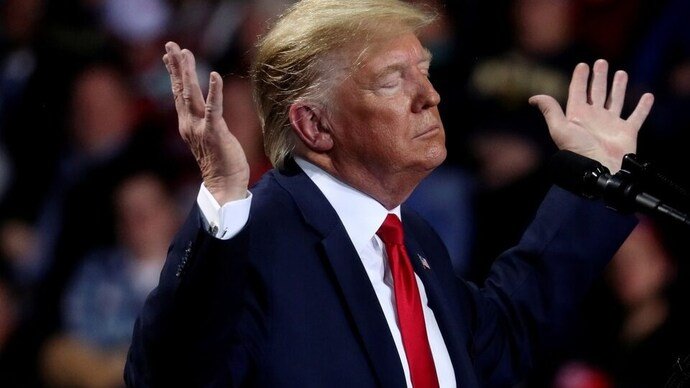
President Donald Trump‘s administration has received a significant legal victory in its effort to expand border security infrastructure along the US-Mexico border. The Supreme Court has cleared the way for construction to proceed in the remote Big Bend region of Texas, reversing a lower court restriction that had prevented the government from moving ahead while a legal challenge continued.
The dispute centres on a proposed 341-mile construction segment that includes areas surrounding Big Bend National Park and the Rio Grande. Environmental organisations, conservation advocates and local residents have challenged the government’s decision to bypass several Environmental Protection requirements, arguing that the project could permanently alter one of the most distinctive landscapes along the southern border.
The Supreme Court’s decision does not resolve every legal question surrounding the project. Instead, it removes an injunction imposed by a federal judge and allows the administration to continue its construction plans while the broader dispute proceeds.
Why the Supreme Court Allowed Trump’s Border Wall Project to Proceed
The Supreme Court issued a five-page unsigned decision blocking an injunction that had prevented construction in the Big Bend region. The justices concluded that the federal judge who originally ruled against the administration lacked the authority to impose the restriction.
The court indicated that the Trump administration was extremely likely to prevail on this particular legal question. It also emphasised that the federal government has compelling interests when a disputed policy involves national border security.
The decision represents an important distinction between the government’s authority to construct border infrastructure and the environmental consequences of individual projects.
Rather than deciding every argument raised by environmental organisations and local residents, the Supreme Court focused on the authority of the lower court to issue the injunction.
Of the nine justices, only liberal Justice Ketanji Brown Jackson dissented from the decision.
What the Supreme Court Decision Changes
Before the ruling, construction was blocked by an injunction issued by US District Judge Kathleen Cardone. Her October 2 decision had invalidated waivers that allowed the Department of Homeland Security to bypass certain environmental and conservation requirements.
After Cardone declined to suspend her ruling, the Trump administration appealed directly to the Supreme Court.
The Supreme Court’s intervention removes that immediate obstacle, giving federal officials greater room to advance the project while the underlying legal proceedings continue.
However, the decision should not be interpreted as a final determination that every aspect of the construction plan is lawful or that environmental objections have been permanently dismissed.
What Is Trump’s Proposed Big Bend Border Wall Project?
The Big Bend project forms part of Trump’s broader effort to expand physical barriers and surveillance infrastructure along the US-Mexico border.
The proposed construction covers approximately 341 miles in a remote section of southwest Texas. The region includes the Rio Grande, sparsely populated border communities and areas associated with Big Bend National Park.
Unlike heavily populated border crossings near major cities, the Big Bend region is characterised by expansive desert landscapes, mountainous terrain and relatively limited human development.
Its geographical characteristics have made the proposed construction particularly controversial. Supporters of additional border infrastructure argue that leaving a large section without physical barriers could create opportunities for unauthorised crossings.
Opponents, however, argue that extensive construction could damage natural habitats, interfere with conservation efforts and affect historic and cultural locations that cannot easily be restored once altered.
Why the Rio Grande Matters to the Project
The Rio Grande forms a substantial part of the international boundary between the United States and Mexico. In the Big Bend region, the river passes through an expansive landscape that includes protected natural areas and remote communities.
The proposed wall has therefore raised concerns beyond the immediate question of border enforcement.
Construction in this environment can involve more than installing steel barriers. Supporting infrastructure, access routes, surveillance equipment and other security installations can also influence the surrounding landscape.
For conservation groups, the cumulative impact of these developments is a central concern.
The dispute also highlights a broader challenge facing border infrastructure projects: balancing federal security objectives with the protection of environmentally sensitive and historically significant areas.
Environmental Waivers at the Centre of the Legal Dispute
The legal battle focuses on three waivers issued by former Homeland Security Secretary Kristi Noem in February and her successor, Markwayne Mullin, in May and July.
These waivers allowed the administration to bypass certain environmental and conservation laws that would otherwise apply to border construction.
The administration argues that federal law gives it broad authority to construct border infrastructure without becoming delayed by extensive regulatory procedures.
Solicitor General D. John Sauer made this argument in a court filing, maintaining that Congress provided the government with significant flexibility under legislation passed in 1996.
The challengers disagree with this interpretation. They argue that the law does not provide unlimited authority to waive environmental requirements across any part of the border.
What the 1996 Border Construction Law Says
The dispute involves federal legislation passed in 1996 that expanded the government’s authority to construct barriers and related infrastructure along the US-Mexico border.
The administration relies on this law to defend its ability to move forward with construction while avoiding certain regulatory requirements.
However, the plaintiffs argue that Congress intended the waiver authority to apply more narrowly, particularly in locations where unauthorised crossings were widespread.
This disagreement is central to the broader litigation.
The government’s interpretation places significant emphasis on federal discretion over border security infrastructure. The challengers’ interpretation focuses on the limits Congress placed on the use of environmental waivers.
The outcome could influence how future border construction projects are approved, particularly when they involve protected landscapes or locations with significant conservation value.
Why Environmental Groups and Local Residents Oppose the Wall
The Supreme Court dispute was brought by the Center for Biological Diversity, Friends of the Ruidosa Church and Danny Miller, a river guide who owns property in the region.
The three challengers represent different concerns surrounding the proposed construction.
The Center for Biological Diversity is an environmental organisation concerned with protecting wildlife and natural ecosystems. Friends of the Ruidosa Church is a nonprofit organisation dedicated to restoring a historic church in the area. Miller’s involvement reflects concerns from a local property owner and river guide.
The challengers argue that construction could cause lasting damage to a landscape with environmental, historical and cultural importance.
In their legal arguments, they warned that the project could permanently alter an irreplaceable landscape and threaten historic and cultural resources.
Potential Environmental Consequences
Big Bend is recognised for its distinctive desert and river ecosystems. Large infrastructure projects in such environments can raise concerns involving habitat fragmentation, wildlife movement and changes to the surrounding landscape.
Physical barriers may also create practical difficulties for animals that move across the border region as part of their natural habitats.
Conservation concerns are particularly relevant where construction takes place near protected areas. Even when the primary purpose of a project is security, associated infrastructure can affect the wider environment.
The challengers argue that bypassing environmental review requirements could reduce opportunities to identify and address these consequences before construction begins.
The legal dispute therefore involves more than disagreement over the location of a wall. It also concerns how federal agencies should balance infrastructure development with existing environmental protections.
Why the Historic Ruidosa Church Is Part of the Dispute
The involvement of Friends of the Ruidosa Church adds a historical preservation dimension to the case.
The organisation is dedicated to restoring a historic church in the Big Bend area. Its participation reflects concerns that border infrastructure could affect places with cultural and historical significance.
Environmental debates frequently focus on wildlife and natural habitats, but infrastructure projects can also affect historic structures and locations connected to local communities.
For the challengers, protecting the region means considering both its ecological value and its cultural history.
Is Big Bend Really a Major Illegal Crossing Route?
One of the most significant disagreements between the Trump administration and the challengers concerns the level of unauthorised migration activity in the Big Bend region.
The administration argues that leaving this section without additional border infrastructure could create opportunities for people attempting to enter the United States illegally.
Officials have also warned that if physical barriers are expanded elsewhere but the Big Bend section remains open, individuals seeking to cross the border could exploit the remaining gap.
However, the plaintiffs challenge the need for such extensive construction in this particular location.
They argue that Big Bend has the lowest apprehension rates for migrants anywhere along the US-Mexico border.
The supplied government figures also identify the region as having the lowest number of encounters between federal agents and migrants along the southern border.
The administration, meanwhile, has said that approximately 89,000 people have been detained attempting to enter the United States in the region in recent years.
These competing arguments raise an important policy question: should border infrastructure be distributed according to historical apprehension figures, anticipated security risks or a broader strategy covering the entire international boundary?
Why Migration Statistics Matter
Migration statistics are important when evaluating the need for new border infrastructure because they help policymakers understand where enforcement activity is concentrated.
However, apprehensions and encounters do not necessarily provide a complete picture of every attempted crossing or the potential for future migration activity.
For the administration, the argument is that physical barriers can help prevent people from shifting their crossing routes into areas with fewer existing restrictions.
For environmental groups and local residents, the low number of recorded encounters strengthens the argument that the environmental costs of extensive construction may not be justified in this location.
The disagreement demonstrates why the legal case involves both statutory authority and the government’s justification for applying its waiver powers to the Big Bend region.
How the Big Bend Decision Fits Into Trump’s Border Wall Policy
Building a wall along the US-Mexico border has been one of Trump’s signature political and immigration policies since his first presidential campaign in 2016.
His administration has consistently presented physical barriers as a central component of its approach to border enforcement, alongside increased surveillance and immigration enforcement measures.
The current construction strategy seeks to expand the border security network through a combination of steel panels, vehicle barriers and modern surveillance technology.
With additional construction funding provided by the Republican-controlled Congress, the administration is pursuing an ambitious plan covering approximately 2,000 miles of border infrastructure.
The Big Bend segment is an important part of that wider strategy because it represents a large and geographically distinctive section of the Texas border.
Why the Administration Wants to Avoid Gaps in the Border Wall
The Trump administration’s argument is based partly on the idea that leaving certain sections without barriers could undermine enforcement efforts elsewhere.
If physical infrastructure is constructed along one section of the border but another remains comparatively accessible, people attempting to cross may change their routes.
From this perspective, the administration sees continuity as an important element of its broader border security strategy.
However, critics argue that the effectiveness of a border wall cannot be evaluated simply by measuring how many miles of barriers are installed.
They point to the need to consider geography, migration patterns, environmental consequences and the effectiveness of alternative security measures.
The Big Bend dispute brings these competing priorities into direct conflict.
What Happens Next With the Texas Border Wall Construction?
The Supreme Court’s decision gives the Trump administration an opportunity to advance its construction plans without the injunction that previously prevented work in the disputed area.
However, the wider legal dispute remains important because the challengers continue to question the government’s authority to issue broad environmental waivers.
The next stages of the litigation could help clarify how far federal agencies can go when bypassing environmental and conservation requirements for border security projects.
Several issues will remain central to the case:
- Federal authority: Whether the government can use the 1996 law to issue the waivers in the manner challenged by the plaintiffs.
- Environmental protection: How existing conservation requirements apply to construction in the Big Bend region.
- Migration patterns: Whether the government’s security justification adequately addresses the relatively low number of recorded encounters in the area.
- Historic preservation: Whether construction could threaten significant cultural and historic resources.
- Future legal challenges: Whether the challengers can obtain further judicial review as the case progresses.
The administration’s ability to proceed with construction does not eliminate the possibility of further legal proceedings or additional challenges to particular aspects of the project.
Why the Supreme Court Ruling Matters for Future Border Projects
The Big Bend decision could have implications beyond a single section of the Texas border.
At its core, the dispute concerns how much authority the federal government possesses when constructing border security infrastructure and how that authority interacts with environmental protection laws.
If the administration successfully defends its interpretation of the 1996 legislation, it could strengthen its ability to move forward with similar projects without following certain regulatory procedures.
For conservation organisations, the case raises concerns about the long-term protection of environmentally sensitive areas when federal security objectives are given priority.
It also highlights the importance of judicial review in disputes involving executive authority. The Supreme Court’s decision focuses on the lower court’s authority to issue the injunction, leaving broader questions surrounding the project and its environmental consequences relevant to the ongoing litigation.
For residents and organisations in the Big Bend region, the immediate concern is the possibility that construction could move forward before all their objections have been fully resolved.
Supreme Court’s Big Bend Border Wall Decision: Key Takeaways
| Issue | Key Details |
|---|---|
| President | Donald Trump |
| Location | Big Bend region, southwest Texas |
| Border | US-Mexico border |
| Proposed construction | 341-mile segment |
| Supreme Court decision | Blocked the lower court injunction |
| Lower court judge | US District Judge Kathleen Cardone |
| Environmental waivers | Three waivers issued in February, May and July |
| Government legal representative | Solicitor General D. John Sauer |
| Major environmental challenger | Center for Biological Diversity |
| Other challengers | Friends of the Ruidosa Church and Danny Miller |
| Supreme Court dissent | Justice Ketanji Brown Jackson |
| Broader border infrastructure plan | Approximately 2,000 miles |
Conclusion: A Legal Victory for Trump, but the Big Bend Dispute Continues
The Supreme Court’s decision represents a significant development in Trump’s effort to expand border security infrastructure across the US-Mexico border. By removing the injunction imposed by a Texas federal judge, the justices have allowed the administration to move forward with its proposed construction in the Big Bend region.
However, the ruling does not erase the environmental, cultural and legal concerns raised by local residents and conservation groups.
The central disagreement remains whether the federal government can use its statutory authority to bypass environmental protections for a project of this scale in an area with relatively low recorded migrant encounters.
For the Trump administration, the priority is to avoid gaps in border infrastructure and strengthen enforcement across the southern border. For its opponents, protecting Big Bend’s natural and historic landscape is equally important.
How the remaining legal proceedings develop will help determine the limits of federal authority over future border construction projects and the extent to which environmental protections can be set aside in the name of national security.
For breaking news and live news updates, like us on Facebook or follow us on Twitter and Instagram. Read more on Latest World on thefoxdaily.com.





COMMENTS 0