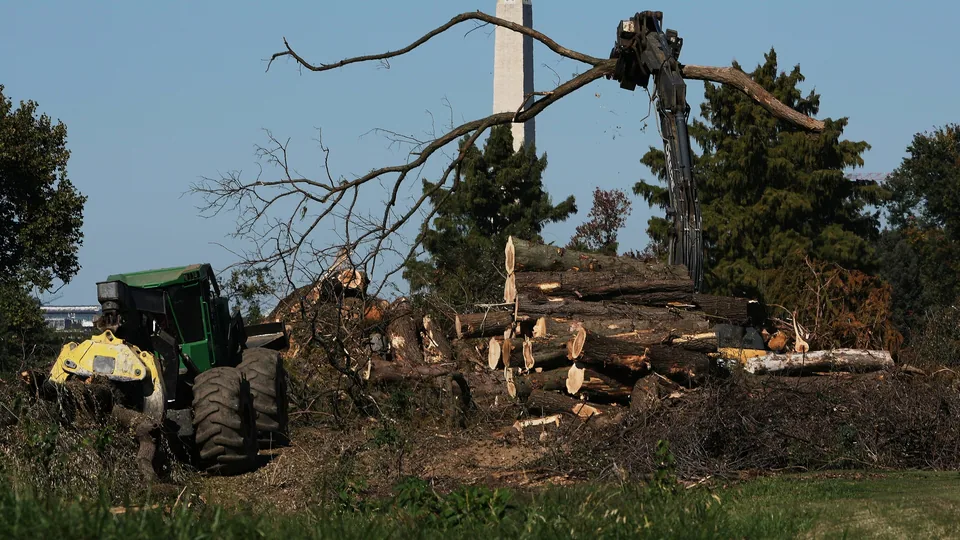
A federal judge has barred the Trump administration from cutting down or damaging additional trees at East Potomac Golf Links in Washington, D.C., as legal challenges continue over President Donald Trump’s plan to transform the public golf facility into a championship-level course.
U.S. District Judge Ana Reyes issued a preliminary injunction on Monday evening, October 26, 2026, prohibiting further tree removal unless necessary to address an imminent threat to public safety. The order also requires the administration to provide at least 10 business days’ written notice before closing any part of the golf course or making irreversible changes to East Potomac Park.
The ruling marks a significant development in a dispute over the future of a historic public recreational area. The challengers argue that the administration moved ahead with its renovation plans without completing legally required environmental and historic preservation reviews. The government maintains that the work is connected to an existing landscaping plan.
The court’s decision follows the removal of hundreds of trees earlier in October, an episode that intensified scrutiny of the project and raised questions about whether the administration had adequately informed the court of its intentions.
Judge Issues Preliminary Injunction Against Further Tree Removal
Judge Reyes issued the preliminary injunction after reviewing the government’s plans and the circumstances surrounding the earlier tree clearing. The order prevents the administration from cutting down or damaging additional trees at East Potomac Golf Links while the litigation continues, except where an imminent public safety threat requires action.
Reyes also imposed advance-notice requirements covering major changes to the property. Before closing the golf course, whether entirely or partially, the administration must provide written notice at least 10 business days in advance. The same notice period applies before any irreversible modification to the park’s existing features.
The requirements are intended to prevent further substantial changes while the court considers the legal challenges. They also give the challengers and the court advance warning of actions that could alter the property before the dispute is resolved.
Reyes acknowledged that the circumstances surrounding the case were extraordinary but said the judicial action itself was not unusual. She explained that the court’s role was to prevent an agency from proceeding simply because the president wanted it to do so.
The injunction does not, by itself, resolve whether the proposed renovation is lawful or permanently prevent the administration from carrying it out. Instead, it establishes restrictions while the legal proceedings continue.
Removal of Hundreds of Trees Escalated the Legal Dispute
The lawsuit was filed in February by the DC Preservation League and two local golfers who challenged the administration’s authority to overhaul the public golf facility. The dispute became more urgent earlier in October, when the administration removed hundreds of trees over a holiday weekend and gave the court less than 24 hours’ notice, according to the supplied report.
Reyes reacted angrily to the development because the administration had previously indicated that no final plan was in place to begin the work. She issued a temporary order stopping the tree felling through October 26, giving the court time to consider whether the restriction should continue.
Before arguments on extending the order took place, Trump announced that the golf course would close on November 15 for a renovation expected to last approximately 15 months. The announcement sharpened the question of whether the administration’s plans were still preliminary or had advanced to the point of implementation.
Reyes subsequently directed the Justice Department to clarify the government’s position. Tensions increased after Associate Attorney General Stanley Woodward filed a brief maintaining that nothing had changed in the administration’s position.
In her latest ruling, Reyes concluded that the renovation plan was final. She pointed not only to statements by Trump and the interior secretary but also to the administration’s actions, particularly the removal of hundreds of healthy, non-invasive trees without meaningful advance notice.
The sequence of events became central to the court’s assessment. The administration’s public announcements, the planned closure and the physical work already completed all contributed to the judge’s conclusion that the project had moved beyond a merely preliminary proposal.
Administration Says Tree Cutting Was Part of an Existing Landscaping Plan
The government’s explanation for the tree removal became a key point of disagreement during the proceedings.
Gregory Wischer, deputy chief of staff at the Interior Department, testified that Trump’s renovation project was part of the president’s broader effort to beautify the nation’s capital. He also said the department began cutting trees on October 10 to implement a landscaping plan adopted in 2019.
Reyes rejected the suggestion that the tree removal could be understood simply as routine maintenance or cleanup. She said the landscaping plan was being implemented to advance Trump’s redesign of the golf course and described the characterisation of the work as “cleaning up” as “borderline farcical.”
The disagreement raises an important legal question: whether the administration was carrying out an established landscaping programme or using that programme to advance a larger redevelopment plan that required additional review.
The distinction matters because the challengers contend that the administration exceeded its authority and bypassed mandatory environmental and historic preservation procedures. The government’s reliance on an earlier landscaping plan does not, on its own, settle whether the broader renovation complies with those requirements.
The court will need to assess the relevant legal authority, the scope of the government’s plans and the procedures required before major changes can be made to the property. The preliminary injunction preserves the existing position while those issues remain under consideration.
DC Preservation League Calls the Ruling a Major Victory
Democracy Forward, the legal organisation representing the DC Preservation League and the two golfers, welcomed the injunction as a major victory in the effort to protect the park from further irreversible damage.
The challengers argue that the administration adopted and began implementing plans to overhaul the golf course without meeting the required legal standards. Their lawsuit centres on claims that the government exceeded its authority and avoided environmental and historic preservation reviews that should have preceded the work.
The latest order gives the challengers greater protection against additional tree removal and other irreversible changes while the case proceeds. The advance-notice requirement may also allow them to seek judicial intervention before further major work takes place.
However, the injunction should not be confused with a final judgment on the merits of the lawsuit. The court has imposed interim restrictions, but the broader legal dispute over the renovation and the administration’s authority remains unresolved.
What Is East Potomac Golf Links?
East Potomac Golf Links is located on Hains Point, a narrow island in the Potomac River in Washington, D.C. The facility first opened as a municipal golf course in 1920, on land that Congress had designated as a public park in 1897.
For decades, the property has been maintained by the Interior Department and the National Park Service. Its public status and long history are central to the debate over how the land should be managed and whether major changes require additional safeguards.
The facility has traditionally offered several forms of recreation, including two nine-hole courses, an 18-hole course, miniature golf and a driving range. Its relatively affordable rates have made it accessible to beginners, casual players and experienced golfers.
Supporters of preserving the existing facility fear that a major redesign could change its character and reduce its accessibility. Their concerns include whether the renovated property would continue to serve a broad range of visitors or become more focused on championship-level golf.
The dispute therefore extends beyond the removal of trees. It also concerns the future use of public land, the preservation of its historic character and the balance between improving a recreational facility and maintaining access for ordinary residents.
Trump Wants a Championship-Level Golf Course
Trump has defended the renovation, describing the existing golf links as “old, broken, dilapidated, and of no further use.” He has said the completed facility will remain open to the public while becoming capable of hosting major golf tournaments.
Trump has also said he notified the United States Golf Association, the PGA of America and the PGA Tour that the renovated course would be available as a potential venue.
A design rendering shared by Trump on social media depicts a transformed property featuring one 18-hole course and a driving range. The proposed layout differs from the existing arrangement, which includes multiple courses and miniature golf.
The administration has presented the project as part of a wider effort to improve the appearance of the nation’s capital. Its supporters may view the redevelopment as an opportunity to modernise a public sporting facility and attract high-profile events to Washington.
Opponents, however, argue that the administration must follow the law regardless of the project’s intended benefits. They contend that the renovation cannot proceed without proper consideration of environmental impacts, historic preservation obligations and the public interest.
The court’s ruling does not determine whether a championship-level course would be an appropriate use of the property. It focuses on preventing further changes while the legal challenge proceeds and ensuring that the administration provides advance notice before major actions.
Why Environmental and Historic Preservation Reviews Matter
Environmental and historic preservation reviews can help government agencies identify the potential consequences of major projects before construction or other irreversible work begins. Depending on the applicable legal requirements, such processes may examine effects on natural features, historic resources and public use of a site.
In the East Potomac case, the challengers allege that the administration bypassed required reviews when it adopted and began implementing its renovation plans. The removal of hundreds of healthy trees has heightened their concerns because the loss cannot necessarily be reversed simply by changing the project at a later stage.
The administration’s position, as described in the supplied reporting, is that the tree cutting formed part of an existing landscaping plan. The legal question is whether that explanation adequately accounts for the work carried out and the wider redevelopment the president has announced.
Reyes’s finding that the plan was final is significant because it challenges the suggestion that the administration had not yet committed to the project. Her ruling points to the government’s actions as evidence that the renovation had advanced beyond preliminary planning.
The court will still need to resolve the underlying claims through the legal process. The preliminary injunction establishes immediate limits on the administration’s actions but does not replace a final determination of the parties’ legal arguments.
What Happens Next in the East Potomac Golf Course Case?
The administration must comply with the injunction while the litigation remains ongoing. Further tree removal or damage is prohibited unless necessary to address an imminent threat to public safety, and the government must provide at least 10 business days’ written notice before closing the course or making irreversible modifications to the park.
The announced November 15 closure remains an important issue because the court’s order specifically addresses advance notice before a full or partial shutdown. The requirement does not, on its own, establish that the renovation can proceed once notice is provided. Other legal questions raised by the lawsuit remain unresolved.
The case is likely to focus on the administration’s authority to carry out the redesign, the status and scope of the 2019 landscaping plan, and whether the relevant environmental and historic preservation requirements were followed.
The challengers will seek to protect the park from further changes they consider unlawful, while the administration may continue to defend its renovation plans. The court’s future decisions will determine how those competing positions are handled under the law.
Why the Ruling Matters Beyond Golf
The dispute over East Potomac Golf Links highlights a broader issue in public land management: the extent to which an administration can rapidly alter a long-established public facility before legal challenges have been resolved.
For the challengers, the central concern is that tree removal and other physical changes can cause lasting harm before a court has decided whether the project is lawful. For the administration, the renovation is part of a stated effort to improve the capital’s appearance and upgrade a golf facility it considers outdated.
Reyes’s injunction addresses that conflict by restricting further irreversible action and requiring advance notice. It does not prevent the administration from defending its plans in court, nor does it permanently settle the future of the golf course.
The case also illustrates the importance of transparency when government agencies undertake major projects on public land. Advance notice and legal review can give affected parties an opportunity to challenge proposed actions before changes become difficult or impossible to undo.
For now, East Potomac Golf Links remains at the centre of a legal dispute over public access, environmental protection, historic preservation and presidential authority. The next stage will determine whether the administration can proceed with its proposed transformation and what legal safeguards must be satisfied before further work can take place.
For breaking news and live news updates, like us on Facebook or follow us on Twitter and Instagram. Read more on Latest World on thefoxdaily.com.






COMMENTS 0