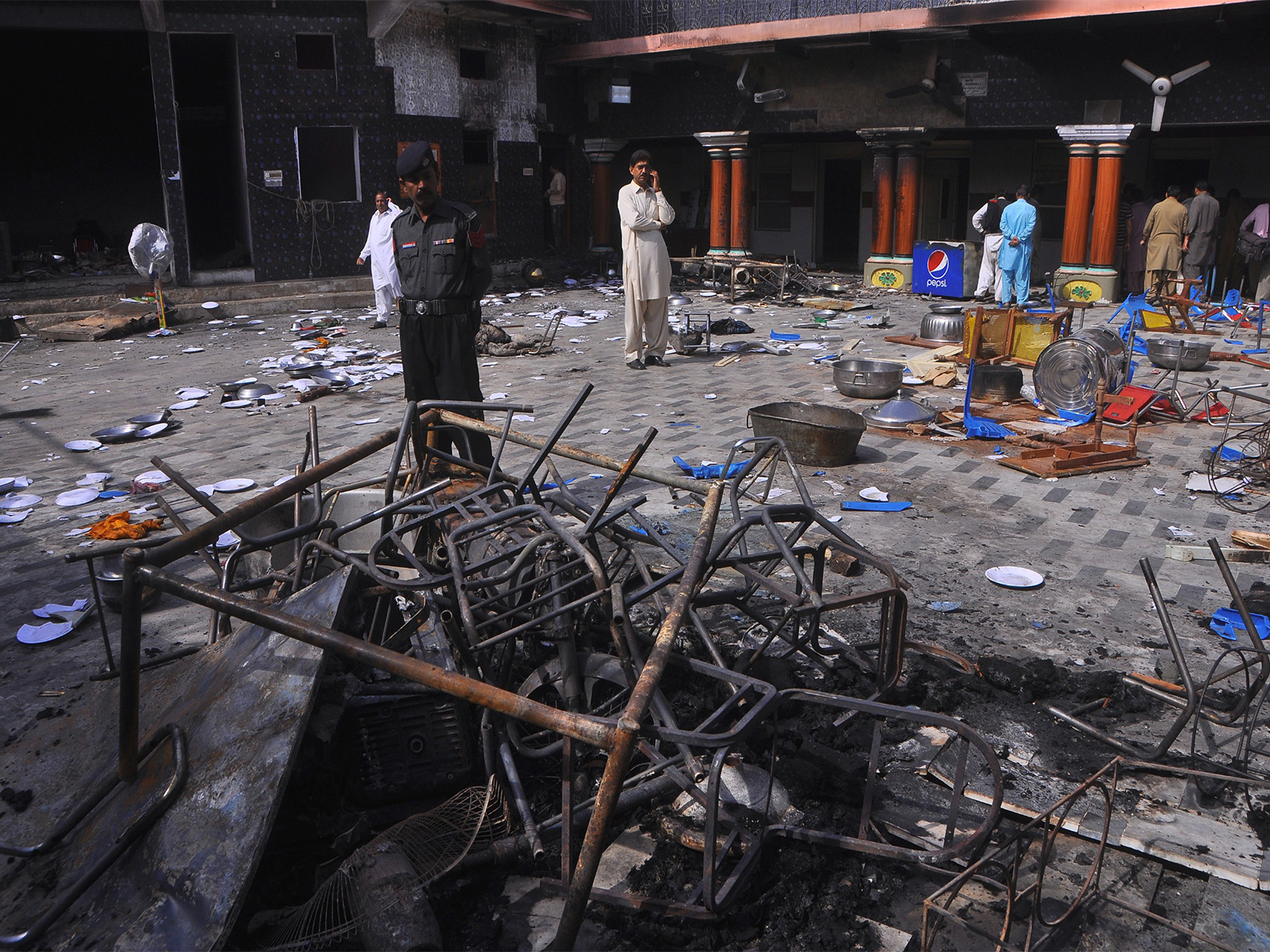
Authorities in Pakistan have sealed the historic Ram Leela Temple in Dera Ismail Khan after members of the Hindu community and civil society activists stopped an attempt to demolish the nearly 200-year-old structure for a proposed commercial plaza. The temple has been placed in official custody, while community representatives are demanding an investigation into its ownership and the legality of the proposed construction.
The temple, located in Rahim Bazaar in Dera Ismail Khan city in Khyber Pakhtunkhwa province, was taken into official custody by the local administration on Saturday and subsequently sealed by the Evacuee Trust Property Board (ETPB), officials told the Press Trust of India (PTI).
The controversy has renewed concerns about the protection of historic religious sites and the rights of minority communities in Pakistan. Residents and heritage activists consider the Ram Leela Temple an important part of the city’s cultural and religious history.
Community representatives have called for authorities to establish who legally owns the property and whether the attempted demolition and proposed commercial development were authorised. The dispute also comes amid broader concerns about the management of minority religious properties and the protection of heritage buildings.
Why Was the Ram Leela Temple Sealed?
The Ram Leela Temple was sealed after local residents intervened to stop demolition work earlier in the week. The proposed demolition was reportedly linked to plans to construct a commercial plaza on the site.
Sohail Ahmed Azmi, president of the Dera Civil Society and the local traders’ association, said he rushed to the location with other residents after learning that workers were attempting to demolish the historic building.
According to Azmi, a man present at the site claimed that he had been awarded a contract to carry out the demolition. The claim prompted questions about who had authorised the work and whether the individual responsible had the legal right to alter or demolish the property.
Following the intervention, members of the Hindu community and civil society representatives met to oppose the proposed demolition. They demanded a formal investigation into the property’s ownership and the legality of any commercial construction planned for the location.
The local administration subsequently took the property into official custody, and the ETPB sealed the temple on Saturday. The move placed the site under official control after the confrontation over its proposed redevelopment.
However, the sealing of the temple does not by itself resolve the questions raised by residents. Community representatives continue to seek clarification about ownership, the attempted demolition and the permissions, if any, granted for commercial development.
Hindu Community Demands Investigation Into Temple Ownership
Members of the Hindu community and civil society activists have called for transparency regarding the Ram Leela Temple’s legal status. They want authorities to determine who controls the property and whether the attempted demolition was lawful.
Representatives have also urged elected officials to raise the matter in Pakistan’s National Assembly, bringing the dispute to the attention of national lawmakers.
The demands extend beyond stopping the immediate demolition. An investigation could establish how the property was managed, whether any transfer or development arrangement was authorised and what protections apply to the historic religious structure.
Local residents and traders have reportedly opposed an earlier attempt to develop a commercial plaza at the site as well. That history suggests the dispute over the temple’s future predates the latest confrontation, although the details of the earlier proposal would need to be established through official records.
For the Hindu community, the temple represents a religious and historical site whose significance extends beyond the building itself. For heritage advocates, the case also raises questions about how historic structures are protected when commercial development is proposed.
The investigation sought by community representatives could help clarify the property’s legal status and determine what steps are required to protect the building from unauthorised demolition or redevelopment.
What Is the Evacuee Trust Property Board?
The Evacuee Trust Property Board is a Pakistani government body responsible for managing properties left behind by people who migrated to India following Partition in 1947, as well as properties held in trust for minority religious communities.
The board oversees several Hindu and Sikh religious sites and plays an important role in the administration of properties associated with minority communities. Its responsibilities make the management of historic temples and other religious buildings a significant issue for heritage protection and religious access.
According to PTI, the Ram Leela Temple is among approximately 400 buildings in Dera Ismail Khan identified by the ETPB as cultural heritage properties.
The reported designation places the temple within a wider group of historically significant buildings in the district. However, the precise legal protections applicable to the Ram Leela Temple and the approvals required for work on the property were not detailed in the available report.
Questions about the board’s management of religious properties have also attracted scrutiny from rights organisations. The Human Rights Commission of Pakistan (HRCP) has called for greater transparency and accountability in the ETPB’s functioning and recommended reforms to make it more representative of minority communities.
These concerns are relevant to the temple dispute because clear ownership records, transparent decisions and effective oversight can help prevent conflicts over the use of religious properties. An investigation into the Ram Leela Temple could establish whether existing procedures were followed before demolition work began.
Nearly 200-Year-Old Temple Is Part of Dera Ismail Khan’s Heritage
The Ram Leela Temple is regarded by local residents and heritage activists as part of Dera Ismail Khan’s historical and religious heritage. Its reported age makes the dispute particularly significant for those seeking to preserve historic buildings in the region.
The district and surrounding areas contain several historic Hindu religious and archaeological sites. One example is the temple complex at Bilot Sharif, which dates from the seventh to the early 11th centuries, according to Pakistan’s Department of Archaeology and Museums.
Such sites provide evidence of the region’s religious and cultural history across different periods. Their preservation can help maintain the historical record and protect structures associated with communities that have contributed to the area’s development.
Historic religious buildings can also have significance beyond their original architectural purpose. They may serve as markers of longstanding community presence, places of worship and reminders of the region’s diverse cultural past.
The proposed commercial development at the Ram Leela Temple has therefore raised concerns about whether the building’s heritage value was adequately considered before demolition work was attempted.
Protecting a historic site requires more than preventing immediate damage. Authorities may also need to clarify ownership, document the structure’s condition, establish applicable heritage protections and ensure that any proposed development complies with the relevant rules.
The temple’s current status under official custody creates an opportunity for authorities to examine these issues before any decision is made about its future.
Religious Minority Rights in Pakistan Under Scrutiny
The controversy comes amid wider concerns about the protection of religious minorities in Pakistan. Hindu and Christian communities, among others, have raised concerns over religious freedom, personal safety, discrimination and the protection of their places of worship.
The Human Rights Commission of Pakistan has highlighted several of these issues in a report titled Sanctuary Denied: Freedom of Religion or Belief in 2025/26, released on Thursday, according to the supplied report.
The HRCP said minorities continued to face violations of fundamental rights, misuse of blasphemy laws, forced marriages and conversions, and discrimination. Its report also highlighted the abduction and forced marriage of Hindu and Christian girls, discriminatory employment practices and the marginalisation of minority concerns.
The findings provide broader context for the concerns raised over the Ram Leela Temple, although they do not independently establish wrongdoing in this specific property dispute.
Community representatives have argued that religious sites need effective protection against illegal occupation, unauthorised transfers and demolition. Haroon Sarab Dial, chairman of the All Pakistan Hindu Rights Movement, expressed hope that Hindu religious sites would receive special protection during the current period of governor’s rule in Khyber Pakhtunkhwa.
Dial also called for a thorough investigation into religious properties allegedly occupied or sold illegally between 2013 and 2026.
His demand highlights the importance of reviewing property records and investigating allegations through established legal procedures. Determining whether any individual property was illegally occupied or transferred requires case-specific evidence rather than general conclusions about the management of minority religious sites.
Why Is Khyber Pakhtunkhwa Under Governor’s Rule?
The temple controversy has unfolded during a period of governor’s rule in Khyber Pakhtunkhwa. Pakistan imposed the measure on October 11, citing a deteriorating law and order situation in the province.
Authorities accused the provincial government, which is run by the party of jailed former prime minister Imran Khan, of failing to cooperate in counterterrorism efforts.
The political and security circumstances provide important context for the temple dispute, particularly because Minority Rights advocates are seeking stronger protection for religious properties during the current administration.
Dial’s appeal for special safeguards reflects concern about whether historic Hindu sites will receive adequate protection and whether allegations involving their ownership or management will be investigated.
However, the imposition of governor’s rule does not, on its own, establish the legal status of the Ram Leela Temple or determine who was responsible for the attempted demolition. Those questions require a separate examination of the property’s records and the circumstances surrounding the work at the site.
What Happens Next After the Temple’s Sealing?
The immediate issue is whether the authorities will conduct a comprehensive investigation into the Ram Leela Temple’s ownership and the attempted demolition. Community representatives have called for the property’s legal status to be clarified and for any proposed commercial construction to be examined.
The ETPB’s involvement is particularly important because the board manages properties associated with minority religious communities. Its handling of the site could help establish the next steps for protecting the building and determining how it may be used in the future.
Officials will also need to clarify whether the proposed demolition had received any lawful authorisation and whether the temple has formal heritage protections that restrict changes to the structure.
For residents and heritage activists, the priority is to ensure that the building is not demolished or redeveloped before the relevant questions have been resolved. Their demands also extend to broader transparency in the administration of Hindu and Sikh religious properties.
The sealing of the nearly 200-year-old Ram Leela Temple has halted the immediate dispute over demolition, but it has not settled the questions surrounding the site’s ownership or future. The outcome of any investigation will be important in determining whether the temple receives lasting protection and whether the concerns raised by the Hindu community are addressed.
For breaking news and live news updates, like us on Facebook or follow us on Twitter and Instagram. Read more on Latest World on thefoxdaily.com.





COMMENTS 0