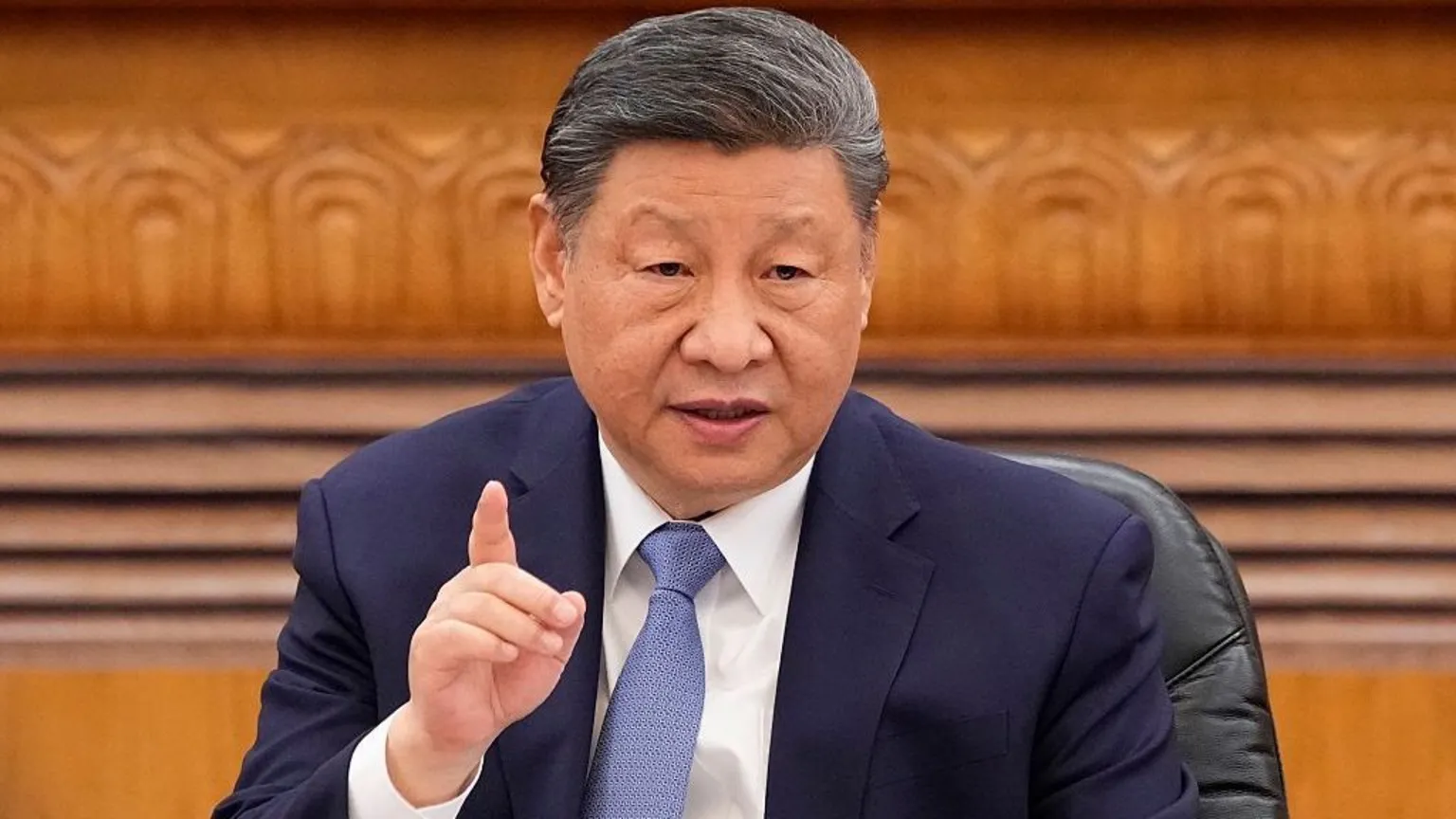
The Fifth Plenary Session of the 20th Central Committee of the Communist Party of China (CPC) was held in Beijing from October 26 to 29, 2026. The meeting coincided with the beginning of the 15th Five-Year Plan and carried particular political significance as the Party considered its roadmap ahead of next year’s 21st Party Congress.
The session attracted international attention not only because of its policy priorities but also because of the scale of the political and disciplinary changes confirmed during the meeting. The expulsion of 33 officials, including senior political and military figures, has intensified debate over the direction of China’s leadership under President Xi Jinping.
A Purge, as Seen From Outside
Two developments made the Fifth Plenum particularly significant for international observers. Only 279 of the 376 full and alternate members of the Central Committee attended the session, marking a record low. The Party also confirmed the expulsion of 33 officials, among them former Politburo member Ma Xingrui and former senior military leader Zhang Youxia.
Outside China, the political restructuring has been interpreted as a major purge. One reading is that President Xi is removing potential opposition, consolidating his authority and preparing the political ground for an unprecedented fourth term at the 21st Party Congress, scheduled for late 2027.
The removal of senior military officials has also raised questions about the leadership and operational readiness of the People’s Liberation Army (PLA). These concerns have emerged despite China’s progress in military technology and modernisation.
For international observers, the scale of the expulsions and the limited attendance at the plenum point to deeper questions about the stability of the Party’s leadership structure. The developments have also fuelled speculation about the extent to which the Anti-Corruption Campaign is being used to strengthen political control.
Self-Purification, as Projected Inside China
Within China, the same personnel changes and disciplinary actions have been presented through a different political narrative. Official messaging describes the measures as evidence of the Central Committee’s willingness to demonstrate political courage, purify the Party and eliminate hidden dangers through internal reform.
The stated objective is to strengthen the CPC’s creativity, cohesion and ability to act effectively in an uncertain global environment. This process has been described through the concept of “revolutionary forging”, based on the argument that a strong Party is necessary to make China strong.
Chinese commentaries acknowledge that the CPC is the world’s largest ruling party and exercises considerable global influence. However, they argue that its size and political position should not lead to complacency or the loss of its revolutionary spirit.
According to this interpretation, the Party must continuously reform itself to remain vibrant, youthful and connected with the people. The Fifth Plenum therefore emphasised the need to “persistently advance comprehensive and strict Party governance” and achieve the Party’s “self-purification, self-improvement, self-renewal and self-enhancement.”
In this domestic framing, disciplinary action is not simply about removing officials. It is presented as a continuing effort to strengthen the organisation, preserve political discipline and maintain the Party’s capacity to govern.
Taking the Anti-Corruption Campaign Further
The Fifth Plenum also advanced the anti-corruption agenda pursued at the Fifth Plenary Session of the 20th Central Commission for Discipline Inspection in January. The latest meeting pledged to intensify the campaign with greater clarity and determination and to continue the struggle until the end.
The Party reiterated its commitment to an integrated approach to preventing corruption, built around the principle that officials “dare not be corrupt, cannot be corrupt, and do not want to be corrupt.”
According to Chinese interpretations, the campaign will continue to concentrate on sectors where political authority, financial resources and economic influence are heavily concentrated. These include:
- Finance: Scrutiny of corruption risks in the financial sector.
- State-owned enterprises: Greater attention to the use of public resources and institutional power.
- Energy: Oversight of corruption risks in a sector with significant economic importance.
- Pharmaceuticals: Continued investigations into misconduct in the sector.
- Infrastructure: Stronger scrutiny of projects and relationships involving government resources.
Particular attention is also being directed towards possible collusion between government officials and business interests. This reflects the Party’s stated intention to address corruption involving the intersection of political authority and commercial activity.
Focus on Hidden and New Forms of Corruption
One of the priorities highlighted in the anti-corruption drive is the investigation of what Chinese authorities describe as “hidden and new types of corruption”. These practices can be more difficult to identify than conventional forms of bribery or misuse of official authority.
The areas identified for scrutiny include expected returns, agreed shareholdings and government-business “revolving doors”. The campaign is also expected to intensify efforts against cross-border corruption.
By focusing on these arrangements, the Party aims to address situations in which financial benefits and business interests may be connected to the exercise of official power through indirect or less visible mechanisms.
Petty Corruption and Everyday Public Services
The anti-corruption agenda is not limited to senior officials, large institutions or major economic sectors. Addressing “petty corruption” has also been identified as a priority, particularly in areas that directly affect ordinary citizens.
The stated focus includes rural collective asset management, medical insurance funds, elderly care services, education and healthcare. These areas are significant because corruption or misuse of resources can affect access to public services and the fair distribution of benefits.
By targeting corruption at the local and service-delivery levels, the campaign seeks to promote fairness and justice for broader sections of society.
Another priority is improving supervision of senior officials and people holding key positions. The Party has emphasised strengthening oversight mechanisms, including through the development of a digital discipline inspection and supervision system.
Xi Jinping’s Political Authority and the Question of Domestic Support
The scale of the political shake-up under President Xi has attracted scrutiny and criticism abroad in recent years. However, China’s propaganda and censorship apparatus appears to have kept domestic sentiment under control, preventing visible large-scale criticism or unrest in response to the campaign.
One interpretation is that Xi Jinping is using a sweeping anti-corruption and political-discipline campaign to centralise authority and eliminate potential challenges to his long-term leadership. The removal of senior officials and the expansion of disciplinary oversight have strengthened this argument among some international observers.
Yet another possibility is that the campaign has genuine support among sections of Chinese society. Its message of tackling corruption and strengthening political unity may resonate with ordinary citizens who see corruption as a threat to fairness, public services and effective governance.
The campaign’s stated principle of “offending thousands, not betraying 1.4 billion” reflects an attempt to present disciplinary action as necessary for the wider national interest rather than as a measure directed only at individual officials.
Some sections of society may also support the broader argument that a more united Party and country, with Xi Jinping at its core, are essential to achieving the “great rejuvenation of the Chinese nation” through Chinese-style modernisation.
However, determining the actual level of public support remains difficult. The restrictions on open debate and political expression in China’s system make it challenging to establish whether the domestic narrative reflects widespread public opinion or the effectiveness of official messaging.
Purge or Purification: Two Competing Interpretations
China’s Fifth Plenum has exposed a clear difference between how the political shake-up is interpreted internationally and how it is presented domestically. For many outside observers, the expulsions and disciplinary measures raise concerns about the concentration of power under Xi Jinping, the future of the military leadership and the removal of possible political rivals.
Inside China, the official narrative describes the same developments as necessary self-reform. The emphasis is on eliminating corruption, strengthening discipline, improving governance and ensuring that the Party remains capable of leading the country through an uncertain international environment.
Both interpretations centre on the same political developments but draw different conclusions about their purpose and consequences. Whether the campaign is primarily an exercise in consolidating personal authority, a genuine effort to improve Party discipline or a combination of both remains difficult to determine from outside the Chinese political system.
Ultimately, the Fifth Plenum demonstrates how the CPC is seeking to connect anti-corruption efforts with its wider political and national objectives. Whether this process produces a more accountable governing system or further concentrates power around Xi Jinping will remain an important question as China approaches its 21st Party Congress in late 2027.
About the Author
Antara Ghosal Singh is a Fellow at the Observer Research Foundation (ORF), New Delhi. She is a graduate of Tsinghua University in China and has been a Chinese language fellow at the National Central University in Taiwan.
For breaking news and live news updates, like us on Facebook or follow us on Twitter and Instagram. Read more on Latest World on thefoxdaily.com.



COMMENTS 0