- Why the Strait of Hormuz Matters So Much
- What the US Blockade Involves
- Escalation at Sea: A New Phase of Maritime Conflict
- Can a Blockade Fully Stop Iranian Oil?
- Economic Impact: Oil Prices, Inflation, and Global Markets
- Diplomatic Fallout: Talks in Limbo
- Pressure on Allies: A Fractured Global Response
- A Unique Insight: The “Globalisation of Blockades”
- Comparison: Sanctions vs Naval Blockade
- What Happens Next? Key Scenarios
- Prediction: A Long Game With Global Consequences
- Conclusion: A High-Stakes Gamble in a Critical Waterway
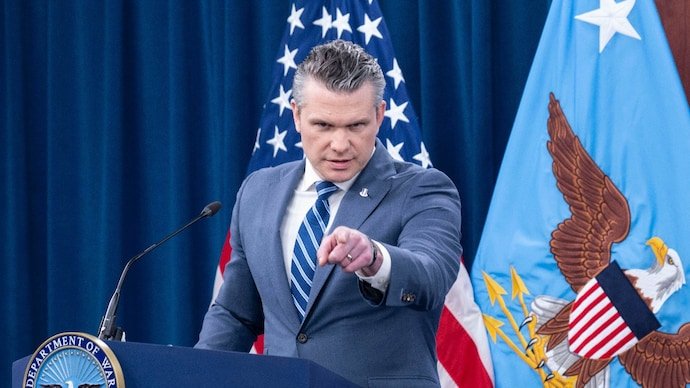
The United States has signaled a dramatic escalation in its standoff with Iran, declaring that its naval blockade in the Strait of Hormuz will remain firmly in place “as long as it takes.” The announcement reflects a broader shift toward sustained military and economic pressure, even as fragile diplomatic efforts struggle to stay alive.
At the center of this confrontation is one of the world’s most critical maritime chokepoints a narrow passage through which a significant portion of Global Oil supplies flows every day. By tightening control over this route, Washington is not just targeting Iran, but also reshaping global energy dynamics, trade flows, and geopolitical alliances.
What makes this moment particularly significant is the combination of military enforcement, economic sanctions, and diplomatic signaling all unfolding simultaneously. The result is a high-stakes geopolitical standoff with global consequences.
Why the Strait of Hormuz Matters So Much
The Strait of Hormuz is often described as the world’s energy lifeline and for good reason. Connecting the persian gulf to the Arabian Sea, it serves as a critical artery for oil and gas shipments from major producers.
- Roughly one-fifth of global oil supply passes through this route
- Key exporters include Saudi Arabia, Iraq, UAE, and Iran
- Any disruption immediately impacts global energy prices
Because of its strategic importance, even minor tensions in the region can trigger significant volatility in global markets. A sustained blockade, however, raises the stakes to an entirely different level.
What the US Blockade Involves
The current US strategy goes beyond traditional sanctions. It combines naval dominance with direct maritime enforcement, effectively restricting Iran’s ability to export oil and conduct shipping operations.
Key elements of the blockade include:
- Interception and redirection of vessels linked to Iranian trade
- Expansion of surveillance and enforcement beyond the Gulf region
- Coordination between naval forces and economic sanctions mechanisms
The messaging from Washington is clear: the blockade is not temporary leverage it is a sustained pressure campaign designed to force strategic concessions.
Escalation at Sea: A New Phase of Maritime Conflict
The situation is no longer limited to policy statements. It is now playing out in real-time maritime operations.
Recent enforcement actions indicate a shift toward more assertive tactics, including:
- Turning back commercial vessels attempting to transit the region
- Intervening in ships that do not comply with naval directives
- Expanding operational reach into the Indian and Pacific Oceans
This marks a transition from passive deterrence to active enforcement a move that significantly increases the risk of confrontation.
Can a Blockade Fully Stop Iranian Oil?
Despite the aggressive approach, completely sealing off Iranian oil exports is far from straightforward.
History shows that countries under sanctions often find alternative pathways, such as:
- Ship-to-ship transfers in international waters
- Use of intermediary countries and reflagged vessels
- Shadow fleets operating outside formal tracking systems
This creates a complex reality: while the blockade can reduce official exports, it may not entirely eliminate them. Instead, it could push trade into less transparent and more risky channels.
Economic Impact: Oil Prices, Inflation, and Global Markets
The implications of the Hormuz blockade extend far beyond the Middle East. Global markets are already reacting to the uncertainty.
| Sector | Impact | Why It Matters |
|---|---|---|
| Energy | Rising oil prices | Supply disruptions and risk premium |
| Transport | Higher shipping costs | Insurance and rerouting expenses |
| Consumer Goods | Inflation pressure | Increased fuel and logistics costs |
| Emerging Economies | Currency stress | Higher import bills |
For energy-importing countries, including many in Asia, the blockade could translate into higher fuel prices, increased Inflation, and slower economic growth.
Diplomatic Fallout: Talks in Limbo
Even as military pressure intensifies, diplomatic efforts have not entirely collapsed. Talks between the US and Iran are still being discussed, with potential mediation efforts underway.
However, the positions of both sides remain sharply divided:
- United States: Demands verifiable rollback of Iran’s nuclear ambitions
- Iran: Insists that sanctions and blockade must be lifted first
This creates a classic deadlock each side waiting for the other to make the first move.
Without a breakthrough, the risk is that Diplomacy becomes secondary to military posturing.
Pressure on Allies: A Fractured Global Response
Another dimension of the crisis is the response of US allies. Washington has openly called on partners in Europe and Asia to contribute more actively to securing maritime routes.
This highlights a growing tension:
- Many countries depend heavily on oil flowing through Hormuz
- But few are willing to engage directly in enforcement operations
The result is an uneven burden-sharing dynamic, which could strain alliances over time.
A Unique Insight: The “Globalisation of Blockades”
One of the most striking aspects of the current strategy is its expanding scope. The blockade is no longer confined to a single region it is evolving into what could be described as a globalised maritime control strategy.
This signals a broader shift in how economic and military power are being used together:
- Control over trade routes as a geopolitical tool
- Integration of sanctions with physical enforcement
- Expansion of influence beyond traditional Conflict zones
This approach could redefine future conflicts, where economic choke points become central battlegrounds.
Comparison: Sanctions vs Naval Blockade
| Aspect | Economic Sanctions | Naval Blockade |
|---|---|---|
| Method | Financial restrictions | Physical enforcement |
| Visibility | Low | High |
| Immediate Impact | Gradual | Instant disruption |
| Risk Level | Moderate | High (military escalation) |
The current situation combines both approaches, amplifying their overall impact.
What Happens Next? Key Scenarios
1. Prolonged Standoff
The blockade continues, with limited diplomatic progress and sustained economic pressure.
2. Negotiated Breakthrough
Both sides make concessions, leading to partial easing of restrictions.
3. Escalation
Increased maritime incidents lead to broader military confrontation.
4. Strategic Adaptation
Iran expands alternative trade routes, reducing the blockade’s effectiveness over time.
Prediction: A Long Game With Global Consequences
Given the current signals, the most likely scenario is a prolonged standoff rather than a quick resolution. Neither side appears willing to back down immediately, and both are preparing for an extended phase of pressure and counter-pressure.
This means:
- Continued volatility in energy markets
- Persistent geopolitical tension in the region
- Growing importance of alternative trade routes
In essence, the blockade is not just a tactical move it is part of a broader strategic contest.
Conclusion: A High-Stakes Gamble in a Critical Waterway
The US decision to maintain an “ironclad” blockade in the Strait of Hormuz marks a turning point in its approach toward Iran. By combining military enforcement with economic pressure, Washington is pursuing a strategy designed to force long-term concessions.
However, this approach comes with significant risks not just for Iran, but for global trade, energy stability, and regional security.
As the standoff continues, the Strait of Hormuz has once again become the focal point of global geopolitics where every decision carries consequences far beyond its narrow waters.
For breaking news and live news updates, like us on Facebook or follow us on Twitter and Instagram. Read more on Latest World on thefoxdaily.com.



COMMENTS 0