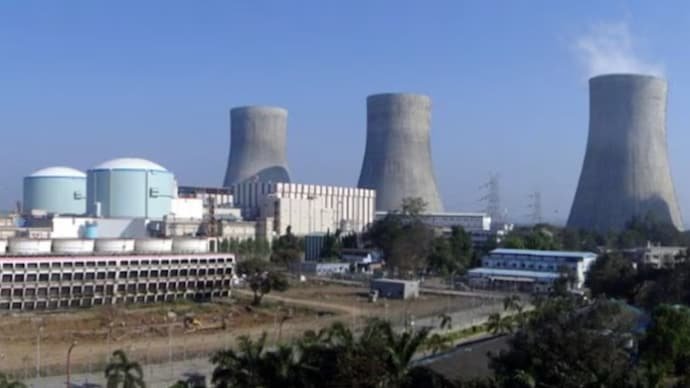
India’s long-term Nuclear Energy programme is moving toward another important milestone, with the 500 MW Prototype Fast Breeder Reactor (PFBR) at Kalpakkam in Tamil Nadu expected to be completed by March 2027.
The timeline was disclosed by Bharatiya Nabhikiya Vidyut Nigam Limited (BHAVINI) in response to a Right to Information (RTI) application. The project is one of the most significant components of India’s three-stage nuclear power programme and is intended to demonstrate the country’s fast breeder reactor Technology on a commercial-scale power generation platform.
The disclosure comes as India continues to expand its nuclear power capacity, with several reactors under construction, others approaching commissioning and additional projects moving through pre-project and construction stages.
Unlike conventional nuclear power reactors, a fast breeder reactor is designed to produce more usable nuclear fuel than it consumes. That capability is particularly important to India’s long-term nuclear strategy because it is intended to help bridge the country toward greater utilisation of its substantial thorium resources.
Kalpakkam PFBR targets March 2027 completion
BHAVINI’s RTI response confirms that the organisation is commissioning the 500 MW Prototype Fast Breeder Reactor at Kalpakkam.
According to the response, the project is expected to be completed by March 2027. The timeline provides a fresh indication of the stage reached by one of the country’s most closely watched nuclear projects.
The PFBR is located at the Madras Atomic Power Station complex at Kalpakkam, on the Tamil Nadu coast. Its development is associated with India’s efforts to establish expertise in fast breeder technology and move beyond the conventional reactor systems that currently make up much of the country’s nuclear generating fleet.
The reactor’s importance extends beyond its planned 500 MW electricity output. Its breeder capability is central to why the project occupies such an important position in India’s nuclear strategy.
Why fast breeder reactors matter to India’s nuclear programme
India’s nuclear programme was designed around a three-stage approach associated with physicist Homi Bhabha. The strategy takes into account the country’s nuclear fuel resources and seeks to progressively expand the availability of usable nuclear fuel.
The first stage relies largely on conventional reactors using natural uranium. The second stage introduces fast breeder reactors capable of producing additional fissile material while generating electricity. The third stage is intended to make greater use of thorium, a resource in which India has significant reserves.
The PFBR is therefore an important bridge between the earlier and later stages of that strategy.
A breeder reactor is designed to generate fissile material as part of its operation. In simplified terms, the reactor can convert fertile material into usable nuclear fuel while also producing electricity. This distinguishes the technology from conventional reactors, which primarily consume fissile fuel without being designed around the same fuel-breeding objective.
The ability to produce additional usable nuclear fuel is particularly significant for India because of the country’s relatively limited domestic uranium resources compared with its large thorium reserves.
Thorium remains central to India’s long-term ambitions
India’s interest in fast breeder technology cannot be separated from its plans for thorium.
Thorium itself is not directly used in the same way as the fissile fuel required to sustain a conventional nuclear chain reaction. It can, however, be converted into uranium-233, a fissile material that can be used as nuclear fuel.
The three-stage programme envisaged by Bhabha was designed to progressively develop the technologies needed to make this possible.
The PFBR at Kalpakkam is part of the second stage. Its operation is expected to provide experience in fast reactor technology while helping establish the conditions required for the longer-term development of the third stage.
That makes the project’s progress significant even beyond its electricity-generating capacity. The reactor is effectively a technological link in a much larger national nuclear strategy that has been under development for decades.
Several reactors are approaching completion
The Kalpakkam project is advancing alongside a wider expansion of India’s nuclear power Infrastructure.
Data from the Nuclear Power Corporation of India Limited (NPCIL) identifies several reactors that are under construction, commissioning or approaching operational milestones, with some projects extending into 2030.
One of the reactors nearing completion is the 700 MW RAPP-8 Pressurised Heavy Water Reactor at Rawatbhata in Rajasthan.
RAPP-8 is in an advanced stage of commissioning and is expected to become operational in 2026. The approved project cost of Rs 22,924 crore covers RAPP-7 and RAPP-8 jointly.
RAPP-7 has already commenced commercial operation, meaning the Rawatbhata site is becoming an increasingly important part of India’s expanding fleet of larger-capacity indigenous pressurised heavy water reactors.
Kudankulam adds four more reactors
Tamil Nadu is also at the centre of India’s nuclear expansion through the Kudankulam Nuclear Power Plant.
Four additional 1,000 MW light water reactors are being implemented at Kudankulam in cooperation with Russia. The projects are being developed in phases, with Units 3 and 4 followed by Units 5 and 6.
Kudankulam Units 3 and 4 are expected to be completed in June 2027 and June 2028, respectively. The approved project cost for the two units is Rs 68,893 crore.
Units 5 and 6 are scheduled for completion in June 2029 and March 2030, respectively. Their approved project cost stands at Rs 69,437 crore.
The expansion means Tamil Nadu is set to remain one of India’s most important nuclear power hubs, with both the conventional light water reactor programme at Kudankulam and the fast breeder programme at Kalpakkam contributing to the state’s nuclear infrastructure.
New nuclear projects are moving ahead
India’s nuclear expansion is not limited to projects already close to commissioning. New reactor construction is also advancing in several states.
In Karnataka, construction of Kaiga Units 5 and 6 began with the First Pour of Concrete on March 1 this year, following the required statutory and regulatory clearances.
Both reactors are designed to have a capacity of 700 MW and use the Pressurised Heavy Water Reactor technology that forms the backbone of India’s indigenous large-reactor programme.
Another major project is under construction at Gorakhpur in Haryana. Units 1 and 2 at the site are also 700 MW Pressurised Heavy Water Reactors.
Construction and commissioning of the Gorakhpur units are expected to take approximately six years from the First Pour of Concrete.
Beyond these projects, another eight 700 MW units have been listed under pre-project activities, indicating that India’s nuclear expansion pipeline extends considerably beyond the reactors currently being built.
India’s existing nuclear power backbone
The new projects are being added to an established nuclear power network spread across multiple parts of the country.
NPCIL’s operational-reactor data shows nuclear power stations across seven sites in six states, with reactors ranging from older small-capacity units to newer 700 MW and 1,000 MW designs.
At Tarapur in Maharashtra, Units 1 and 2 each have a capacity of 160 MW, while Units 3 and 4 each have a capacity of 540 MW.
Rawatbhata in Rajasthan has a more diverse group of reactors. Unit 2 has a capacity of 200 MW, Units 3 to 6 each have 220 MW, and Unit 7 has a capacity of 700 MW.
At Kalpakkam in Tamil Nadu, MAPS-1 and MAPS-2 each have a capacity of 220 MW. The site is now also associated with the much larger 500 MW PFBR, which represents a different stage in India’s nuclear technology development.
Kudankulam’s first two reactors each have a capacity of 1,000 MW, making them among the largest units in India’s operating nuclear fleet.
Uttar Pradesh has two 220 MW reactors, while Kakrapar in Gujarat has two 220 MW units and two 700 MW units.
Kaiga in Karnataka currently has four 220 MW reactors, with the new 700 MW Units 5 and 6 adding substantially more capacity once completed.
Why 700 MW reactors are important
A significant feature of India’s current nuclear expansion is the growing role of domestically designed 700 MW Pressurised Heavy Water Reactors.
These reactors represent an effort to standardise and scale up India’s indigenous nuclear technology. Projects such as RAPP-8, Kaiga 5 and 6, and Gorakhpur 1 and 2 form part of this broader expansion.
Moving toward larger standardised units can help increase generating capacity while building on technology that Indian nuclear institutions have developed through decades of operating pressurised heavy water reactors.
At the same time, the PFBR represents a separate technological pathway. Its importance lies not simply in its 500 MW output but in its ability to support the fuel cycle envisioned in India’s three-stage programme.
Kalpakkam represents a different kind of nuclear milestone
The PFBR’s planned completion in March 2027 would mark an important point in India’s long-running effort to develop fast breeder reactor technology.
Conventional reactors and fast breeder reactors serve different roles within the country’s nuclear strategy. Conventional reactors are primarily designed to generate electricity from nuclear fuel, while breeder technology adds the objective of creating additional usable fissile material.
This distinction explains why the Kalpakkam reactor has attracted attention despite its relatively modest generating capacity compared with some of the 1,000 MW reactors being developed at Kudankulam.
The project is intended to demonstrate a technology that could have implications for the next stages of India’s nuclear fuel cycle.
A nuclear expansion built around multiple technologies
The latest project timelines show that India’s nuclear expansion is proceeding through several parallel tracks.
At one end are established Pressurised Heavy Water Reactors, including the 700 MW units being built at Rawatbhata, Kaiga and Gorakhpur. At another are large light water reactors at Kudankulam being developed with Russian cooperation.
Alongside them is the PFBR at Kalpakkam, which has a different strategic purpose because of its role in the fast breeder stage of India’s nuclear programme.
Together, these projects reflect an approach that combines established reactor technologies with longer-term efforts to develop a more self-sustaining nuclear fuel cycle.
What the 2027 target could mean
The March 2027 completion target disclosed by BHAVINI provides a specific milestone for a project that has been under development for many years.
Completion would not simply add another reactor to India’s electricity network. It would also provide an important operational platform for fast breeder technology and the wider nuclear fuel strategy associated with India’s three-stage programme.
The significance of the project will therefore be measured both in megawatts and in technological experience. Its contribution to the country’s longer-term nuclear ambitions depends on how successfully the technology operates and how it supports subsequent stages of the programme.
Meanwhile, the wider pipeline shows that India’s nuclear expansion is continuing on several fronts, with reactors nearing commissioning, new units under construction and additional projects being prepared.
For a country seeking to expand low-carbon electricity generation while making greater use of its domestic nuclear resources, the combination of conventional reactor expansion and fast breeder technology represents a long-term strategy rather than a single-project development.
The Kalpakkam PFBR’s March 2027 target is consequently an important date to watch. Its progress will provide a measure of how India’s fast breeder programme is moving from decades of development toward operational deployment and the next phase of the country’s nuclear ambitions.
For breaking news and live news updates, like us on Facebook or follow us on Twitter and Instagram. Read more on Latest India on thefoxdaily.com.






COMMENTS 0