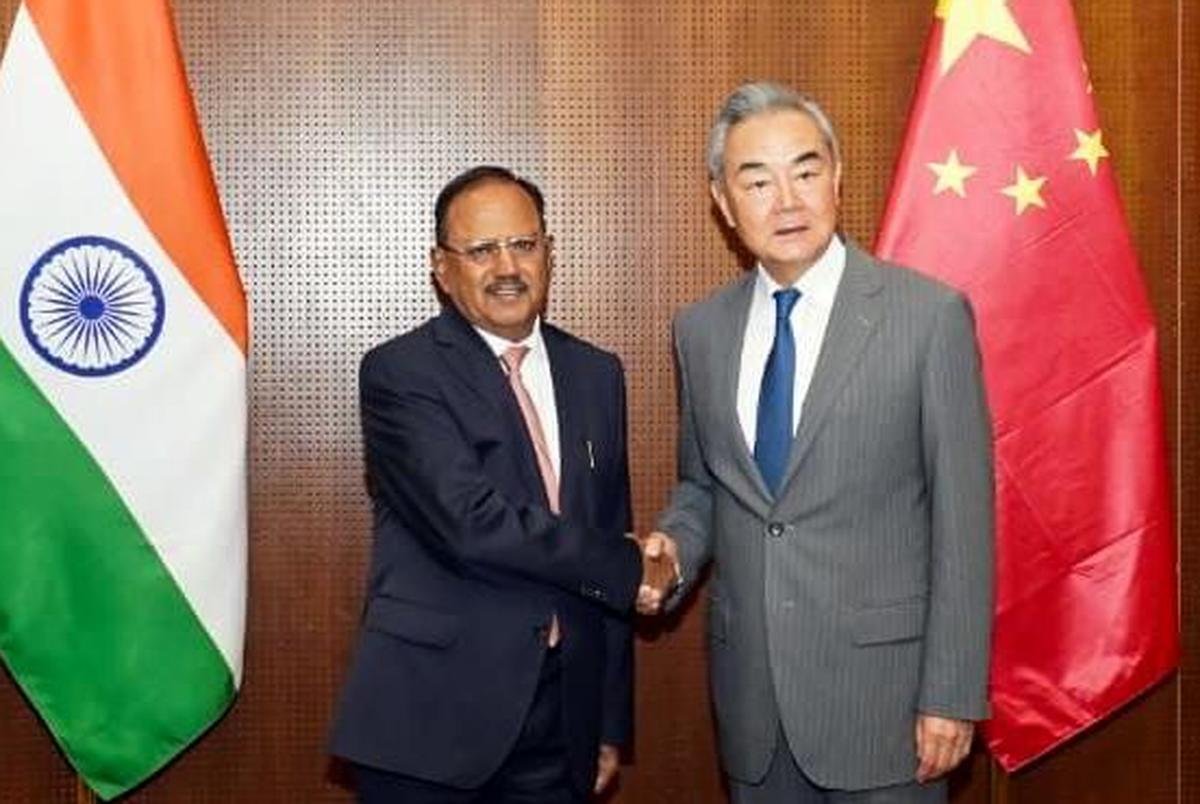
Relations between India and China are entering a crucial new phase. During high-level discussions in New Delhi, Chinese Foreign Minister Wang Yi urged both countries to respect each other’s “core interests” and implement the strategic understanding reached by their leaders. The meeting with National Security Advisor Ajit Doval, who also serves as India’s Special Representative on the boundary question, highlighted growing efforts to rebuild trust after one of the most difficult periods in bilateral relations.
The talks come at a time when both nations face major economic, geopolitical and security challenges. While the Border Dispute remains unresolved, New Delhi and Beijing appear increasingly aware that prolonged hostility between the world’s two most populous nations carries significant costs. The latest engagement signals a cautious but important attempt to create a more stable framework for cooperation while managing areas of disagreement.
Who is involved? China’s Foreign Minister Wang Yi and India’s National Security Advisor Ajit Doval. What is at stake? The future direction of India-China relations. When and where did the talks take place? In New Delhi during the BRICS National Security Advisors’ meeting. Why does it matter? Because the relationship affects regional security, global supply chains, trade, technology cooperation and the broader balance of power in Asia. How can progress be achieved? Through dialogue, confidence-building measures and sustained diplomatic engagement.
Why India-China Relations Matter Beyond the Border
India and China together account for more than one-third of the world’s population and represent two of the largest emerging economies. Their relationship influences not only Asia but also global trade, Energy Markets, manufacturing networks and international institutions.
For decades, the relationship has been characterised by a mix of cooperation and competition. While trade expanded rapidly, strategic concerns continued to shape political interactions. Border disputes, differing regional ambitions and competing security interests frequently complicated engagement.
Despite these challenges, both countries have remained important economic partners. Bilateral trade has grown significantly over the last two decades, demonstrating that economic realities often continue to drive engagement even during periods of political tension.
The latest diplomatic efforts suggest both governments recognise that complete disengagement is neither practical nor beneficial.
The Long Shadow of the Border Dispute
Any discussion about India-China relations inevitably returns to the unresolved boundary question. The border remains one of the most sensitive issues between the two countries and has repeatedly tested diplomatic ties.
The relationship suffered a major setback following the Galwan Valley clash in 2020, which marked the most serious military confrontation between the two sides in decades. The incident triggered a sharp deterioration in trust and led to extensive military deployments along the Line of Actual Control (LAC).
Since then, multiple rounds of military and diplomatic negotiations have sought to reduce tensions. While progress has been achieved in certain friction points, a final resolution remains elusive.
Wang Yi’s remarks about placing the border issue in an “appropriate position” indicate Beijing’s desire to prevent the dispute from dominating the entire relationship. India, meanwhile, has consistently maintained that peace and stability along the border are essential prerequisites for broader cooperation.
This difference in emphasis remains one of the central challenges in the relationship.
What Does “Respect Core Interests” Actually Mean?
The phrase “core interests” carries significant diplomatic weight, particularly in Chinese foreign policy.
For China, the term typically relates to issues involving sovereignty, territorial integrity, national security and political stability. Beijing frequently uses the phrase when discussing matters it considers non-negotiable.
India also has its own core interests, including territorial integrity, national security, strategic autonomy and protection of its sovereignty.
When Wang Yi called for mutual respect of core interests, the message was directed at creating a framework where disagreements can be managed without escalating into larger confrontations.
However, translating this principle into practical policy remains challenging. The real test lies in whether both countries can demonstrate mutual sensitivity during future disputes involving security, trade, regional influence or border management.
The Significance of Ajit Doval-Wang Yi Engagement
The meeting between Ajit Doval and Wang Yi carries particular importance because both officials serve as Special Representatives on the boundary issue.
This mechanism has historically been one of the most important channels for managing the complex border dispute. Unlike routine diplomatic exchanges, Special Representative talks focus on long-term political solutions and strategic understanding.
Over the years, this framework has helped maintain communication even during periods of heightened tensions.
The continuation of these discussions indicates that both governments remain committed to dialogue despite ongoing disagreements. In international Diplomacy, maintaining communication channels is often as important as reaching immediate agreements.
The fact that the talks were described as constructive and forward-looking suggests that neither side wants the relationship to remain trapped by past confrontations.
Economic Realities Are Driving Re-engagement
One of the strongest factors encouraging improved relations is economics.
Both India and China are pursuing ambitious development goals. Sustained economic growth requires stable regional conditions, reliable supply chains and predictable business environments.
India continues to expand its manufacturing ambitions, attract foreign investment and strengthen infrastructure development. China, meanwhile, is navigating economic restructuring while seeking new growth opportunities.
While strategic competition remains real, economic logic often pushes both countries toward engagement.
Businesses in both nations benefit from greater stability, reduced uncertainty and smoother commercial interactions. Investors also prefer predictable geopolitical environments.
This economic dimension explains why discussions increasingly focus on restoring mechanisms related to trade, finance and commercial cooperation.
The BRICS Factor and the Global South
Another major theme emerging from the talks is the growing importance of the Global South.
Both India and China frequently position themselves as voices for developing nations in global Governance debates. Institutions such as BRICS have provided platforms where the two countries can cooperate despite broader strategic differences.
Issues such as development financing, climate change, technology access, Food Security and global economic reform often create areas of common interest.
Wang Yi’s emphasis on accelerating the modernisation of the Global South reflects China’s broader effort to strengthen partnerships across emerging economies.
India also plays an increasingly influential role among developing nations, particularly following its leadership initiatives in recent years.
The overlap in these ambitions creates opportunities for cooperation, even as competition continues in other areas.
Trade, Technology and Future Cooperation
One of the most practical outcomes of improved diplomatic engagement could be the restoration of sector-specific dialogue mechanisms.
According to discussions highlighted during the visit, both sides are exploring greater engagement in:
- Trade and commerce
- Financial cooperation
- Law enforcement coordination
- Media exchanges
- People-to-people interactions
- Educational cooperation
- Business engagement
Technology is likely to remain a particularly sensitive area. Both countries are investing heavily in Artificial Intelligence, semiconductor development, digital infrastructure and advanced manufacturing.
Balancing cooperation with national security concerns will require careful policy management.
Comparison: Then vs Now
| Period | Relationship Status | Key Characteristic |
|---|---|---|
| Pre-2020 | Competitive but cooperative | Strong trade growth despite disputes |
| 2020-2023 | Severely strained | Border tensions dominated engagement |
| 2024-2025 | Cautious stabilisation | Dialogue mechanisms gradually resumed |
| 2026 and Beyond | Managed competition | Focus on balancing cooperation and security concerns |
The transition from confrontation toward managed competition represents one of the most important shifts currently underway in Asian Geopolitics.
The Public Trust Challenge
Diplomatic progress alone may not be enough.
One of the less discussed but equally important challenges is rebuilding public trust. Years of tensions, political debates and security concerns have shaped public perceptions in both countries.
Wang Yi’s call for guiding public opinion and fostering better understanding highlights this issue directly.
Public sentiment increasingly influences foreign policy decisions in modern democracies and highly connected societies. Negative perceptions can limit political flexibility and complicate diplomatic initiatives.
Therefore, cultural exchanges, academic cooperation and people-to-people engagement may become important components of the broader normalisation process.
The Strategic Reality: Cooperation and Competition Will Coexist
Perhaps the most important insight from the latest talks is that neither India nor China expects competition to disappear.
Both countries have legitimate national interests, expanding global ambitions and different strategic priorities. Competition in areas such as regional influence, infrastructure development and geopolitical partnerships is likely to continue.
However, competition does not necessarily require confrontation.
The emerging objective appears to be creating guardrails that prevent disagreements from escalating into broader crises. This approach mirrors strategies adopted by several major powers around the world that seek to manage rivalry while maintaining communication.
For India, stable relations with China allow greater focus on economic development and long-term strategic planning. For China, reducing tensions with India supports broader regional stability and economic objectives.
What Happens Next?
The success of the current diplomatic effort will depend on actions rather than statements.
Several developments will be closely watched in the coming months:
- Progress in border management discussions
- Restoration of suspended dialogue mechanisms
- Expansion of economic engagement
- Increased diplomatic exchanges
- Confidence-building measures along the Line of Actual Control
- Cooperation within BRICS and other multilateral forums
If these areas show tangible progress, the relationship could move toward greater predictability and stability. If setbacks emerge, old tensions could quickly resurface.
Conclusion: A Cautious Reset, Not a Complete Transformation
The meeting between Wang Yi and Ajit Doval represents another step in the gradual effort to stabilise one of the world’s most consequential bilateral relationships. China’s call for respecting core interests and India’s emphasis on trust-building reflect a shared recognition that continued confrontation serves neither side’s long-term interests.
Yet this should not be mistaken for a dramatic breakthrough. Deep differences remain, particularly regarding the border dispute, strategic competition and regional security concerns. What appears to be emerging instead is a more pragmatic approach focused on managing disagreements while expanding areas of cooperation.
The future of India-China relations will likely be defined not by perfect harmony but by disciplined diplomacy, strategic patience and realistic expectations. If both countries can successfully balance competition with cooperation, they could help shape a more stable Asian century. If they fail, the consequences would extend far beyond their borders.
For now, the message from New Delhi is clear: dialogue is back, trust remains a work in progress, and the next chapter of India-China relations is still being written.
For breaking news and live news updates, like us on Facebook or follow us on Twitter and Instagram. Read more on Latest Uncategorized on thefoxdaily.com.






COMMENTS 0