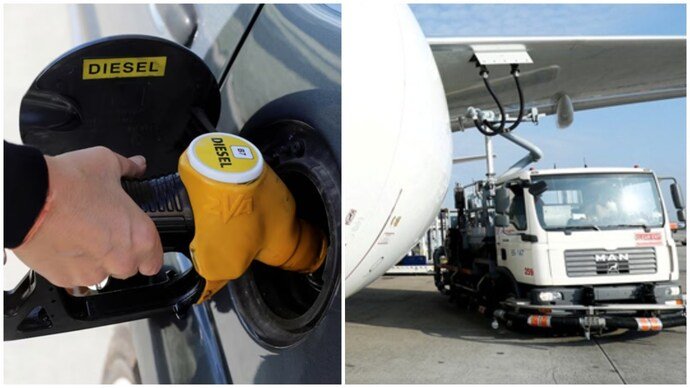
The Indian government has once again tightened its windfall tax framework by increasing the Special Additional Excise Duty (SAED) on diesel and Aviation Turbine Fuel (ATF) exports. The decision comes at a time when global oil markets remain highly sensitive to developments in West Asia, where ongoing geopolitical uncertainty has contributed to fluctuations in crude Oil Prices and refining margins.
Under the revised structure, the export duty on diesel has been increased to Rs 14 per litre, while the duty on Aviation Turbine Fuel exports has been raised to Rs 12.5 per litre. The export duty on petrol remains unchanged at Rs 1.5 per litre.
Although the changes primarily affect exporters and refiners rather than consumers, the move highlights the government’s broader effort to balance domestic Energy Security with the economic realities of a volatile global oil market.
The latest revision also underscores how energy policy has become increasingly linked to international conflicts, supply chain risks, and strategic economic planning.
What Is a Windfall Profit Tax?
A windfall profit tax is a special levy imposed on companies that earn exceptionally high profits due to external events rather than improvements in productivity or innovation.
In the energy sector, such profits often arise when global crude oil prices surge because of geopolitical crises, supply disruptions, wars, sanctions, or natural disasters.
Governments introduce windfall taxes to:
- Capture a portion of extraordinary profits
- Protect domestic consumers
- Maintain fuel availability
- Prevent excessive exports during shortages
- Generate additional government revenue
The rationale is simple: when companies benefit from circumstances beyond their control, governments may seek to redistribute part of those gains to support broader economic stability.
New Windfall Tax Rates Explained
The latest changes involve only export-oriented petroleum products and do not affect fuel sold within India.
| Petroleum Product | Previous Duty | Revised Duty |
|---|---|---|
| Diesel Exports | Rs 13.5 per litre | Rs 14 per litre |
| Aviation Turbine Fuel (ATF) Exports | Rs 9.5 per litre | Rs 12.5 per litre |
| Petrol Exports | Rs 1.5 per litre | Rs 1.5 per litre |
The increase in ATF duty is particularly notable because it represents a significantly larger jump compared to diesel.
This suggests policymakers are paying close attention to aviation fuel margins and international demand conditions.
Why the Government Increased Export Duties Now
The timing of the decision is directly linked to developments in global energy markets.
West Asia remains one of the world’s most strategically important energy-producing regions. Any escalation involving major oil-producing nations can quickly affect global crude prices.
Recent tensions involving Iran, Israel, and broader regional security concerns have increased uncertainty across energy markets.
Whenever geopolitical risks rise, oil traders often factor potential supply disruptions into prices, pushing crude oil higher even before actual shortages occur.
Higher crude prices generally improve refining margins, creating opportunities for refiners to earn greater profits through exports.
The government’s concern is that excessive exports during such periods could tighten domestic supply and create vulnerabilities in India’s energy security framework.
Understanding India’s Position as a Global Refining Hub
India occupies a unique position in the global energy ecosystem.
Although the country imports a large portion of its crude oil requirements, it possesses one of the world’s largest refining capacities.
Indian refiners process imported crude and export substantial quantities of:
- Diesel
- Petrol
- Jet fuel
- Petrochemical feedstocks
- Other refined petroleum products
This makes India both a major energy consumer and a significant exporter of refined fuels.
The country’s refining sector plays a critical role in supplying energy products to markets across Asia, Africa, Europe, and other regions.
As a result, changes in export policies can have implications beyond India’s borders.
Will Fuel Prices Increase for Indian Consumers?
One of the biggest questions following any change in fuel taxation is whether consumers will face higher prices.
In this case, the government has specifically clarified that there is no change in excise duties applicable to petrol and diesel sold domestically.
This means:
- Petrol prices are unlikely to change immediately because of this decision
- Diesel prices are unlikely to be directly affected
- Domestic fuel taxation remains unchanged
- The revised duties apply only to exports
However, fuel prices remain influenced by several factors including international crude prices, exchange rates, transportation costs, and broader economic conditions.
While consumers may not see an immediate impact, prolonged geopolitical disruptions could still affect global energy markets and indirectly influence domestic fuel pricing decisions in the future.
How Windfall Taxes Protect Domestic Energy Security
Energy security has become one of the most important policy priorities for governments worldwide.
The concept extends beyond simply having enough fuel.
Energy security involves ensuring:
- Stable supply chains
- Affordable fuel prices
- Reliable availability during crises
- Protection against geopolitical shocks
- Strategic reserves and emergency preparedness
During periods of high international prices, exporters may naturally prioritize overseas markets where profit margins are greater.
While this behavior is economically rational, governments often intervene to prevent domestic shortages.
Windfall taxes act as a balancing mechanism by reducing the incentive to excessively divert supplies toward exports.
The Impact on Oil Refining Companies
For India’s major refining companies, the revised duties may modestly affect export profitability.
Refiners typically benefit when there is a significant difference between crude oil costs and the market price of refined products.
Higher export duties reduce some of those gains.
However, industry analysts generally view the latest increases as manageable rather than transformative.
Large refining companies operate within complex global markets and often adjust strategies based on changing policy environments.
Possible responses from refiners may include:
- Increasing domestic sales
- Optimizing export destinations
- Adjusting production mixes
- Improving operational efficiency
- Managing inventories strategically
The impact is therefore likely to be felt more in margins than in overall business viability.
Global Comparison: How Other Countries Handle Windfall Profits
India is not alone in using windfall taxes during periods of energy market volatility.
Many governments have adopted similar measures in recent years.
| Country/Region | Approach |
|---|---|
| United Kingdom | Energy profits levy on oil and gas producers |
| European Union | Temporary solidarity contributions on energy firms |
| Italy | Windfall taxes on extraordinary energy profits |
| India | Export duties linked to petroleum products and margins |
The common objective is to ensure that extraordinary market gains do not come at the expense of economic stability or consumer welfare.
However, policymakers must strike a careful balance because excessive taxation can discourage investment and reduce competitiveness.
The Aviation Sector and Rising ATF Duties
The increase in export duty on Aviation Turbine Fuel deserves particular attention.
ATF is one of the most important inputs for the global aviation industry and typically accounts for a substantial portion of airline operating costs.
Although the revised duty targets exports rather than domestic aviation fuel sales, it reflects growing attention to aviation-related energy dynamics.
As international travel continues to recover and air cargo demand remains strong, aviation fuel markets have become increasingly important within the broader energy landscape.
By raising export duties on ATF, the government is signaling its intention to closely monitor this strategically significant sector.
The West Asia Factor Driving Energy Policy
The latest policy revision cannot be understood without considering the geopolitical backdrop.
West Asia remains central to global energy security because of its vast oil and natural gas reserves.
Any disruption involving major producers or critical shipping routes can trigger immediate reactions in commodity markets.
Several key risks currently influencing markets include:
- Regional military tensions
- Potential supply disruptions
- Shipping route security concerns
- Sanctions-related uncertainties
- Volatility in crude oil benchmarks
Governments worldwide are increasingly integrating geopolitical risk assessments into energy policy decisions.
India’s latest tax adjustment reflects this broader trend.
The Unique Insight: This Policy Is About Strategy, Not Revenue
Much of the discussion surrounding windfall taxes focuses on government revenue collection.
However, the larger strategic objective is often overlooked.
The primary purpose of the revised duties appears to be risk management rather than taxation.
By discouraging excessive exports during periods of uncertainty, policymakers are attempting to build resilience into India’s energy system.
In today’s interconnected world, energy security is increasingly viewed as a National Security issue.
Ensuring reliable fuel availability can be just as important as managing prices or generating tax revenue.
The decision therefore reflects a broader shift toward proactive energy Governance in an era of geopolitical unpredictability.
What Happens Next?
The government reviews windfall taxes periodically, typically taking into account:
- Global crude oil prices
- Refining margins
- Export volumes
- Domestic fuel availability
- Geopolitical developments
If international markets stabilize and crude prices decline, future revisions could reduce or remove some duties.
Conversely, a sharp escalation in geopolitical tensions could prompt further adjustments.
The policy therefore remains dynamic rather than fixed.
Future Outlook: Balancing Exports, Energy Security, and Market Stability
India’s decision to increase the windfall profit tax on diesel and aviation fuel exports reflects the difficult balancing act faced by modern energy policymakers.
On one hand, the country benefits from being a major refining and export hub. On the other, it must ensure adequate domestic supplies during periods of global uncertainty.
The revised duties signal that energy security remains a top priority as geopolitical tensions continue to influence global commodity markets.
For consumers, there is no immediate impact on domestic petrol and diesel prices. For refiners, the move may modestly affect export margins while encouraging greater focus on domestic availability.
Most importantly, the decision highlights a broader reality of today’s energy landscape: government policies are increasingly shaped not only by economics but also by geopolitical risks, supply chain resilience, and national security considerations.
As oil markets respond to developments in West Asia and potential diplomatic breakthroughs in the region, India’s windfall tax framework is likely to remain an important tool for managing uncertainty and protecting the country’s long-term energy interests.
For breaking news and live news updates, like us on Facebook or follow us on Twitter and Instagram. Read more on Latest Uncategorized on thefoxdaily.com.






COMMENTS 0