- Why the Strait of Hormuz Crisis Has Become a Global Economic Threat
- Marco Rubio’s Message Was About More Than Oil Sales
- How America Became an Energy Superpower Again
- India’s Energy Challenge Is Bigger Than Oil Prices
- Why Washington Wants Closer Energy Ties With India
- The Russia Factor Still Complicates Everything
- The Venezuela Signal and the New Oil Diplomacy
- The Quad, Indo-Pacific Security, and Energy Routes
- India’s Long-Term Energy Future Will Be More Complex
- The Real Story Behind Rubio’s Visit
- Conclusion
The Global energy map is changing again and this time, India sits at the center of it.
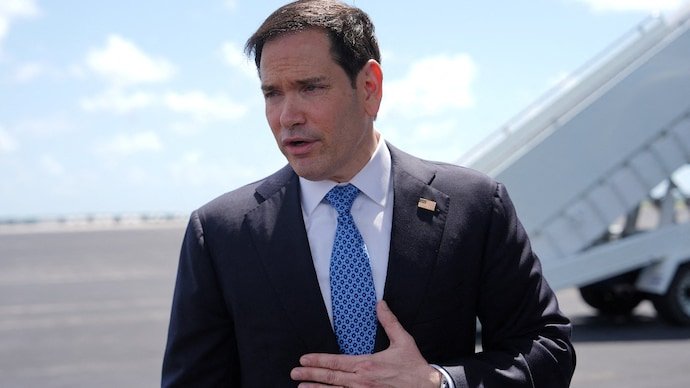
As tensions in West Asia continue disrupting global fuel markets and threatening one of the world’s most critical oil shipping routes, the United States is aggressively positioning itself as a long-term energy partner for India. Ahead of his first official visit to New Delhi, US Secretary of State Marco Rubio made Washington’s intentions unusually clear: America wants to sell India “as much energy as they’ll buy.”
On the surface, the statement sounds like a straightforward trade pitch. In reality, it reflects something far larger: a strategic realignment unfolding across global energy markets, geopolitical alliances, and supply chain security.
The timing matters.
With uncertainty surrounding the Strait of Hormuz pushing governments into emergency energy planning, India is facing one of its biggest strategic vulnerabilities heavy dependence on imported crude oil passing through increasingly unstable maritime routes. The United States sees an opportunity not only to expand exports, but to deepen its influence in one of the world’s fastest-growing major economies.
This is no longer just about oil.
It is about who controls the future architecture of global energy security.
Why the Strait of Hormuz Crisis Has Become a Global Economic Threat
The Strait of Hormuz is often described as the world’s most important oil chokepoint and for good reason.
The narrow waterway connecting the Persian Gulf to the Arabian Sea handles a massive share of global oil and liquefied natural gas shipments every single day. Any disruption in the region instantly affects international fuel prices, shipping insurance costs, airline operations, and inflation across major economies.
For India, the risk is especially serious.
India imports nearly 90 percent of its crude oil requirements, and a large portion of those imports travel through the Strait of Hormuz. That means every escalation in the region directly threatens India’s energy security, industrial stability, and economic growth.
The latest tensions have already triggered fears of:
- Oil supply disruptions
- Rising shipping costs
- Fuel inflation
- Refinery pressure
- Higher transportation expenses
- Economic volatility across Asia
Even rumors of prolonged instability in the region are enough to move global oil markets sharply upward.
That vulnerability is exactly why India has spent recent years diversifying its energy partnerships and why the United States now sees a strategic opening.
Marco Rubio’s Message Was About More Than Oil Sales
Rubio’s remarks ahead of his India visit were carefully timed and strategically significant.
By openly stating that the United States wants to become a larger part of India’s energy portfolio, Washington is signaling a broader geopolitical ambition: integrating India more deeply into an American-aligned energy and security framework.
For years, India-US relations focused heavily on defence cooperation, technology partnerships, and Indo-Pacific strategy. Energy is now emerging as another major pillar of the relationship.
The reason is simple.
Energy security has become National Security.
Countries no longer evaluate energy suppliers purely on price. They now consider geopolitical reliability, shipping security, diplomatic stability, and long-term strategic trust.
That changes the equation dramatically.
The United States believes India could become one of the most important long-term buyers of American oil and liquefied natural gas exports. India, meanwhile, wants to reduce excessive dependence on any single region or supply route.
The interests align naturally.
How America Became an Energy Superpower Again
Just over a decade ago, the idea of the United States becoming a major energy exporter seemed unlikely.
America was heavily dependent on imported oil, and energy security concerns shaped much of its foreign policy.
Then came the shale revolution.
Advances in hydraulic fracturing and horizontal drilling transformed US energy production, unlocking enormous reserves of oil and natural gas. The result was one of the biggest shifts in global energy markets in modern history.
The United States rapidly evolved into one of the world’s largest oil and LNG exporters.
That transformation changed Washington’s strategic calculations.
Instead of focusing mainly on securing overseas energy access, America now increasingly focuses on securing overseas energy customers.
India represents one of the biggest opportunities in that strategy.
| Why India Matters to US Energy Strategy | Strategic Importance |
|---|---|
| Rapidly Growing Economy | Long-term increase in energy demand |
| Heavy Oil Import Dependence | Large and stable buyer market |
| Strategic Indo-Pacific Partner | Strengthens geopolitical alignment |
| Industrial Expansion | Rising fuel and manufacturing needs |
| Energy Diversification Goals | Opportunity to reduce Middle East reliance |
India’s Energy Challenge Is Bigger Than Oil Prices
For India, the issue is not simply about buying cheaper oil.
The real challenge is building long-term resilience in an increasingly unstable global environment.
India’s Economy depends heavily on reliable energy access. Manufacturing growth, infrastructure expansion, transportation networks, aviation, agriculture, and digital industries all require stable fuel supplies.
Any major disruption creates ripple effects across the entire economy.
This is why India has gradually adopted a multi-source energy strategy over recent years.
Instead of depending overwhelmingly on one region, New Delhi has expanded purchases from multiple suppliers, including:
- Russia
- The United States
- The UAE
- Saudi Arabia
- African producers
- Latin American exporters
The goal is strategic flexibility.
If one region becomes unstable, India wants alternative supply channels already in place.
The Hormuz crisis has only accelerated the urgency of that approach.
Why Washington Wants Closer Energy Ties With India
From the American perspective, energy exports are no longer just economic tools they are instruments of geopolitical influence.
Supplying energy strengthens diplomatic relationships, creates long-term dependencies, and deepens strategic partnerships.
Washington understands that India is likely to remain one of the world’s fastest-growing energy consumers for decades. Establishing itself early as a reliable supplier could significantly strengthen America’s long-term position in Asia.
There is also a broader strategic calculation involved.
The United States increasingly views India as a key balancing power in the Indo-Pacific region. Stronger economic interdependence supports wider cooperation involving:
- Maritime security
- Defence coordination
- Technology partnerships
- Supply chain resilience
- Regional stability
Energy cooperation therefore becomes part of a much larger geopolitical framework.
The Russia Factor Still Complicates Everything
One major complication in the India-US energy relationship is Russia.
Since the Ukraine conflict and Western sanctions, India has dramatically increased purchases of discounted Russian crude oil. Those imports helped India control domestic fuel costs while giving refiners access to cheaper supplies.
From India’s perspective, the decision was pragmatic rather than ideological.
India prioritizes energy affordability and national interest.
But Washington clearly wants American energy exports to capture a larger share of India’s import market over time.
That does not necessarily mean India will reduce Russian imports immediately. Instead, New Delhi is likely to continue balancing relationships carefully while maintaining maximum flexibility.
This balancing act has become one of the defining characteristics of India’s foreign policy.
The Venezuela Signal and the New Oil Diplomacy
Rubio’s mention of Venezuelan oil may appear secondary, but it reveals an important emerging trend in global energy Politics.
As geopolitical tensions disrupt traditional supply chains, countries are increasingly reconsidering previously isolated energy producers.
Venezuela possesses some of the world’s largest proven crude reserves, but sanctions and political instability limited its role in international markets for years.
If diplomatic flexibility increases, India could potentially become a major buyer of Venezuelan crude as part of its diversification strategy.
This reflects a broader reality:
Global energy alliances are becoming more fluid.
Countries are prioritizing supply security over old political assumptions.
The Quad, Indo-Pacific Security, and Energy Routes
Rubio’s India visit also overlaps with growing discussions surrounding the Quad alliance involving India, the United States, Japan, and Australia.
Originally framed largely around Indo-Pacific security, the Quad increasingly touches economic resilience, maritime trade protection, and strategic supply chains.
That includes energy shipping routes.
The Strait of Hormuz crisis reinforced how vulnerable global economies remain to disruptions in maritime corridors. Securing trade routes is now becoming as important as securing military alliances.
This creates a major strategic shift.
Energy security is no longer treated as a separate economic issue. It is now deeply integrated into defence planning, regional Diplomacy, and geopolitical competition.
India’s Long-Term Energy Future Will Be More Complex
Even as renewable energy expands globally, oil and natural gas will remain central to India’s economic growth for years.
India is investing heavily in:
- Solar energy
- Green hydrogen
- Electric mobility
- Renewable infrastructure
But the scale of India’s industrial expansion means traditional energy demand will continue rising in parallel.
This creates a complicated transition period where India must simultaneously:
- Expand clean energy
- Secure oil imports
- Protect economic growth
- Manage geopolitical risks
That balancing act will define much of India’s economic strategy over the next two decades.
The Real Story Behind Rubio’s Visit
The deeper significance of Rubio’s comments is not simply that America wants to sell more oil.
The real story is that global energy politics are entering a new phase.
The old system heavily dependent on stable Middle Eastern shipping lanes and predictable global supply flows is becoming increasingly fragile.
Countries are now building strategic partnerships designed to survive future crises.
India’s growing relationship with the United States reflects that shift.
This is no longer only about trade.
It is about building resilience in an era where wars, sanctions, shipping disruptions, and geopolitical rivalry can reshape energy markets almost overnight.
Conclusion
Marco Rubio’s declaration that the United States wants to sell India “as much energy as they’ll buy” marks a defining moment in the evolving India-US relationship.
What appears on the surface to be an energy discussion is actually part of a much larger geopolitical transformation involving supply chain security, Indo-Pacific strategy, global oil realignment, and the future balance of power in Asia.
The Strait of Hormuz crisis exposed how vulnerable modern economies remain to geopolitical instability. For India, the lesson is clear: diversification is no longer optional.
For the United States, the opportunity is equally obvious.
Becoming a major long-term energy supplier to India would not only strengthen economic ties, but also deepen strategic influence in one of the world’s most important emerging powers.
The next phase of global politics may not be shaped only by armies or trade agreements.
It may increasingly be shaped by who keeps the lights on when the world becomes unstable.
For breaking news and live news updates, like us on Facebook or follow us on Twitter and Instagram. Read more on Latest India on thefoxdaily.com.





COMMENTS 0