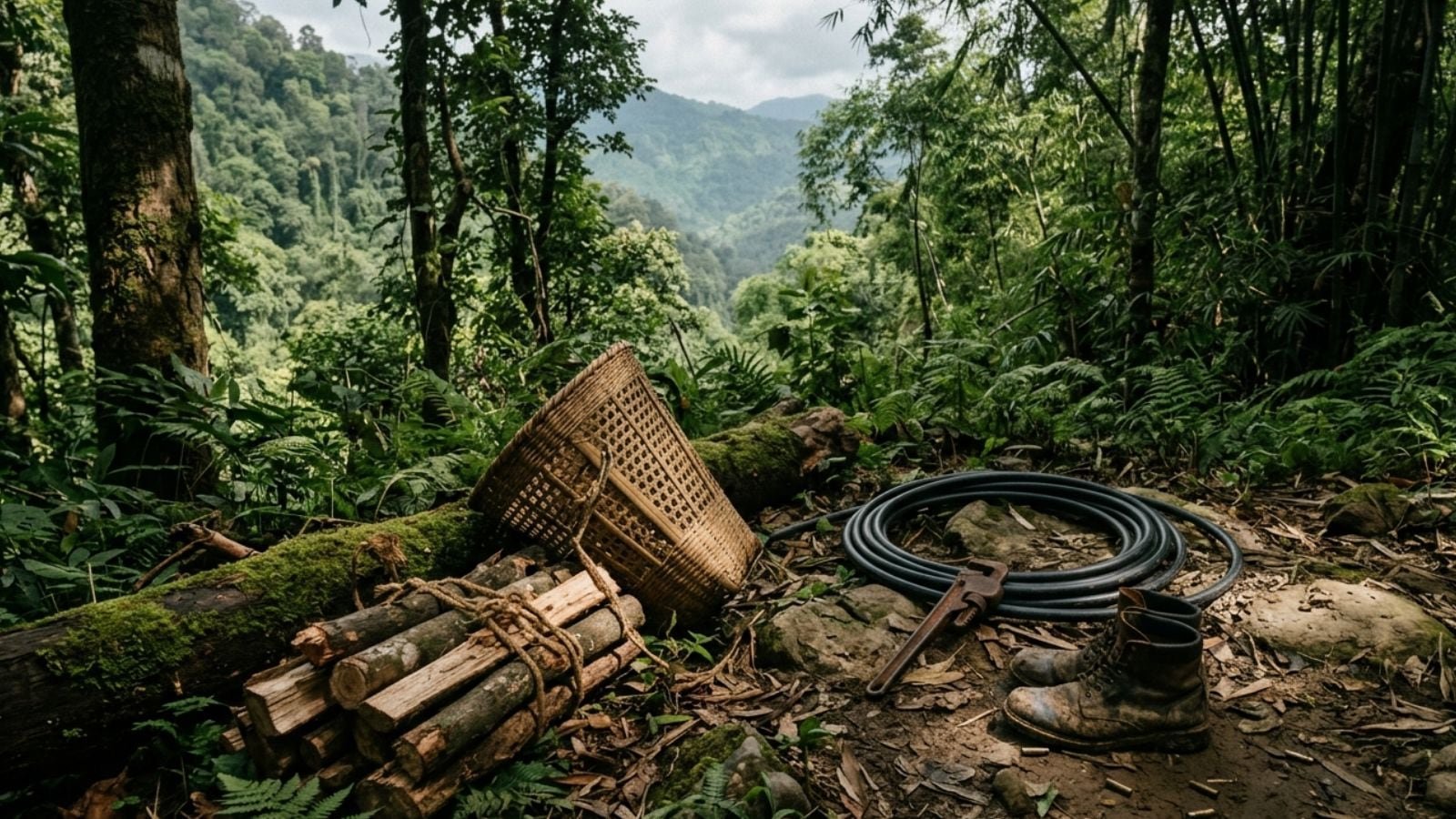
The death of a 58-year-old Rongmei Naga man in the forests of Kangpokpi district on June 8, 2026, has sparked fresh concerns about Security and inter-community relations in Manipur. The victim, identified as Chungjanglung Panmei, reportedly went missing after armed men allegedly opened fire on a group of villagers who had entered a forest area to collect firewood and repair water supply infrastructure.
His body was later recovered during a police rescue operation, with officials reporting multiple bullet injuries. The incident has triggered demands for a thorough Investigation and renewed discussions about the continuing instability in parts of Manipur, where ethnic divisions and security concerns have persisted for years.
Beyond the immediate tragedy, the incident raises broader questions about civilian safety, access to natural resources, Governance in Conflict-prone areas, and the challenges of maintaining peace among communities that share the same geographical space but often face deep historical and political differences.
What Happened in Kangpokpi Forest?
According to official accounts, a group of villagers from Pongringlong Part-I, a Rongmei Naga village located in Kangpokpi district, entered a nearby forest early in the morning to collect firewood and repair water pipelines serving their village.
Such activities are routine in many hill districts of Northeast India, where communities often depend directly on forests for fuel, water management, and other daily necessities.
However, the group reportedly came under fire from armed individuals. Most villagers managed to flee the area, but Chungjanglung Panmei went missing during the attack.
security forces and police subsequently launched a search operation. Several hours later, Panmei’s body was recovered from the forest.
Preliminary observations indicated multiple bullet injuries, leading authorities to initiate further investigation and post-mortem procedures.
Understanding the Geography of Kangpokpi
Kangpokpi district occupies a strategically important position in Manipur’s hill region. The district is characterized by dense forests, rugged terrain, and a diverse ethnic composition.
Several communities, including Kuki and Naga groups, reside in different parts of the district and surrounding areas.
The challenging terrain often complicates law enforcement operations, Emergency Response efforts, and infrastructure development. Remote villages frequently depend on forest routes for daily activities, making civilian movement through isolated areas common.
This geographical reality means that any security incident in forested regions can quickly become difficult to monitor, investigate, and manage.
The Rongmei Naga Community: Historical and Cultural Context
The Rongmei Nagas are one of the major Naga tribes inhabiting parts of Manipur, Nagaland, and Assam. Known for their rich cultural traditions, community-based governance systems, and historical significance in Northeast India, the Rongmei community has played an important role in the region’s social and political landscape.
Many Rongmei villages are located in hill areas where agriculture, forest-based activities, and traditional occupations remain important sources of livelihood.
Like several indigenous communities in the Northeast, the Rongmei people maintain a strong connection to land, forests, and natural resources. As a result, access to forest areas is not merely an economic issue but also a matter of cultural and community survival.
Why Forest Access Matters in Hill Districts
For many urban residents, collecting firewood may seem like an outdated practice. However, in numerous hill communities across Northeast India, forests remain essential to everyday life.
Villagers depend on forests for:
- Firewood and cooking fuel
- Water source maintenance
- Construction materials
- Medicinal plants
- Agricultural support activities
- Community infrastructure upkeep
When security concerns limit access to these resources, the impact extends beyond immediate safety risks. It affects livelihoods, food security, water supply systems, and the overall quality of life of rural communities.
The fact that the villagers were reportedly repairing water pipelines highlights how infrastructure maintenance itself can become risky in conflict-prone areas.
Manipur’s Complex Security Landscape
The latest incident cannot be viewed in isolation. It occurs against the backdrop of a broader security environment that has challenged Manipur for decades.
The state has experienced multiple forms of conflict involving ethnic groups, insurgent organizations, territorial claims, and political grievances.
While significant efforts have been made by both state and central authorities to restore stability, periodic incidents continue to demonstrate the fragility of peace in certain regions.
Security experts often note that conflicts in Northeast India are rarely straightforward. Historical grievances, identity Politics, resource access, land ownership issues, and local governance concerns frequently overlap.
This complexity makes long-term conflict resolution particularly challenging.
Why an Independent Investigation Is Important
Following the incident, local organizations and village authorities called for a thorough and impartial investigation.
Such demands are common after security-related incidents because establishing factual accuracy is critical for maintaining public trust.
A credible investigation serves several important purposes:
- Determining exactly what happened
- Identifying those responsible
- Preventing misinformation
- Reducing the risk of retaliatory actions
- Supporting future peace-building efforts
- Strengthening confidence in law enforcement institutions
In regions with complex ethnic dynamics, transparency becomes especially important because competing narratives can quickly emerge and deepen existing tensions.
The Human Cost Often Overlooked
While headlines frequently focus on security developments and political implications, incidents like these ultimately involve ordinary people whose lives are permanently altered.
Chungjanglung Panmei was not participating in a military operation or political demonstration. According to available information, he was engaged in routine village work alongside fellow residents.
His death highlights a difficult reality faced by many communities living in sensitive regions: everyday activities can sometimes become dangerous due to circumstances beyond their control.
The emotional and economic impact on families can be profound. In rural communities, the loss of a family member often affects not only household income but also social support networks, community participation, and long-term family stability.
The Challenge of Preventing Future Incidents
Preventing similar tragedies requires more than increased security deployments. Sustainable peace typically depends on a combination of measures.
| Challenge | Potential Focus Area |
|---|---|
| Civilian safety | Enhanced patrolling and rapid response systems |
| Community distrust | Dialogue and confidence-building measures |
| Remote terrain | Improved infrastructure and surveillance capabilities |
| Resource access disputes | Clear community agreements and mediation mechanisms |
| Misinformation risks | Transparent communication from authorities |
Experts frequently emphasize that security solutions alone cannot resolve longstanding tensions. Community engagement, economic development, Institutional Trust, and inclusive governance all play important roles in maintaining peace.
What This Means for Manipur’s Future
Manipur remains one of India’s most strategically important northeastern states. Its geographical location, cultural diversity, and regional significance make stability in the state a national priority.
Recent years have demonstrated both the challenges and opportunities facing the region. While significant efforts have been made to improve connectivity, infrastructure, and governance, security incidents continue to remind policymakers that peace-building remains an ongoing process.
Events such as the Kangpokpi killing reinforce the need for sustained attention to local grievances, effective law enforcement, and community-level reconciliation initiatives.
The long-term goal must extend beyond responding to individual incidents. It must focus on creating conditions where communities can coexist peacefully and pursue development without fear.
Lessons for Conflict-Prone Regions
The incident also offers broader lessons applicable to other regions experiencing social or ethnic tensions.
First, civilian protection must remain at the center of security policy. Second, rapid investigations are essential for preventing rumors and escalation. Third, access to basic resources such as water, forests, and infrastructure should never become a source of insecurity for ordinary citizens.
Perhaps most importantly, lasting peace requires trust trust between communities, trust in institutions, and trust that grievances can be addressed through lawful and peaceful means.
Conclusion
The killing of Chungjanglung Panmei in Kangpokpi district is a tragic reminder of the challenges that continue to affect parts of Manipur. While authorities investigate the circumstances surrounding the incident, the event has already highlighted deeper concerns about civilian safety, ethnic relations, and security in remote hill regions.
Beyond the immediate investigation, the incident underscores the importance of strengthening peace-building efforts, ensuring transparency, and protecting communities that rely on forests and natural resources for their daily survival.
For Manipur, the path forward requires not only justice in individual cases but also sustained commitment to dialogue, development, and reconciliation. Only through a combination of security, accountability, and community trust can the region move closer to lasting stability.
As investigations continue, many will be watching not only for answers about what happened in Kangpokpi forest, but also for signs that such tragedies can be prevented in the future.
For breaking news and live news updates, like us on Facebook or follow us on Twitter and Instagram. Read more on Latest India on thefoxdaily.com.






COMMENTS 0