India’s ambition to achieve net-zero emissions by 2070 could become one of the largest long-term investment opportunities for global businesses and financial institutions. The transition is expected to require an estimated $22.7 trillion in cumulative investment, spanning renewable power, electricity infrastructure, energy storage, transport electrification and industrial decarbonisation.
The scale of the requirement reflects a major economic challenge. India must expand its energy supply, build infrastructure, support industrial growth and improve living standards while gradually reducing the emissions associated with economic development. Meeting these objectives will require substantial investment over several decades, making the country’s climate transition an important issue for international financial markets.
A report titled India’s Net Zero Transition is the World’s Net Zero Transition, associated with Australian economist Nicki Hutley, presents the transition as an opportunity extending beyond India’s domestic climate commitments. It argues that the country’s growing energy requirements and economic importance mean its progress towards net zero will have significant implications for global emissions and investment.
The report estimates a funding shortfall of approximately $6.5 trillion, indicating that available domestic resources may not be sufficient to finance the entire transition. International investors, development finance institutions and global financial markets could therefore play a substantial role in supporting India’s clean-energy expansion.
Why India’s Net-Zero Transition Requires $22.7 Trillion
India has committed to achieving net-zero greenhouse gas emissions by 2070 while pursuing its broader ambition of becoming a developed economy by 2047. These two objectives will require the country to expand its productive capacity without allowing rising energy consumption to create decades of additional dependence on high-emission infrastructure.
Net zero does not mean eliminating every source of greenhouse gas emissions immediately. It involves reducing emissions as far as possible and balancing the remaining emissions through removals or other recognised measures. For India, reaching that position will require changes across electricity generation, manufacturing, transport, buildings and other parts of the economy.
The estimated $22.7 trillion investment requirement represents cumulative capital needs over the transition period rather than money that must be raised in a single year. It includes investments in infrastructure and technologies that will be needed as India’s economy and energy system expand.
The figure also needs to be understood in the context of India’s existing development requirements. The country needs additional electricity generation, stronger transmission networks, modern transport systems, industrial facilities and urban infrastructure. A growing share of these investments will need to support lower-emission technologies if the net-zero target is to remain achievable.
Separate modelling by NITI Aayog has also estimated cumulative investment needs of approximately $22.7 trillion under a net-zero scenario through 2070. Its analysis puts investment under a current-policy scenario at around $14.7 trillion, suggesting that the net-zero pathway would require approximately $8.1 trillion in additional investment compared with that baseline.
These estimates underline that the transition is not simply about replacing existing power plants with solar panels or wind turbines. It involves redesigning parts of the energy and industrial system, including the infrastructure needed to deliver electricity reliably when renewable generation fluctuates.
The $6.5 Trillion Funding Gap and the Role of Foreign Capital
The most important financial challenge is the difference between the investment required and the capital that India could reasonably mobilise. The report associated with Hutley estimates a funding gap of approximately $6.5 trillion, leaving a substantial requirement for additional financing.
According to the report, India could finance just over 70 per cent of the estimated investment requirement through domestic resources. The remaining amount would need to be supported through international capital and other financing channels.
This creates opportunities for foreign investors, infrastructure funds, development finance institutions, international banks and companies specialising in clean-energy technologies. However, attracting this capital will depend on whether investors can identify projects with credible financial structures, predictable regulations and manageable risks.
International investment can take several forms. Foreign direct investment can support renewable-energy companies, manufacturing facilities and infrastructure projects. Foreign portfolio investment can provide capital through shares and bonds, while development finance institutions can offer longer-term funding and risk-sharing arrangements.
Concessional finance and grants may be particularly important for technologies that are necessary for the transition but are not yet commercially competitive. These forms of support can help reduce the cost of capital and make projects viable in areas where private investors may otherwise be reluctant to participate.
NITI Aayog’s separate financing analysis also highlights the importance of international capital. It estimates that overseas sources could account for as much as 42 per cent of total financing needs by 2070 under its modelled pathway. The difference between this estimate and the domestic financing share in Hutley’s report reflects the assumptions and financing frameworks used in the respective assessments.
Renewable Energy Will Be at the Centre of the Investment Opportunity
Renewable electricity generation is expected to attract a major share of investment because it will be central to meeting India’s growing power demand while reducing the carbon intensity of electricity production.
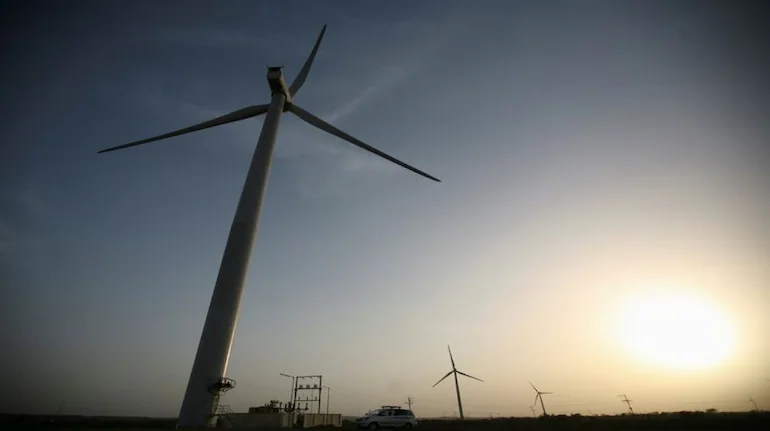
Solar and wind energy have already become important parts of India’s power expansion. The country has substantial solar potential, while wind resources offer opportunities for both onshore and offshore development. Continued investment in these technologies could increase the availability of low-carbon electricity for households, businesses and industrial users.
However, installing more renewable-energy capacity is only one part of the challenge. Solar generation depends on sunlight, while wind output changes with weather conditions. A power system that relies increasingly on these sources needs sufficient storage, flexible generation, modern transmission infrastructure and better electricity management.
India’s progress in expanding non-fossil electricity capacity illustrates the difference between building generation capacity and supplying actual electricity. According to the figures cited in the report, non-fossil sources accounted for 54.2 per cent of installed power capacity by June 2026. Their share of actual electricity generation, however, remained considerably lower at around one-quarter.
Installed capacity measures the maximum electricity that power plants can theoretically produce, while generation records the electricity they actually supply. The difference matters because renewable sources do not operate continuously at their maximum capacity. Their contribution to the electricity mix also depends on weather, grid conditions, storage availability and demand patterns.
For investors, this means the opportunity extends well beyond solar parks and wind farms. Projects involving grid upgrades, energy storage, transmission lines and electricity distribution systems will be essential to making renewable power more reliable and commercially useful.
Battery Storage and Electricity Grids Will Become Critical
Energy storage is likely to become one of the most important investment areas as renewable electricity expands. Batteries can store surplus electricity generated during periods of high solar or wind output and release it when production falls or demand rises.
Battery storage can help address the mismatch between when renewable electricity is generated and when consumers need it. It can also support grid stability, improve the use of existing renewable assets and reduce the need to rely on conventional power sources during periods of limited renewable generation.
Different storage technologies may serve different requirements. Lithium-ion batteries are already widely used in electric vehicles and stationary storage projects, while longer-duration storage solutions could become increasingly important for balancing electricity supply over extended periods.
India will also need substantial investment in electricity transmission and distribution. Renewable-energy projects are often located far from major centres of electricity consumption. Without adequate transmission capacity, electricity generated in one region may not be delivered efficiently to industrial centres and cities elsewhere.
Modernising distribution networks is equally important. Electricity distribution companies need to improve their financial position, reduce technical and commercial losses and strengthen their ability to purchase and deliver power. Weak distribution finances can affect payments to power producers and make investors more cautious about committing capital.
Consequently, the success of India’s renewable-energy expansion will depend on coordinated investment across generation, storage, transmission and distribution rather than on adding new power capacity alone.
Green Hydrogen and Industrial Decarbonisation Could Attract Long-Term Capital
Electricity generation is not the only sector that needs to change. Industries such as steel, cement and chemicals have significant energy requirements and production processes that can be difficult to decarbonise using conventional electrification alone.
Green hydrogen could become an important option for reducing emissions in some of these sectors. It is produced using renewable electricity to split water into hydrogen and oxygen. If the electricity used in production comes from low-carbon sources, the resulting hydrogen can offer a cleaner alternative to hydrogen produced using fossil fuels.
Potential applications include industrial processes, certain chemical production activities and selected heavy-transport uses. Green hydrogen could also support the production of lower-emission industrial materials, although its commercial viability will depend on production costs, infrastructure availability and demand from buyers.
Building a green hydrogen industry requires investment in renewable electricity, electrolysers, water supply, storage, transport and industrial facilities. The technology therefore creates opportunities across several connected parts of the economy.
Industrial decarbonisation will also require more efficient production equipment, cleaner fuels, electrification where technically possible and the development of technologies such as carbon capture, utilisation and storage. These solutions may be particularly relevant for industrial processes where eliminating emissions completely is difficult.
Such projects often involve substantial upfront costs and long investment periods. Their financial viability will depend on technology improvements, supportive policies, reliable infrastructure and the willingness of companies to purchase lower-carbon products.
Transport Electrification Creates Another Major Market
Transport is another important part of India’s transition. Rising incomes, urbanisation and economic activity are expected to increase demand for passenger vehicles, commercial transport and freight services. How this demand is met will influence the country’s future oil consumption and emissions.
Electric vehicles can reduce direct emissions from road transport, particularly when charged using increasingly clean electricity. The investment opportunity includes vehicle manufacturing, battery production, charging infrastructure, power connections and recycling facilities.
Two-wheelers, three-wheelers, buses and commercial fleets could offer different opportunities for electrification. Vehicles used intensively in urban areas may be particularly suitable for electric alternatives because they can return to predictable charging locations and accumulate substantial daily mileage.
However, the transition will require more than increasing vehicle sales. Charging networks must expand, battery costs and performance need to improve, and electricity distribution systems must be prepared for additional demand. Financing arrangements will also influence whether individuals and businesses can afford to adopt electric vehicles.
Heavy freight and long-distance transport present more complex challenges. Batteries, alternative fuels, hydrogen and other technologies may each have a role depending on the vehicle, route and operating requirements.
India’s Economic Growth Makes the Energy Transition More Urgent
India’s climate challenge is closely connected to its development needs. The country is among the world’s largest greenhouse gas emitters in absolute terms, but its per-capita emissions remain significantly below the global average.
The report estimates India’s per-capita emissions at approximately 3.1 tonnes of carbon dioxide equivalent, compared with a global average of 6.6 tonnes. It also places India’s gross domestic product per capita at around $2,810, considerably below the global average.
These figures highlight why India’s transition cannot be approached in the same way as that of wealthier economies. A large share of the population still needs better access to reliable electricity, housing, transport, healthcare and other essential services. Economic growth and improvements in living standards remain central national priorities.
India’s energy demand is expected to rise as its population grows, cities expand and industrial activity increases. Demand for air conditioning is also likely to become more important as incomes rise and temperatures create greater cooling requirements.
The expansion of data centres adds another source of electricity demand. These facilities support cloud computing, digital services and artificial intelligence infrastructure, but require reliable power and cooling systems. Their growth will increase the importance of securing dependable electricity supplies.
If much of this additional demand is met through long-lived fossil-fuel infrastructure, India could face higher emissions for decades. Building clean-energy capacity and supporting infrastructure early could reduce the risk of locking in carbon-intensive assets while creating new industries and employment opportunities.
What Could Prevent Global Investors From Funding the Transition?
Despite the scale of the opportunity, the estimated investment requirement does not guarantee that capital will automatically flow into Indian clean-energy projects. Investors will assess project returns, financing costs, regulatory conditions and the risks associated with construction and operations.
The cost of capital is a particularly important factor. Renewable-energy and infrastructure projects generally require substantial upfront spending, while revenues are generated over long periods. Higher interest rates or expensive borrowing can make projects less attractive, even when the underlying technology is commercially established.
Currency risk is another concern for overseas investors. A project may generate returns in Indian rupees, while an international investor measures performance in dollars or another foreign currency. Exchange-rate movements can reduce the value of those returns and make long-term financing more complicated.
Regulatory predictability also matters. Investors need clarity on electricity tariffs, land acquisition, environmental approvals, power-purchase agreements, taxation and rules governing foreign investment. Sudden changes or delays can increase project costs and undermine confidence.
The financial condition of electricity distribution companies presents an additional challenge. Renewable-energy developers depend on reliable payments for the electricity they supply. If distribution companies struggle to meet payment obligations, projects can face cash-flow pressure and financing risks.
Grid connectivity and project execution are equally important. Delays in transmission infrastructure can prevent completed renewable-energy projects from delivering electricity at their expected capacity. A strong pipeline of bankable projects, standardised contracts and clearer allocation of risks could help improve investor confidence.
How India Can Turn the Investment Estimate Into Actual Projects
Closing the financing gap will require action from both the government and private sector. Public investment can support essential infrastructure and early-stage technologies, while policy reforms can help attract domestic and international private capital.
Deepening India’s corporate bond market could provide companies with more options for raising long-term funds. Institutional investors, including pension funds and insurance companies, could also play a larger role in financing infrastructure and clean-energy assets, subject to appropriate risk management and investment safeguards.
Green bonds and other sustainable finance instruments can help direct capital towards eligible projects. Their effectiveness, however, depends on transparent reporting, credible environmental standards and clear information about how the money is used.
Development finance institutions can help projects that face higher initial risks or require longer repayment periods. They may also provide guarantees and concessional loans that encourage private investors to participate in sectors where commercial financing remains limited.
India will need to strengthen the project pipeline as well. Investors are more likely to commit capital when projects have secured land, permits, grid connections, reliable buyers and clear revenue arrangements. Improving these conditions can reduce uncertainty and shorten the time between investment decisions and project completion.
Technology development and domestic manufacturing will also influence the long-term economics of the transition. Expanding local production of solar equipment, batteries, power electronics and other clean-energy components could strengthen supply chains, support industrial growth and reduce exposure to external disruptions.
Why India’s Net-Zero Progress Matters Beyond Its Borders
India’s energy choices will have consequences for international climate goals because of the country’s population, economic growth and rising energy consumption. Its ability to expand clean electricity and reduce emissions across industry and transport could influence the pace of global decarbonisation.
The transition also creates opportunities for international companies to participate in one of the world’s largest developing energy markets. Renewable-energy developers, equipment manufacturers, battery suppliers, engineering firms and financial institutions could all find potential business opportunities as infrastructure investment expands.
For global investors, India offers the possibility of long-term participation in a growing economy while supporting the development of lower-carbon infrastructure. But the scale of the market should not be confused with guaranteed returns. Individual projects will still depend on commercial viability, execution capacity and policy conditions.
The estimated $22.7 trillion requirement is therefore both an investment signal and a measure of the work ahead. The $6.5 trillion funding gap highlights the importance of attracting international capital, while the country’s development priorities make it essential to ensure that clean-energy investment supports affordable and reliable economic growth.
India’s net-zero ambition will ultimately be judged not by the size of the investment estimate but by the infrastructure built, emissions reduced and energy services delivered. If the country can combine predictable policies, stronger financial markets, reliable electricity networks and commercially viable clean technologies, its transition could become a major driver of economic transformation through 2070.
For breaking news and live news updates, like us on Facebook or follow us on Twitter and Instagram. Read more on Latest India on thefoxdaily.com.






COMMENTS 0