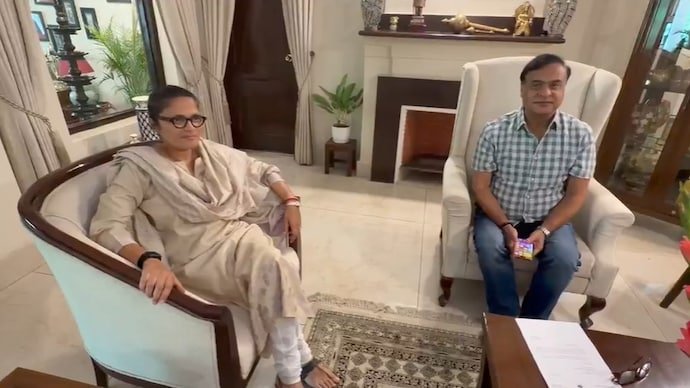
The political landscape in eastern India witnessed another dramatic development after Sushmita Dev resigned from the Rajya Sabha and subsequently met Assam Chief Minister Himanta Biswa Sarma in New Delhie move has triggered widespread speculation that the former Trinamool congress (TMC) leader could be preparing to join the Bharatiya Janata Party (BJP), potentially dealing another significant blow to Mamata Banerjee‘s party.
The resignation comes at a sensitive moment for the TMC, which is already grappling with internal dissent, leadership challenges, and questions about its future political strategy beyond West Bengal. Dev’s departure is particularly significant because she was considered one of the party’s most recognizable national faces and played a key role in expanding TMC’s presence outside Bengal.
Her exit, combined with recent resignations and reported unrest within the party, has reignited discussions about whether the TMC is entering a period of political instability or merely undergoing a temporary phase of internal restructuring.
Who Is Sushmita Dev?
Sushmita Dev is one of the better-known political leaders from Assam and has had a diverse political journey spanning multiple parties and leadership roles.
She first gained national prominence as a Congress leader and represented Silchar in Assam as a Member of Parliament in the Lok Sabha. Known for her strong communication skills and active participation in national political debates, she emerged as one of the Congress party’s visible faces in the Northeast.
After losing the 2019 Lok Sabha election, Dev eventually left Congress and joined the Trinamool Congress in 2021. Her induction was viewed as part of Mamata Banerjee’s broader strategy to transform TMC from a regional force into a national political player.
Within a relatively short period, she rose through the party ranks and was entrusted with major responsibilities, including serving as the party’s national spokesperson and later becoming a Rajya Sabha member.
Why Her Resignation Matters
Political resignations happen regularly in Indian Politics, but Sushmita Dev’s departure carries significance beyond the loss of a single parliamentary seat.
Several factors make this development particularly noteworthy:
- She was among TMC’s most prominent leaders outside West Bengal.
- She represented the party’s efforts to expand in Northeast India.
- She had direct access to the party’s national leadership.
- Her resignation comes amid broader reports of dissatisfaction within the party.
- Her immediate meeting with a senior BJP leader has fueled defection speculation.
For a party seeking to maintain relevance beyond Bengal, losing a leader with national visibility and regional influence could create both symbolic and organizational challenges.
The Meeting With Himanta Biswa Sarma: Why It Is Politically Significant
The biggest talking point surrounding the resignation is not merely the act itself but what happened afterward.
Sushmita Dev’s meeting with Assam Chief Minister Himanta Biswa Sarma immediately intensified speculation about her political future. Sarma is widely regarded as one of the BJP’s most influential strategists in Northeast India and has played a central role in the party’s electoral expansion across the region.
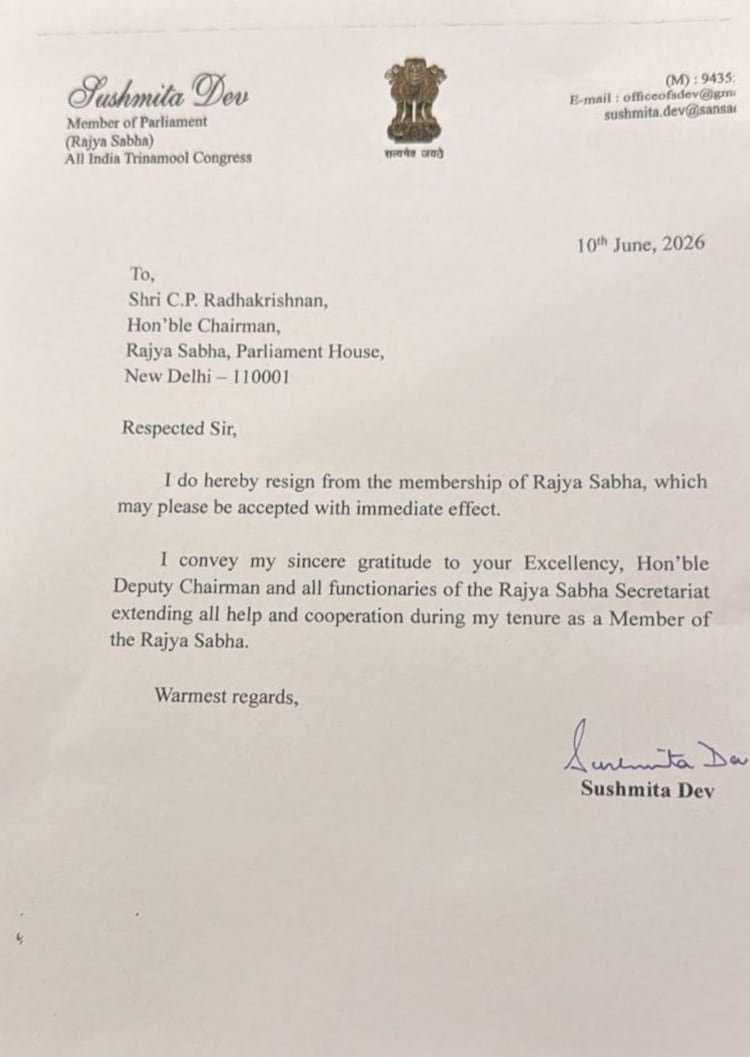
Political observers note that such meetings rarely escape public attention, particularly when they occur shortly after a high-profile resignation.
While no official announcement has been made regarding her next move, the optics of the meeting have generated strong expectations that she may soon join the BJP.
The Growing Challenges Inside the Trinamool Congress
Sushmita Dev’s resignation is not occurring in isolation. It comes against the backdrop of increasing reports of internal disagreements and leadership challenges within the Trinamool Congress.
The party has recently faced criticism over Governance issues, corruption allegations, organizational disputes, and electoral setbacks.
The departure follows the resignation of senior Rajya Sabha member Sukhendu Sekhar Roy, who publicly criticized the party leadership and governance record before stepping down.
When multiple senior leaders leave within a short period, political analysts often view it as a sign of deeper organizational tensions rather than isolated incidents.
A Timeline of Recent Political Developments
| Timeline | Political Development |
|---|---|
| 2019 | Sushmita Dev loses Lok Sabha election from Silchar |
| 2021 | Leaves Congress and joins Trinamool Congress |
| 2021–2025 | Emerges as a prominent national face of TMC |
| Recent Week | Sukhendu Sekhar Roy resigns from Rajya Sabha |
| Current Development | Sushmita Dev resigns and meets Himanta Biswa Sarma |
This sequence of events suggests that the TMC is navigating one of its most challenging political phases in recent years.
What This Means for Mamata Banerjee’s National Ambitions
For several years, Mamata Banerjee has sought to position herself as a major national opposition figure. The TMC’s expansion strategy focused on increasing its presence in states beyond West Bengal, including Assam, Tripura, Goa, and Meghalaya.
Recruiting leaders such as Sushmita Dev was a critical component of that strategy.
However, retaining influential leaders from different regions is often more difficult than attracting them initially. Political expansion requires organizational depth, local leadership structures, and long-term commitment from recruits.
The departure of senior leaders raises questions about whether the party can sustain its national ambitions while simultaneously managing internal challenges.
The BJP’s Continued Expansion Strategy
If Sushmita Dev eventually joins the BJP, it would fit into a broader pattern that has defined Indian politics over the past decade.
The BJP has successfully expanded its influence by attracting experienced leaders from rival parties, particularly those with regional networks and administrative experience.
This approach has been especially effective in the Northeast, where the party has significantly strengthened its political footprint.
Bringing in a leader with experience in Congress and TMC would provide the BJP with additional organizational knowledge and political reach.
Why Assam Remains a Key Political Battleground
Assam has become one of India’s most strategically important political states.
As the largest state in Northeast India by population, Assam serves as a gateway to the region and often shapes broader political trends across neighboring states.
The state is important because of:
- Its electoral significance in the Northeast.
- Its role in national security and border management.
- Its influence on regional development policies.
- Its importance in debates surrounding citizenship and migration.
- Its growing economic and infrastructure profile.
Political developments involving major Assamese leaders therefore attract attention well beyond the state’s borders.
The Congress Connection: A Full Political Circle?
One of the more interesting aspects of Sushmita Dev’s political journey is that both she and Himanta Biswa Sarma were once prominent Congress leaders before moving to rival parties.
Their respective transitions reflect a broader trend in Indian politics, where traditional party loyalties have increasingly given way to strategic realignments based on political opportunity, ideological positioning, and electoral calculations.
If Dev joins the BJP, it would represent another example of how political careers in India often evolve across multiple party platforms.
What Political Analysts Are Watching
Political observers are focusing on several key questions following the resignation:
- Will Sushmita Dev formally join the BJP?
- Will other TMC leaders follow her path?
- Can Mamata Banerjee contain the growing dissent?
- How will the development affect TMC’s national expansion plans?
- What impact will it have on Northeast politics?
The answers to these questions could influence political dynamics not only in West Bengal but across several states heading into future Elections.
The Bigger Story: India’s Era of Political Realignment
Beyond the immediate headlines, Sushmita Dev’s resignation reflects a broader trend in Indian politics: the increasing fluidity of political affiliations.
Unlike previous decades when party loyalty often remained stable for long periods, modern Indian politics has witnessed frequent shifts by leaders seeking new opportunities, stronger organizational platforms, or greater electoral prospects.
These movements have become particularly common as parties compete to expand their influence beyond traditional strongholds.
The result is a constantly evolving political landscape where alliances, leadership structures, and party strategies can change rapidly.
Future Outlook
The next few days will likely provide greater clarity regarding Sushmita Dev’s political future. If she formally joins the BJP, it could become one of the most significant political defections of the year.
Several developments will be closely watched:
- Any official announcement from Dev.
- BJP’s response to the speculation.
- Reactions from TMC leadership.
- Potential further resignations within the party.
- Political implications for Assam and West Bengal.
Regardless of her final decision, the resignation has already sparked fresh debate about the strength of opposition parties and the evolving balance of power in Indian politics.
Conclusion
Sushmita Dev’s resignation from the Rajya Sabha and subsequent meeting with Himanta Biswa Sarma have added a new chapter to India’s rapidly changing political landscape. Coming at a time when the Trinamool Congress is facing internal challenges, the development has intensified scrutiny of Mamata Banerjee’s leadership and the party’s national ambitions.
Whether Dev formally joins the BJP or charts a different political course, her departure underscores the shifting alliances and strategic recalculations that increasingly define contemporary Indian politics. As parties prepare for future electoral battles, this episode may prove to be more than just a resignation it could signal a larger realignment within India’s opposition landscape.
For breaking news and live news updates, like us on Facebook or follow us on Twitter and Instagram. Read more on Latest India on thefoxdaily.com.





COMMENTS 0